Basic geometry understanding Worksheets for Ages 7-9
5 filtered results
-
From - To
Unlock the world of shapes and symmetry with our "Basic Geometry Understanding Worksheets for Ages 7-9". These interactive and engaging exercises are expertly designed to help young learners grasp essential geometric concepts. From identifying shapes to understanding spatial relationships, each worksheet is crafted to build foundational skills through fun and innovative activities. Tailored for kids aged 7-9, these resources reinforce classroom learning, boost confidence, and foster a love for math. Perfect for both home and school use, our geometry worksheets make learning an exciting adventure. Explore now and watch your child’s geometric wizardry unfold!
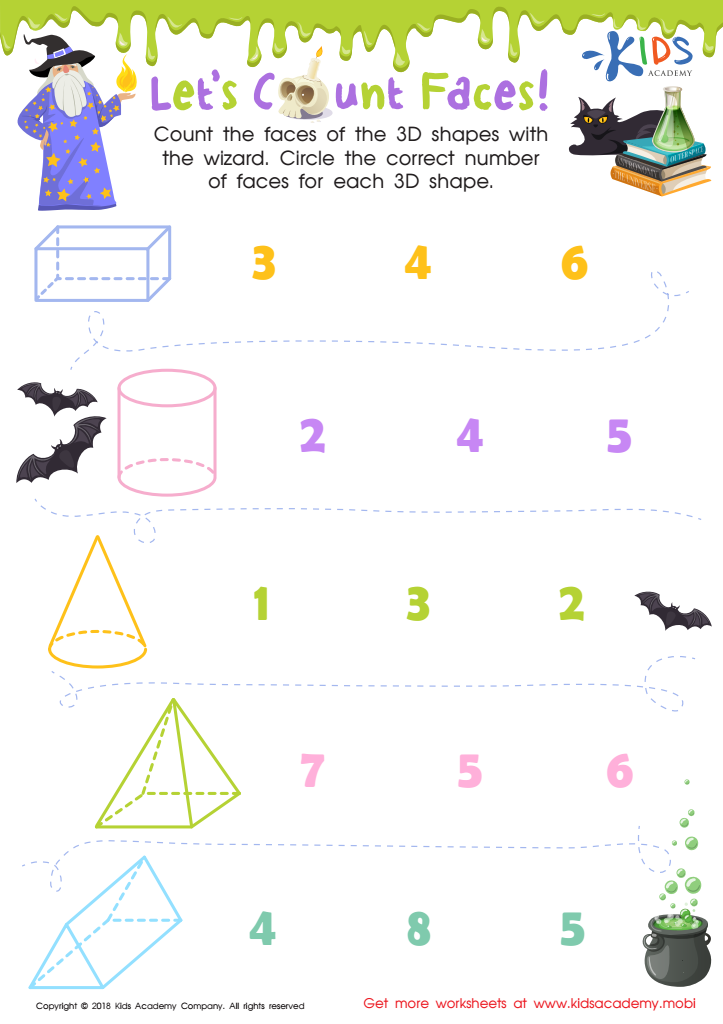
Let's Count Faces! Worksheet
 Assign to My Students
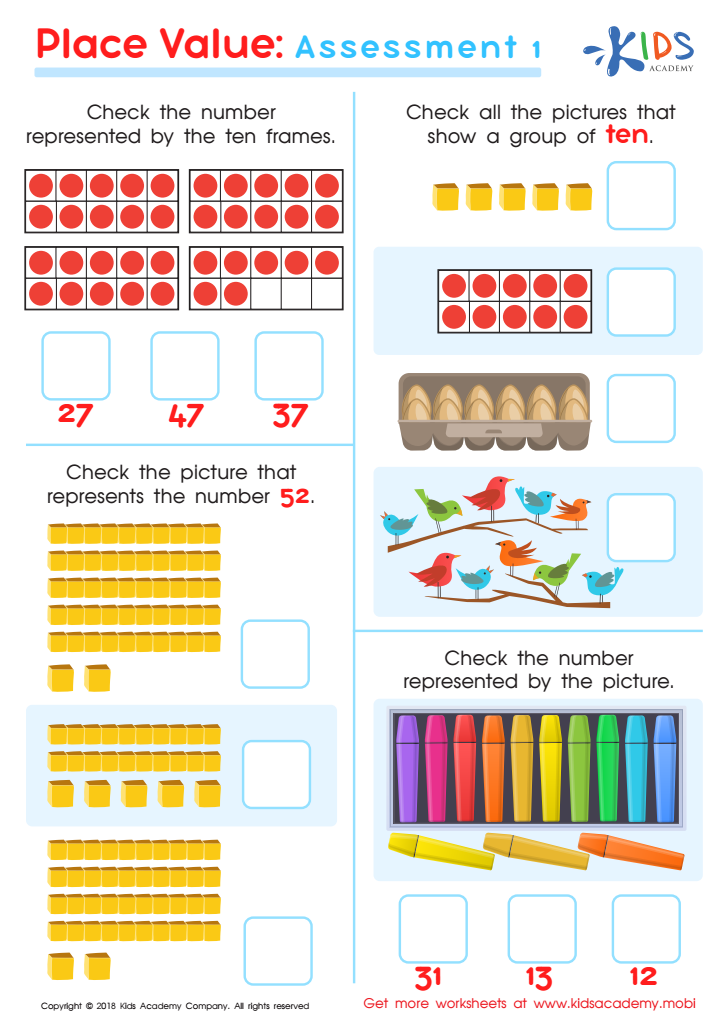
Place Value: Assessment 1 Worksheet
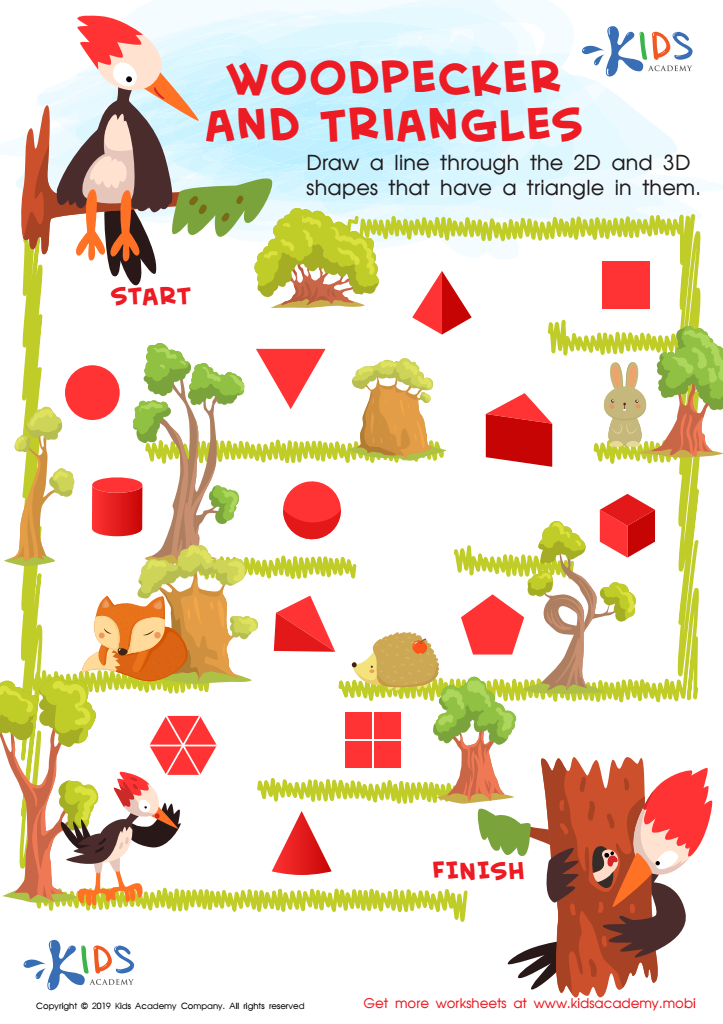
Woodpecker and Triangles Worksheet
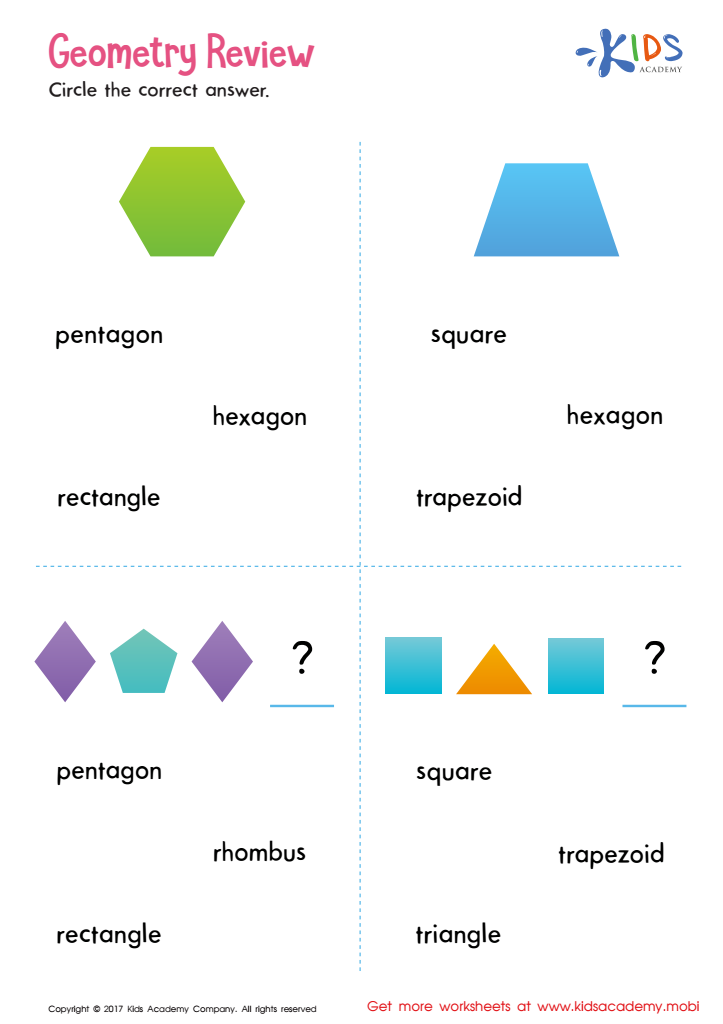
Geometry Review Printable
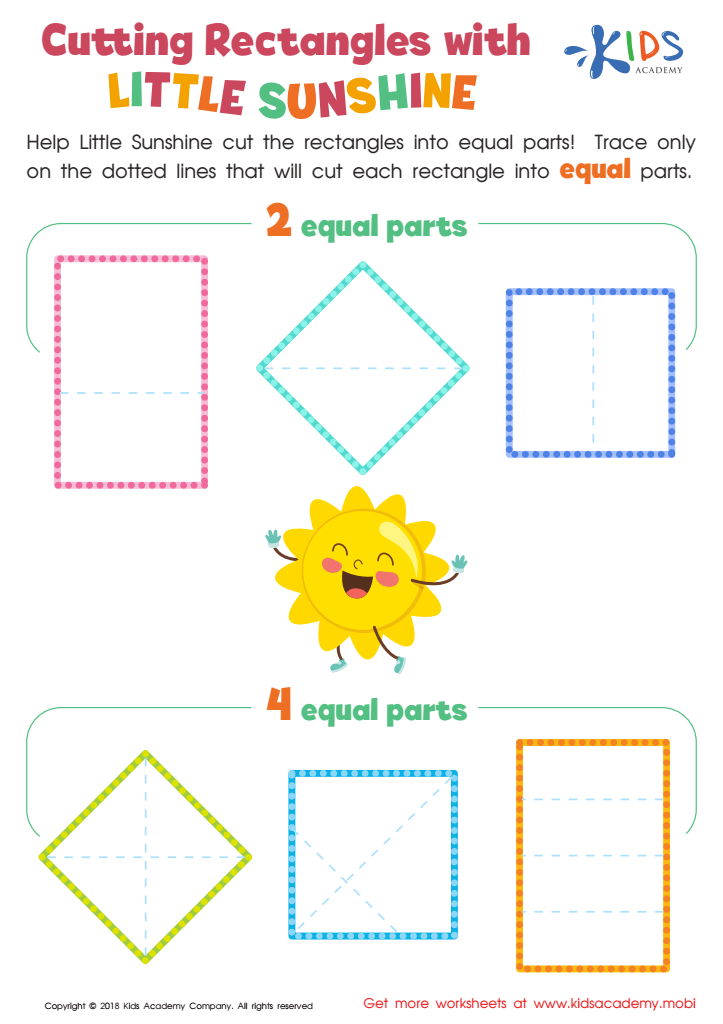
Cutting Rectangles with Little Sunshine Worksheet






Understanding basic geometry at ages 7-9 holds significant importance for children's educational and developmental journeys. Firstly, geometry introduces young learners to vital spatial reasoning skills. Recognizing shapes, their properties, and relationships helps develop the mental capacity to visualize and manipulate objects, aiding in solving everyday problems.
Further, geometry fosters critical thinking and analytical skills. When children explore geometric concepts such as symmetry, congruence, and the differentiation between 2D and 3D shapes, they engage in logical thinking processes. This mental exercise sharpens their problem-solving abilities, beneficial for various subjects beyond math.
Additionally, basic geometry offers practical knowledge applicable in daily activities. Identifying geometric concepts in real-world contexts—like distinguishing shapes in architecture or nature—makes the learning process relevant and enhances observation skills.
Moreover, early geometry concepts lay a foundation for advanced mathematics. Understanding shapes, measurements, and spatial relationships prepares children for more complex mathematical operations encountered in higher grades. This head start can significantly boost confidence and interest in STEM subjects.
Parents and teachers who prioritize geometry ensure that children cultivate essential mathematical skills, critical thinking, and practical understanding, building a strong groundwork for academic success and everyday reasoning.








