
Chess rules understanding Worksheets for Ages 7-9
4 filtered results
Difficulty Level
Grade
Age
-
From - To
Subject
Activity
Standards
Welcome to our "Chess Rules Understanding Worksheets" designed specifically for ages 7-9! These engaging worksheets provide young learners with a fun and interactive way to grasp fundamental chess rules and strategies. Each worksheet incorporates colorful illustrations and easy-to-follow layouts, ensuring kids are excited to learn about piece movements, basic checkmate tactics, and the importance of thinking ahead. Our resources are tailored to foster critical thinking, patience, and sportsmanship. Perfect for classroom use or at-home activities, these worksheets will inspire a new generation of chess enthusiasts. Let's make learning chess an enjoyable adventure for your child today!
Favorites
With answer key
Interactive
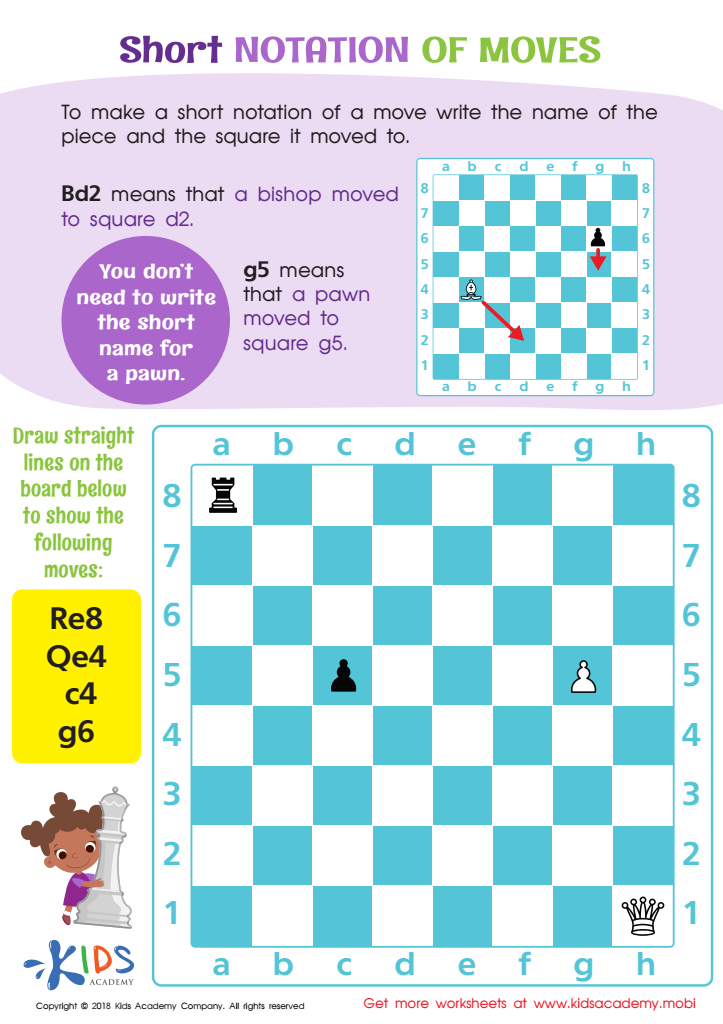
Short Notation of Moves Worksheet
To master chess, you need more than just knowing the pieces and their moves - you need to be able to make notations of your moves. To make a short notation, write the piece name and square it moved to; for example, Bd2 for bishop on d2. Pawns don't need the piece name, just the square; e.g. g5. Show your kids how to draw lines to the board for the moves given.
 Assign to My Students
Short Notation of Moves Worksheet
Worksheet
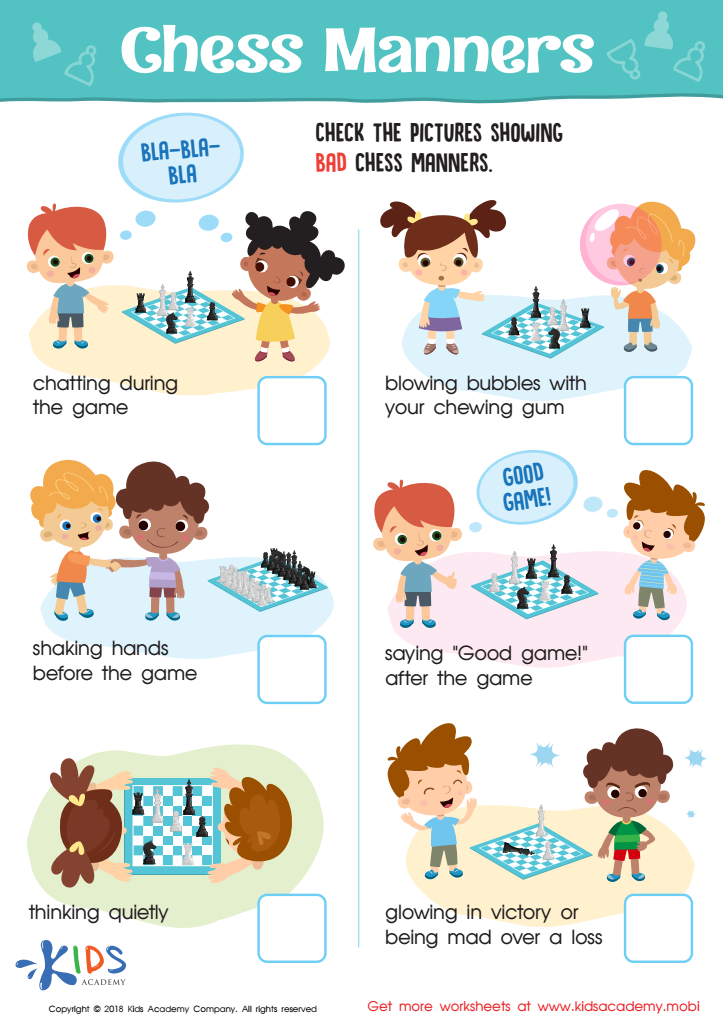
Chess Manners Worksheet
Teach your child chess manners in addition to table and social ones. Chess has clear rules and etiquette which must be followed for a proper game. Review this worksheet with your kid and discuss the pictures that show inappropriate behaviours. This will help them understand how to play the game correctly and with good manners.
Chess Manners Worksheet
Worksheet
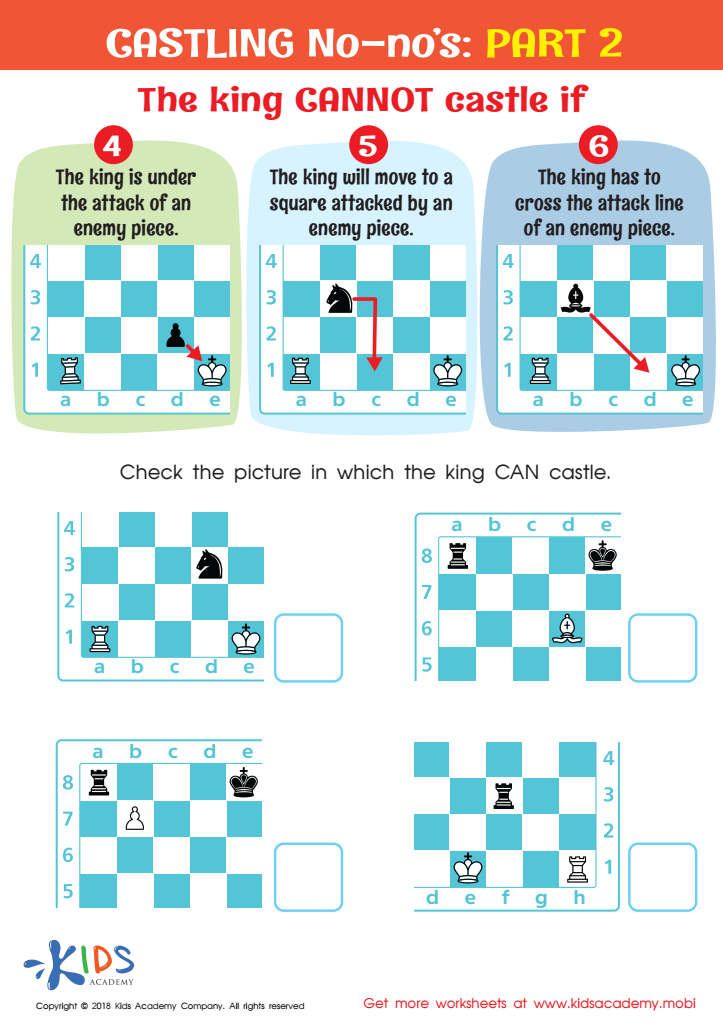
Castling No - no's: Part 2 Worksheet
Teach your child the rules of castling: no castling if the king is under attack or will move onto an attacked square, or cross an attack line. To prepare for a game of chess, help your child complete the exercise of identifying when the king can castle – check the pictures.
Castling No - no's: Part 2 Worksheet
Worksheet
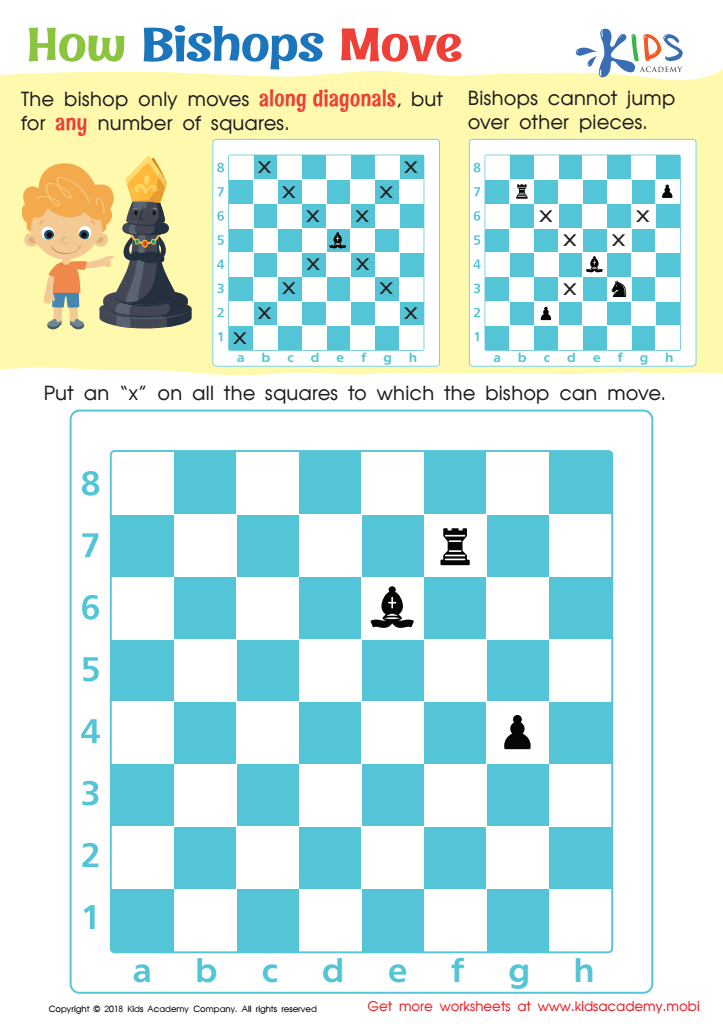
How Bishops Move Worksheet
There is no such thing as too much sharpening of skills. Encourage your child to learn more about chess technicalities with this simple worksheet. It shows them how a bishop moves: along diagonals any number of squares, but it can't jump over other pieces.
How Bishops Move Worksheet
Worksheet
Join Kids Academy for Free
Who is primarily going to use this learning content?








Understanding chess rules is crucial for parents and teachers of children aged 7-9, as it facilitates not only the acquisition of strategic thinking and problem-solving skills but also fosters social interaction and emotional growth.
Firstly, mastering chess rules enhances critical thinking and decision-making abilities. At this age, children are developing cognitive skills that allow them to plan and anticipate consequences. Chess encourages them to think several moves ahead, aiding their ability to engage in logical reasoning, a skill beneficial in both academics and daily life.
Secondly, chess promotes resilience and emotional intelligence. Children learn to manage wins and losses, cultivating patience and sportsmanship. This emotional regulation is integral during formative years, as it helps children cope with various life challenges.
Furthermore, chess serves as an engaging way for parents and teachers to connect with children. Game sessions offer unique opportunities for bonding, fostering enjoyment while learning, and reducing screen time by providing an alternative in a chess-focused environment.
In promoting a comprehensive understanding of chess rules, parents and teachers empower children to thrive both personally and academically, making it an invaluable partnership in their developmental journey.








