Mathematical reasoning Worksheets for Ages 7-9 - Page 3
52 filtered results
-
From - To
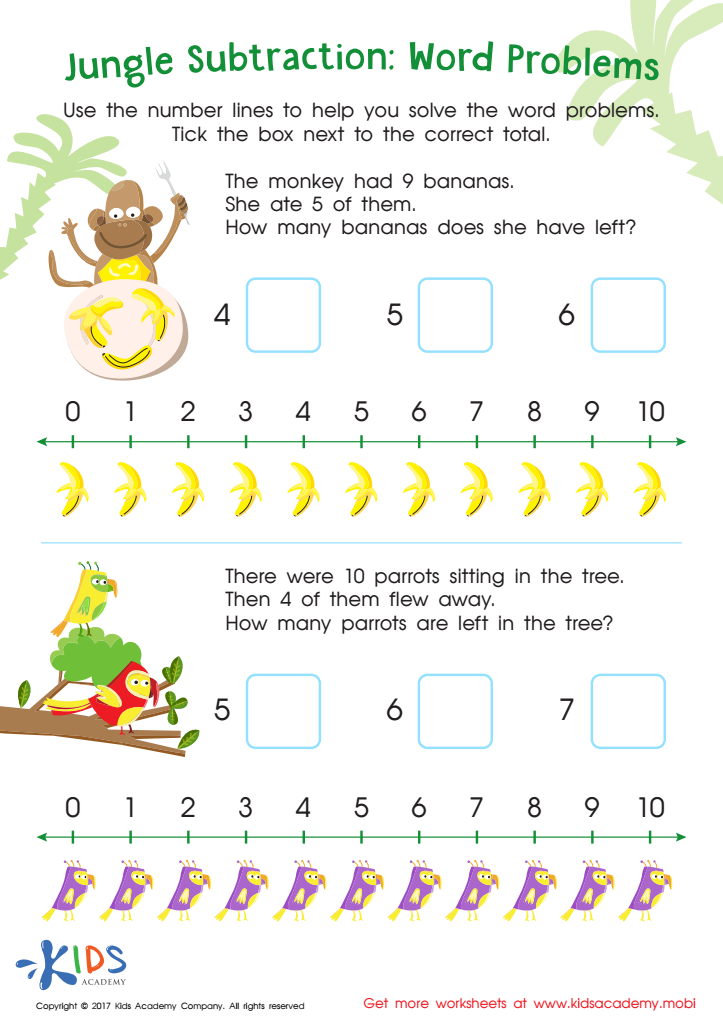
Jungle Subtraction Word Problems Substraction Worksheet
 Assign to My Students
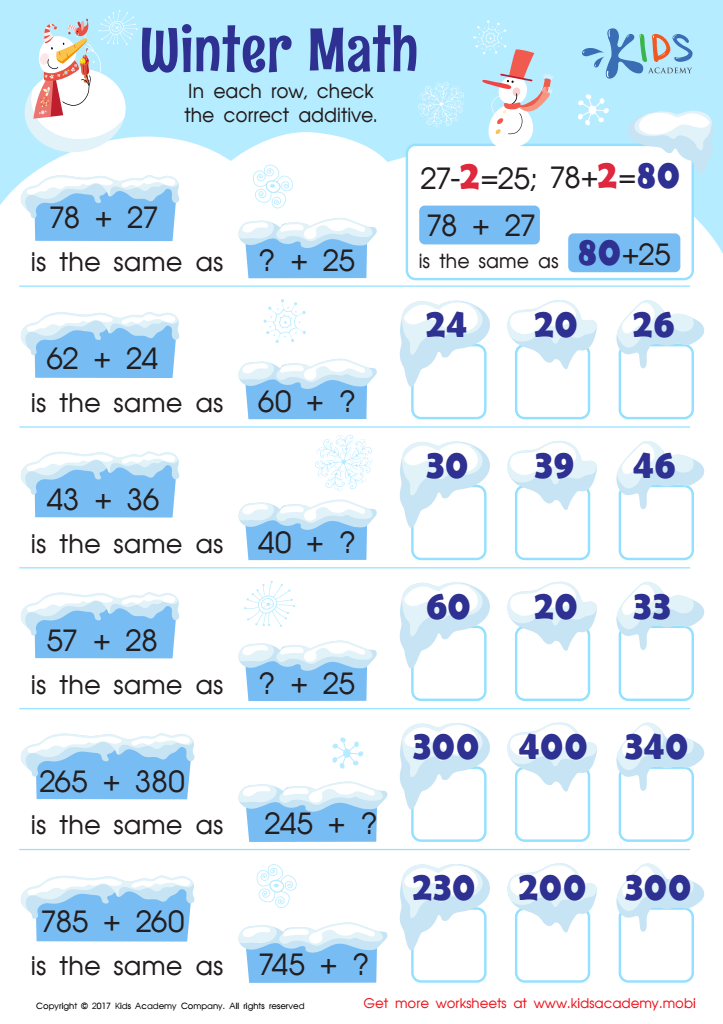
Free Addition Worksheet
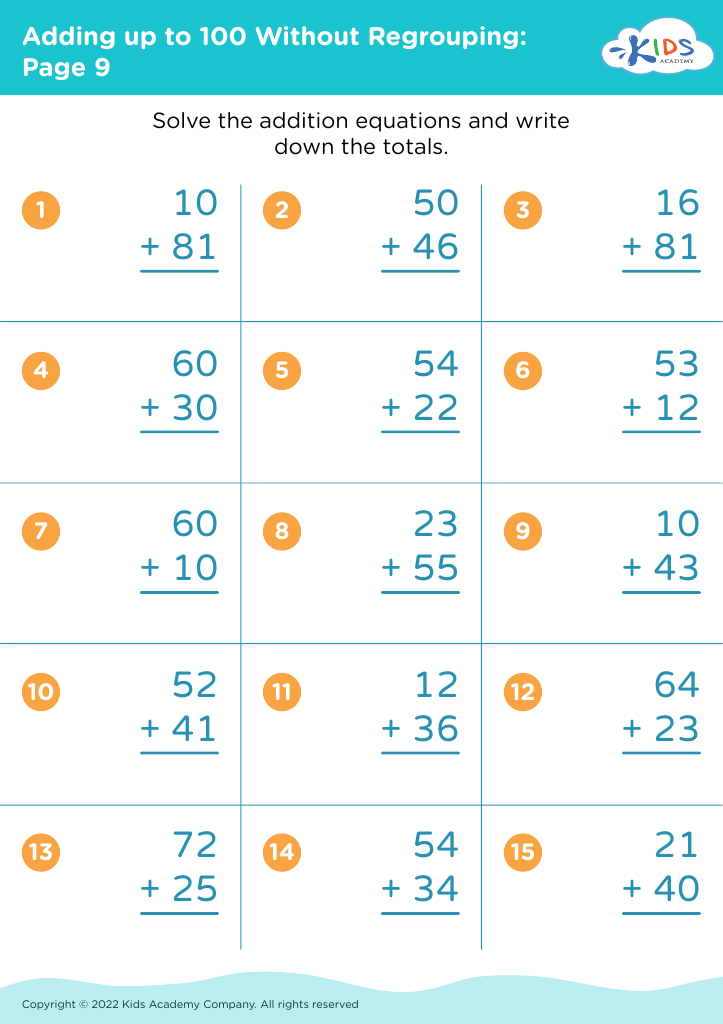







Mathematical reasoning is a crucial skill for children aged 7-9, as it lays the groundwork for their future academic success and problem-solving abilities. At this age, children are developing critical thinking and analytical skills, which are essential for making sense of mathematical concepts and real-world situations. Parents and teachers should care about fostering mathematical reasoning during these formative years, as it not only helps children understand the "how" and "why" behind mathematical operations, but it also encourages a positive attitude towards mathematics.
Moreover, strong mathematical reasoning aids in enhancing a child's ability to think logically and justify their thinking. This empowers them to approach problems methodically, fostering resilience and creativity in solving challenges both in math and beyond. It encourages children to explore various strategies for problem-solving, promotes the ability to communicate their thought processes effectively, and improves performance in not just math, but in other subjects that rely on reasoning and evidence-based thinking.
By supporting mathematical reasoning, parents and teachers can help cultivate a generation of learners who are not only proficient in math but equipped with the skills necessary to tackle complex problems in an increasingly technical world. Ultimately, this investment contributes to a holistic education that supports lifelong learning.








