Pattern identification Worksheets for Ages 7-9
7 filtered results
-
From - To
Enhance your child's critical thinking skills with our engaging Pattern Identification Worksheets designed specifically for ages 7-9! These worksheets feature a variety of fun activities that challenge young learners to recognize and extend patterns using shapes, colors, and numbers. By practicing pattern identification, children will develop essential problem-solving skills while having fun. Ideal for both home and classroom use, these worksheets help reinforce concepts learned in school, making learning enjoyable and effective. Encourage creativity and logical reasoning as your child navigates through colorful and interactive exercises. Start their journey towards mastery of patterns today with our ready-to-print worksheets!
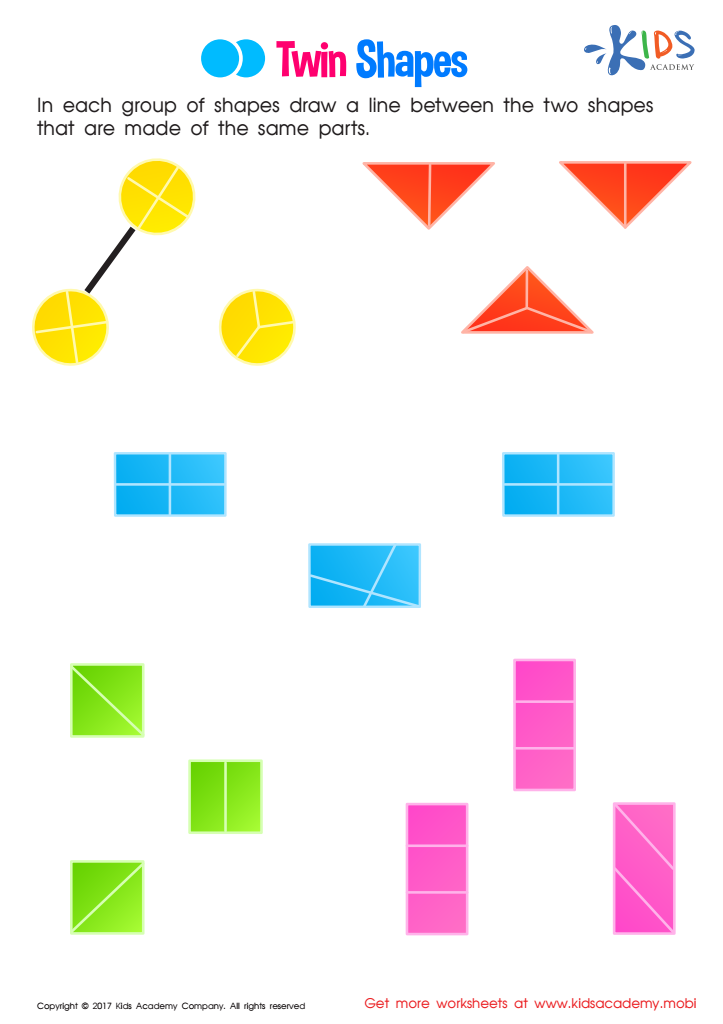
Twin Shapes Worksheet
 Assign to My Students
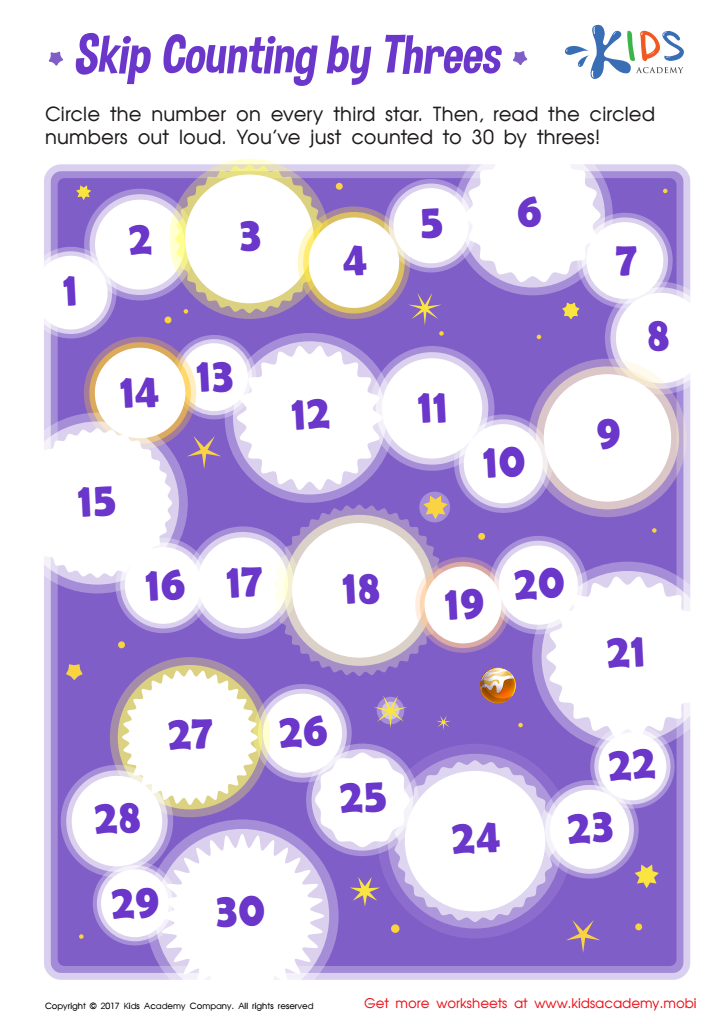
Skip Counting By Three Printable
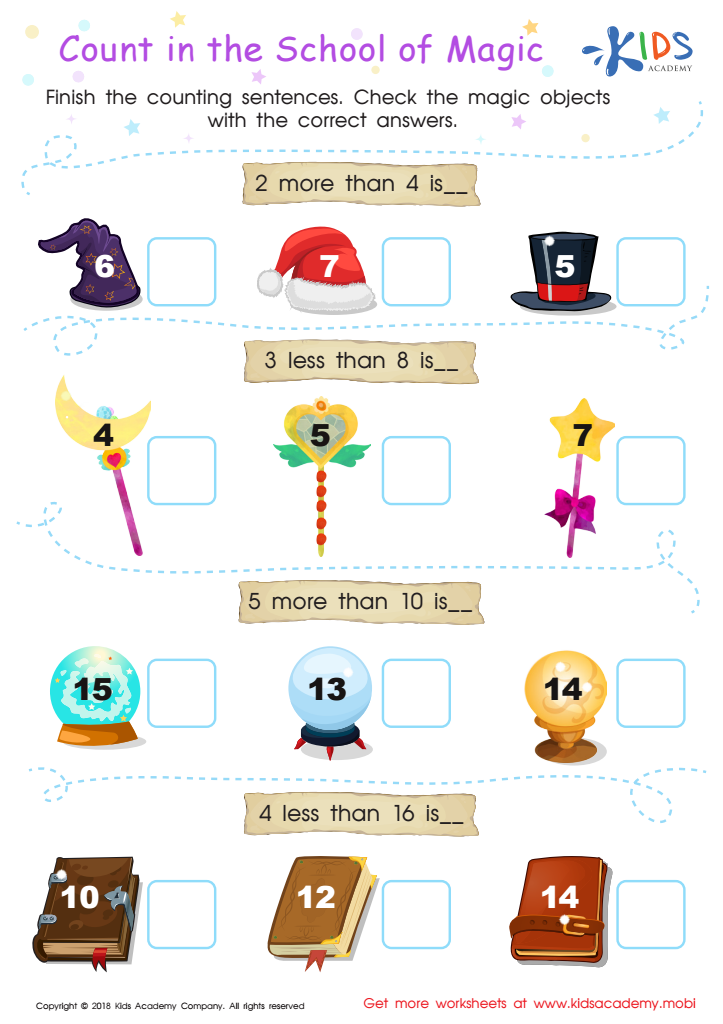
Count in the School of Magic Worksheet
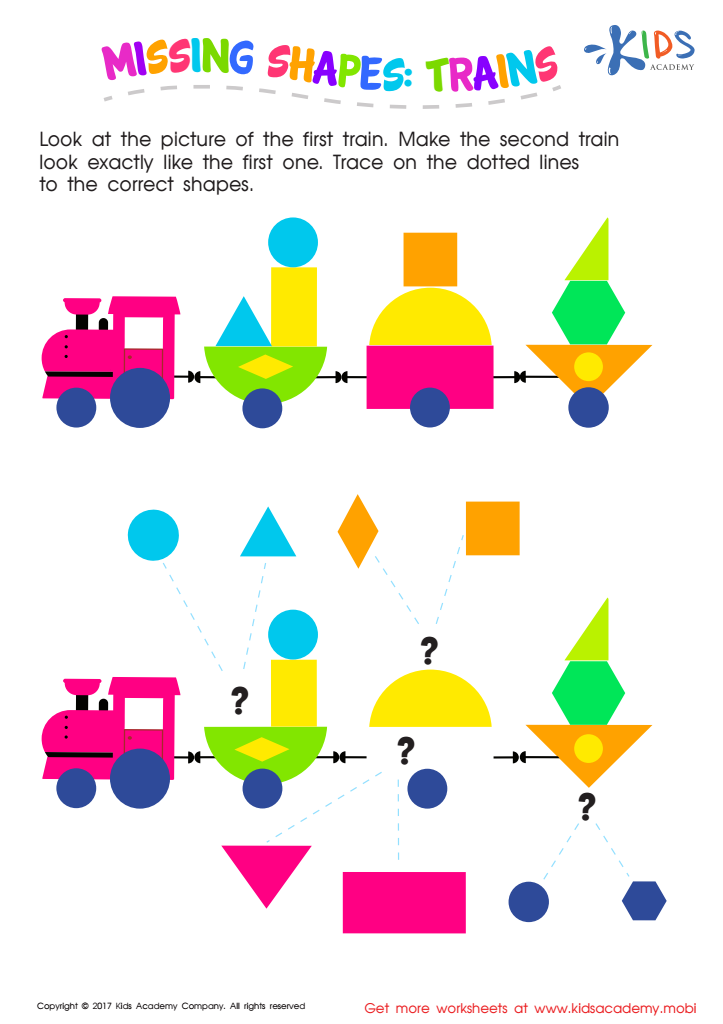
Missing Shapes: Trains Worksheet
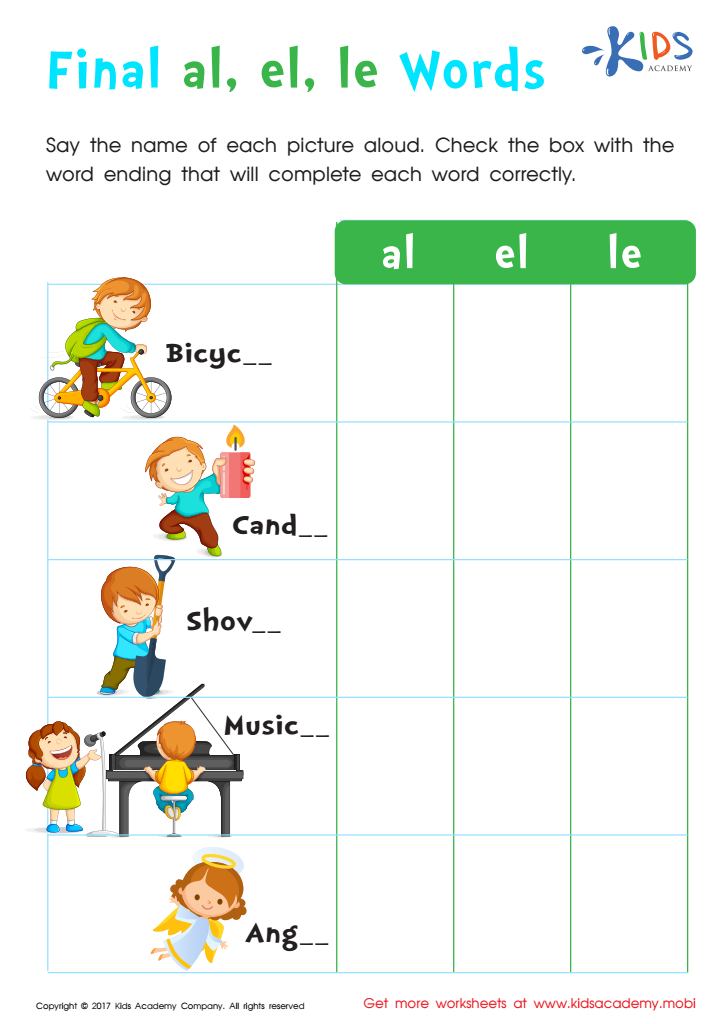
Spelling Words Ending with –le, –el and –al Worksheet








Pattern identification is a crucial skill for children aged 7-9, as it serves as the foundation for several cognitive and academic advancements. During these formative years, children begin to make connections between concepts, enabling them to develop critical thinking and problem-solving abilities. Recognizing patterns in numbers, shapes, and sequences supports mathematical skills, promoting a stronger grasp of topics like addition, multiplication, and geometry.
In addition, pattern identification aids in literacy development. Understanding sequences and structures in stories enhances reading comprehension, allowing children to make predictions and grasp narrative structures more effectively. It also fosters creativity; children who can identify patterns can think innovatively, apply learned concepts in new ways, and explore various solutions to problems.
Moreover, pattern recognition is essential in daily life, from identifying routines in activities to scientific inquiry and data analysis in the future. For instance, analyzing data patterns leads to informed decisions.
In summary, encouraging pattern identification not only builds critical academic skills but also fosters personal development and everyday reasoning. Teachers and parents should prioritize this skill, helping children navigate their world more adeptly and paving the way for lifelong learning.








