
Real-world application Worksheets for Ages 7-9
6 filtered results
Difficulty Level
Grade
Age
-
From - To
Subject
Activity
Standards
Discover our engaging Real-world Application Worksheets designed specifically for children ages 7-9. These interactive resources help bridge classroom learning with everyday experiences, empowering young learners to apply essential skills in practical situations. Our worksheets cover various subjects, encouraging critical thinking, problem-solving, and creativity while making connections to real life. From budgeting and measurement to cooking and planning, children will explore relatable scenarios that reinforce their knowledge and encourage independent learning. Perfect for home or classroom use, these worksheets make learning enjoyable and relevant, ensuring students grasp important concepts while having fun. Start cultivating essential life skills today!
Favorites
With answer key
Interactive
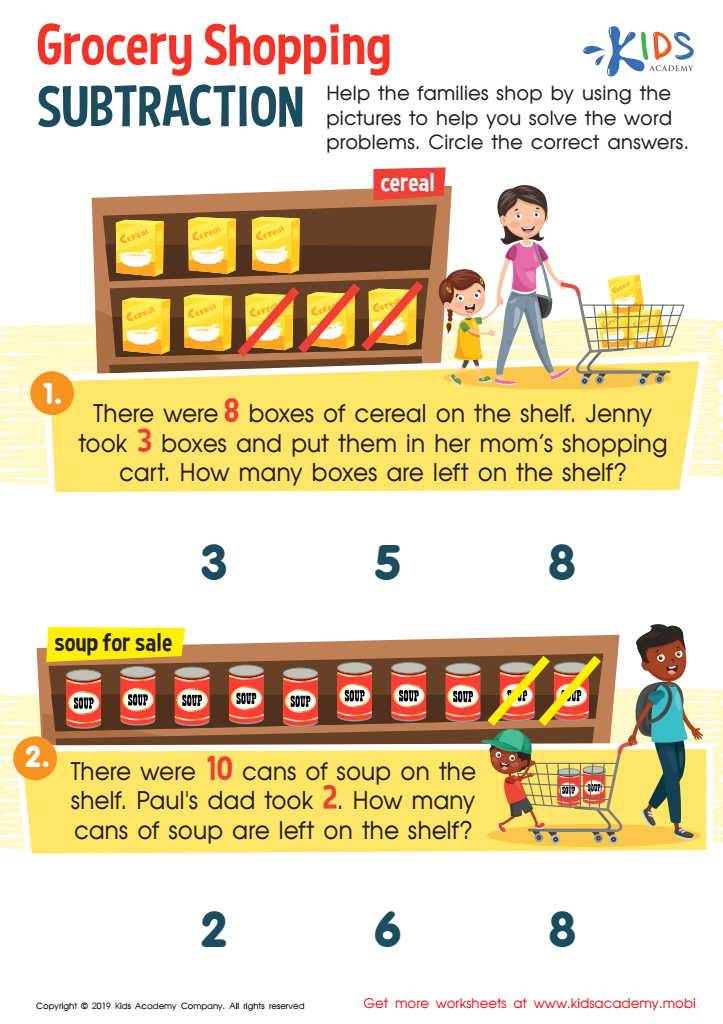
Grocery Shopping Subtraction Worksheet
Take your kids on a virtual grocery trip with this worksheet! Help them read the two word problems and use the pictures to solve them. Then, have them circle the correct answers. It's an easy, fun way to get kids comfortable with math while also getting them excited about grocery shopping!
 Assign to My Students
Grocery Shopping Subtraction Worksheet
Worksheet
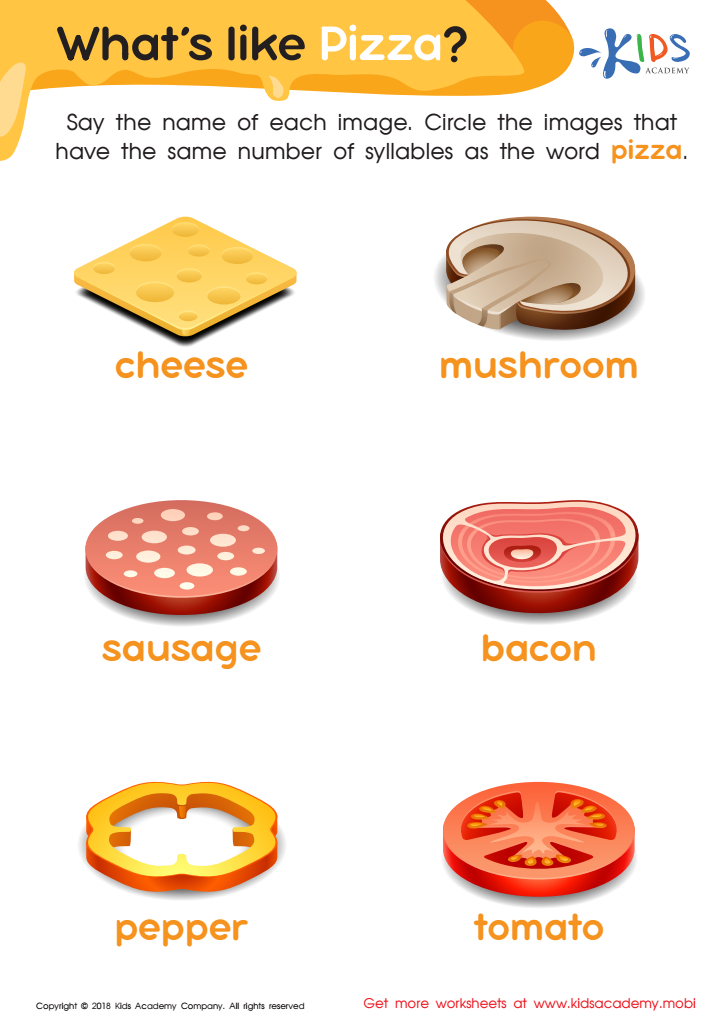
What's Like Pizza? Worksheet
Encourage your kids to exercise their minds with this pizza worksheet! Ask them to name the ingredients they like on their favourite pizzas. Then, help them circle the images that have the same number of syllables as 'pizza'. They'll have fun while learning too!
What's Like Pizza? Worksheet
Worksheet
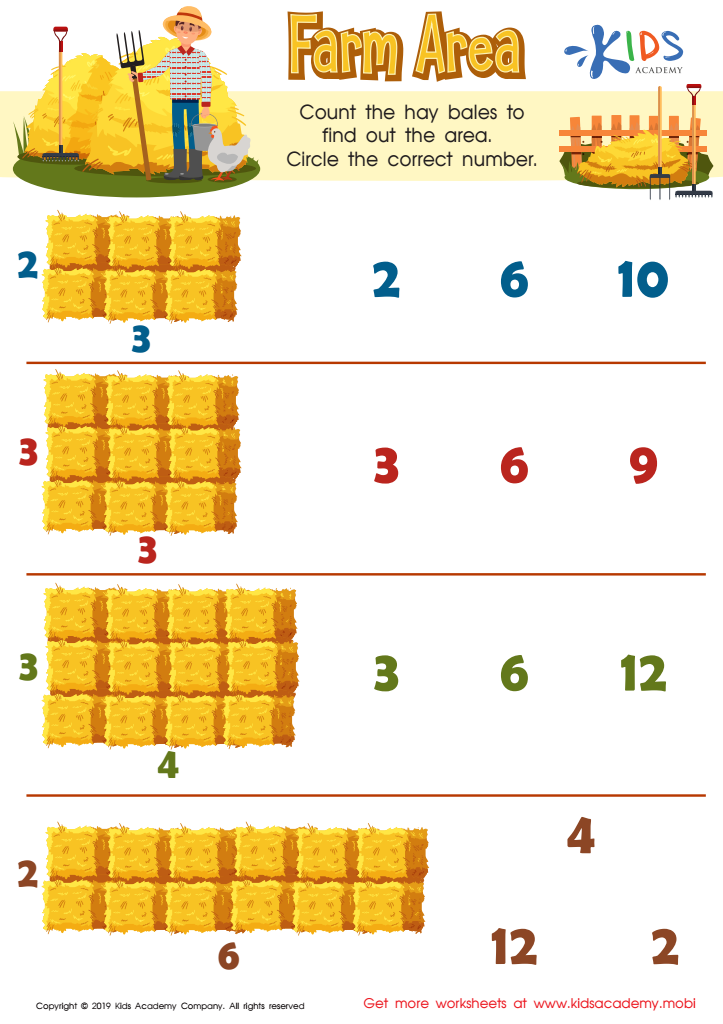
Farm Area Worksheet
Take your kids to a farm and ask them what their favorite part was! Show them this picture with hay bales and have them count them. Find the area then circle the correct number. It's a fun way to learn math and experience a farm!
Farm Area Worksheet
Worksheet
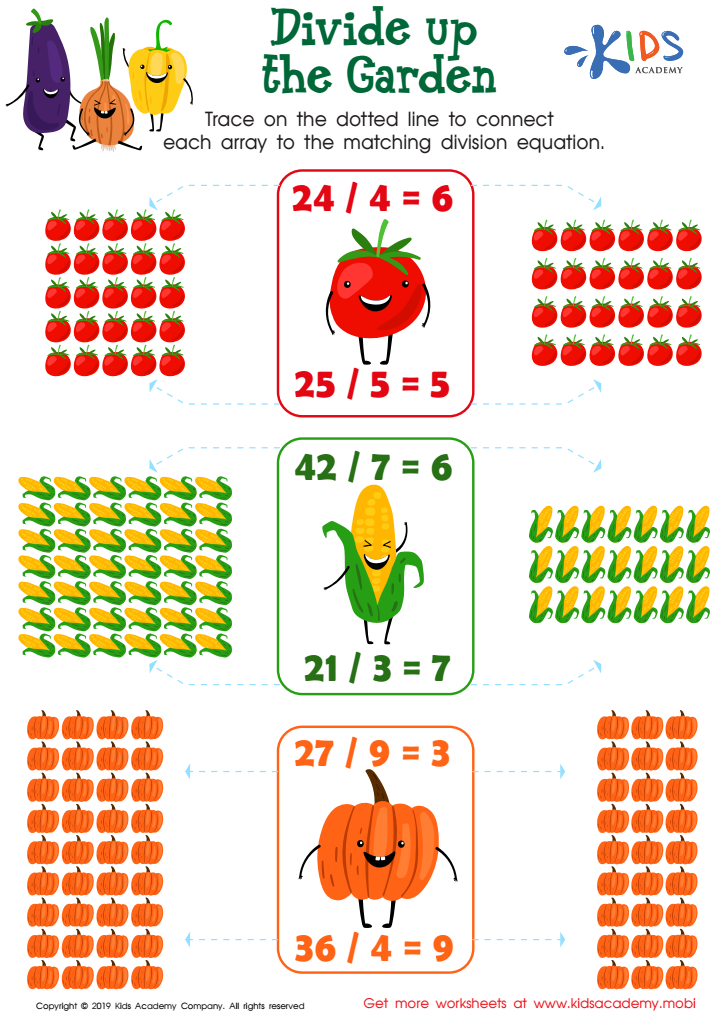
Divide up the Garden Worksheet
Dividing is simply grouping items into equal sets. This worksheet helps kids see division problems in array form. They'll match each equation with a picture group, using the lines provided. It's a great way for beginners to understand division more concretely.
Divide up the Garden Worksheet
Worksheet
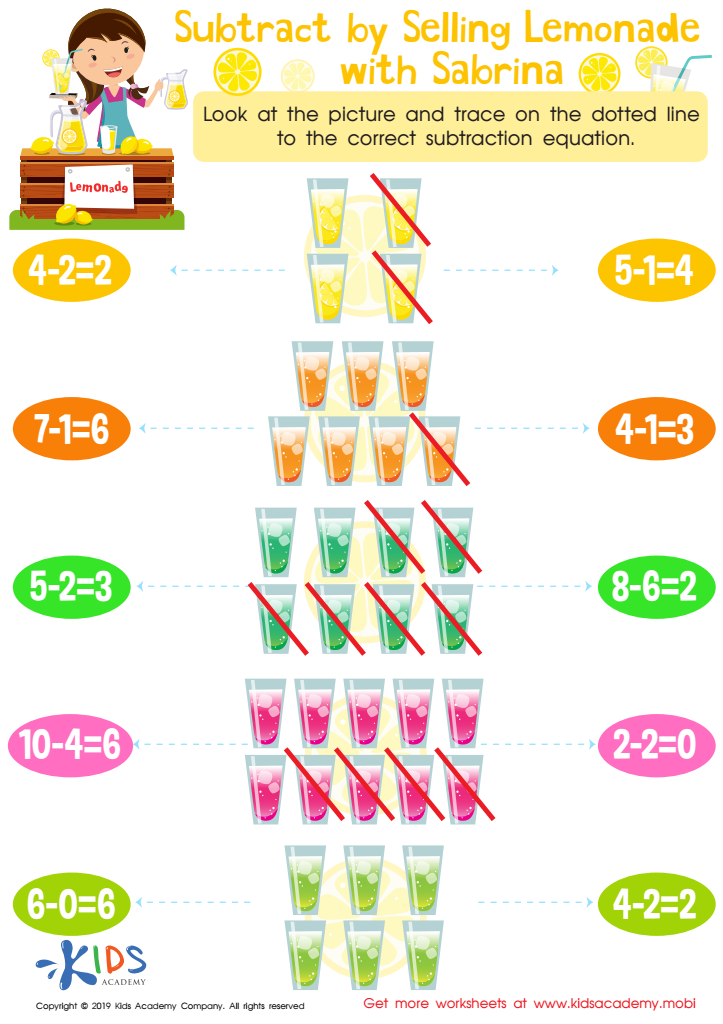
Subtract by Selling Lemonade with Sabrina Worksheet
Kids love running a lemonade stand! Help Sabrina serve up delicious lemonade while working on basic subtraction skills. Look at each picture and use the traceable lines to link them to the correct equations. Download this fun, easy PDF to help kids practice basic computation with success.
Subtract by Selling Lemonade with Sabrina Worksheet
Worksheet
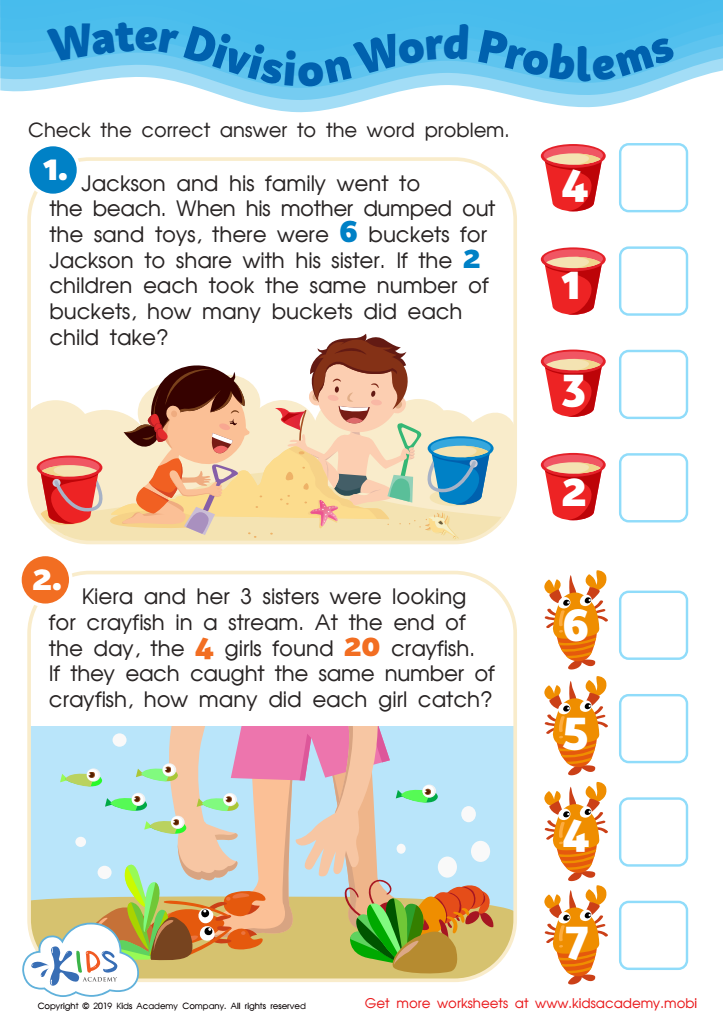
Water Division Word Problems Worksheet
Kids can sharpen their math skills with this fun PDF! They'll see pictures of friends at the beach, plus bold numbers and colorful pictures. All they need to do is read and understand the problem to find the answer - without even realizing they're doing division. A great way to make math enjoyable!
Water Division Word Problems Worksheet
Worksheet
Join Kids Academy for Free
Who is primarily going to use this learning content?




.jpg)
Parents and teachers should prioritize real-world applications of learning for children ages 7-9 because it enhances engagement, deepens understanding, and fosters essential life skills. At this developmental stage, children are naturally curious and eager to make sense of the world around them. Incorporating real-world context into lessons helps ground abstract concepts, making them relatable and easier to grasp. For instance, solving math problems using examples from shopping or cooking helps children see the practical use of mathematics.
Moreover, real-world applications encourage critical thinking and problem-solving. By presenting students with authentic scenarios, teachers cultivate a mindset of inquiry, prompting children to explore various solutions and develop their own reasoning processes. This hands-on learning approach enhances retention and boosts motivation, as children see their studies as more meaningful and applicable.
Additionally, understanding real-world applications nurtures skills necessary for future success, such as teamwork, communication, and adaptability. When students engage in projects that involve community service or environmental initiatives, they learn the value of responsibility and collaboration. Ultimately, instilling these skills at a young age prepares children not just for academic achievement, but also for becoming informed and active members of society. Emphasizing real-world connections lays a strong foundation for lifelong learning.








