
Recognizing numbers Worksheets for Ages 7-9
7 filtered results
Difficulty Level
Grade
Age
-
From - To
Subject
Activity
Standards
Welcome to our Recognizing Numbers Worksheets for Ages 7-9! These engaging and educational worksheets are designed to help young learners enhance their number recognition skills. Aimed at children aged 7 to 9, our resources offer a variety of fun and interactive activities that promote number identification, counting, and comparison. Our worksheets cater to different learning styles, ensuring every child can enjoy mastering numeracy concepts. Perfect for classroom use or at-home learning, these printable worksheets provide essential practice to strengthen foundational math skills. Explore our collection today and inspire your child’s love for numbers while fostering their confidence in math!
Favorites
With answer key
Interactive
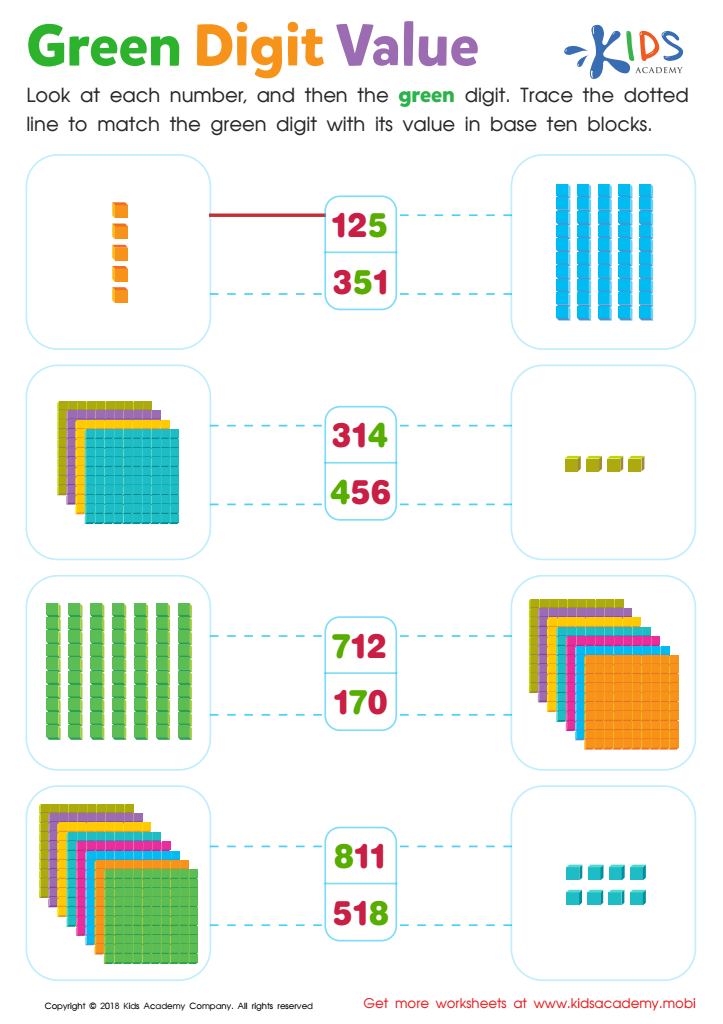
Green Digit Value Worksheet
Math can be stressful for kids. But you can help relieve their anxiety with this simple worksheet. It gives them practice to help them prepare for tougher tasks. Have your child look at the numbers and green digit, then trace the dotted lines to match the green digit with its value in base ten blocks. This will help make math more manageable.
 Assign to My Students
Green Digit Value Worksheet
Worksheet
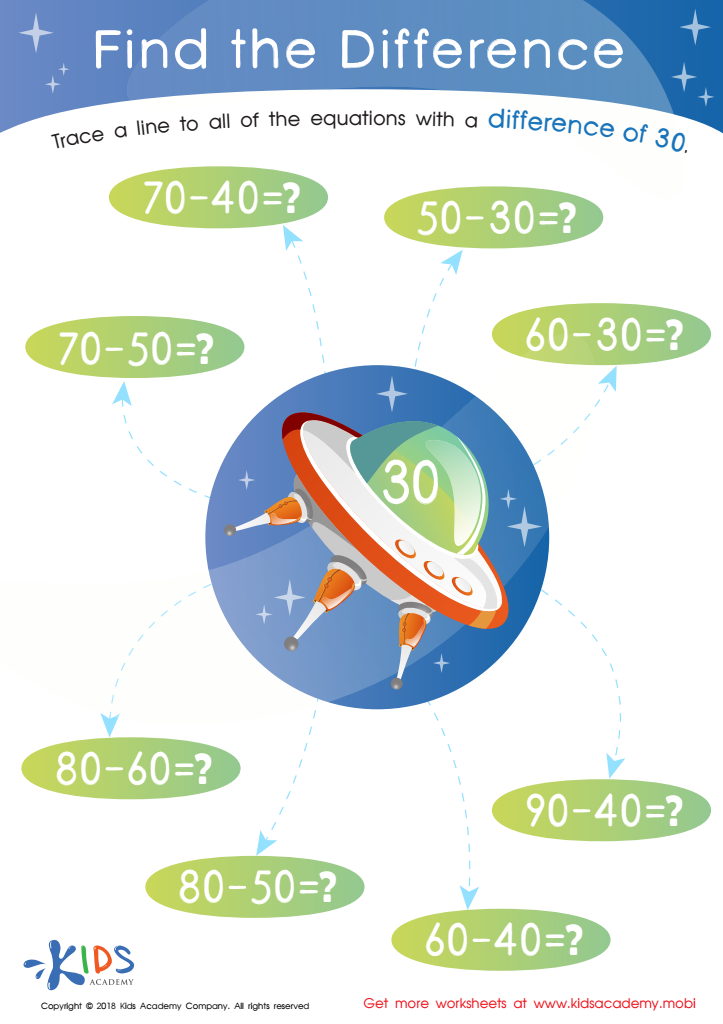
Find The Difference Worksheet
Kindergarteners need to work out subtraction problems and get the right answers. To help them, point to the alien ship with '30' in it on the worksheet. Get them to follow a line to the equations with a difference of 30. Solving these simple subtraction problems will give the answers.
Find The Difference Worksheet
Worksheet
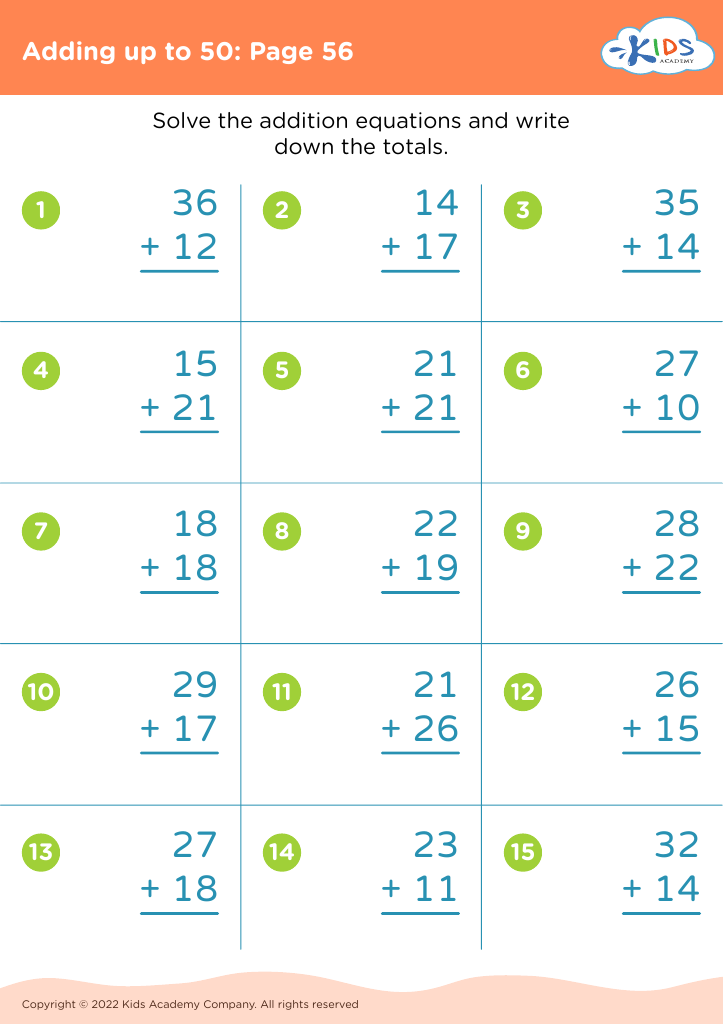
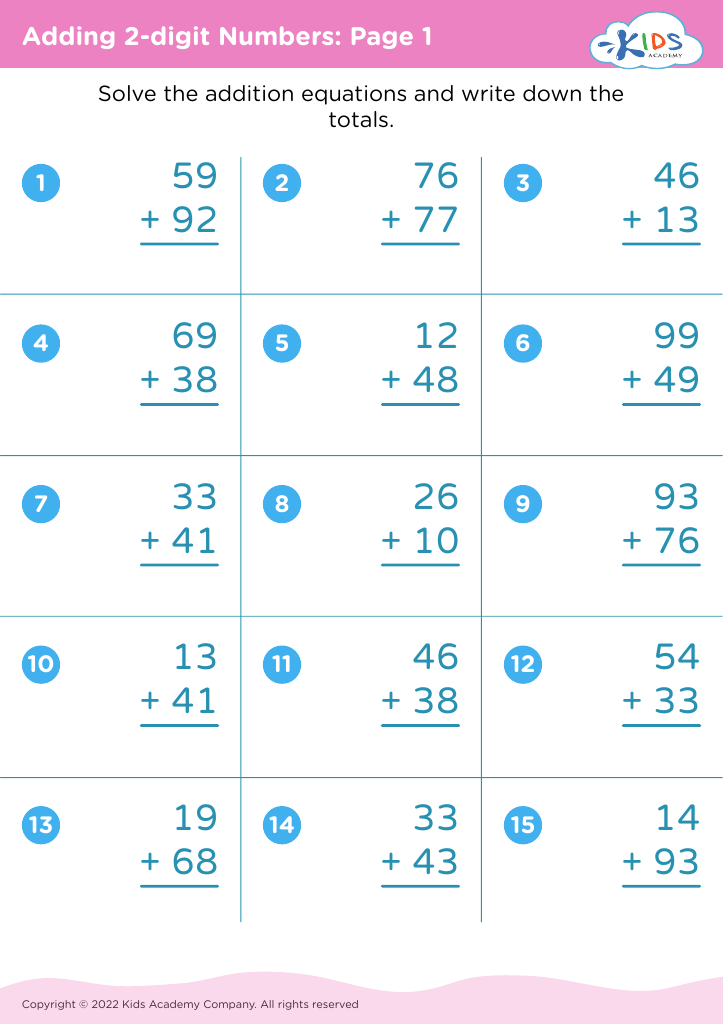
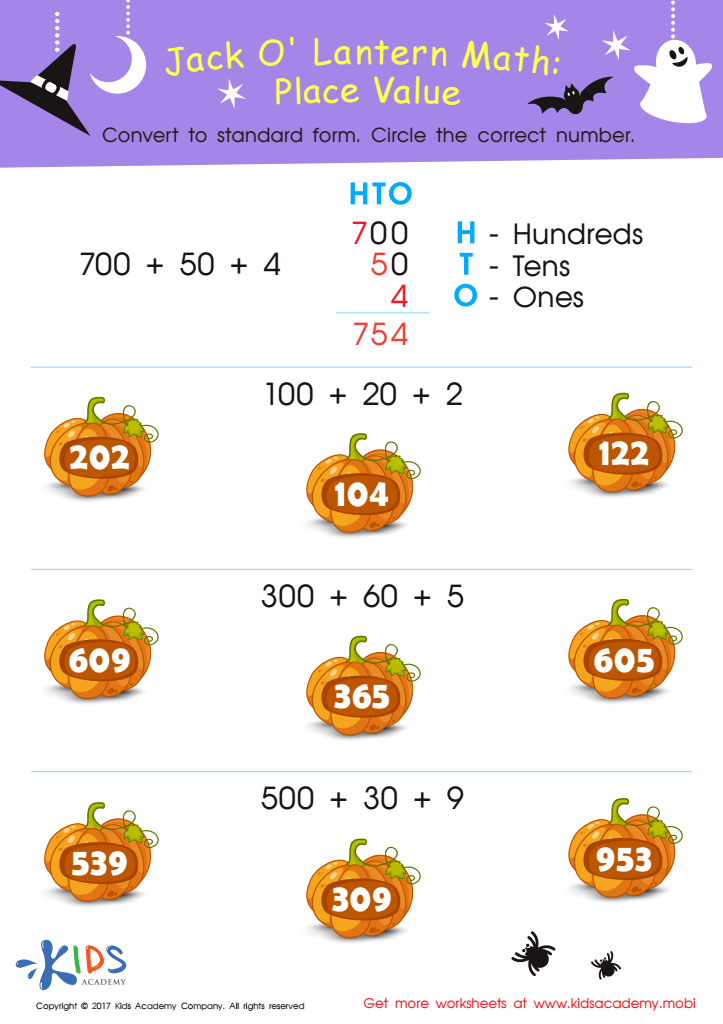
Free Place Value Worksheet
This Halloween-themed worksheet helps children practice converting equations to standard form and understand place value for better problem-solving. Download this free PDF for a fun way to do it!
Free Place Value Worksheet
Worksheet
Join Kids Academy for Free
Who is primarily going to use this learning content?








Recognizing numbers is a foundational skill for ages 7-9, as it forms the basis for more complex mathematical concepts. At this age, children are transitioning from basic counting to developing a deeper understanding of numbers and their relationships. Parents and teachers should care about fostering this skill because it greatly influences a child’s future academic success.
Firstly, number recognition enhances a child’s confidence in math, encouraging them to engage more actively in their learning. Mastery of numbers allows students to tackle addition, subtraction, and eventually multiplication and division with ease, paving the way for higher-level problem-solving skills.
Additionally, recognizing numbers is pivotal for real-life applications, such as telling time, handling money, and understanding data in everyday situations. This foundational skill also links to other subjects like science and literacy, where numerical understanding is often required.
Moreover, recognizing numbers aids in developing critical thinking and cognitive abilities. Developing this skill in early years increases a child’s preparation for academic challenges ahead, fosters their analytical thinking, and nurtures perseverance.
In summary, supporting number recognition during this critical age group is essential for a child's cognitive development and their overall confidence in their ability to learn and succeed in school and beyond.








