Understanding food chains Worksheets for Ages 7-9
3 filtered results
-
From - To
Explore the fascinating world of ecosystems with our "Understanding Food Chains Worksheets" designed for kids aged 7-9! These engaging and interactive worksheets introduce young learners to the essential components of food chains, including producers, consumers, and decomposers. Through fun activities and colorful illustrations, children will develop critical thinking skills and comprehend the interconnectedness of organisms within their environments. Perfect for classroom use or at-home learning, these resources encourage exploration and curiosity about nature. Foster your child's understanding of biological systems and promote environmental awareness with our thoughtfully crafted worksheets. Dive into a world of learning and discovery today!
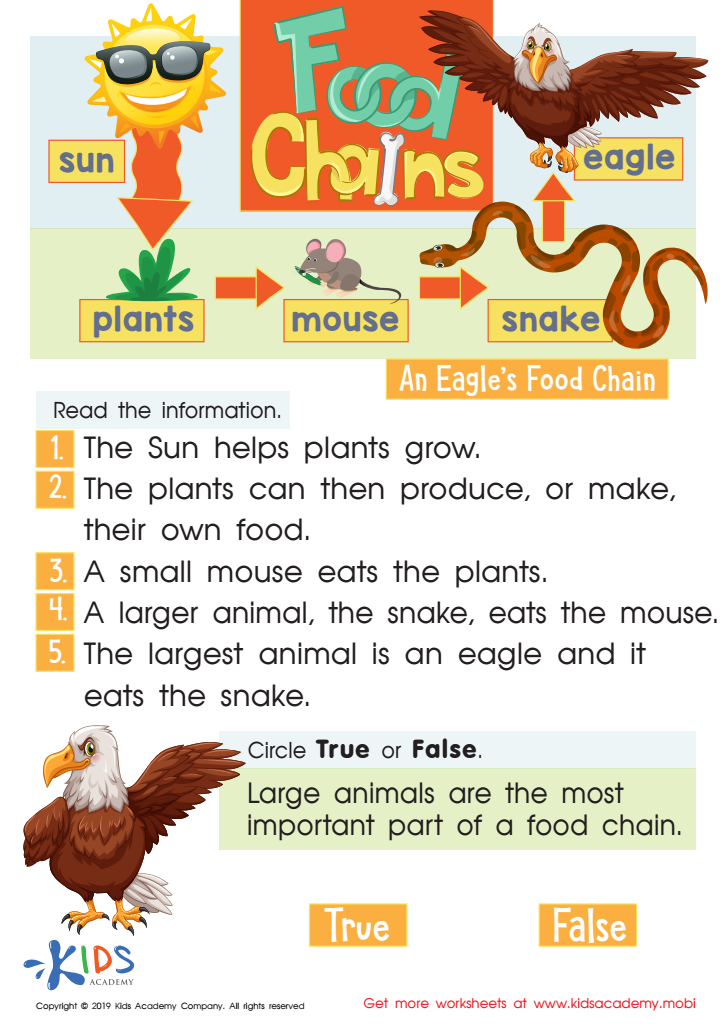
Food Chains Worksheet
 Assign to My Students
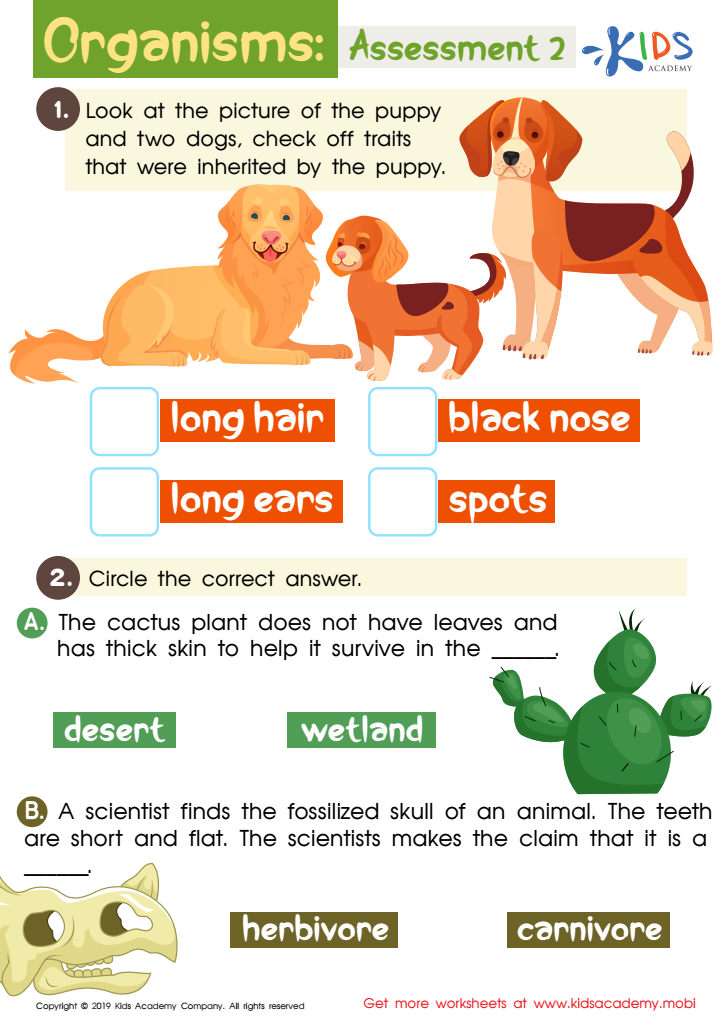
Organisms: Assessment 2 Worksheet
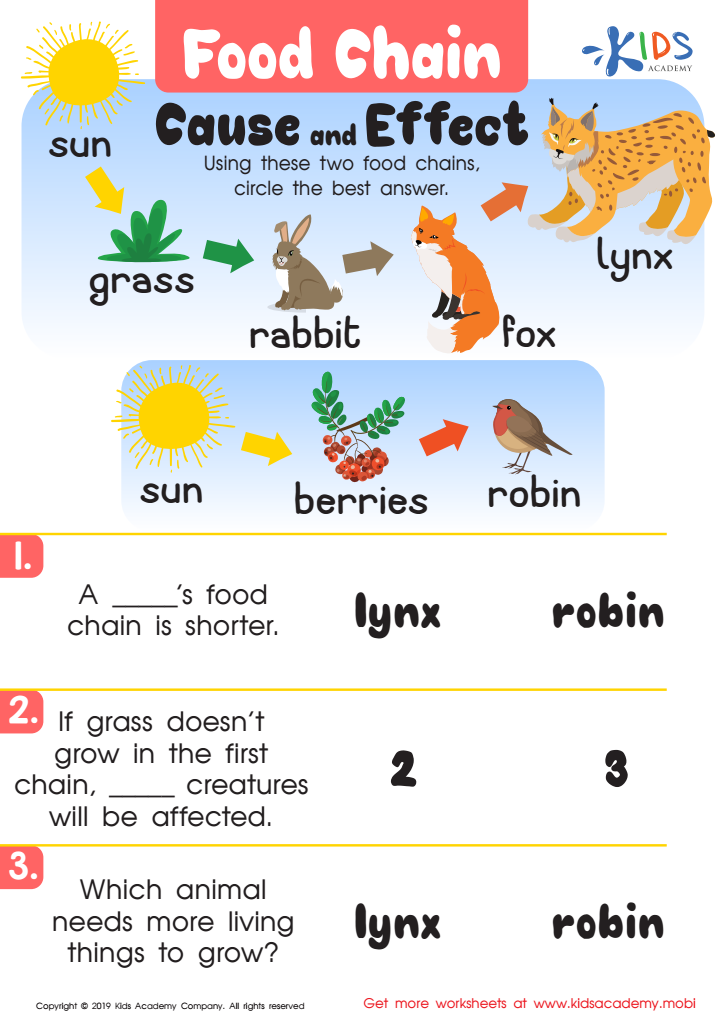
Food Chain Cause Worksheet







Understanding food chains is crucial for children aged 7-9 as it lays the foundation for their comprehension of ecosystems and the interdependence of living organisms. During this developmental stage, kids are naturally curious about the world around them, and learning about food chains introduces them to concepts like producers, consumers, and decomposers. This knowledge helps them appreciate the role each species plays in maintaining balance in nature.
Moreover, grasping food chains fosters awareness of environmental issues, encouraging young minds to think critically about ecosystem health. By understanding how energy is transferred—from plants to herbivores to carnivores—children will recognize the impact of pollution, habitat destruction, and climate change on food sources and biodiversity.
Involving parents and teachers in this educational journey reinforces critical thinking, nurtures collaboration, and cultivates a sense of responsibility towards the environment. Discussions about food chains can lead to captivating activities such as nature walks, projects, or even school gardens, enhancing learning through hands-on experience.
Ultimately, instilling an understanding of food chains not only enriches children’s knowledge about nature but engages them in important discussions about sustainability—shaping them into informed and conscientious future stewards of our planet.








