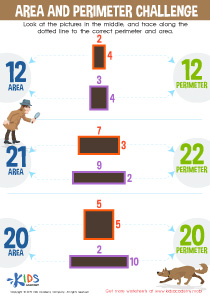
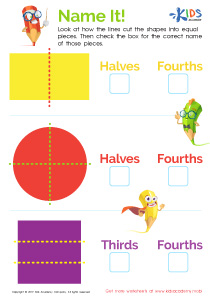
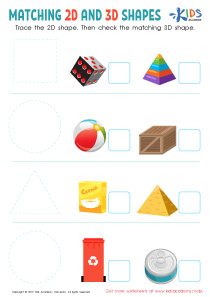
Visual discrimination 2D Shapes Worksheets for Ages 7-9
4 filtered results
-
From - To
Enhance your child's learning with our engaging Visual Discrimination 2D Shapes Worksheets designed for ages 7-9! These worksheets focus on improving visual perception skills by challenging students to identify, compare, and differentiate various 2D shapes. Ideal for classroom use or at-home practice, our resources promote critical thinking and problem-solving abilities. With an array of fun activities, children will build confidence in recognizing shapes, fostering essential math foundations. Explore our curated collection and watch your child excel in math while having fun with shapes! Equip them with the tools needed for academic success today. Enjoy effortless learning at Kids Academy!
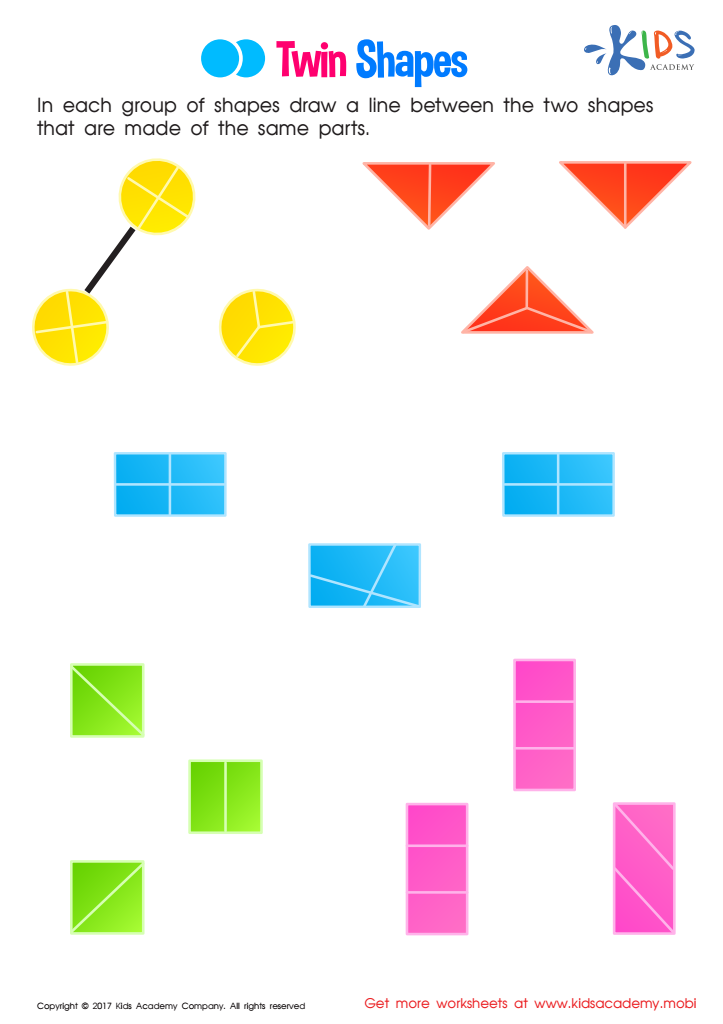
Twin Shapes Worksheet
 Assign to My Students











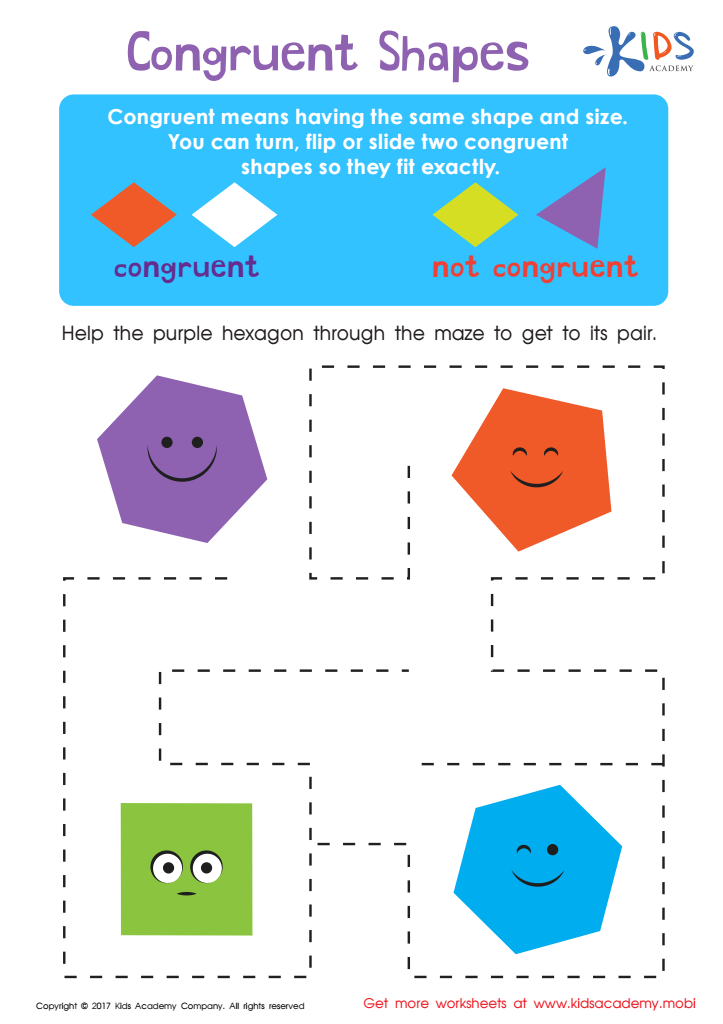
Congruent Shapes Worksheet
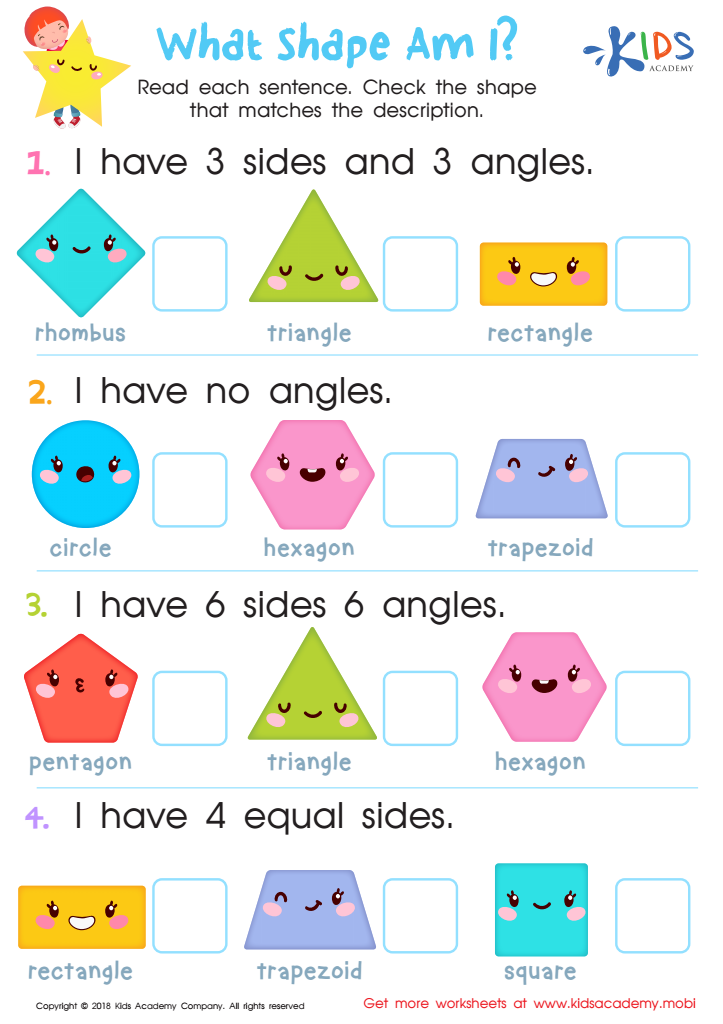
What Shape Am I? Worksheet
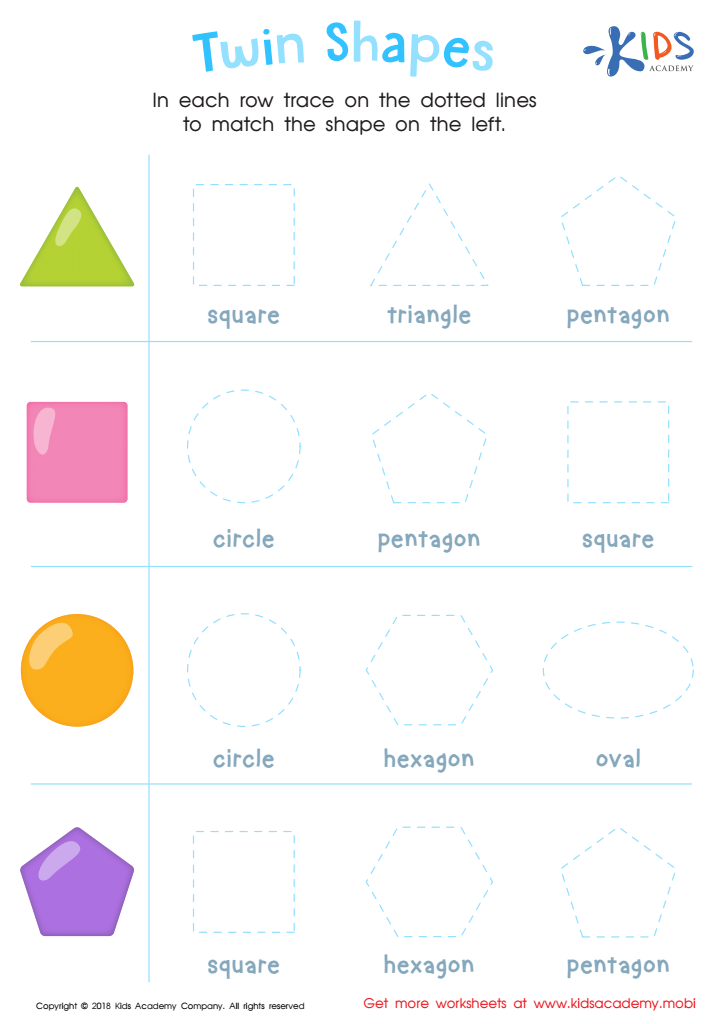
Twin Shapes Dot-to-Dot Worksheet








Visual discrimination of 2D shapes is a foundational skill essential for children ages 7-9, as it plays a pivotal role in their overall cognitive development and academic success. At this age, students encounter various subjects like math, art, and reading, where recognizing and differentiating shapes has practical applications.
Understanding 2D shapes enhances spatial awareness, which is crucial for solving mathematical problems, especially in geometry. Children learn to identify shapes, understand their properties, and recognize patterns, laying the groundwork for higher-level mathematical concepts.
Additionally, visual discrimination aids in reading development. Children who can differentiate shapes often find it easier to recognize letters and words, as many letters contain specific shapes. This skill directly influences their literacy progress.
Moreover, fostering strong visual discrimination skills encourages problem-solving and critical thinking. When students can identify and analyze shapes in different orientations and contexts, they develop transferable skills that are vital in both academic and everyday scenarios.
Ultimately, investing in the development of visual discrimination in 2D shapes enables young learners to build confidence, creativity, and essential skills that support their academic journey. For parents and teachers, nurturing this ability not only boosts children's learning but also prepares them for future success in various fields.