Filters

19 filtered results

Clear all filters
Favorites
With answer key
Interactive

19 filtered results

Difficulty Level

Grade


Boost your child's addition skills with our "Improve Counting Skills Adding up to 100 Worksheets" for ages 7-9. Tailored to enhance numerical fluency, these colorful worksheets feature engaging exercises that make learning fun. Perfect for honing addition within 100, the activities will advance your child's arithmetic abilities, foster confidence in math, and set a strong foundation for future mathematical success. Ideal for classroom use or at-home practice, our resources are designed to align with educational standards. Propel your child's counting and adding proficiency to new heights with our expertly crafted, easy-to-follow worksheets.
Check out this FREE Trial Lesson on Adding up to 100 for age 7-9!

T

Favorites
With answer key
Interactive
  • 7-9
  • Improve counting skills
  • Adding up to 100
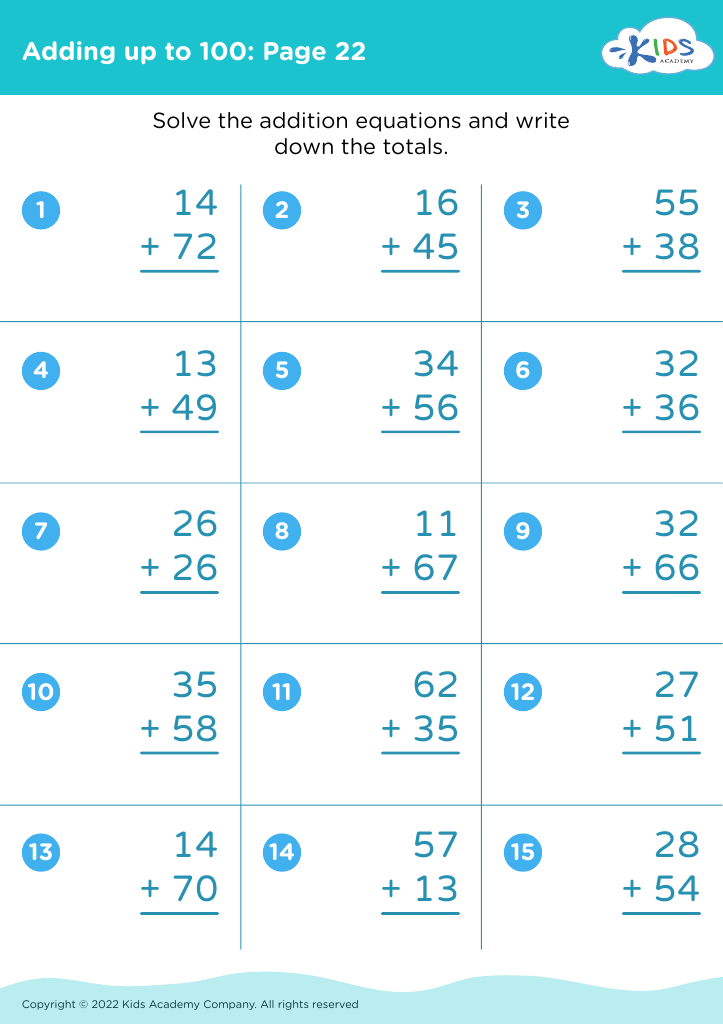
Adding up to 100: Page 22

Adding up to 100: Page 22

Adding up to 100: Page 22
Worksheet
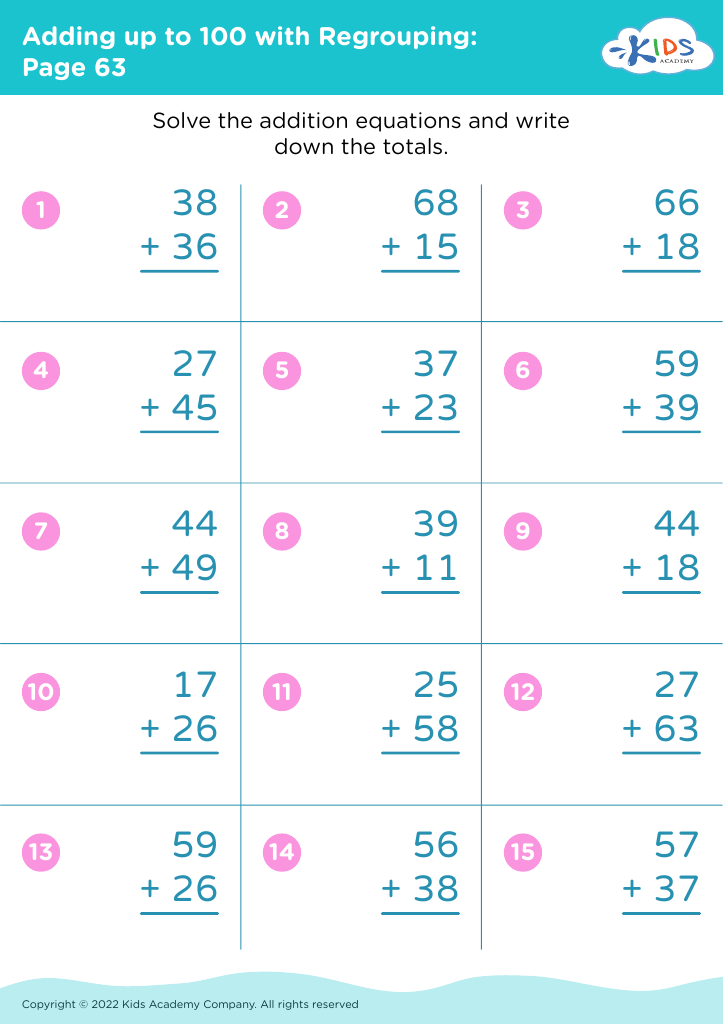
Adding up to 100 with Regrouping: Page 63
Worksheet
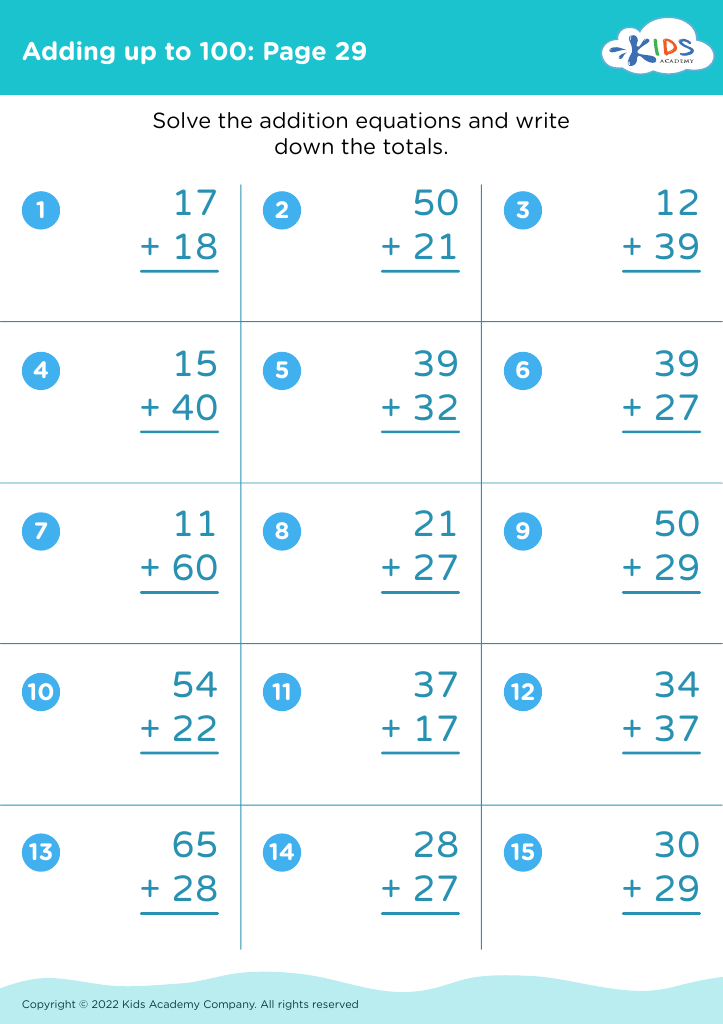
Adding up to 100: Page 29

Adding up to 100: Page 29

Adding up to 100: Page 29
Worksheet
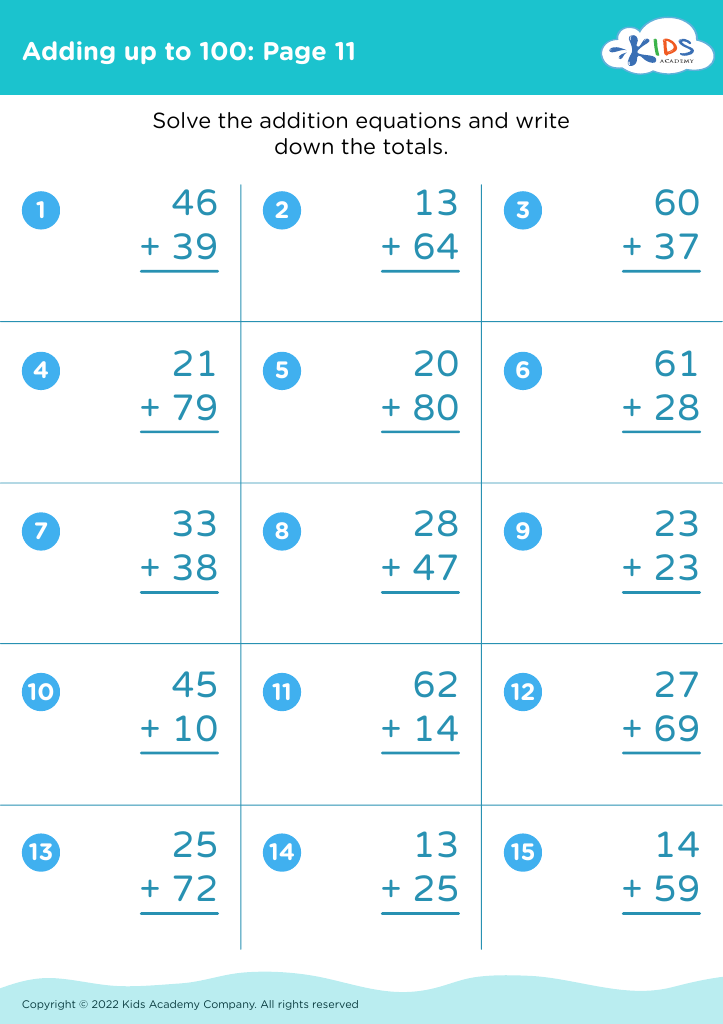
Adding up to 100: Page 11

Adding up to 100: Page 11

Adding up to 100: Page 11
Worksheet
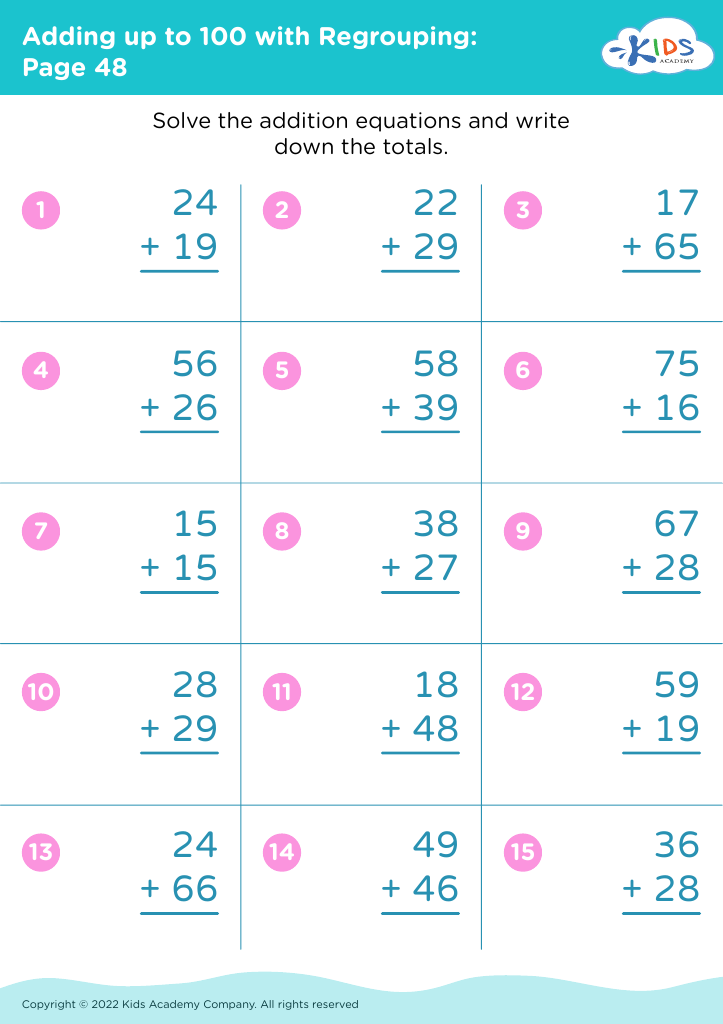
Adding up to 100 with Regrouping: Page 48
Worksheet
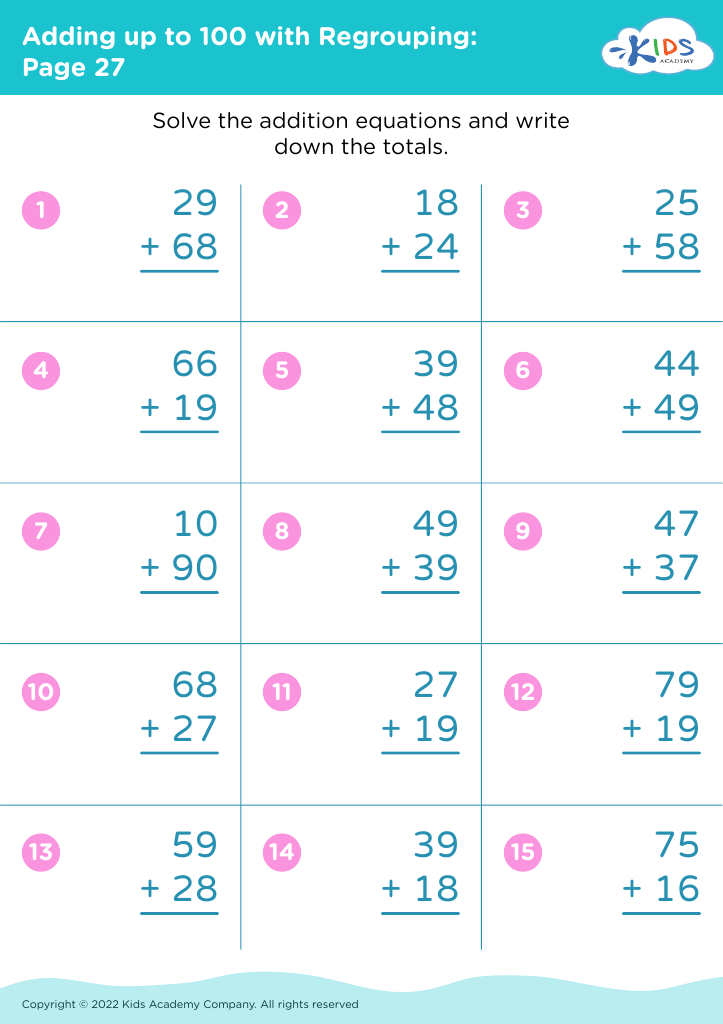
Adding up to 100 with Regrouping: Page 27
Worksheet
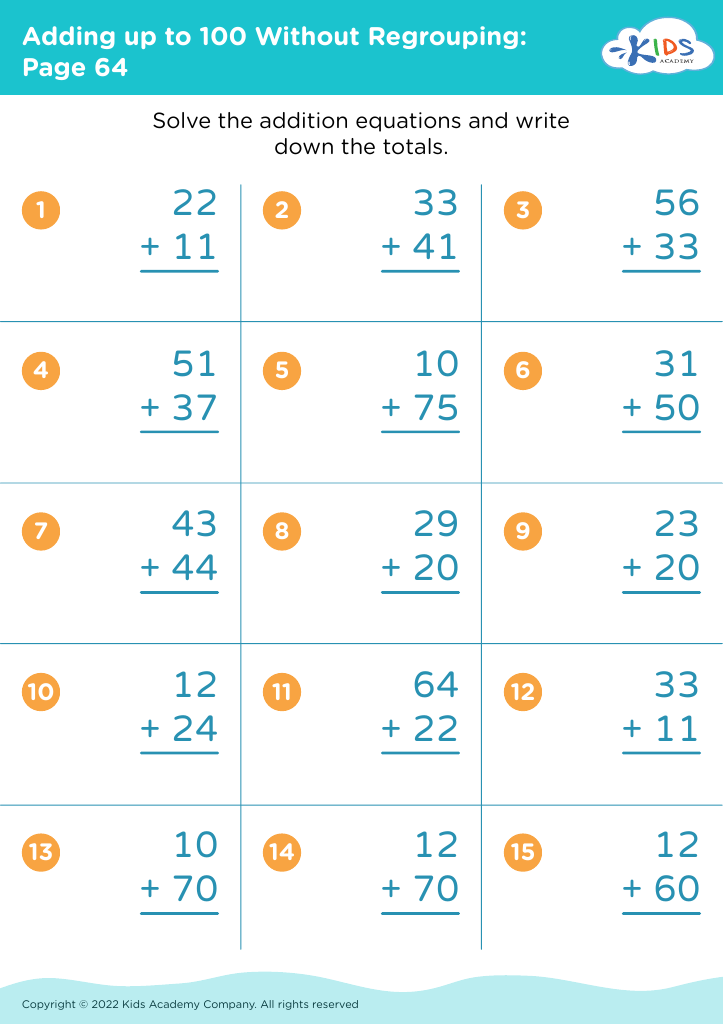
Adding up to 100 Without Regrouping: Page 64
Worksheet
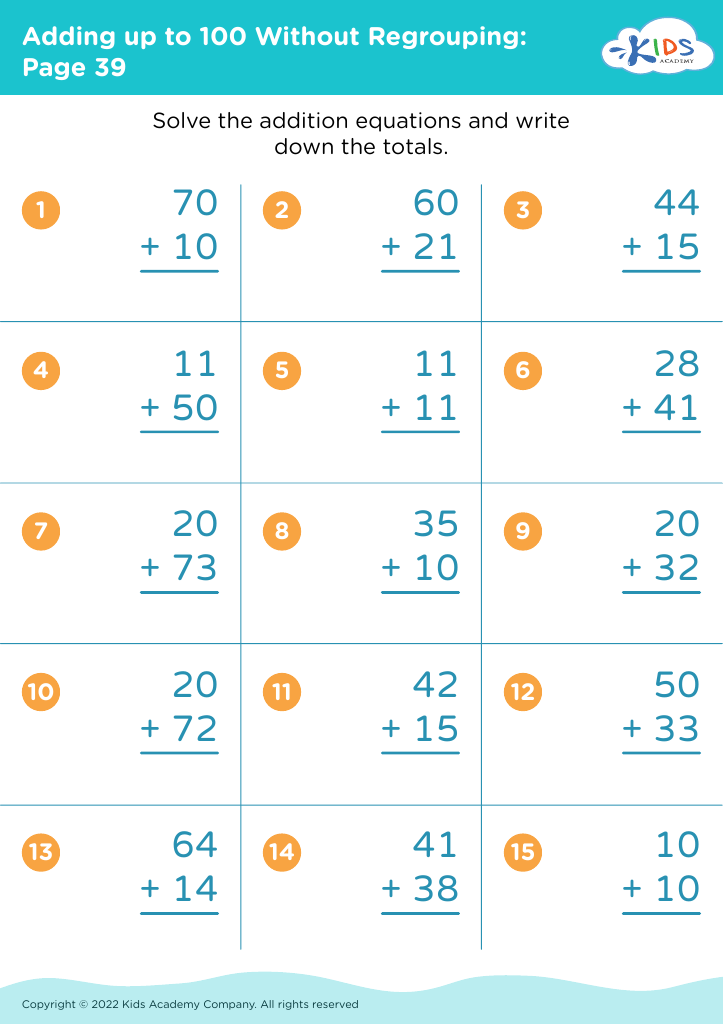
Adding up to 100 Without Regrouping: Page 39
Worksheet
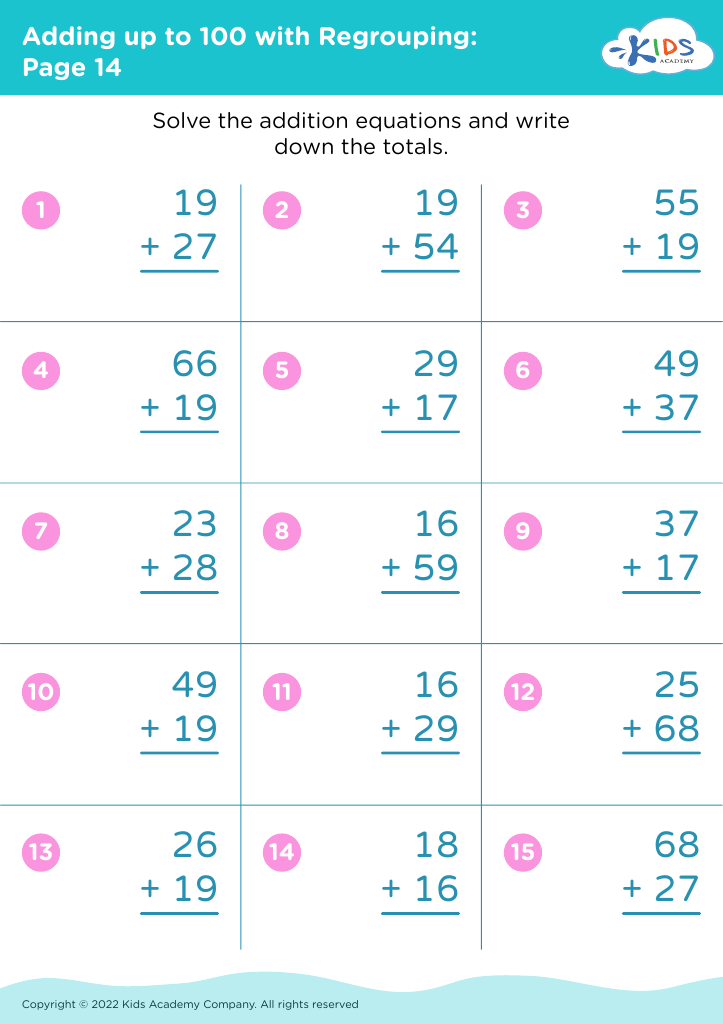
Adding up to 100 with Regrouping: Page 14
Worksheet
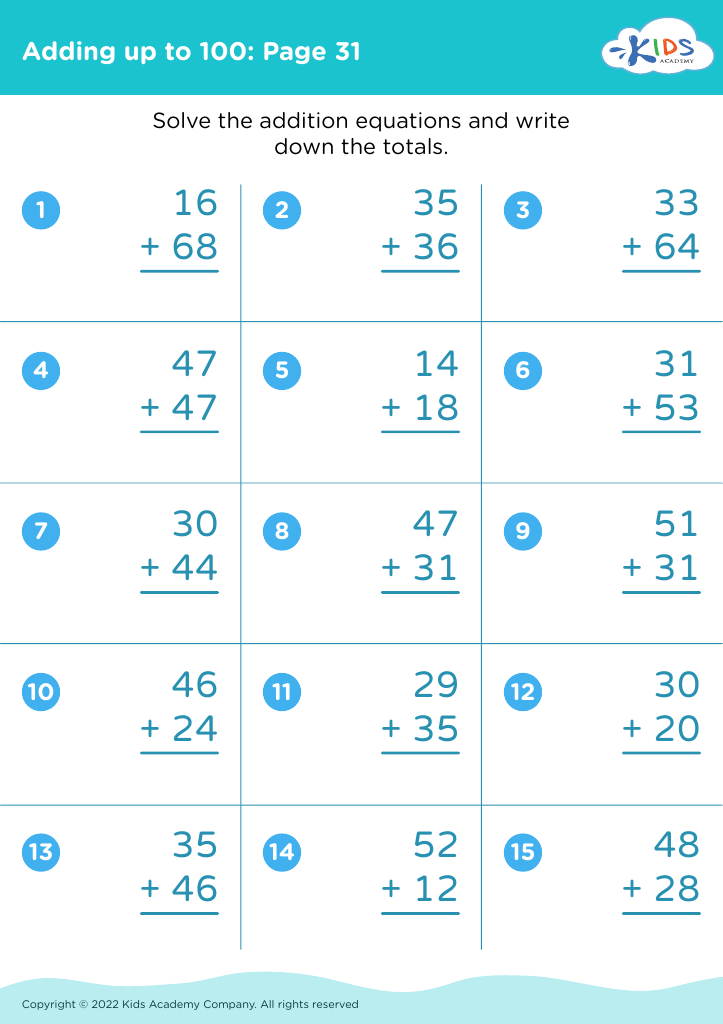
Adding up to 100: Page 31

Adding up to 100: Page 31

Adding up to 100: Page 31
Worksheet
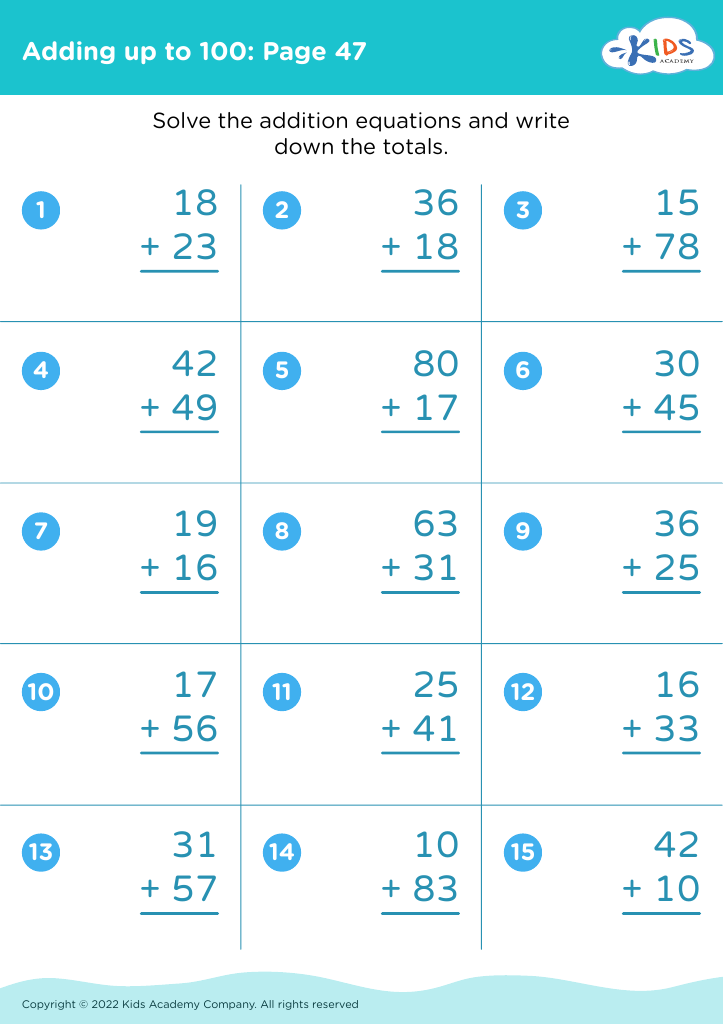
Adding up to 100: Page 47

Adding up to 100: Page 47

Adding up to 100: Page 47
Worksheet
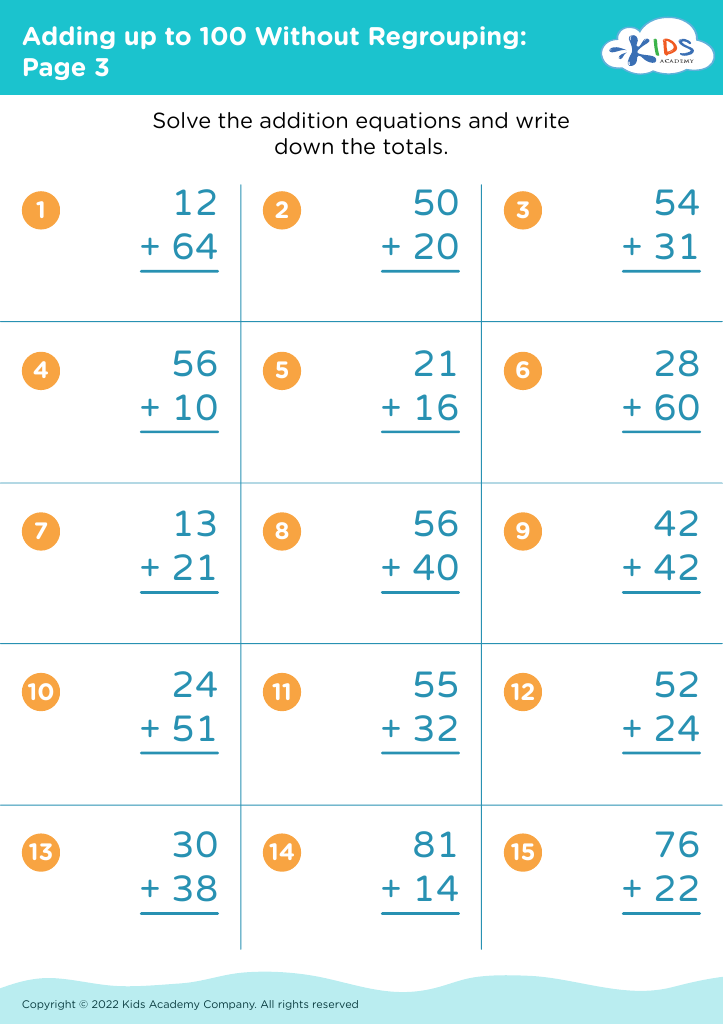
Adding up to 100 Without Regrouping: Page 3
Worksheet
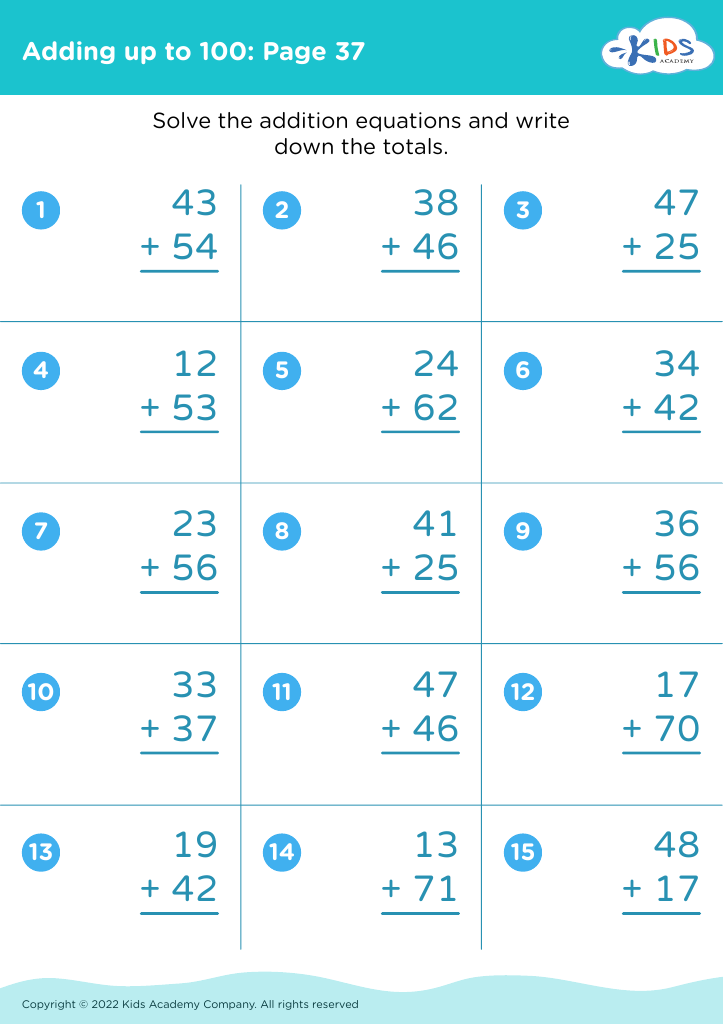
Adding up to 100: Page 37

Adding up to 100: Page 37

Adding up to 100: Page 37
Worksheet
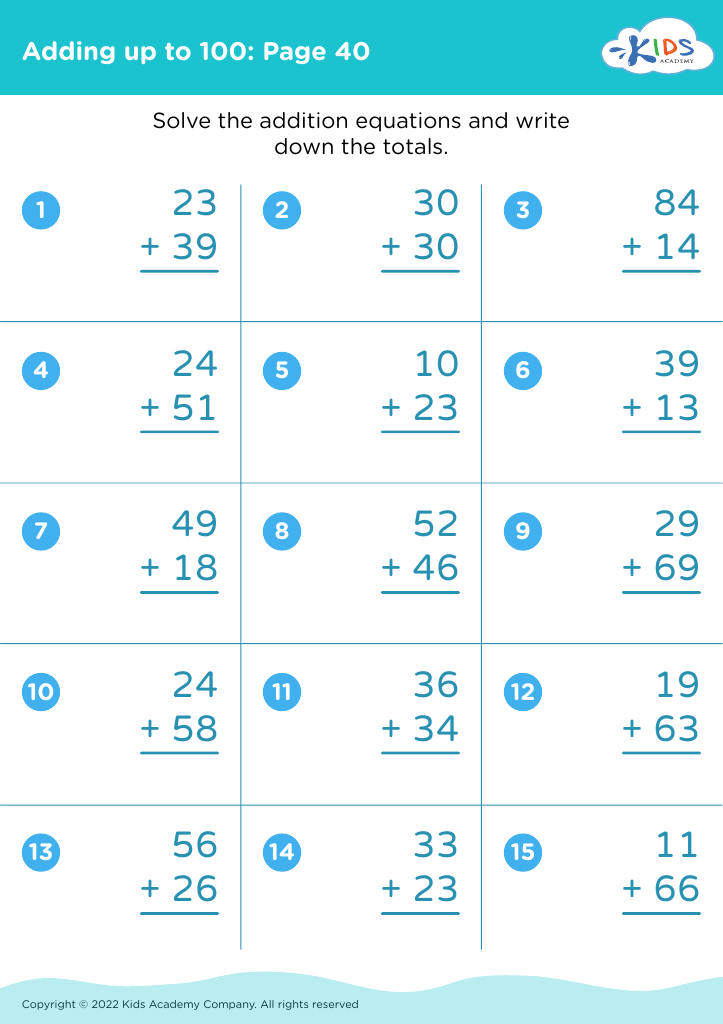
Adding up to 100: Page 40

Adding up to 100: Page 40

Adding up to 100: Page 40
Worksheet
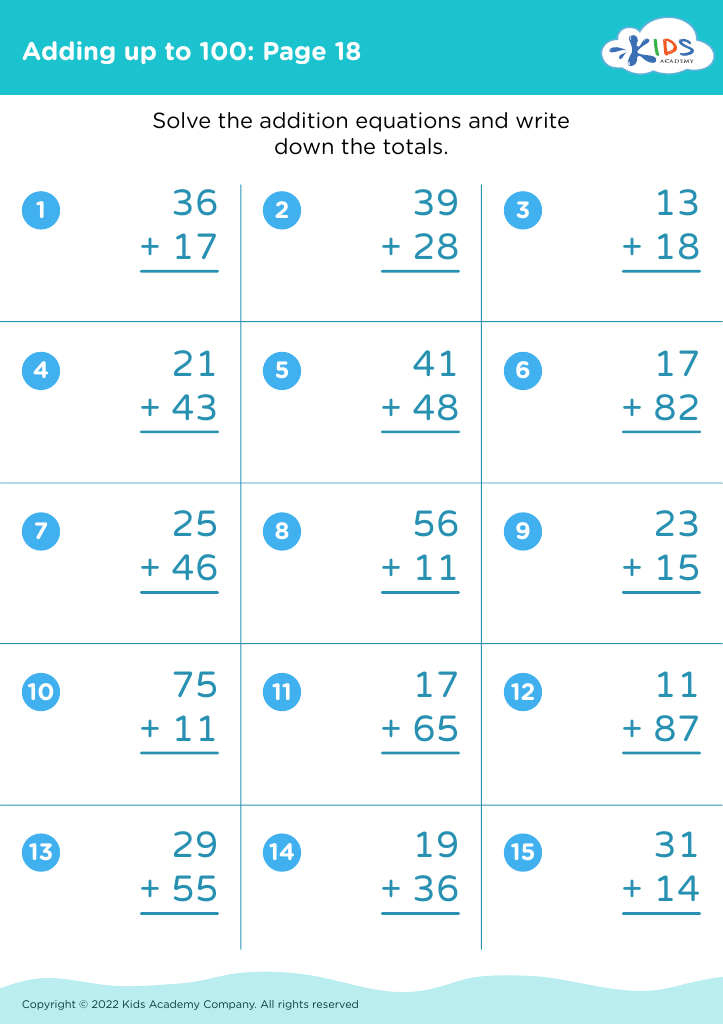
Adding up to 100: Page 18

Adding up to 100: Page 18

Adding up to 100: Page 18
Worksheet
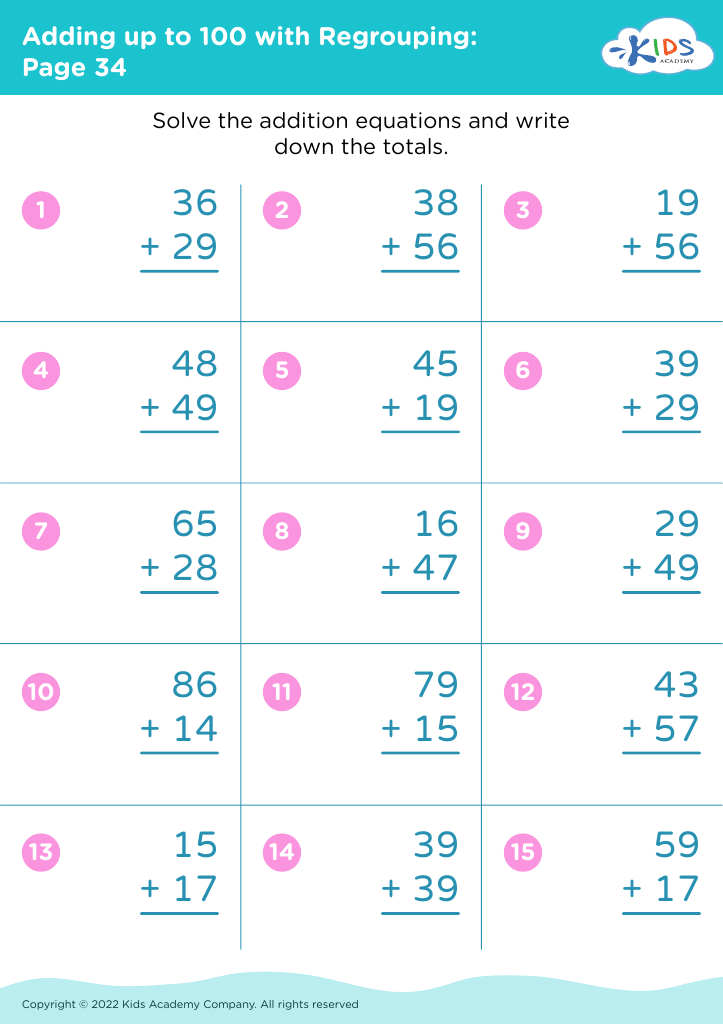
Adding up to 100 with Regrouping: Page 34
Worksheet
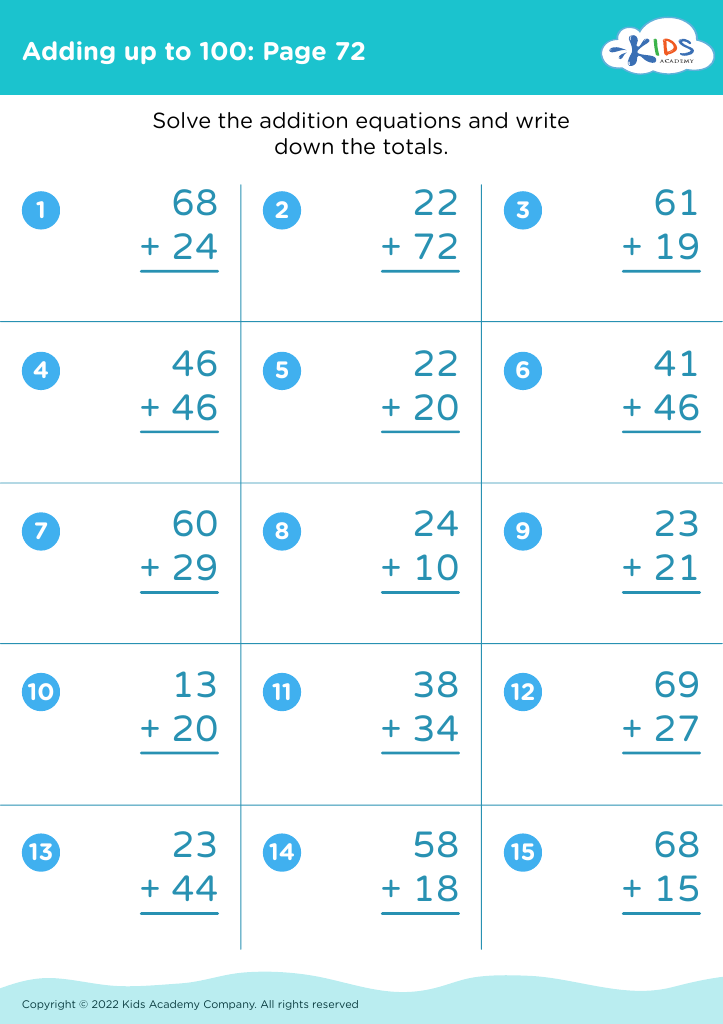
Adding up to 100: Page 72

Adding up to 100: Page 72

Adding up to 100: Page 72
Worksheet
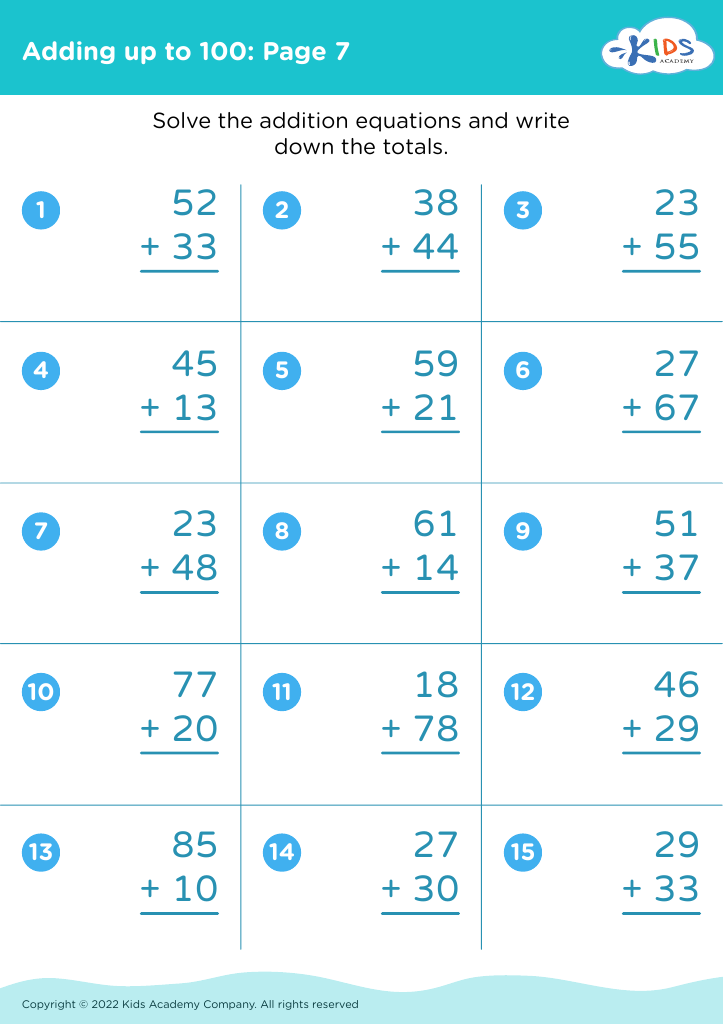
Adding up to 100: Page 7

Adding up to 100: Page 7

Adding up to 100: Page 7
Worksheet
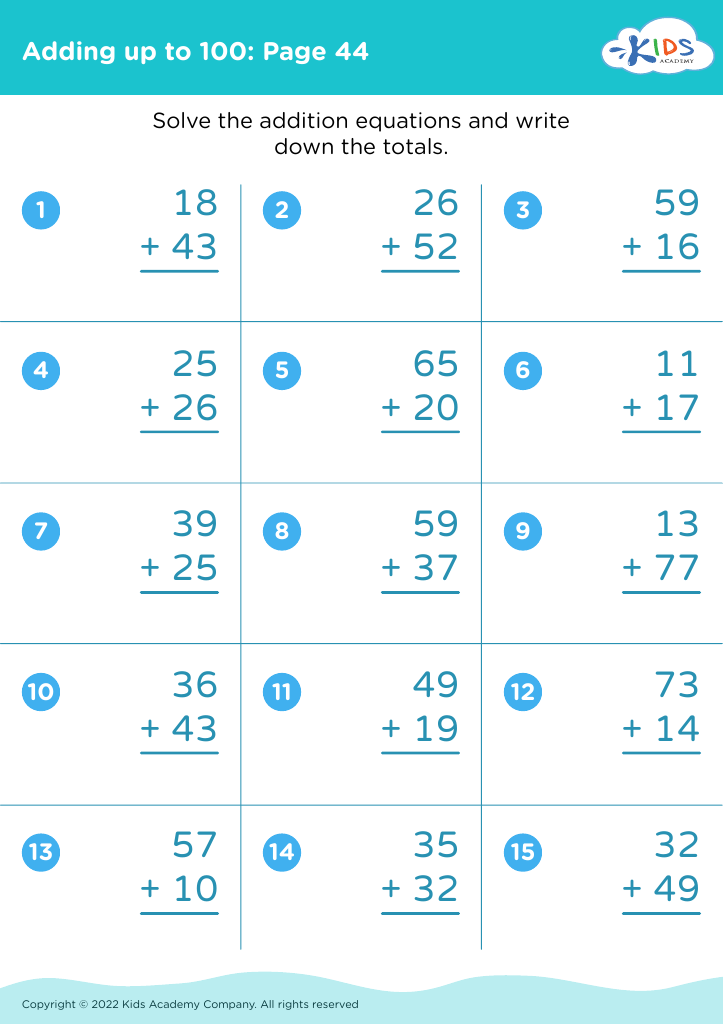
Adding up to 100: Page 44

Adding up to 100: Page 44

Adding up to 100: Page 44
Worksheet


Improving counting skills and the ability to add up to 100 for children aged 7-9 is crucial for several developmental and educational reasons. Firstly, strong counting skills form the foundation for more advanced mathematical concepts such as multiplication, division, and fractions, which are essential for later academic success. At this age, children are transitioning from basic arithmetic to more complex problem-solving tasks, and a solid understanding of numbers empowers them with the confidence to tackle these challenges.

Secondly, enhancing counting and addition abilities helps bolster cognitive development. It encourages logical thinking, pattern recognition, and memory retention. When children practice counting and adding to 100, they are essentially engaging their brains in a form of mental exercise that strengthens neural connections.

Furthermore, these skills are indispensable for daily life activities. From managing their pocket money to understanding sports scores or measuring ingredients for a recipe, practical math skills are part of everyday tasks. By ensuring children are proficient in these areas, parents and teachers equip them for real-world situations, fostering independence.

Finally, developing a positive experience with math in the early years can set the tone for a child's attitude towards the subject throughout their educational journey. Encouragement and early proficiency can help circumvent math anxiety, paving the way for a more enjoyable and successful learning experience in the future.

Overall, investing time and effort in improving counting skills up to 100 is an invaluable step not only in academic development but also in nurturing well-rounded, capable individuals.