Adding up to 50 Worksheets for Ages 7-9 - Page 10
219 filtered results
-
From - To
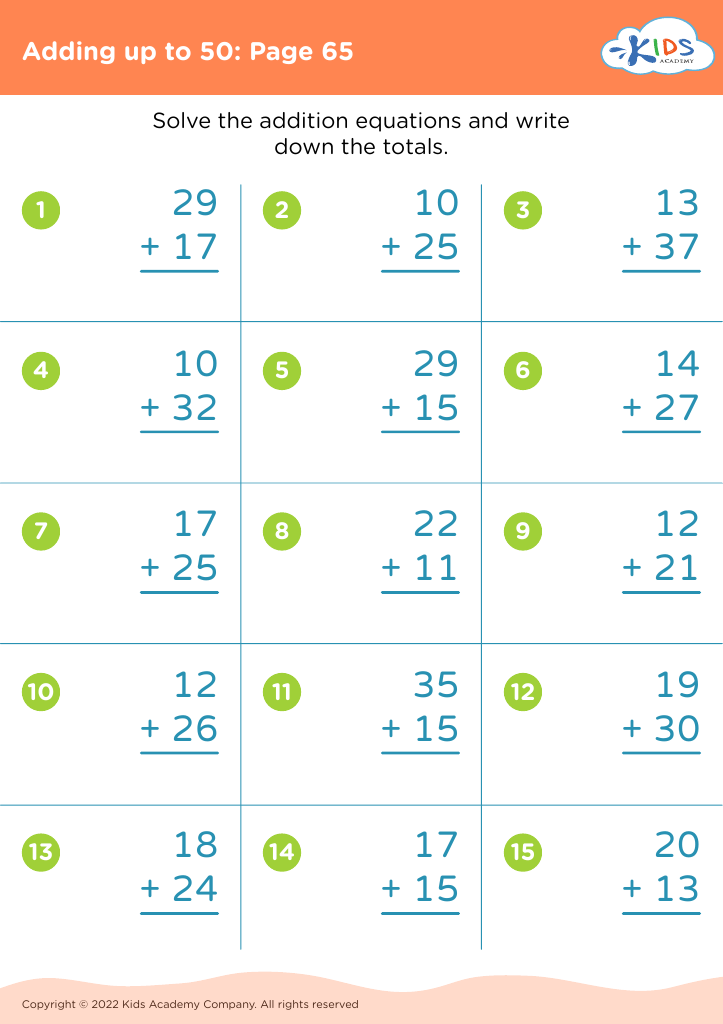
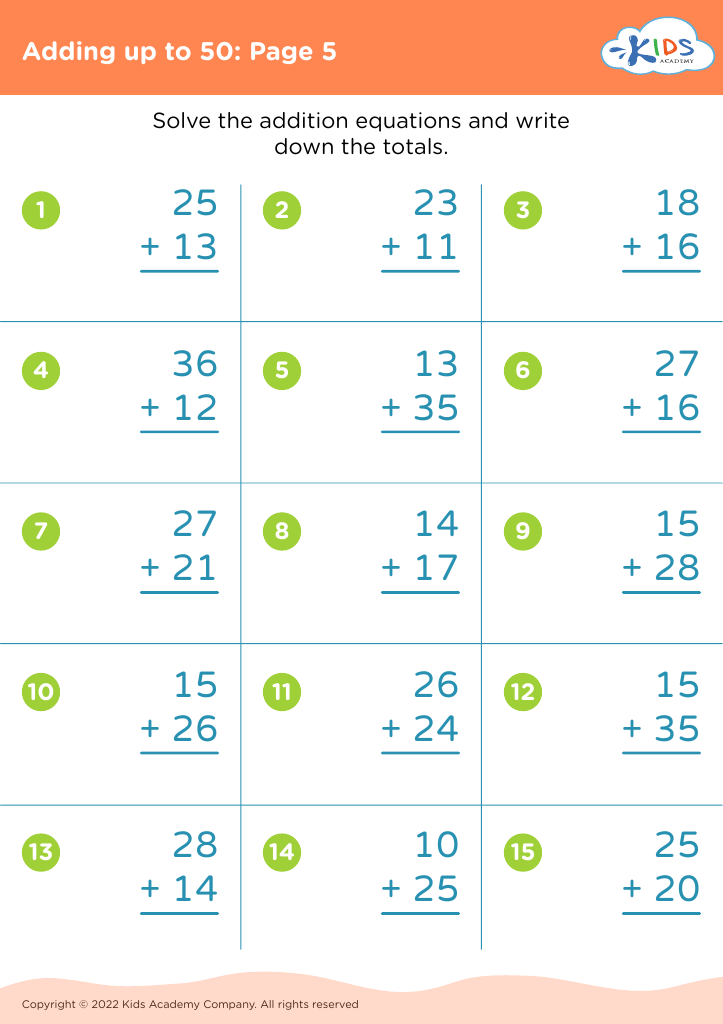
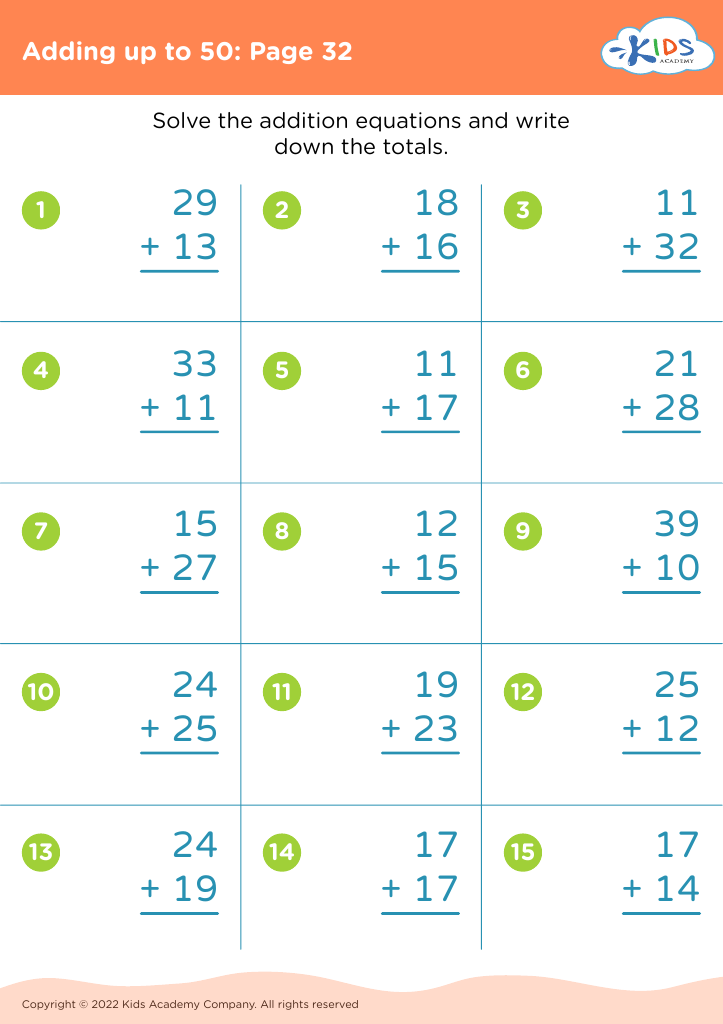




Adding up to 50 is a crucial skill for children aged 7-9, particularly as they develop foundational mathematical abilities. This age group faces new challenges in mathematics, and mastering addition helps build confidence and competence in dealing with larger numbers. Understanding how to add up to 50 lays the groundwork for more complex operations that children will encounter in later grades, like subtraction, multiplication, and division.
Parents and teachers should prioritize this skill because it promotes critical thinking and problem-solving abilities. As students learn to add combinations of numbers to reach 50, they engage in hands-on practice that enhances cognitive development and reinforces their understanding of number relationships. Equally important, fostering a strong foundation in arithmetic supports overall academic performance, leading to greater success in future mathematical concepts.
Moreover, this skill can be incorporated into everyday activities, making math enjoyable and practical—such as counting objects during shopping trips or adding up points in games. When teachers and parents actively encourage addition skills, they contribute to a child’s positive attitude toward learning, equipping them with essential life skills that extend beyond the classroom. Therefore, prioritizing Adding up to 50 is integral in creating a strong mathematical foundation for young learners.








