Filters

34 filtered results

Clear all filters
Favorites
With answer key
Interactive

34 filtered results

Difficulty Level

Grade


Check out this FREE Trial Lesson on Adding up to 50 for age 7-9!

Exactly the Same, or Not

Favorites
With answer key
Interactive
  • 7-9
  • Counting skills
  • Adding up to 50
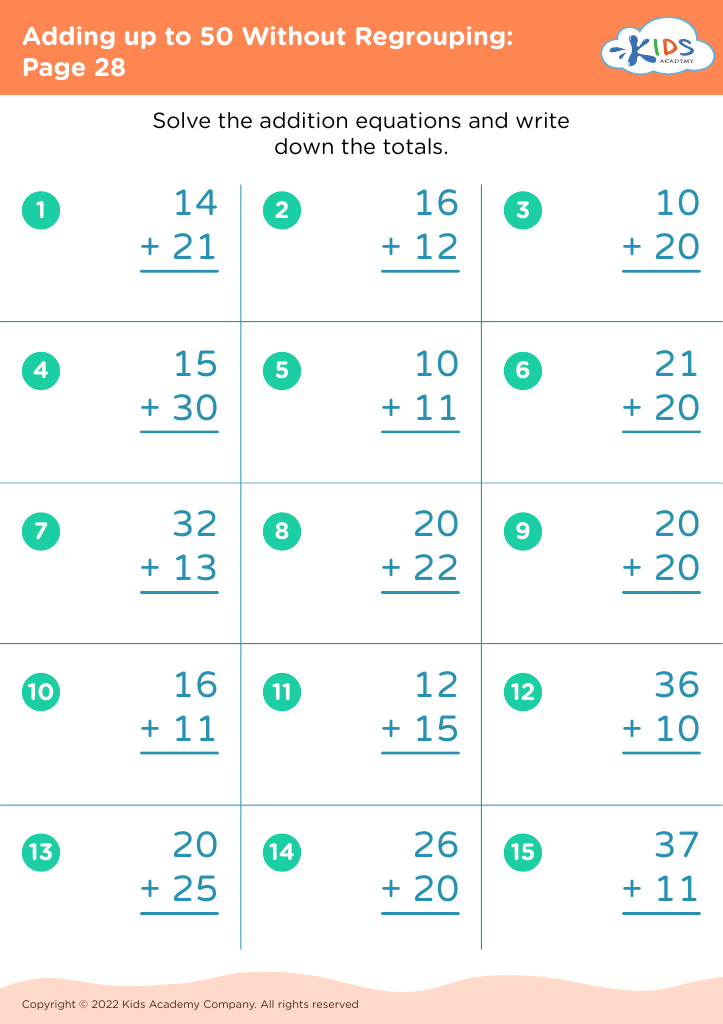
Adding up to 50 Without Regrouping: Page 28
Worksheet
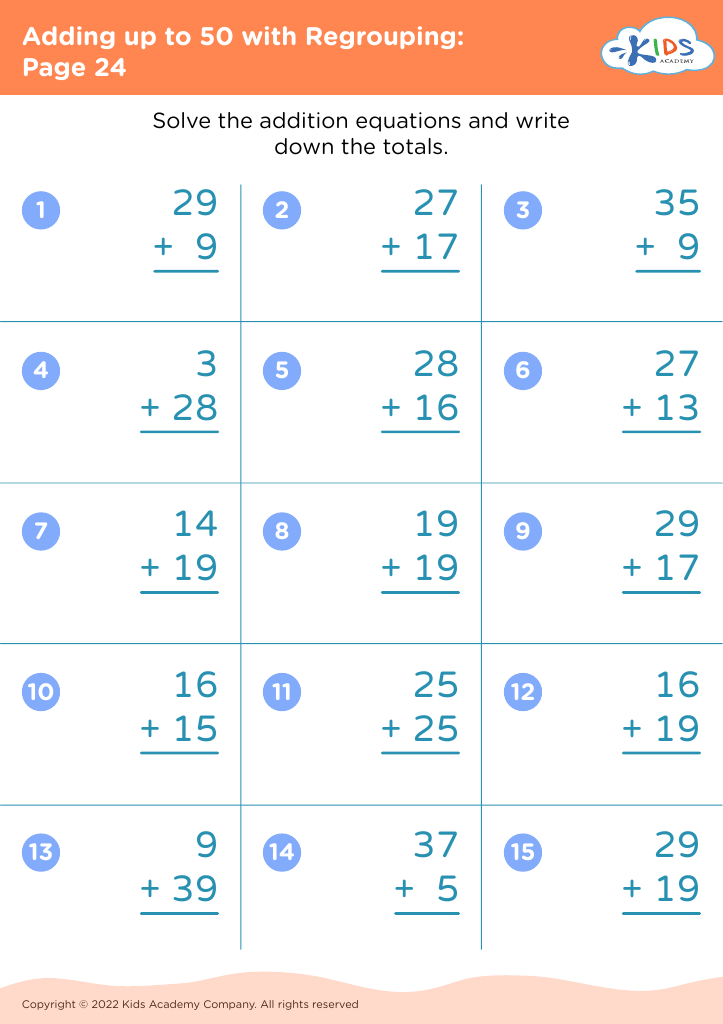
Adding up to 50 with Regrouping: Page 24
Worksheet
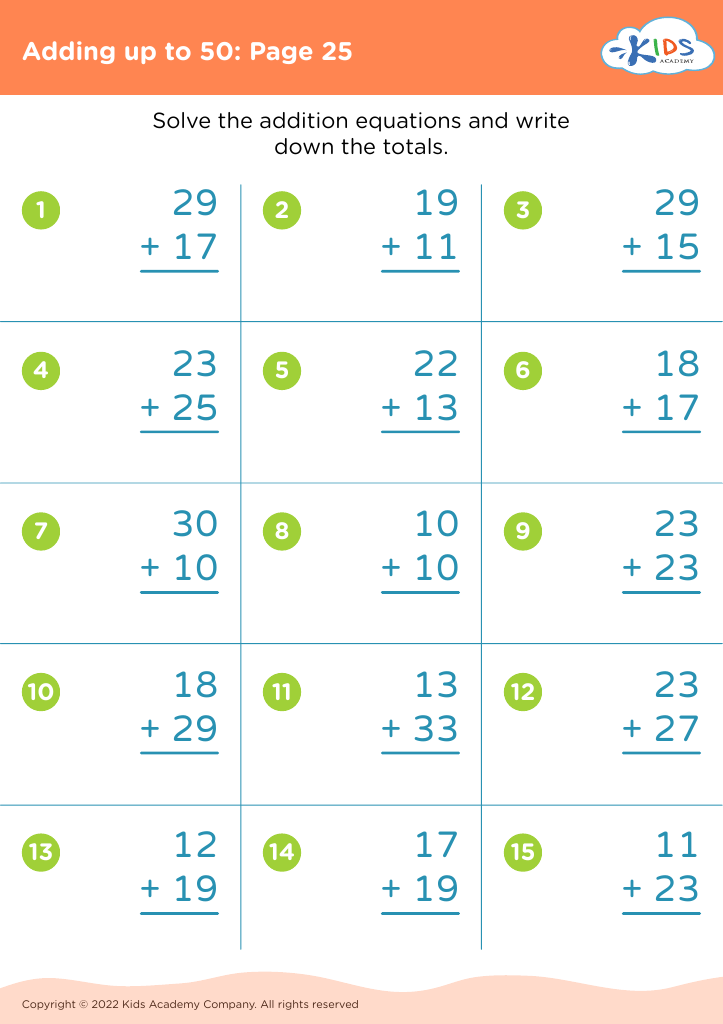
Adding up to 50: Page 25

Adding up to 50: Page 25

Adding up to 50: Page 25
Worksheet
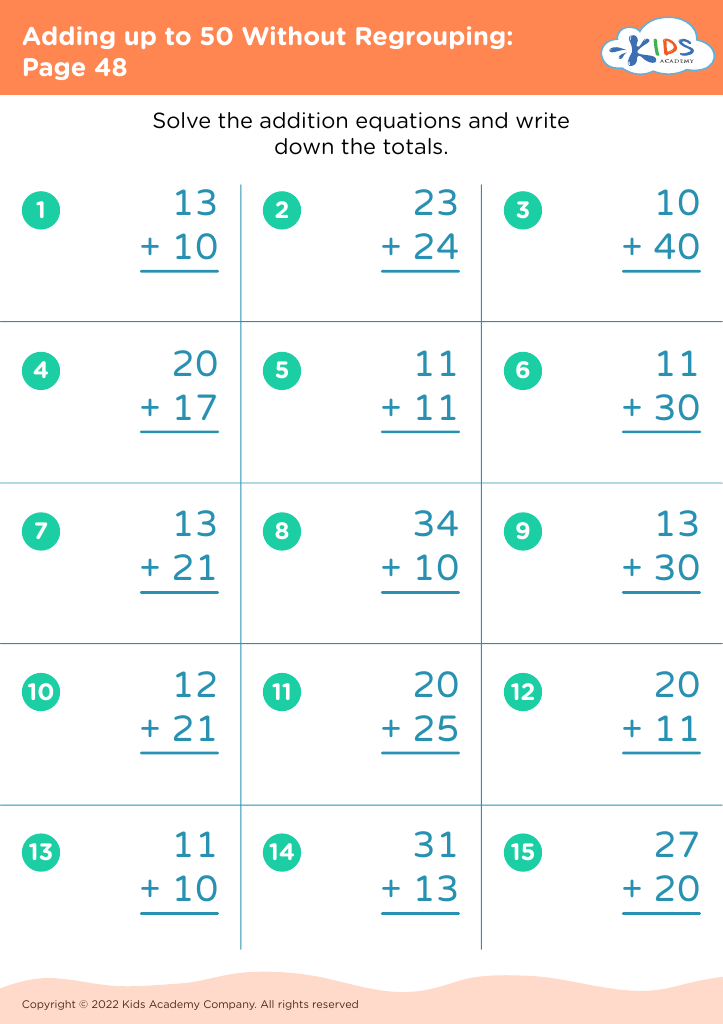
Adding up to 50 Without Regrouping: Page 48
Worksheet
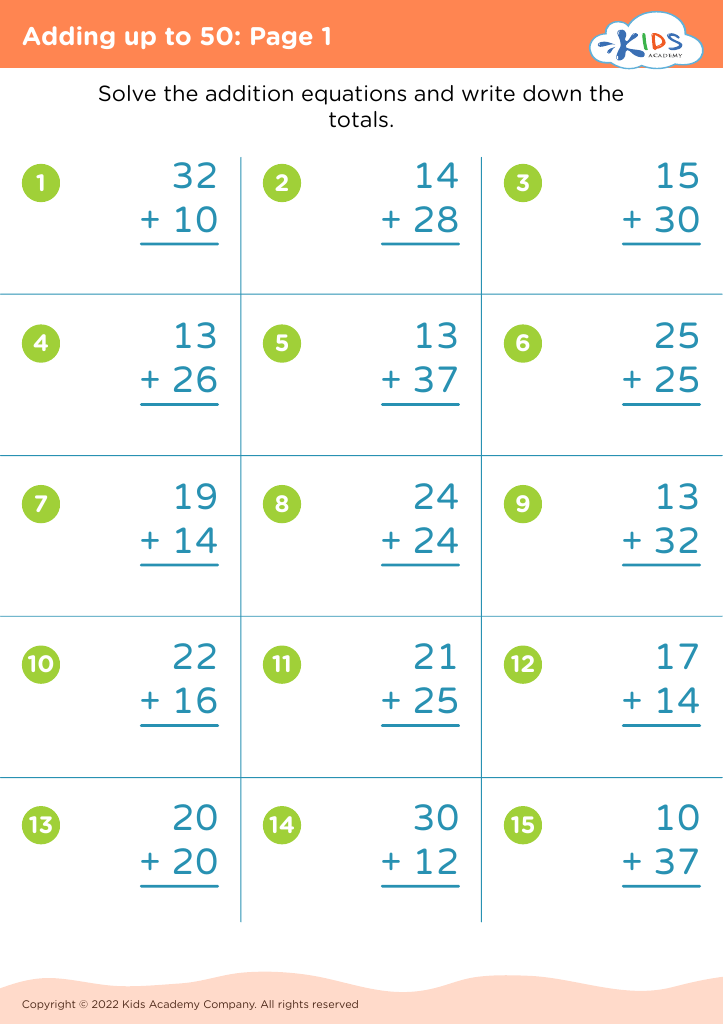
Adding up to 50: Page 1

Adding up to 50: Page 1

Adding up to 50: Page 1
Worksheet
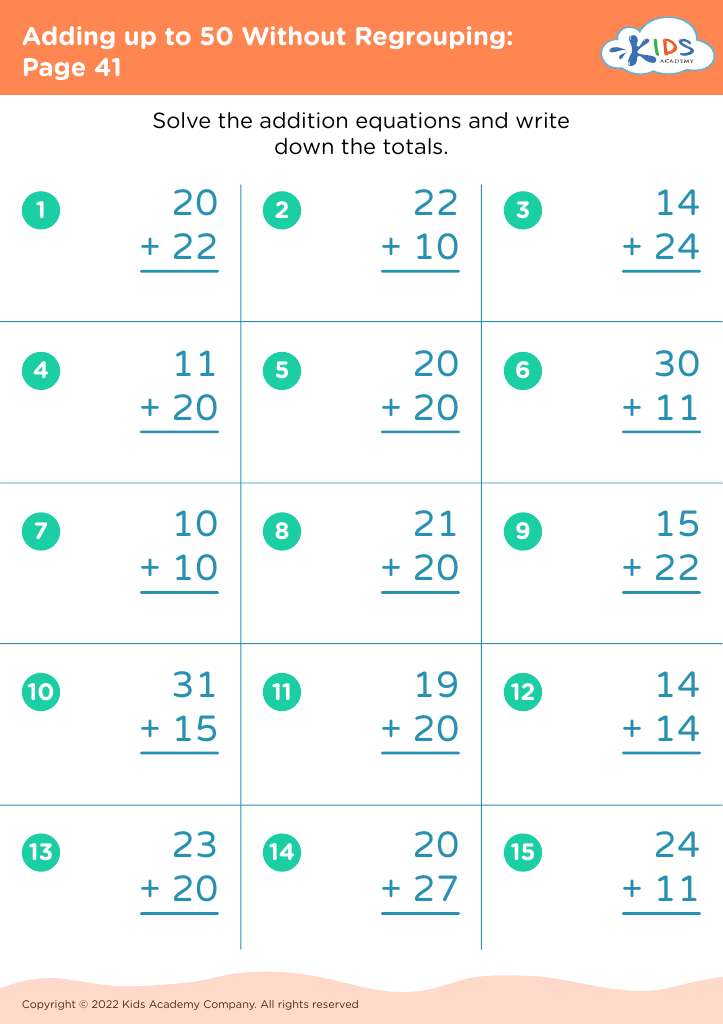
Adding up to 50 Without Regrouping: Page 41
Worksheet
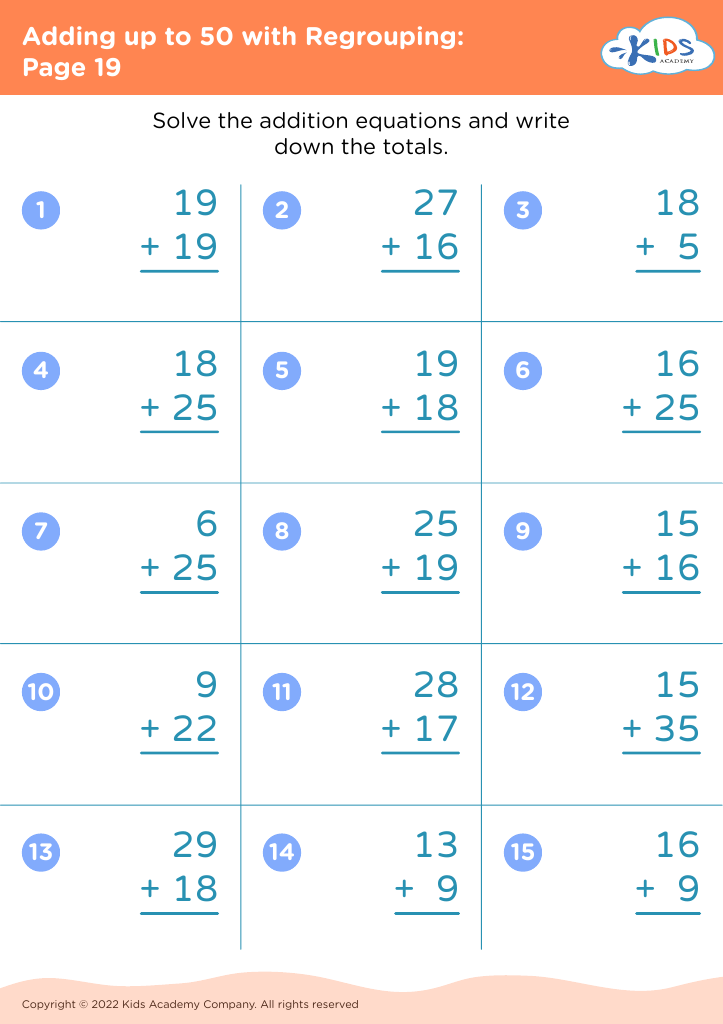
Adding up to 50 with Regrouping: Page 19
Worksheet
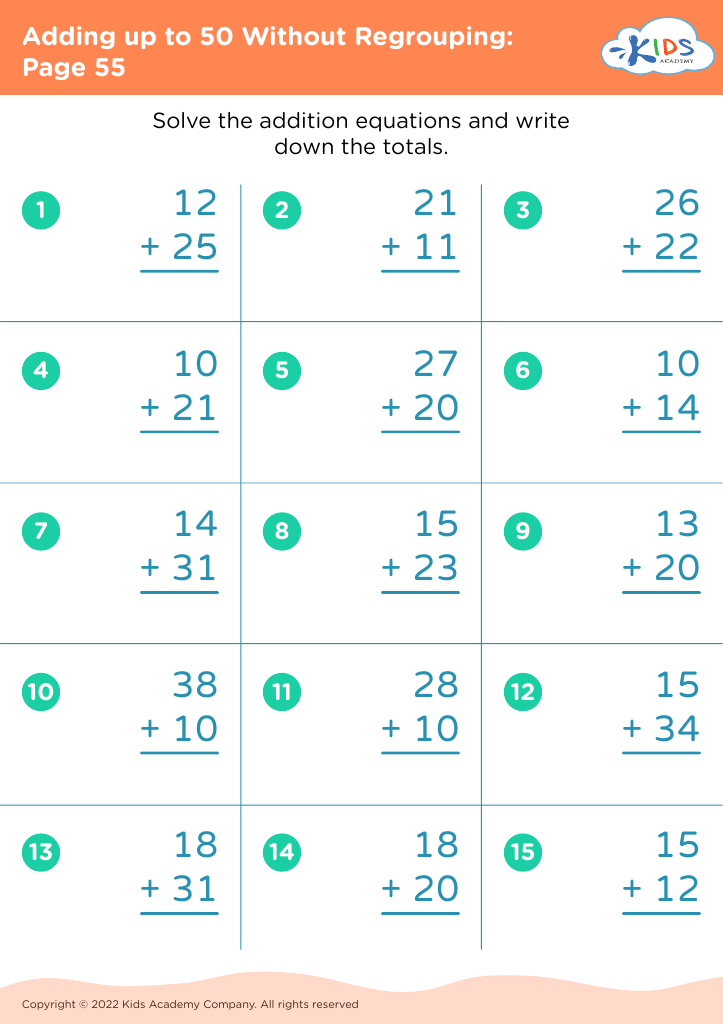
Adding up to 50 Without Regrouping: Page 55
Worksheet
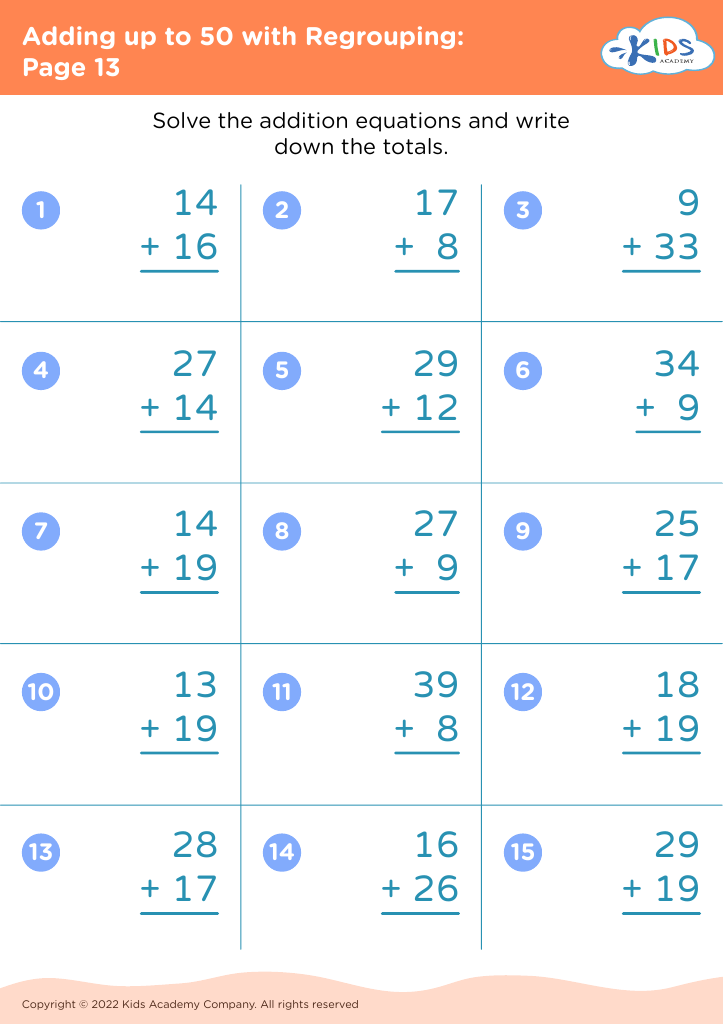
Adding up to 50 with Regrouping: Page 13
Worksheet
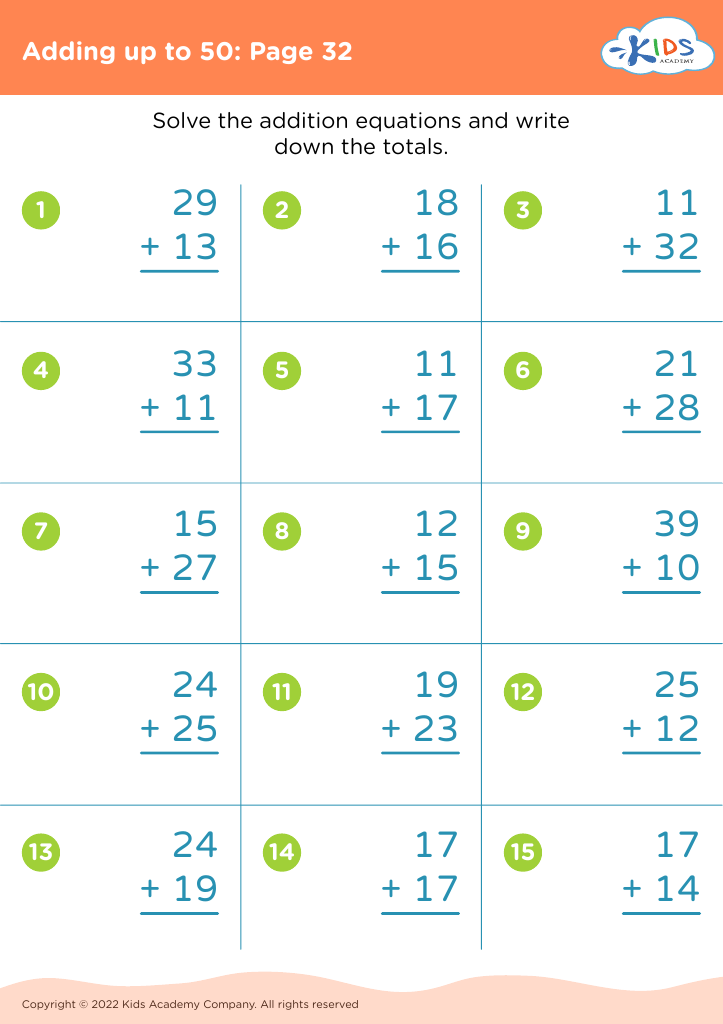
Adding up to 50: Page 32

Adding up to 50: Page 32

Adding up to 50: Page 32
Worksheet


Counting skills, particularly the ability to add up to 50, are essential for children aged 7-9 for several reasons. At this developmental stage, children are building a foundation for more advanced mathematical concepts. Mastery of counting up to 50 not only enhances numerical fluency but also boosts their confidence in math, reducing anxiety associated with future learning.

Understanding how to count and add helps children in everyday scenarios, from handling money to measuring ingredients in recipes. It fosters logical thinking and problem-solving abilities, which are necessary skills across all subjects. Furthermore, being proficient in these basic counting skills allows children to tackle more complex problems involving addition, subtraction, and even early multiplication and division.

For teachers and parents, emphasizing these skills encourages collaboration and engagement in learning. It provides opportunities for fostering a supportive learning environment where children can practice and explore numbers in enjoyable ways. By nurturing counting skills now, adults play a pivotal role in shaping a child's attitudes toward mathematics, which will carry over into higher levels of education. Thus, prioritizing counting skills up to 50 is not just about learning numbers; it builds a pathway for lifelong learning and problem-solving.