Visual Learning Addition and Subtraction Word Problems Worksheets for Ages 7-9
5 filtered results
-
From - To
Engage children ages 7-9 with our captivating Visual Learning Addition and Subtraction Word Problems Worksheets! These expertly crafted worksheets transform math practice into an exciting visual adventure, helping kids grasp essential concepts through vibrant illustrations and interactive problems. By bridging the gap between abstract numbers and real-world scenarios, our worksheets enhance comprehension and retention. Students will boost their problem-solving skills and develop confidence in tackling word problems, all while having fun! Perfect for classroom use or at-home learning, these resources are designed to align with the latest educational standards, ensuring your child’s success in mastering addition and subtraction.
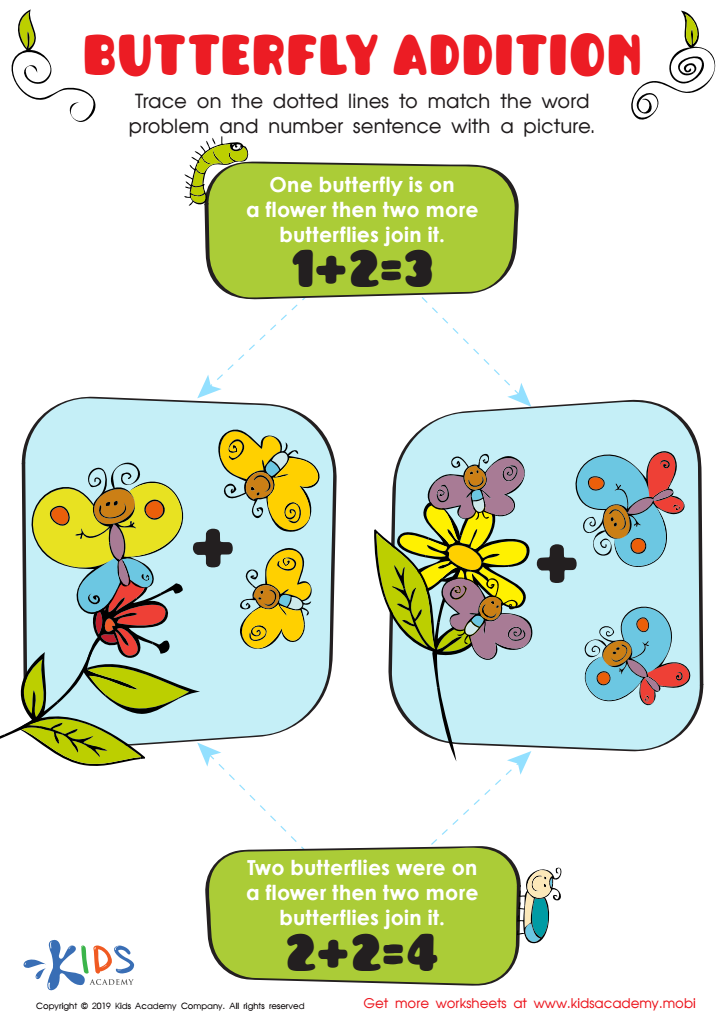
Butterfly Addition Worksheet
 Assign to My Students
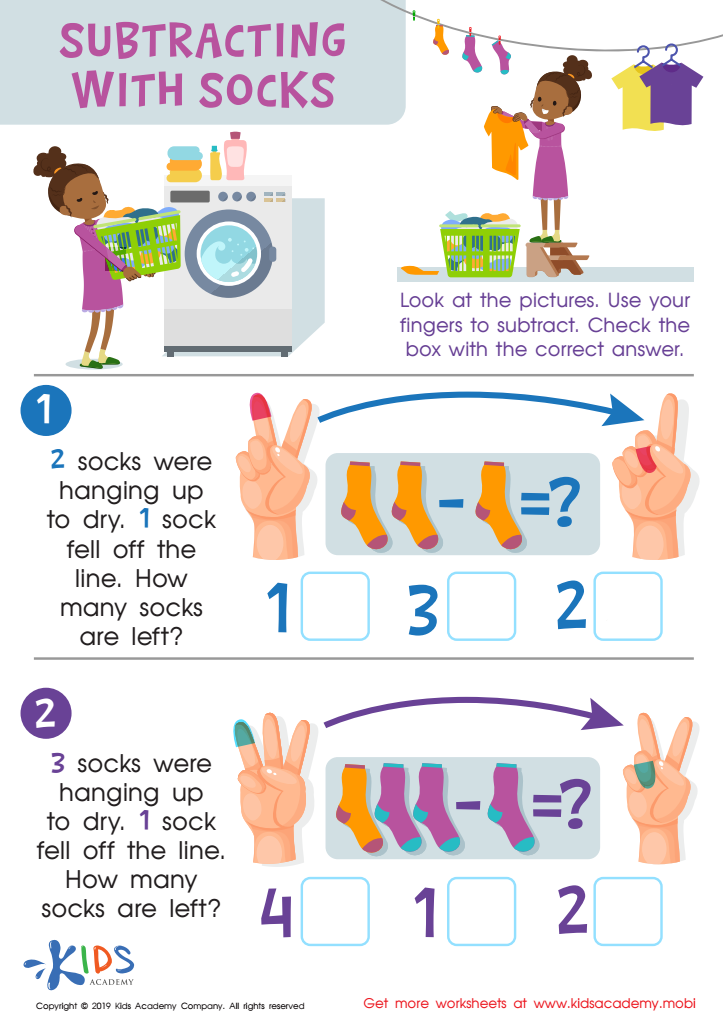
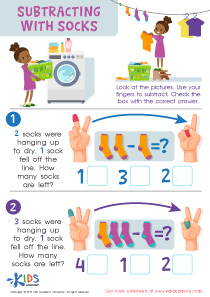
Subtracting Socks Worksheet
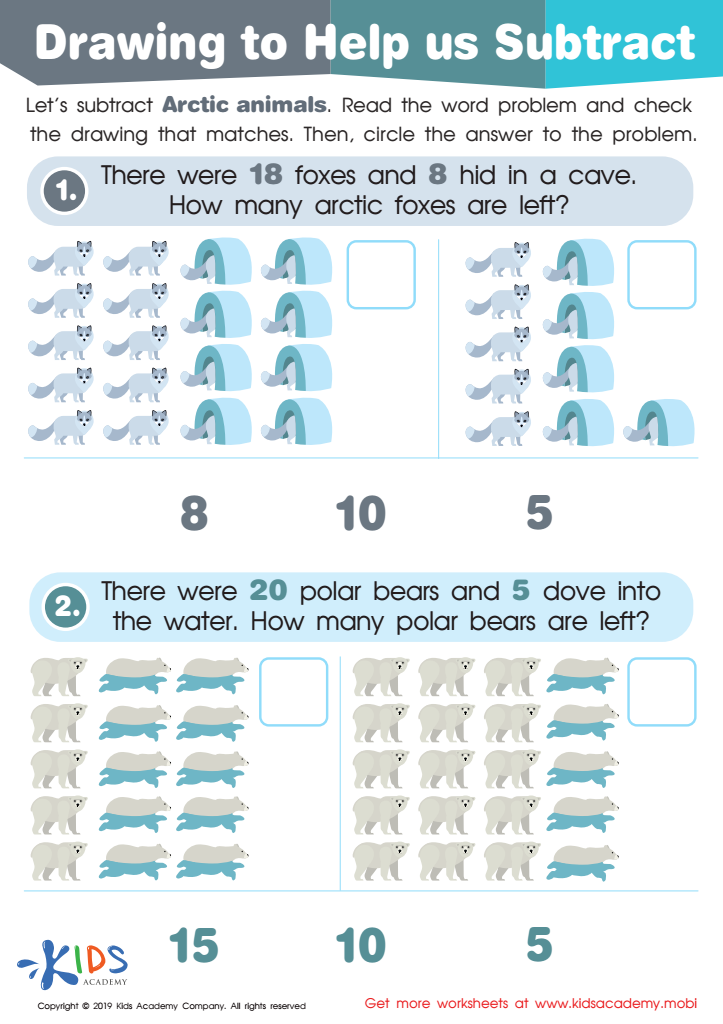
Drawing to Help Us Subtract Worksheet
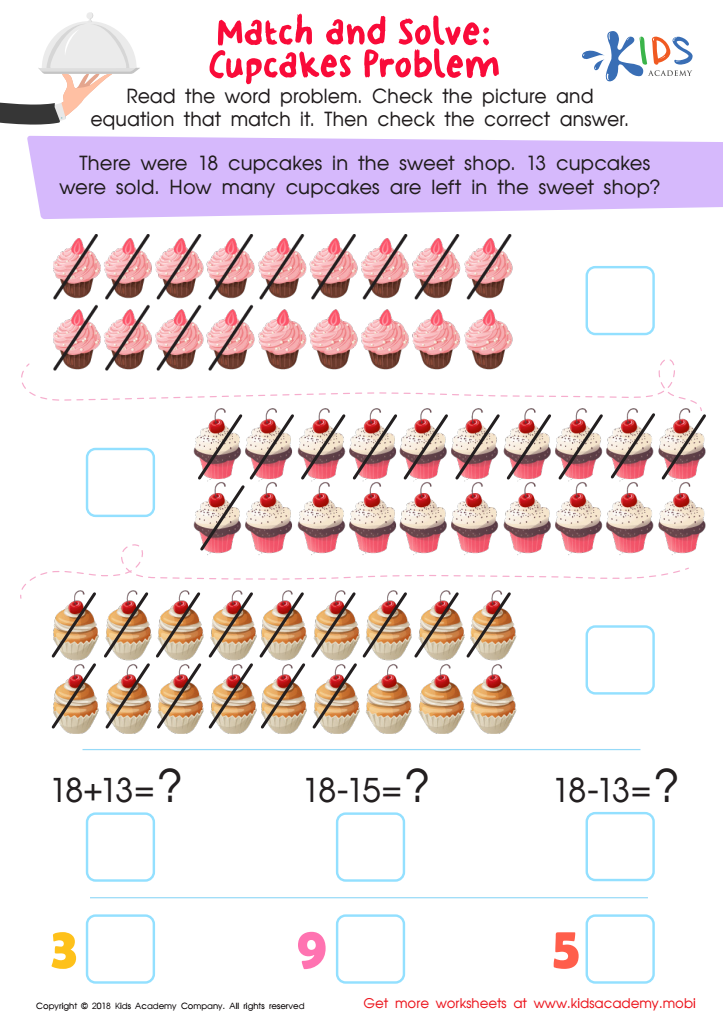
Match and Solve: Cupcakes Problem Worksheet
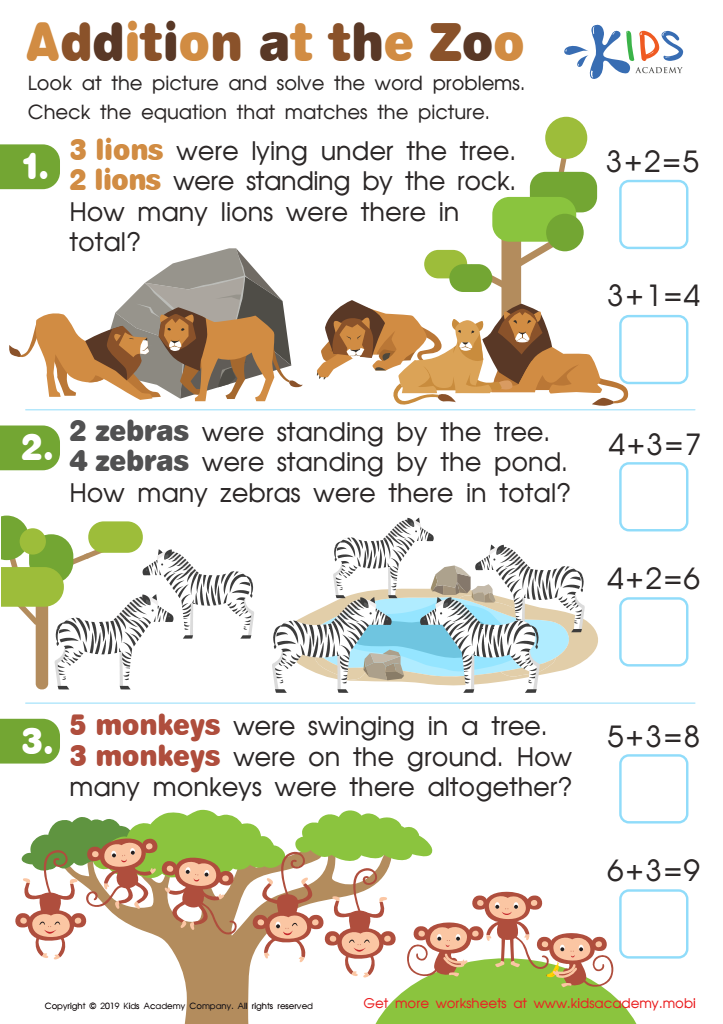
Addition at the Zoo Worksheet








Parents and teachers should prioritize visual learning addition and subtraction word problems for children aged 7-9 due to the critical developmental stage these students are in. At this age, children transition from concrete operational thinking to more complex cognitive functions. Visual learning taps into this by offering tangible and often more memorable ways to grasp abstract math concepts.
Visual aids such as pictures, number lines, and manipulatives enhance comprehension by providing multiple representation methods. These tools help children see math in action, making it less intimidating and more accessible. When students can "see" the problem unfold, they develop a better number sense and the ability to identify relationships between numbers. For example, visually demonstrating how subtracting five from eight works using a number line helps children comprehend what the abstract symbols represent.
In addition, visual learning benefits diverse learning styles and supports children with special educational needs. It also fosters problem-solving skills, critical thinking, and a love of learning that goes beyond rote memorization of math facts.
Investing in visual learning addition and subtraction word problems lays a solid foundation for future math success. It builds students' confidence and equips them with the tools necessary to tackle more complex mathematical challenges ahead, making it a central focus in early education.