Introduce your young learners to the world of fractions with our "Simplifying Fractions Addition & Subtraction Worksheets" designed for ages 7-9 at Kids Academy! These engaging and educational worksheets are crafted to make mastering fractions fun and easy. Our resources guide children through simplifying fractions, ensuring they develop essential math skills. Each worksheet includes comprehensive practice problems that enhance a child's understanding of adding and subtracting fractions. Perfect for classroom use or homeschooling, these worksheets help build confidence and improve proficiency in fundamental math concepts. Visit Kids Academy today to empower your child's fraction-learning journey!
Check out this FREE Trial Lesson on Addition & Subtraction for age 7-9!

H

Favorites
With answer key
Interactive
  • 7-9
  • Simplifying Fractions
  • Addition & Subtraction
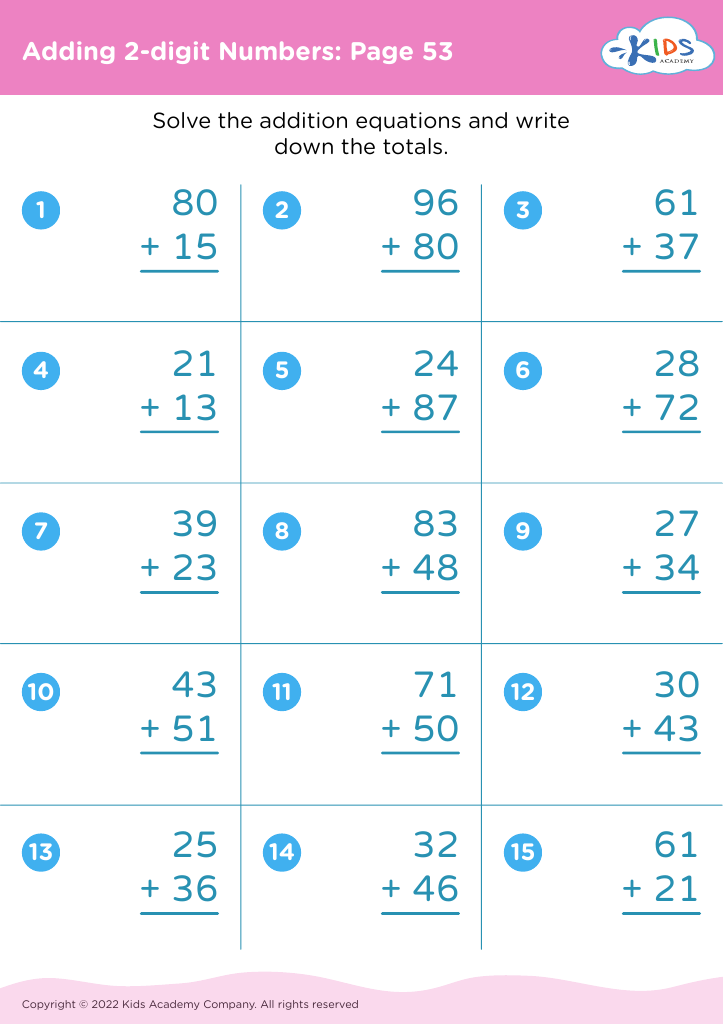
Adding 2-digit Numbers: Page 53

Adding 2-digit Numbers: Page 53

Adding 2-digit Numbers: Page 53
Worksheet
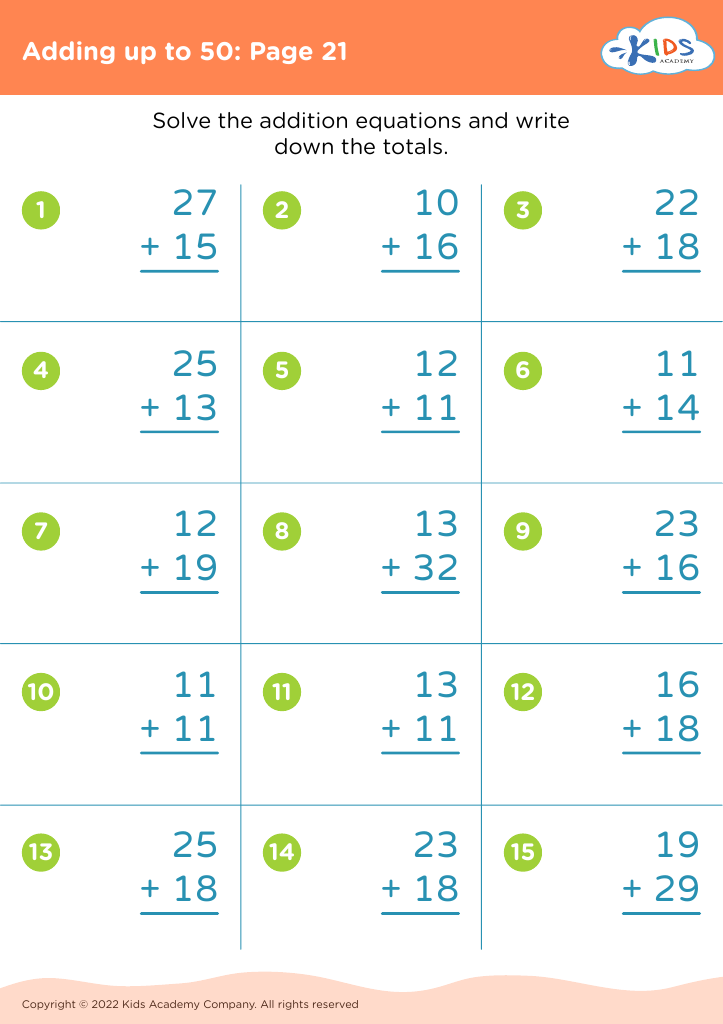
Adding up to 50: Page 21

Adding up to 50: Page 21

Adding up to 50: Page 21
Worksheet
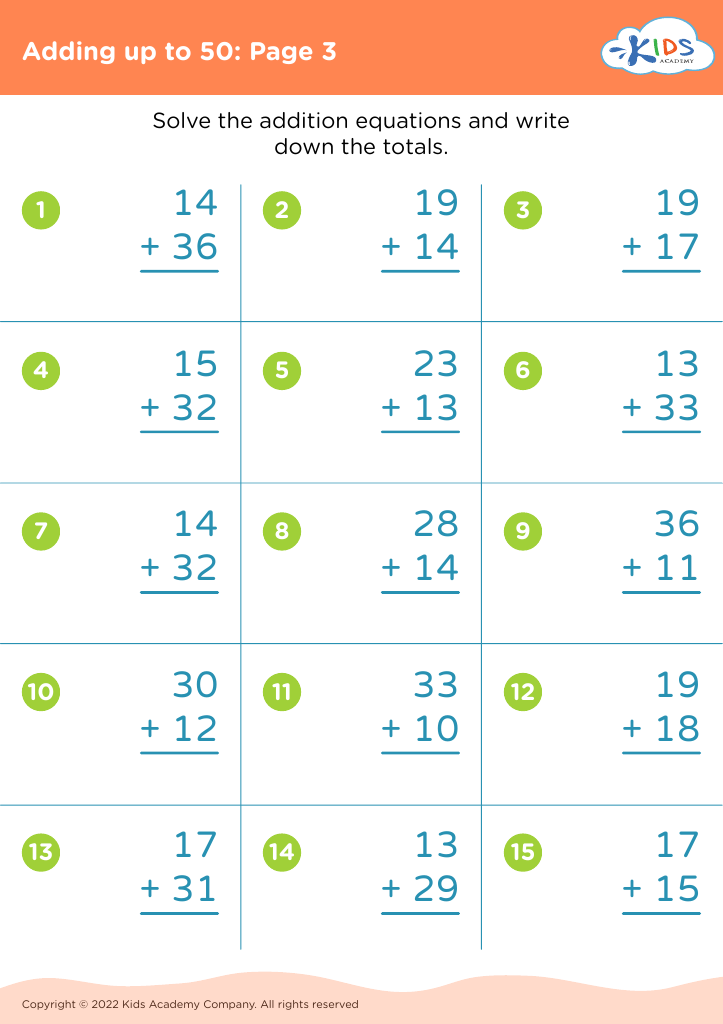
Adding up to 50: Page 3

Adding up to 50: Page 3

Adding up to 50: Page 3
Worksheet
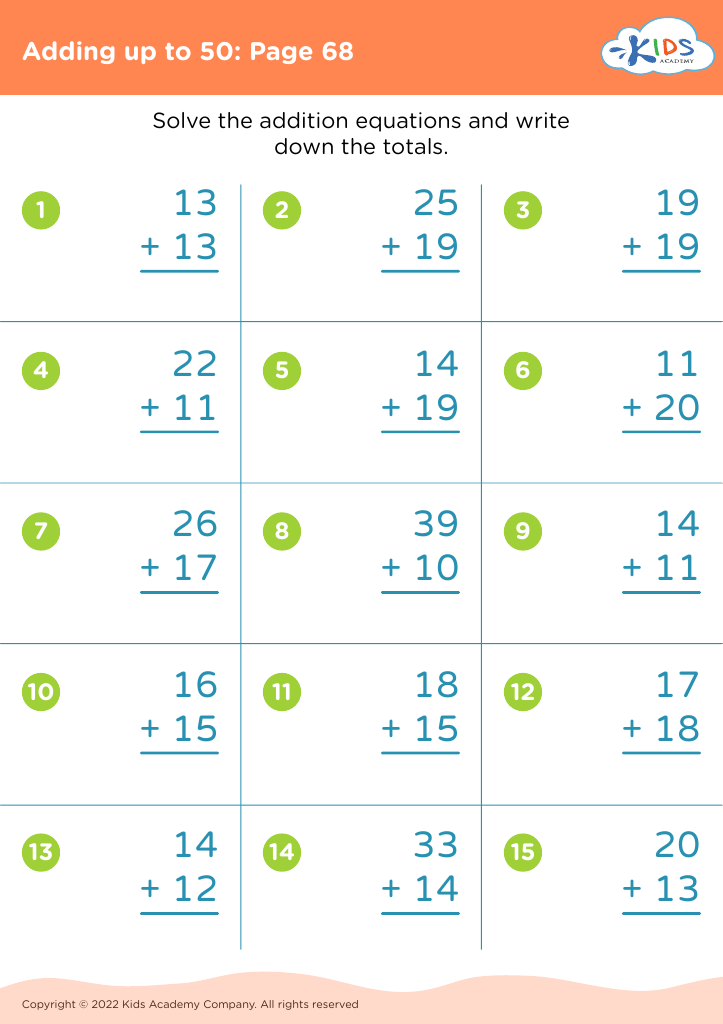
Adding up to 50: Page 68

Adding up to 50: Page 68

Adding up to 50: Page 68
Worksheet
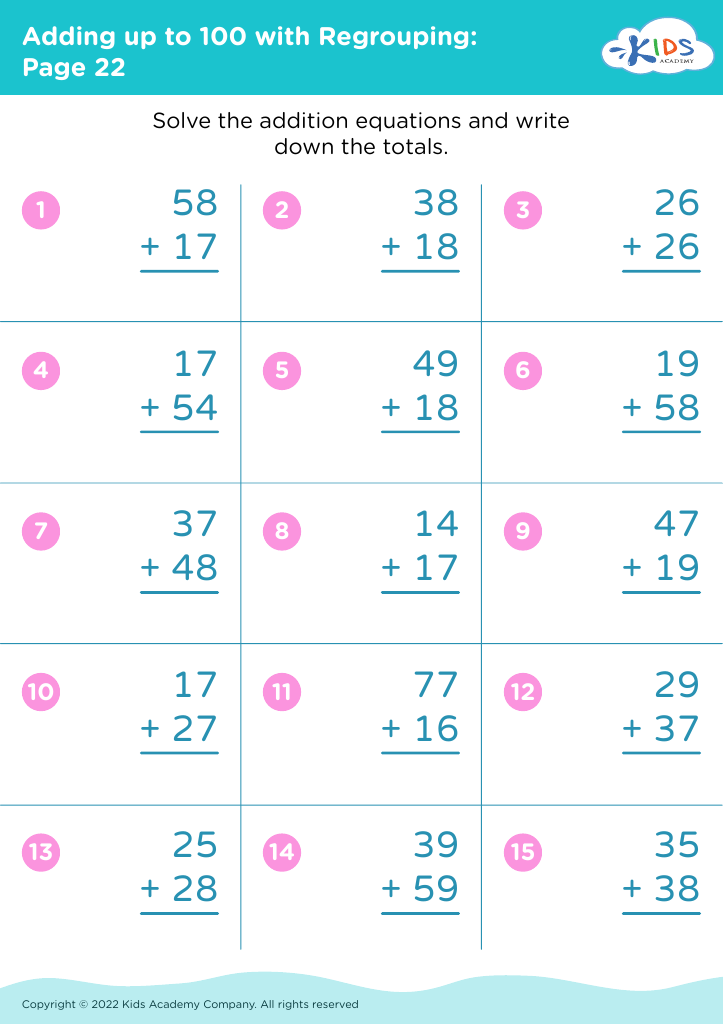
Adding up to 100 with Regrouping: Page 22
Worksheet
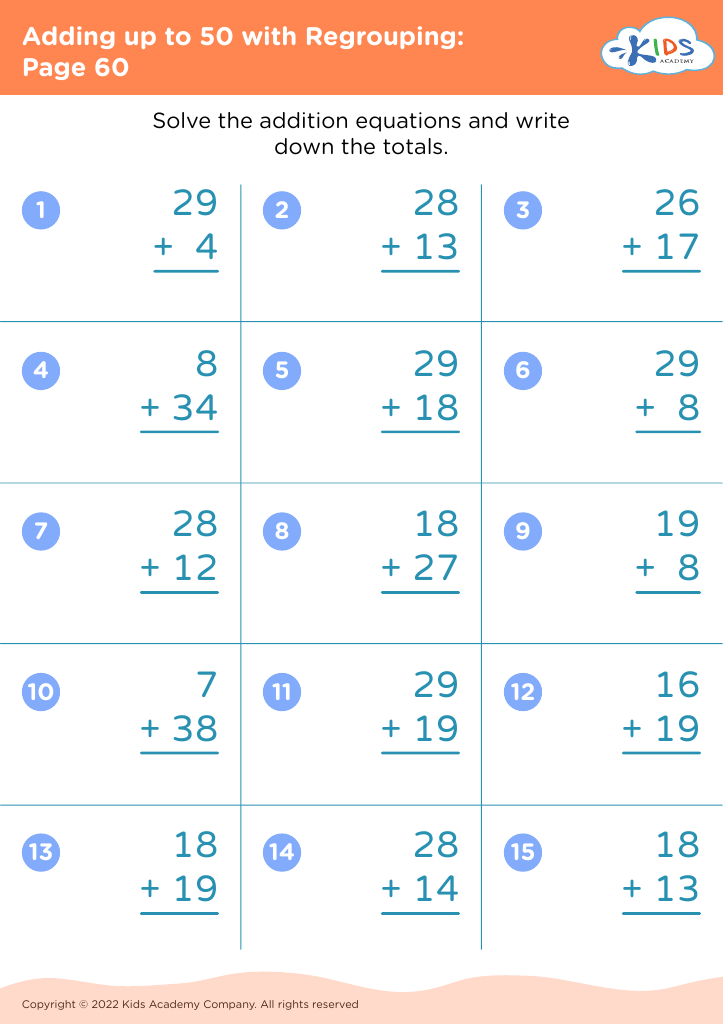
Adding up to 50 with Regrouping: Page 60
Worksheet
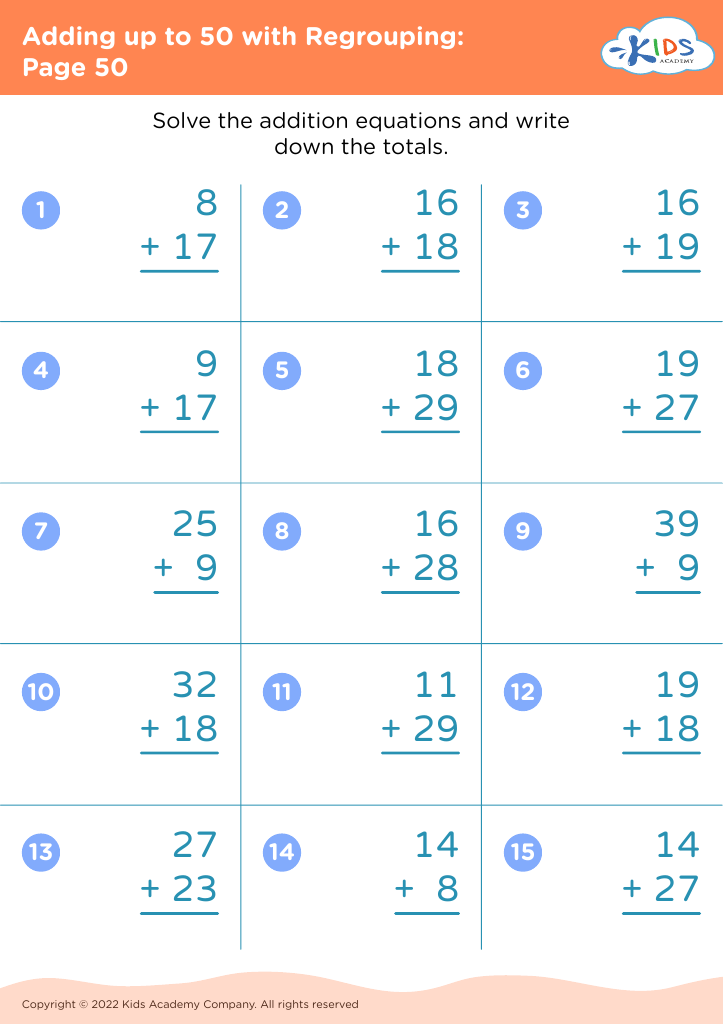
Adding up to 50 with Regrouping: Page 50
Worksheet
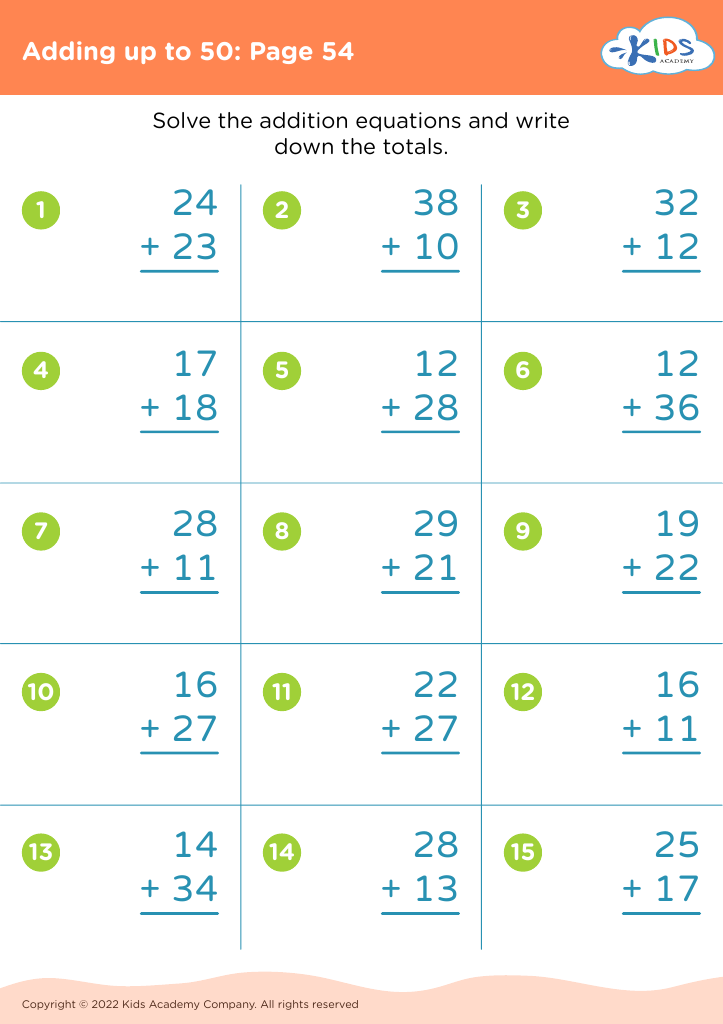
Adding up to 50: Page 54

Adding up to 50: Page 54

Adding up to 50: Page 54
Worksheet
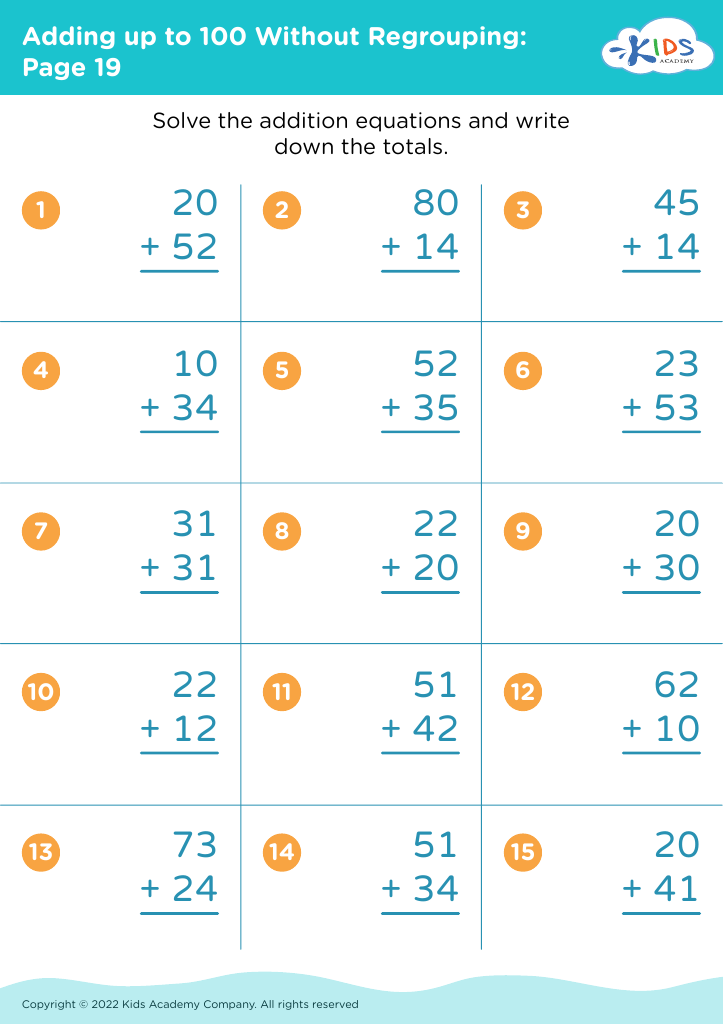
Adding up to 100 Without Regrouping: Page 19
Worksheet
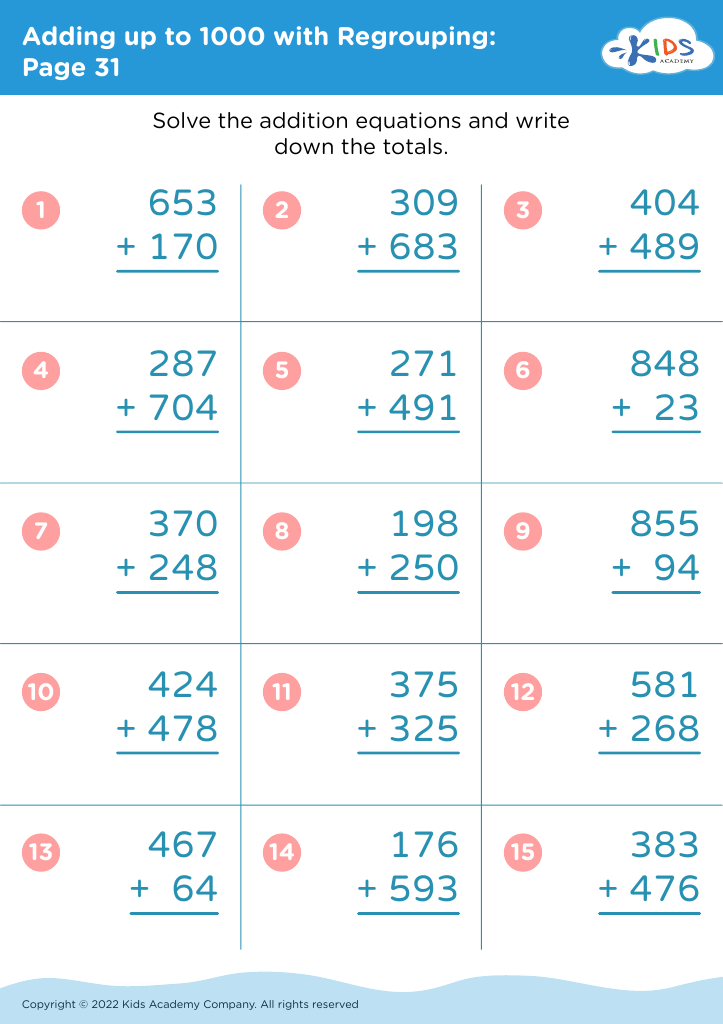
Adding up to 1000 with Regrouping: Page 31
Worksheet
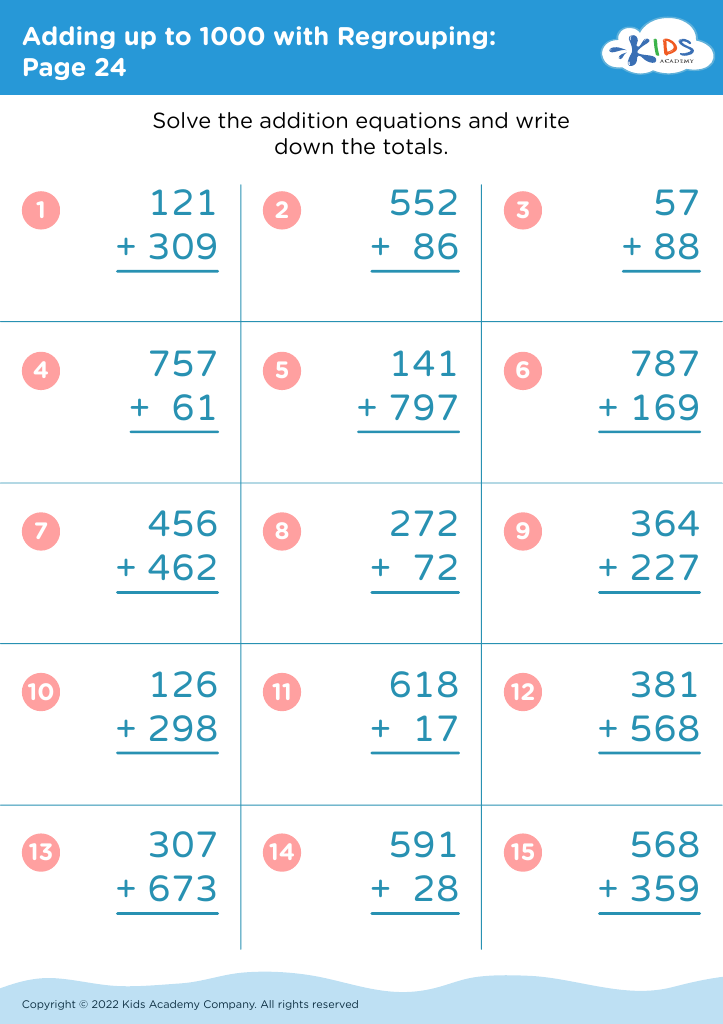
Adding up to 1000 with Regrouping: Page 24
Worksheet
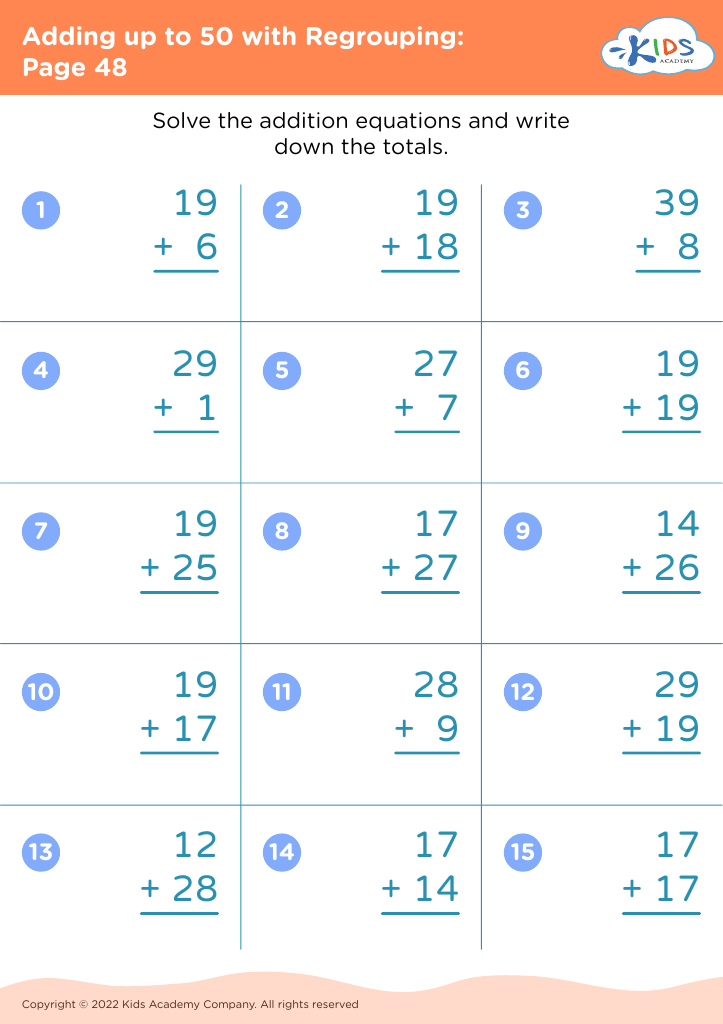
Adding up to 50 with Regrouping: Page 48
Worksheet
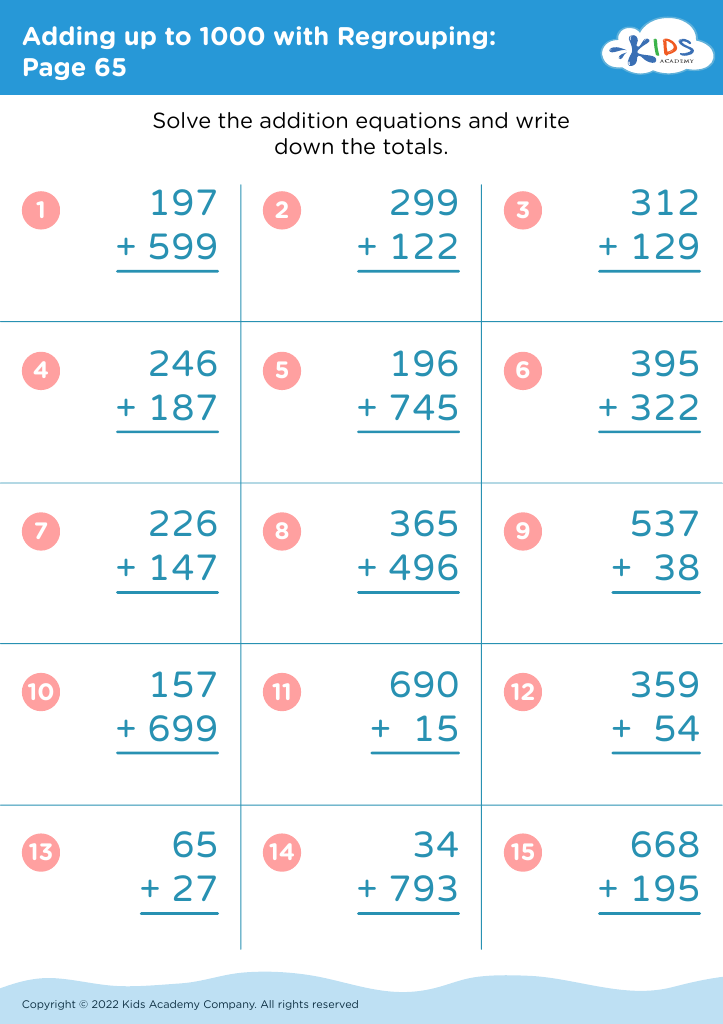
Adding up to 1000 with Regrouping: Page 65
Worksheet
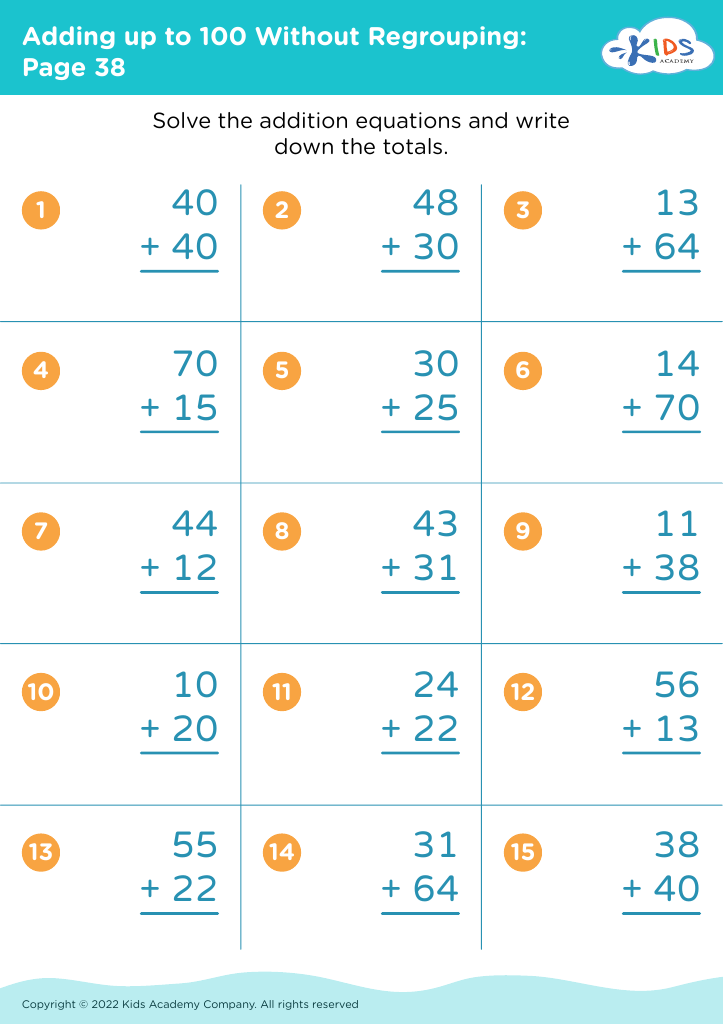
Adding up to 100 Without Regrouping: Page 38
Worksheet
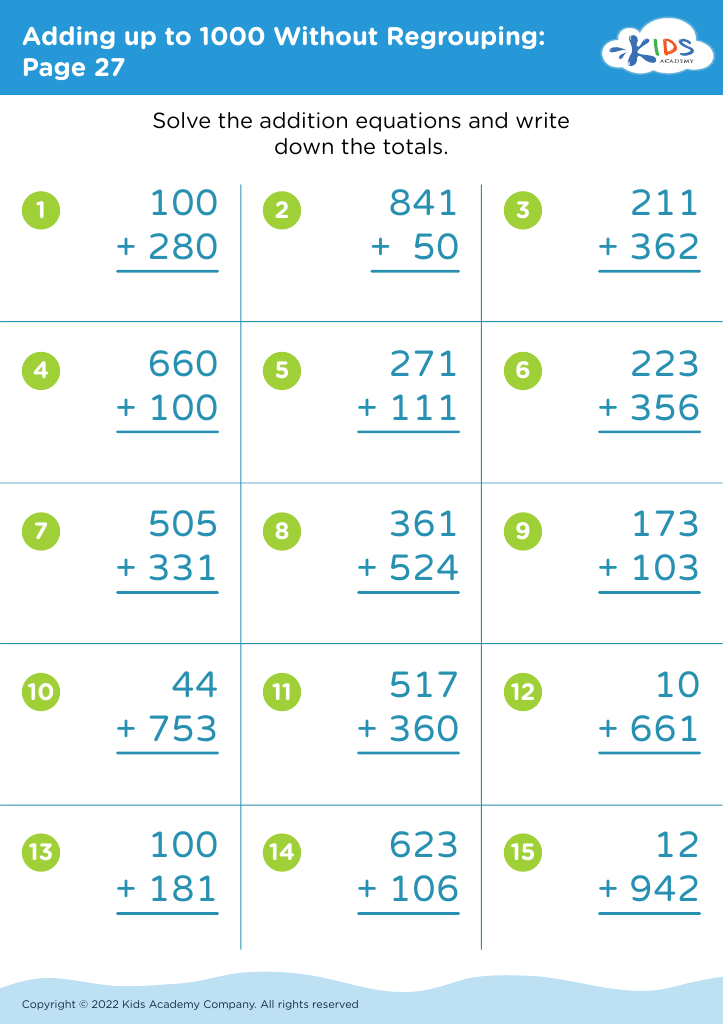
Adding up to 1000 Without Regrouping: Page 27
Worksheet
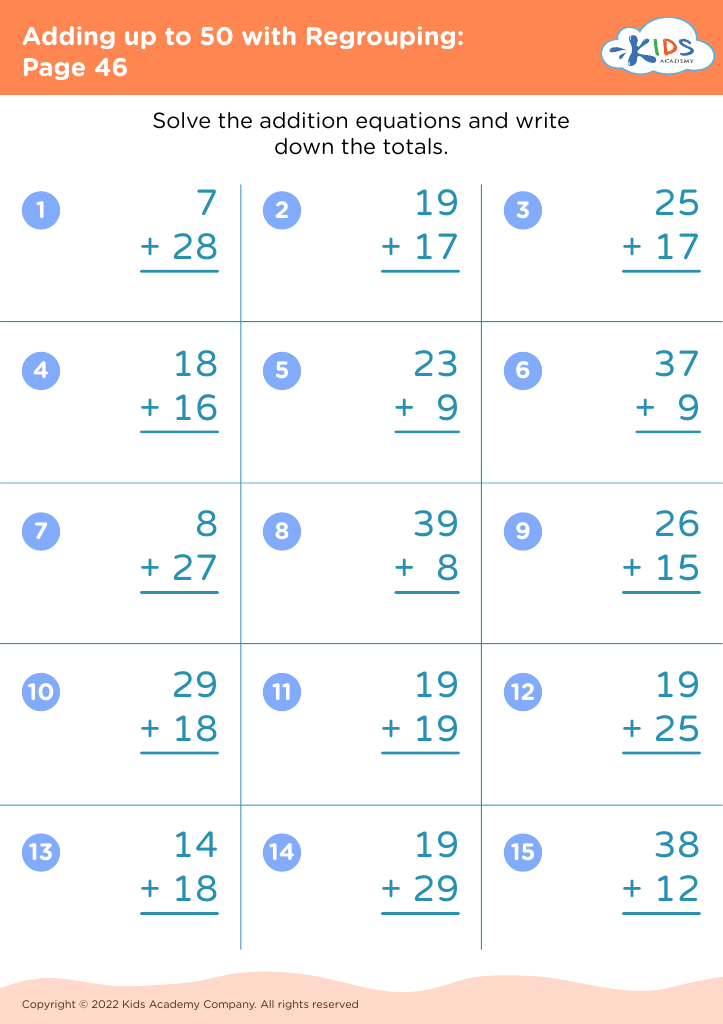
Adding up to 50 with Regrouping: Page 46
Worksheet
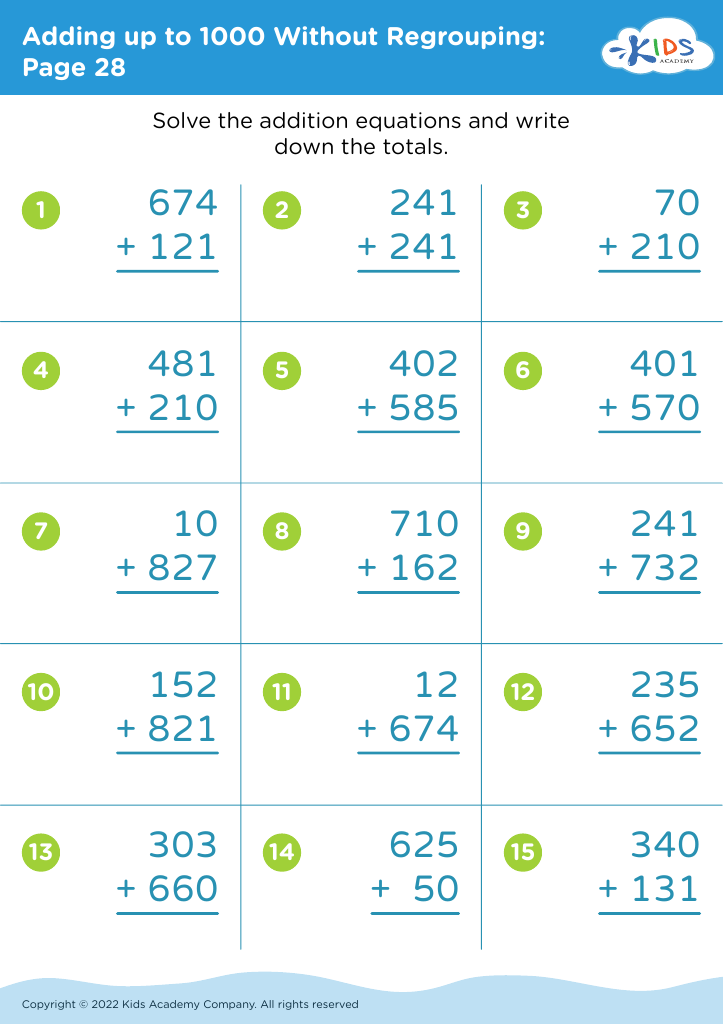
Adding up to 1000 Without Regrouping: Page 28
Worksheet
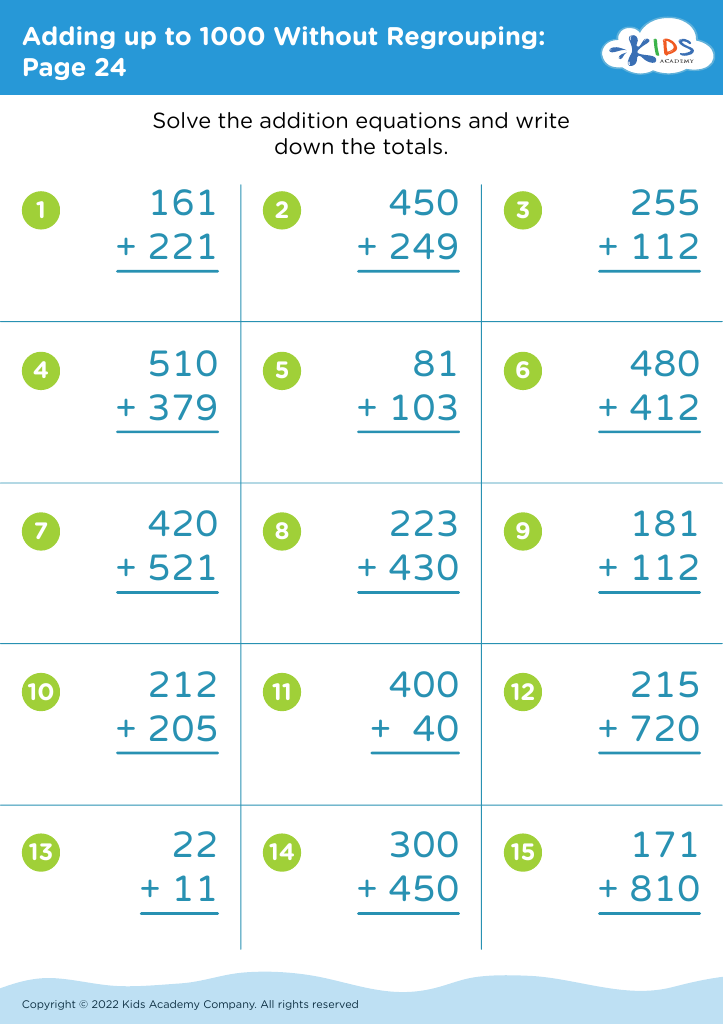
Adding up to 1000 Without Regrouping: Page 24
Worksheet


Simplifying fractions addition and subtraction for children aged 7-9 is crucial for several reasons. At this developmental stage, kids are building foundational mathematical skills that will support more complex learning in later years. Understanding fractions is fundamental to many areas of mathematics, including algebra, geometry, and even real-world applications like measuring ingredients in recipes or analyzing data.

Introducing fractions addition and subtraction simplification at an early age helps children grasp the concept of equivalent fractions, which is essential for understanding relations between different fractions. Simplifying these fractions fosters better number sense, allowing students to see patterns and connections in numbers, aiding mental math abilities.

For teachers and parents, ensuring that fraction skills are mastered early removes potential future obstacles in more advanced math topics. It builds student confidence, allowing them to approach more complex problems with the belief that they can solve them. Moreover, developing fraction skills at a young age encourages analytical thinking and problem-solving skills, fostering a growth mindset and perseverance in tackling mathematical challenges.

In conclusion, simplifying fractions addition and subtraction is about more than just math; it is about equipping children with the tools for academic success and critical thinking. Parents and teachers have a pivotal role in making this learning engaging and foundational for future achievements.