Explore our engaging "Understand Fractions Addition & Subtraction Worksheets" tailored for kids aged 7-9! These printable resources are perfect for helping young learners grasp the essential concepts of fractions through addition and subtraction. Our worksheets employ fun visuals and interactive exercises to make learning fractions enjoyable and effective. Whether your child is just starting with fractions or needs a confidence boost, these activities provide the ideal blend of challenge and support. Enhance your child's math skills and promote comprehension with our user-friendly worksheets, designed to foster a love for learning while mastering foundational fraction concepts! Ideal for classroom and home use.
Check out this FREE Trial Lesson on Addition & Subtraction for age 7-9!

L

Favorites
With answer key
Interactive
  • 7-9
  • Understand fractions
  • Addition & Subtraction
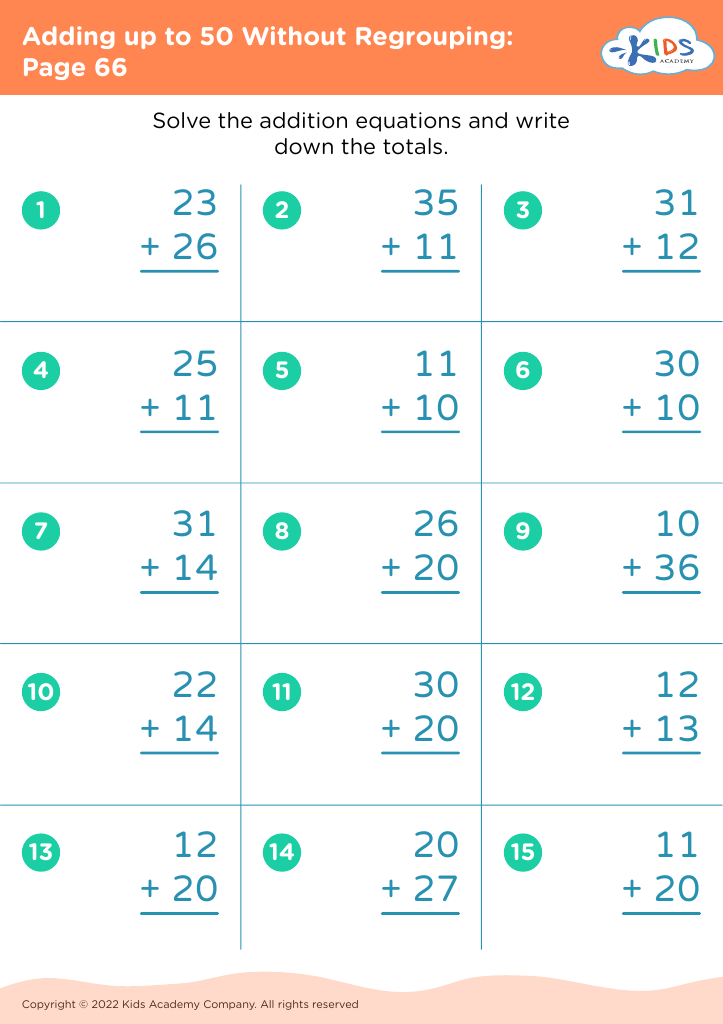
Adding up to 50 Without Regrouping: Page 66
Worksheet
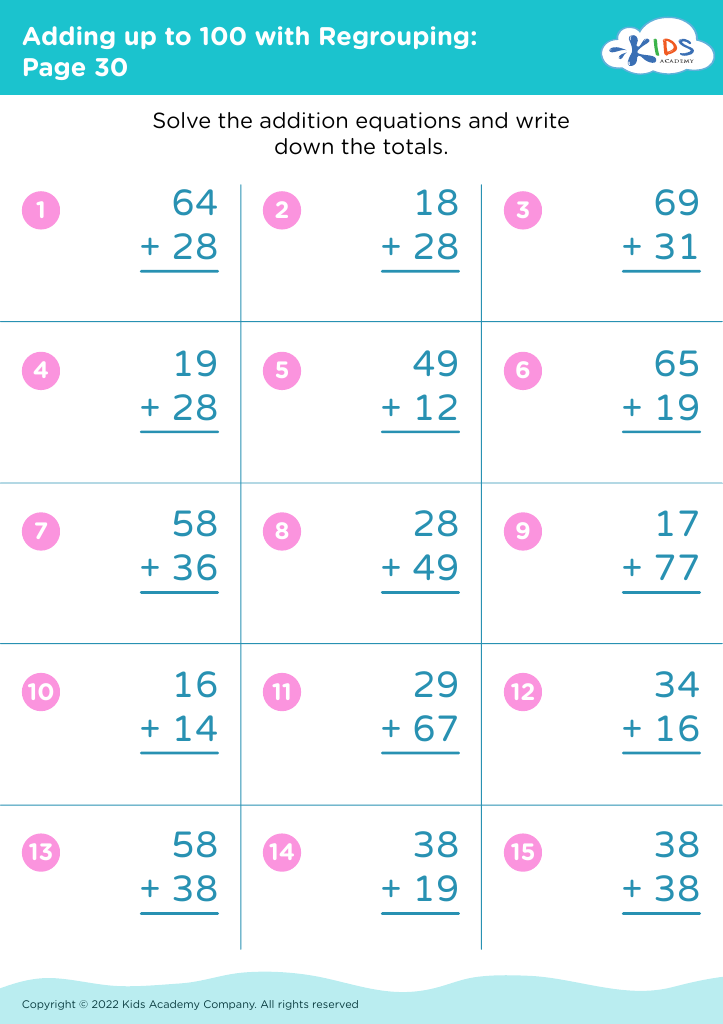
Adding up to 100 with Regrouping: Page 30
Worksheet
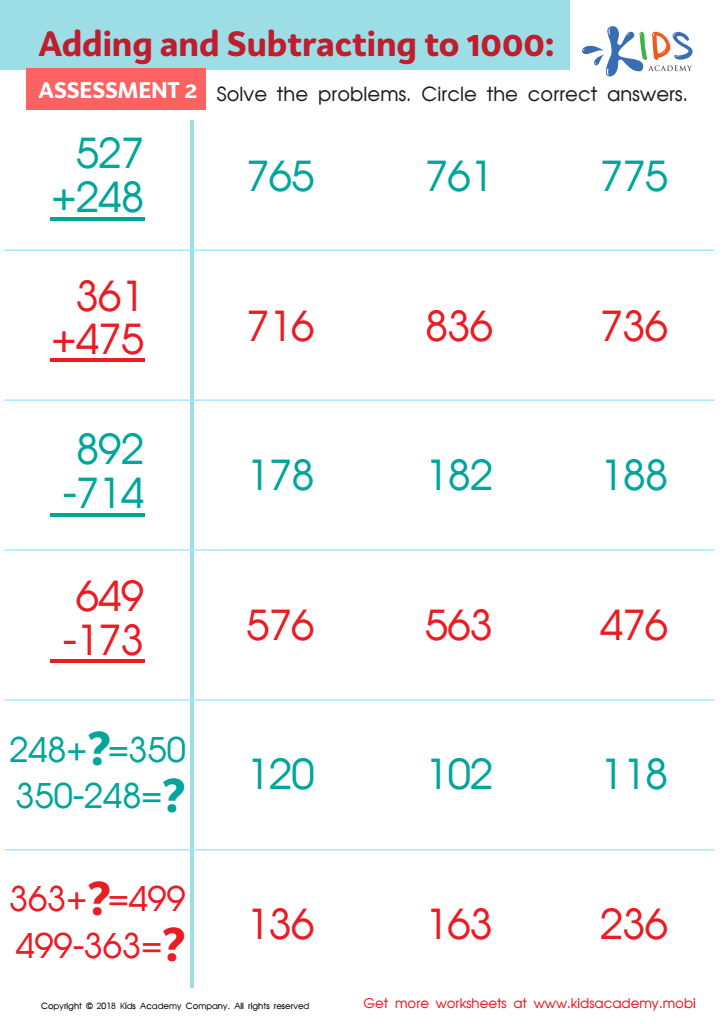
Adding and Subtracting to 1 Worksheet: Assessment 2

Adding and Subtracting to 1 Worksheet: Assessment 2

Test your child's addition and subtraction of 3-digit numbers with this assessment worksheet! They'll practice regrouping and pre-algebra skills to show their expertise. Have them work through the page and circle their answers, then see how many they got right to check their understanding and progress.
Adding and Subtracting to 1 Worksheet: Assessment 2
Worksheet
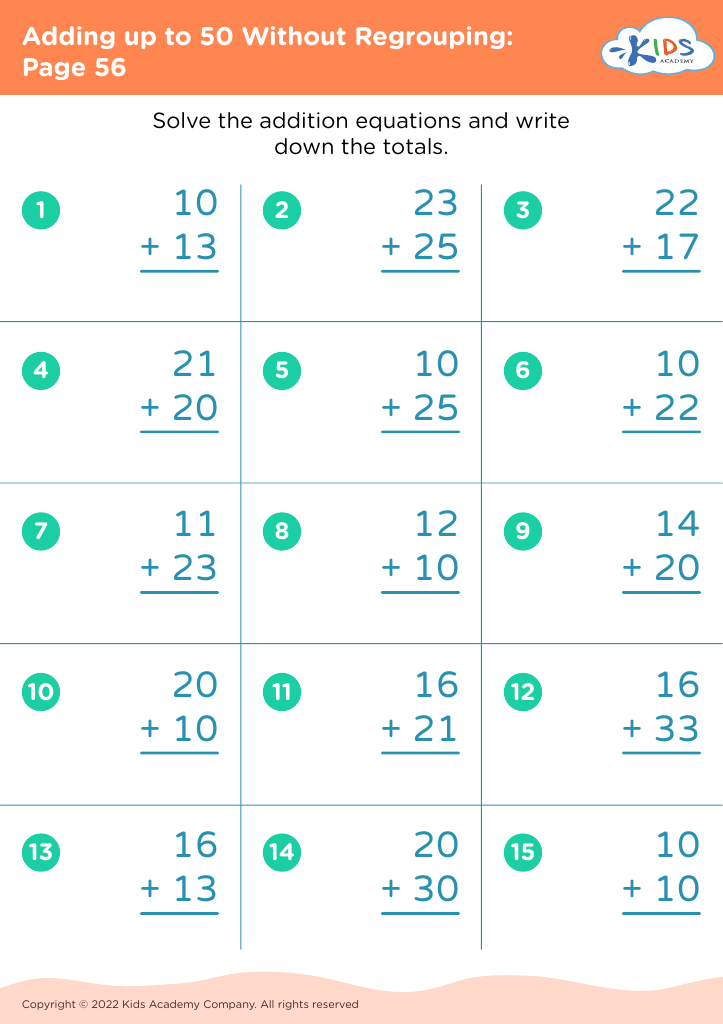
Adding up to 50 Without Regrouping: Page 56
Worksheet
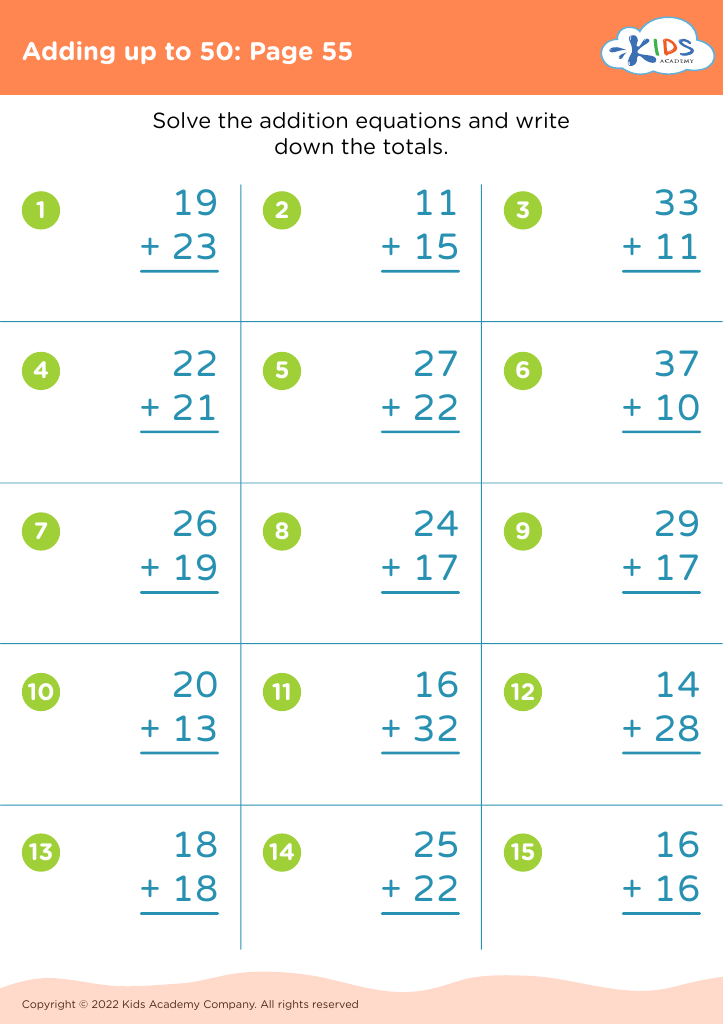
Adding up to 50: Page 55

Adding up to 50: Page 55

Adding up to 50: Page 55
Worksheet
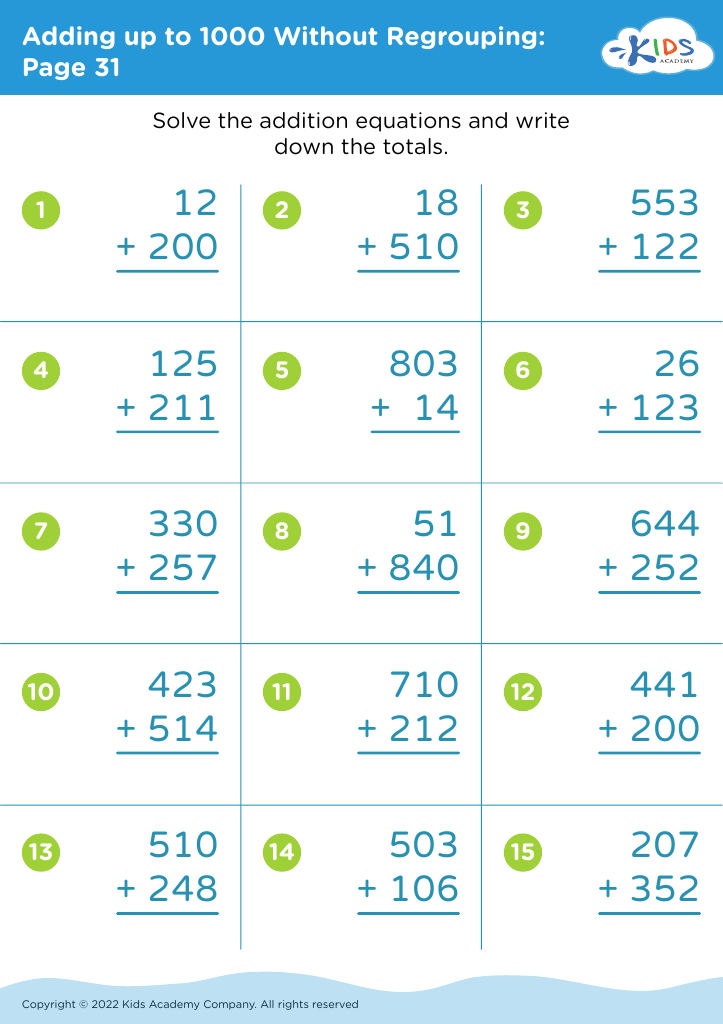
Adding up to 1000 Without Regrouping: Page 31
Worksheet
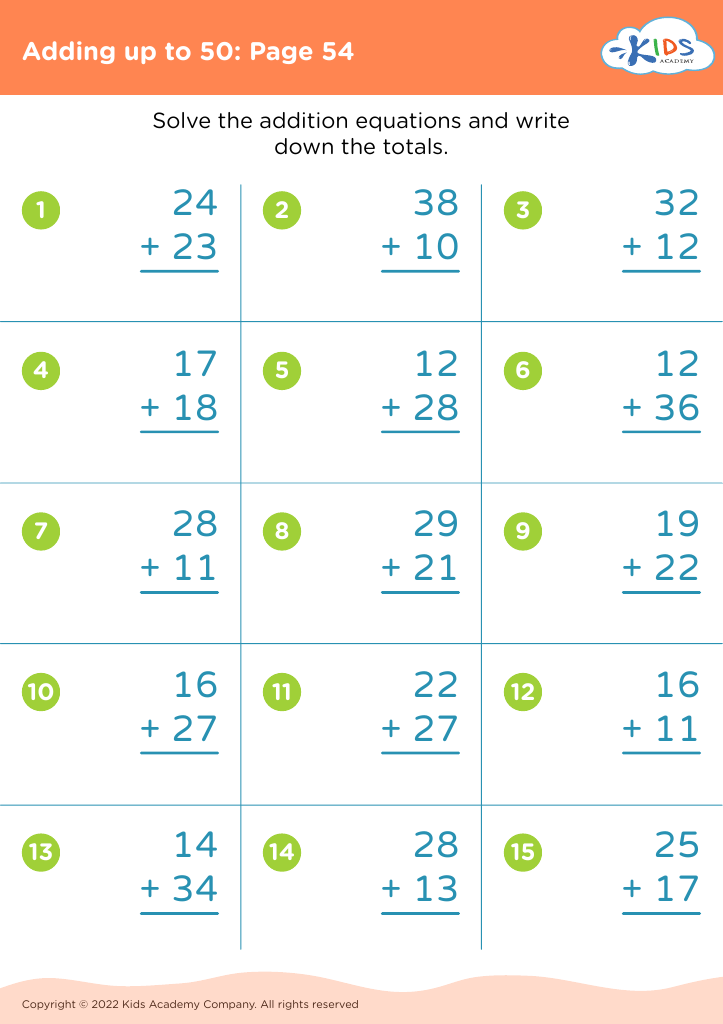
Adding up to 50: Page 54

Adding up to 50: Page 54

Adding up to 50: Page 54
Worksheet
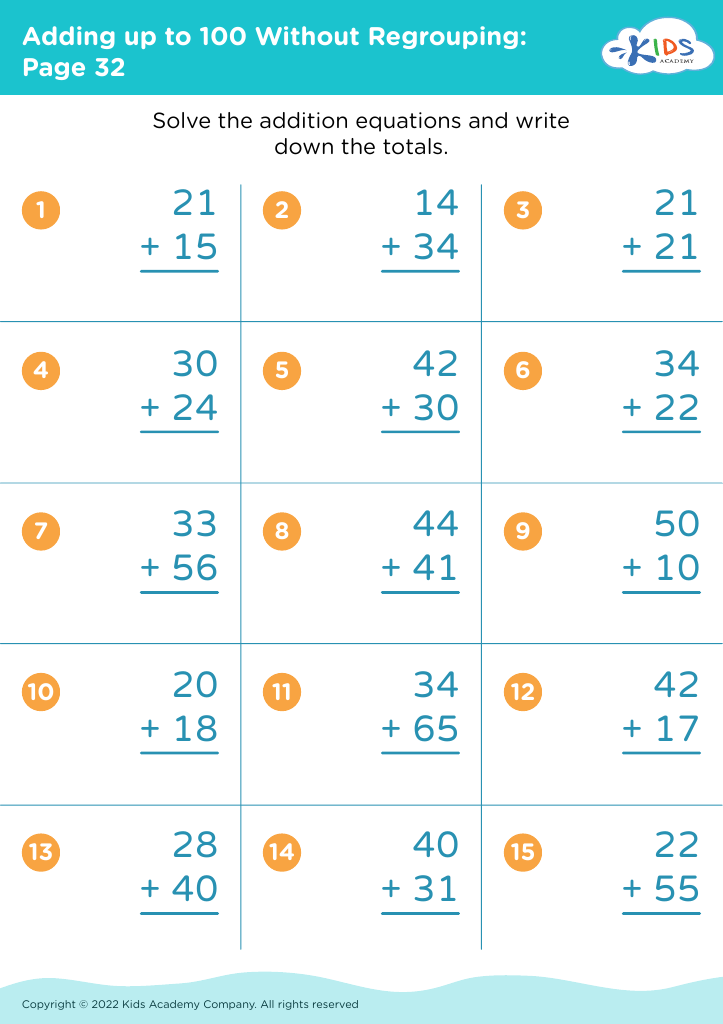
Adding up to 100 Without Regrouping: Page 32
Worksheet
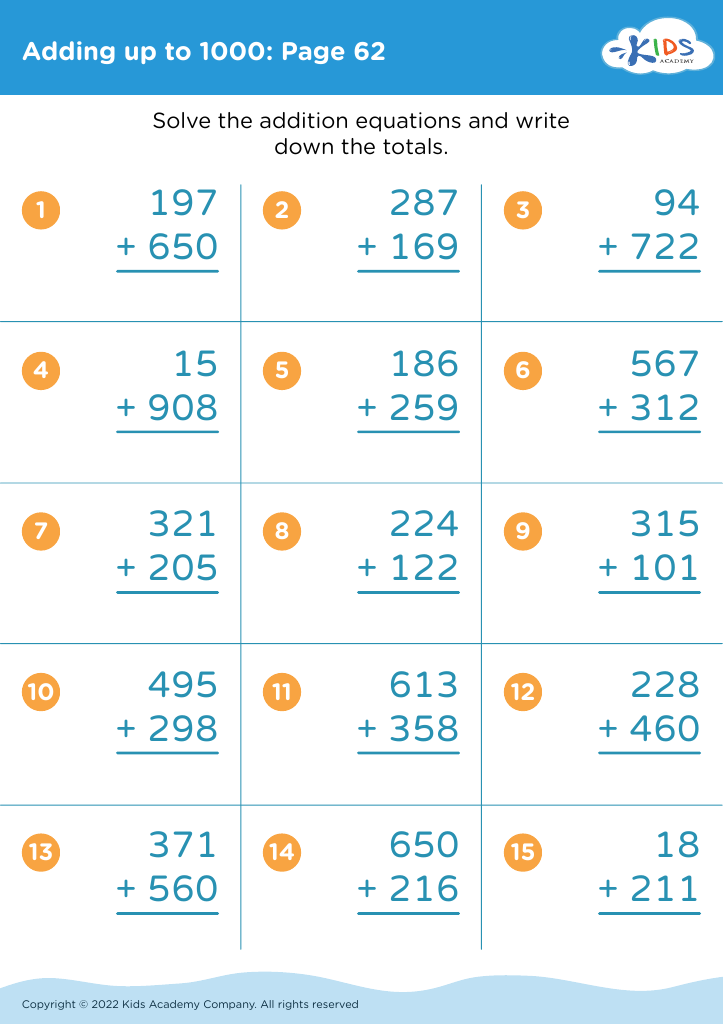
Adding up to 1000: Page 62

Adding up to 1000: Page 62

Adding up to 1000: Page 62
Worksheet
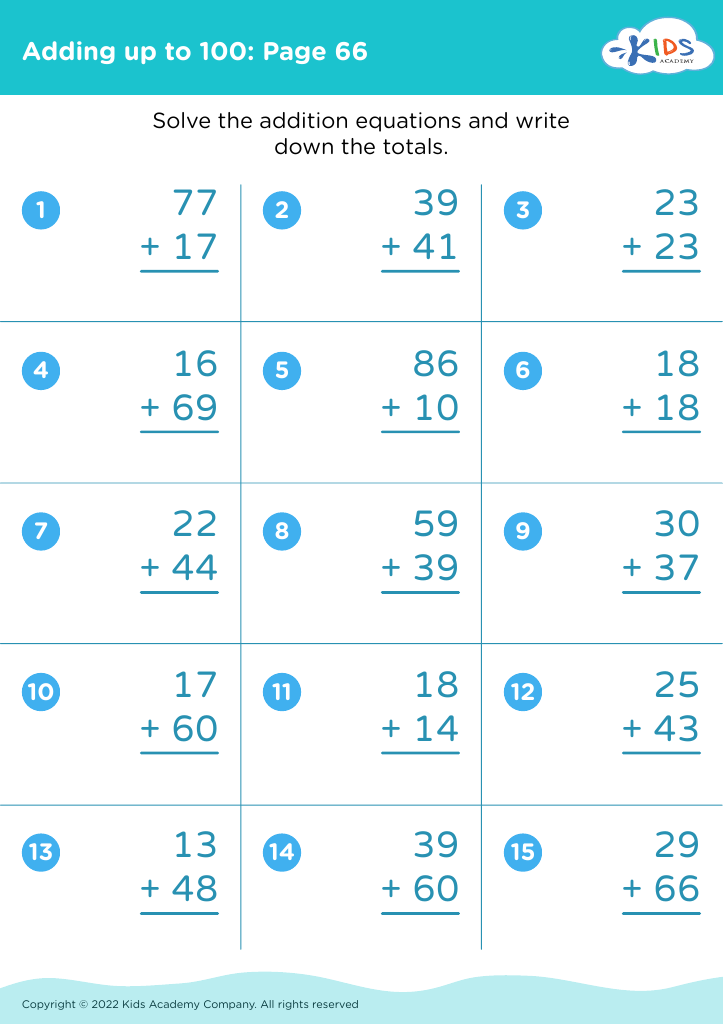
Adding up to 100: Page 66

Adding up to 100: Page 66

Adding up to 100: Page 66
Worksheet
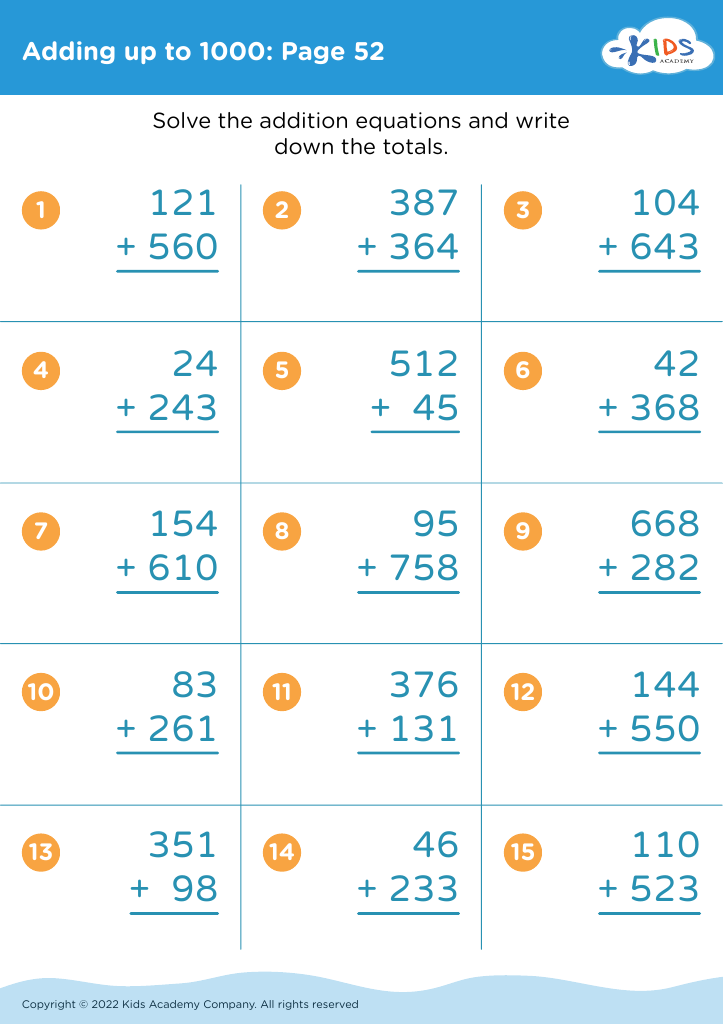
Adding up to 1000: Page 52

Adding up to 1000: Page 52

Adding up to 1000: Page 52
Worksheet
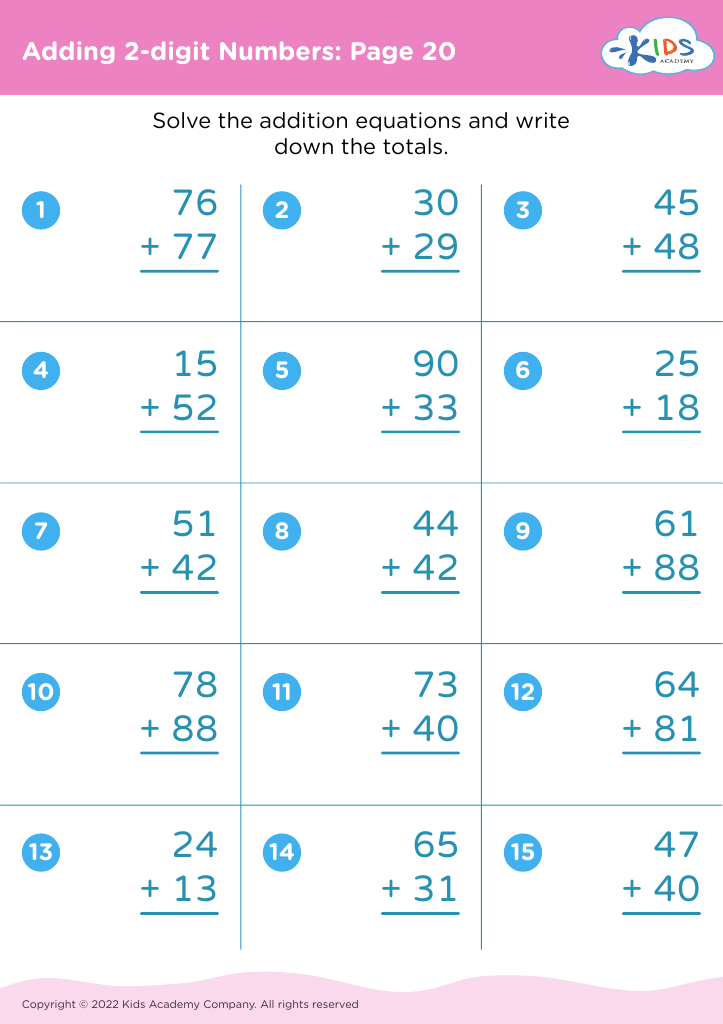
Adding 2-digit Numbers: Page 20

Adding 2-digit Numbers: Page 20

Adding 2-digit Numbers: Page 20
Worksheet
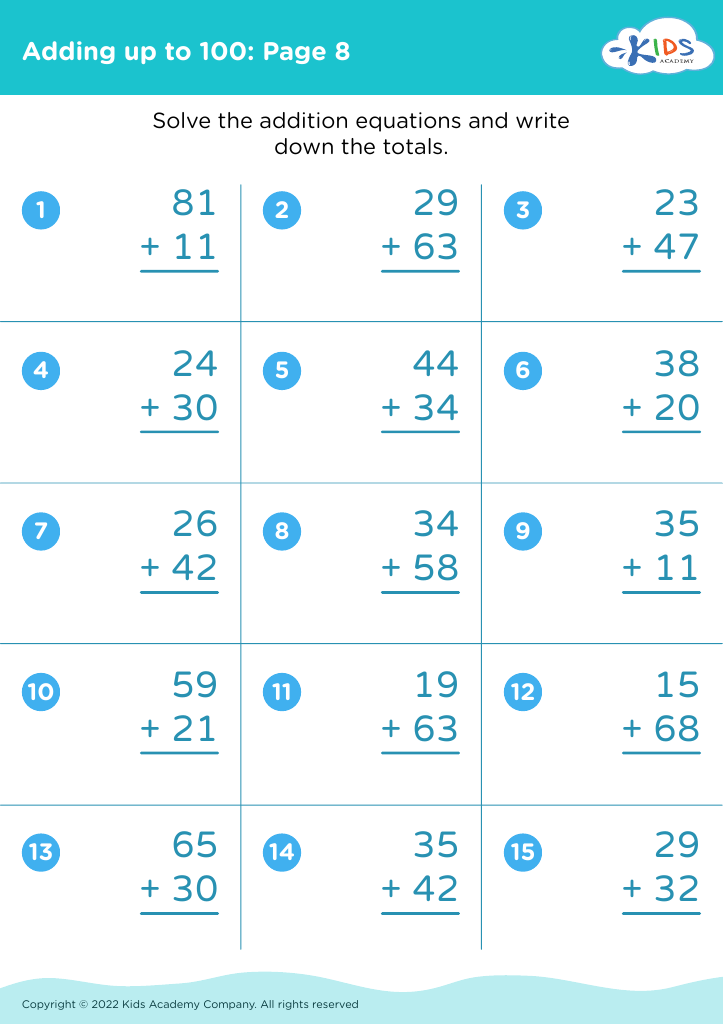
Adding up to 100: Page 8

Adding up to 100: Page 8

Adding up to 100: Page 8
Worksheet
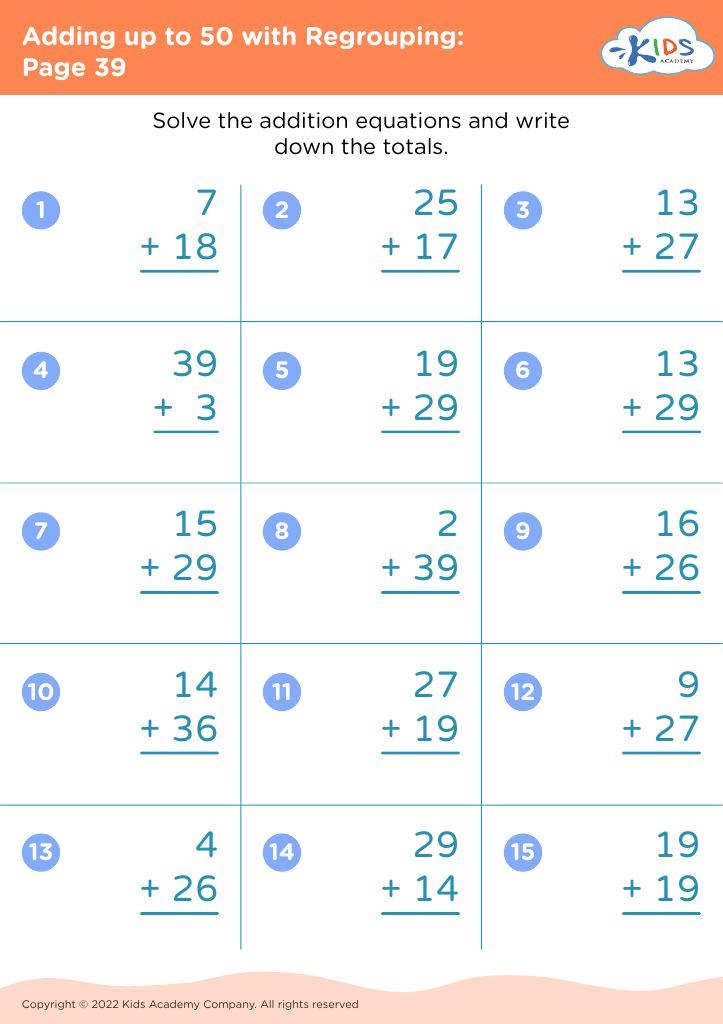
Adding up to 50 with Regrouping: Page 39
Worksheet
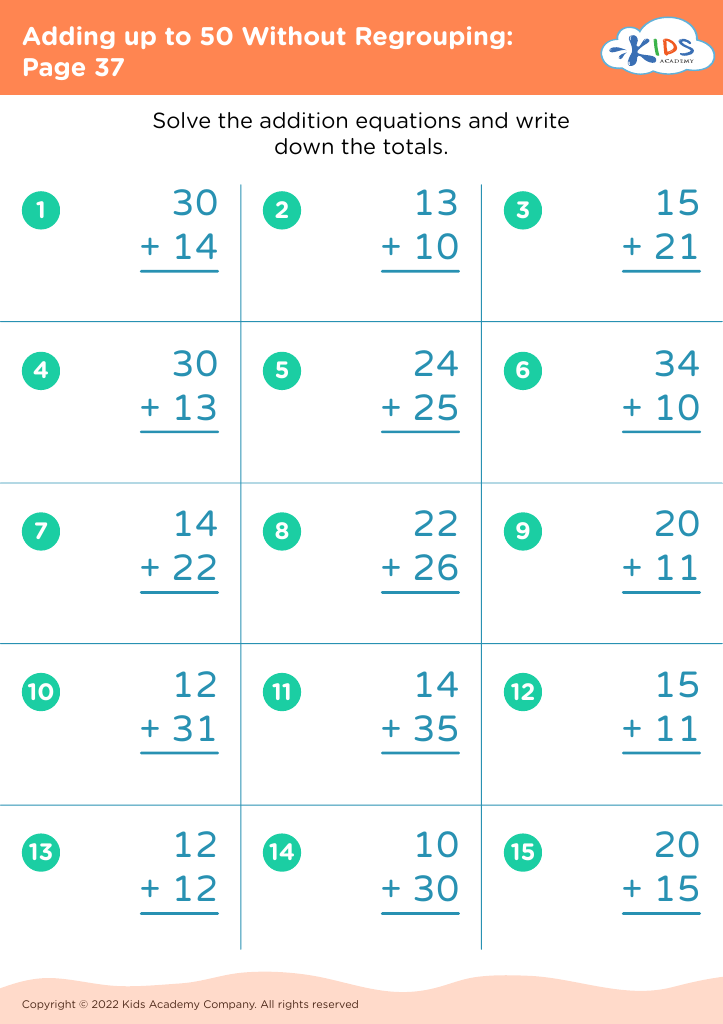
Adding up to 50 Without Regrouping: Page 37
Worksheet
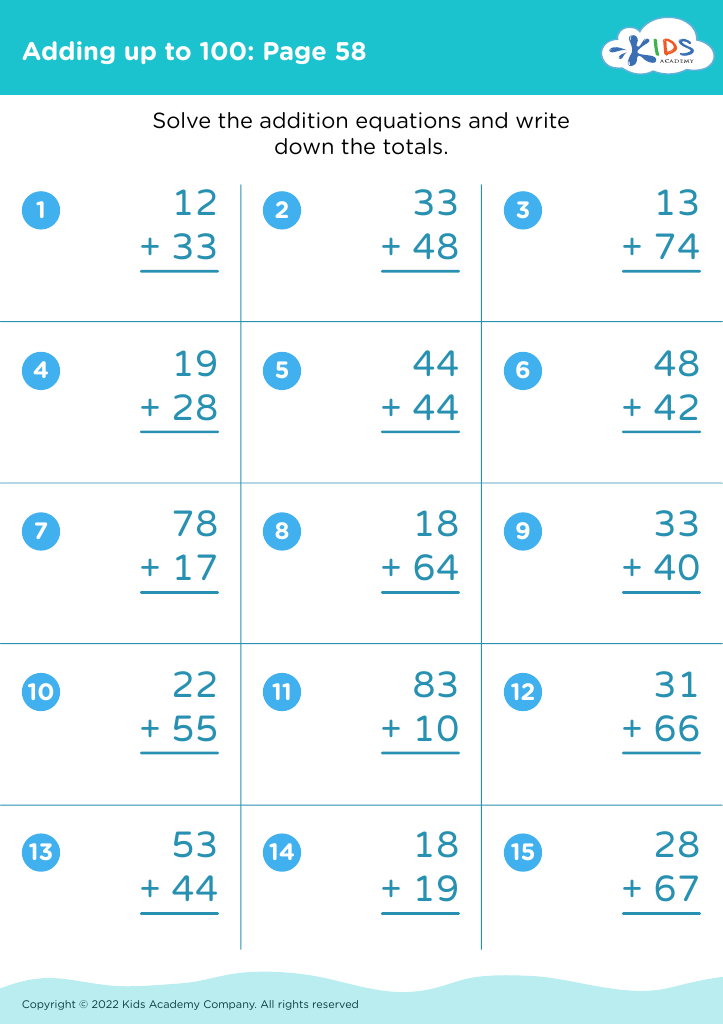
Adding up to 100: Page 58

Adding up to 100: Page 58

Adding up to 100: Page 58
Worksheet
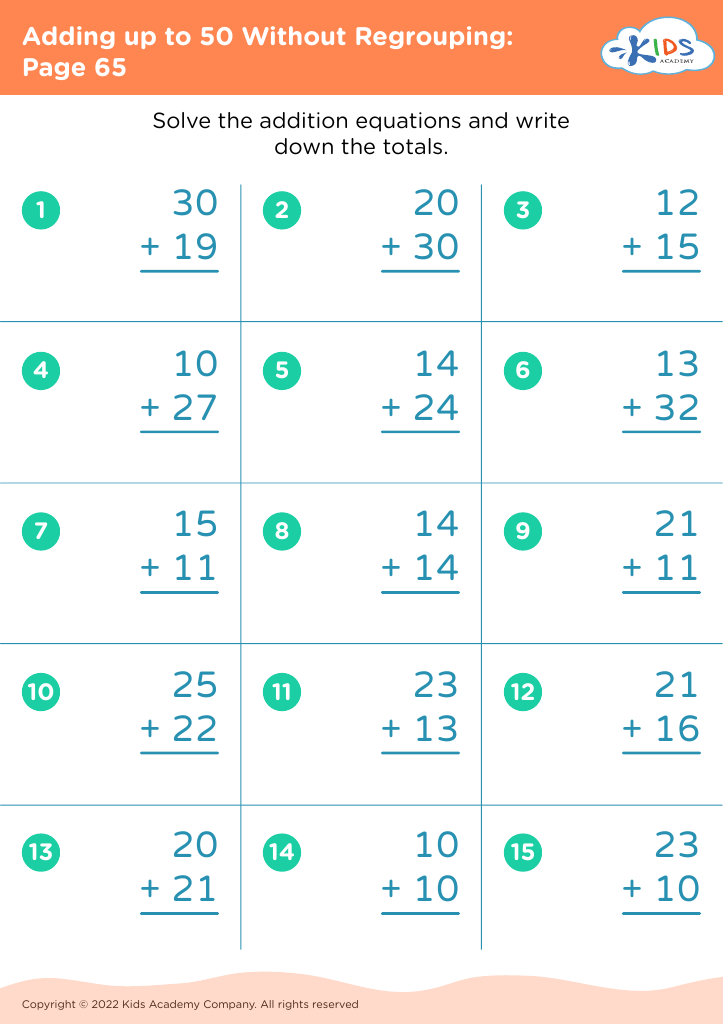
Adding up to 50 Without Regrouping: Page 65
Worksheet
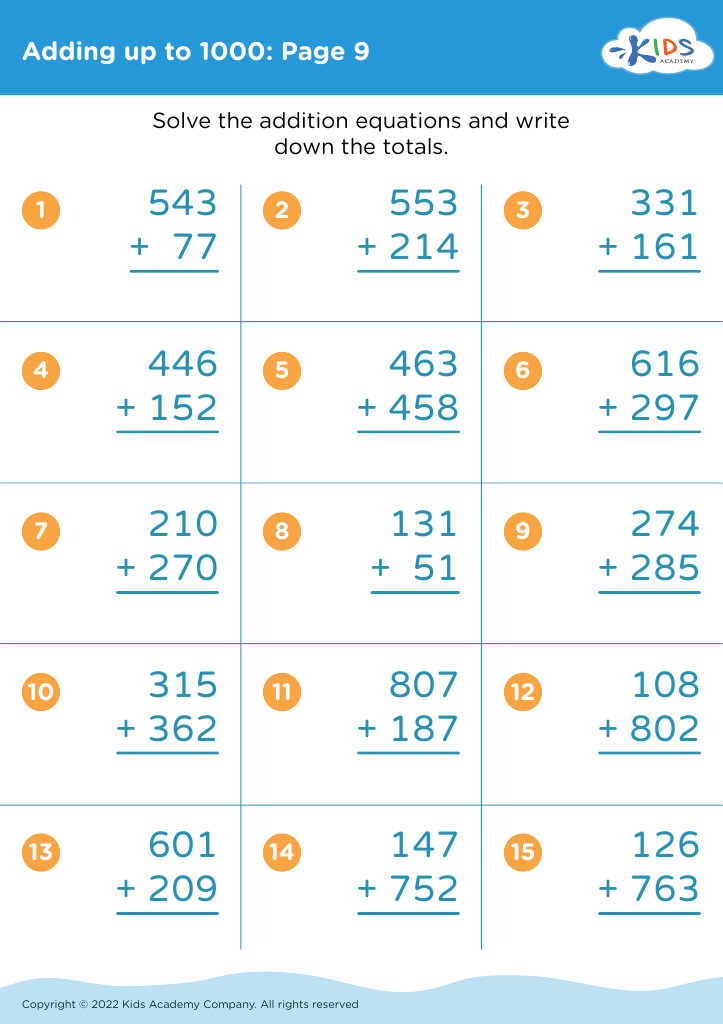
Adding up to 1000: Page 9

Adding up to 1000: Page 9

Adding up to 1000: Page 9
Worksheet
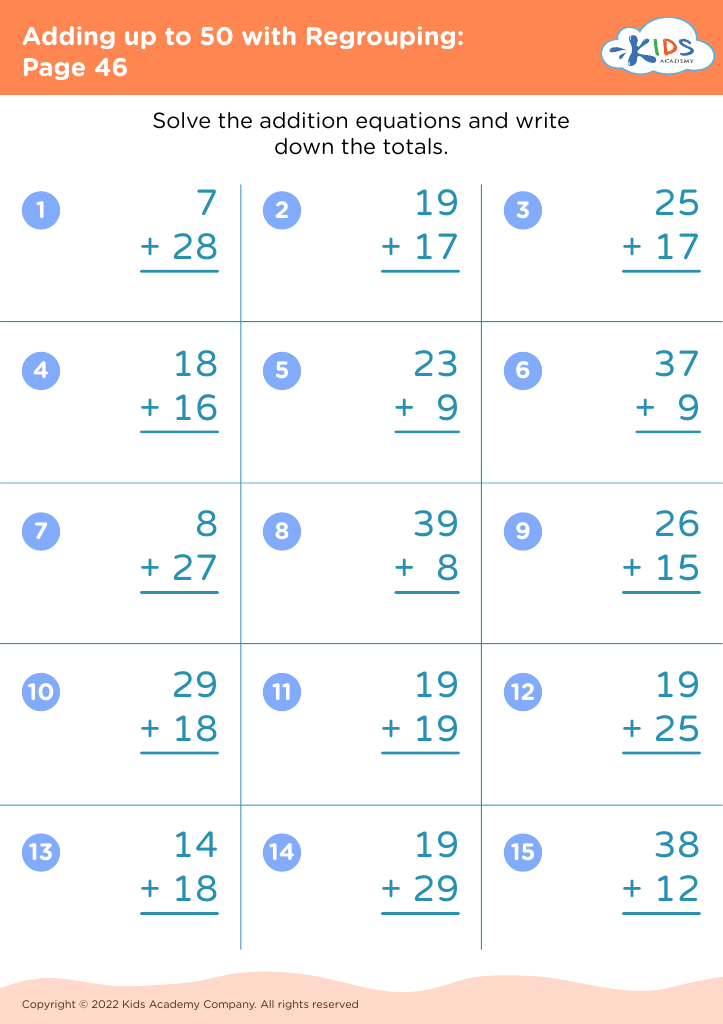
Adding up to 50 with Regrouping: Page 46
Worksheet
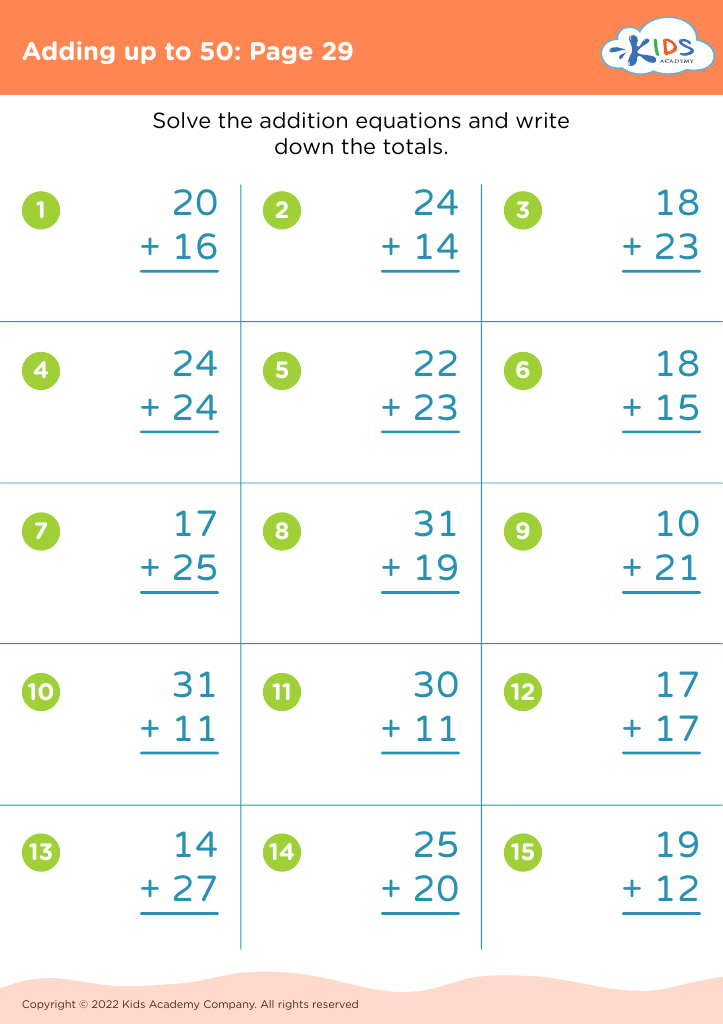
Adding up to 50: Page 29

Adding up to 50: Page 29

Adding up to 50: Page 29
Worksheet


Understanding fractions, addition, and subtraction in children aged 7-9 is crucial for several reasons. During this developmental stage, children are building foundational mathematical skills that will carry into more complex concepts in later grades. Fractions introduce the idea of parts of a whole, an essential concept for real-life applications, such as cooking or measuring, and helps with understanding division.

Moreover, mastery of basic operations involving fractions is key for future topics, such as decimal operations and ratios. If children struggle with these concepts now, they might face difficulties later, potentially leading to gaps in their understanding of mathematics.

Additionally, fostering a strong grasp of addition and subtraction can bolster students' confidence, enabling them to approach problems with a positive mindset. When teachers and parents engage with children in practicing these skills through games or real-life scenarios, it enhances motivation and provides a contextual understanding of mathematics.

Creating an environment supportive of mathematical inquiry also promotes critical thinking and problem-solving skills. In short, ensuring children understand fractions, addition, and subtraction is vital not just for academic success, but also for building their confidence and capability in everyday life.