Vocabulary Building Addition & Subtraction Worksheets for Ages 7-9
6 filtered results
-
From - To
Enhance your child's math skills and vocabulary with our specialized "Vocabulary Building Addition & Subtraction Worksheets for Ages 7-9". Designed by educational experts, these engaging worksheets combine essential arithmetic practice with vocabulary development, making math learning both fun and effective. Each worksheet offers a range of exercises that challenge and inspire, ensuring your child gains confidence in addition and subtraction while enriching their language skills. Perfect for home and classroom use, these printable worksheets are tailored to support children in mastering key concepts in a step-by-step manner. Ignite a love for learning with our innovative vocabulary building worksheets today!
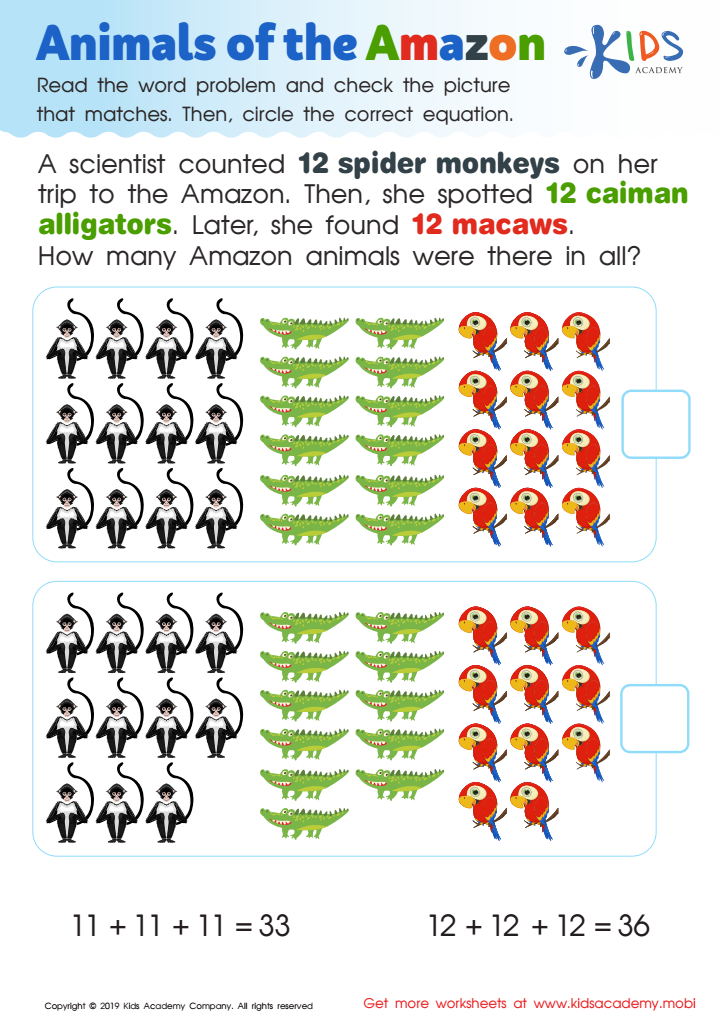
Animals of Amazon Worksheet
 Assign to My Students








Vocabulary building and foundational math skills are both cornerstones of a child's education, especially for ages 7-9. At this age, children begin to transition from simple recognition of words and numbers to more complex comprehension and problem-solving abilities. Fostering a robust vocabulary during these formative years enhances reading comprehension, enabling children to understand and analyze text more effectively. This skill is critical across all subjects, as it not only aids in language arts but also supports learning in science, social studies, and even mathematics.
Simultaneously, mastering addition and subtraction establishes the groundwork for future math concepts such as multiplication, division, and fractions. These basic operations are essential for handling everyday activities like budgeting, time management, and even cooking, making them practical life skills. Teachers and parents should integrate vocabulary building and arithmetic exercises into daily routines to reinforce these skills. Engaging, hands-on activities like word puzzles, story problems, or interactive math games can make learning enjoyable and effective.
Stronger vocabulary and math skills instill confidence and encourage a positive attitude towards learning, which can have long-lasting effects on academic performance and self-esteem. Therefore, prioritizing these areas prepares children not just for higher education but for real-life challenges, contributing to their overall cognitive and social development.








