Filters

817 filtered results

Clear all filters
Favorites
With answer key
Interactive

817 filtered results

Difficulty Level

Grade


Subject

    Check out this FREE Trial Lesson on Addition for age 7-9!

    More & Less Word Problems

    Favorites
    With answer key
    Interactive
    • 7-9
    • Addition
    Adding up to 50 Without Regrouping: Page 65
    Adding up to 50 Without Regrouping: Page 65
    Adding up to 50 Without Regrouping: Page 65
    Worksheet
    Recycling - More or Less Worksheet
    Recycling - More or Less Worksheet

    Recycling - More or Less Worksheet

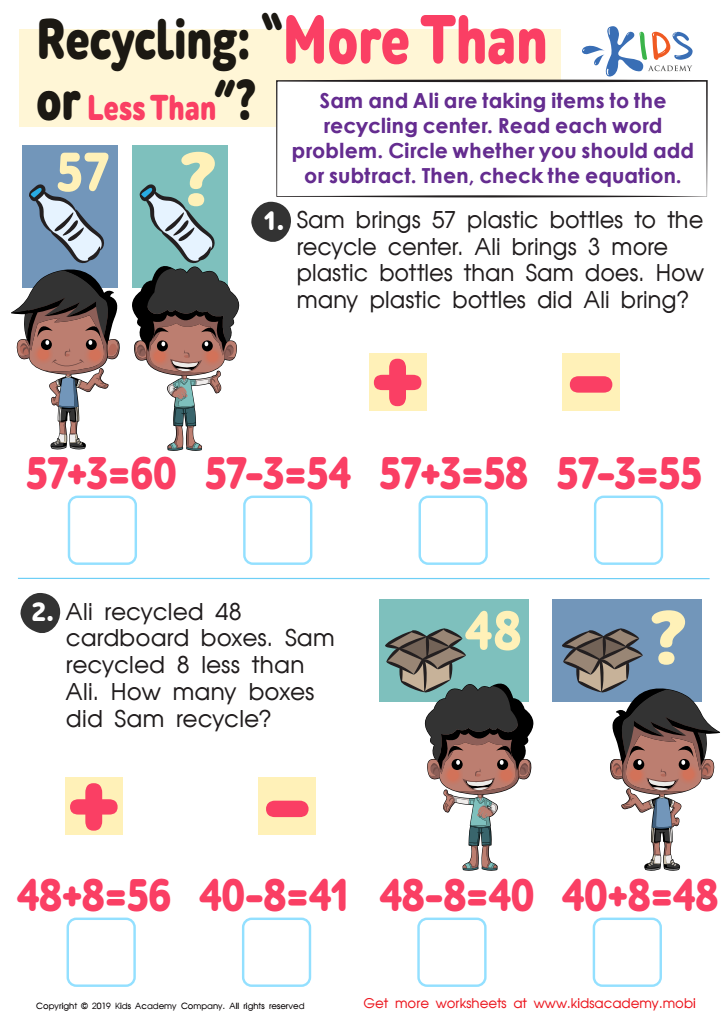
    Your child can compare numbers and solve word problems with this free worksheet. Help them understand what's being asked as Sam and Ali take items to the recycling center. They can choose the correct equation to match the word problem and apply their skills in reading and pulling out the appropriate information.
    Recycling - More or Less Worksheet
    Worksheet
    Adding up to 100 with Regrouping: Page 56
    Adding up to 100 with Regrouping: Page 56
    Adding up to 100 with Regrouping: Page 56
    Worksheet
    Adding up to 1000 with Regrouping: Page 53
    Adding up to 1000 with Regrouping: Page 53
    Adding up to 1000 with Regrouping: Page 53
    Worksheet
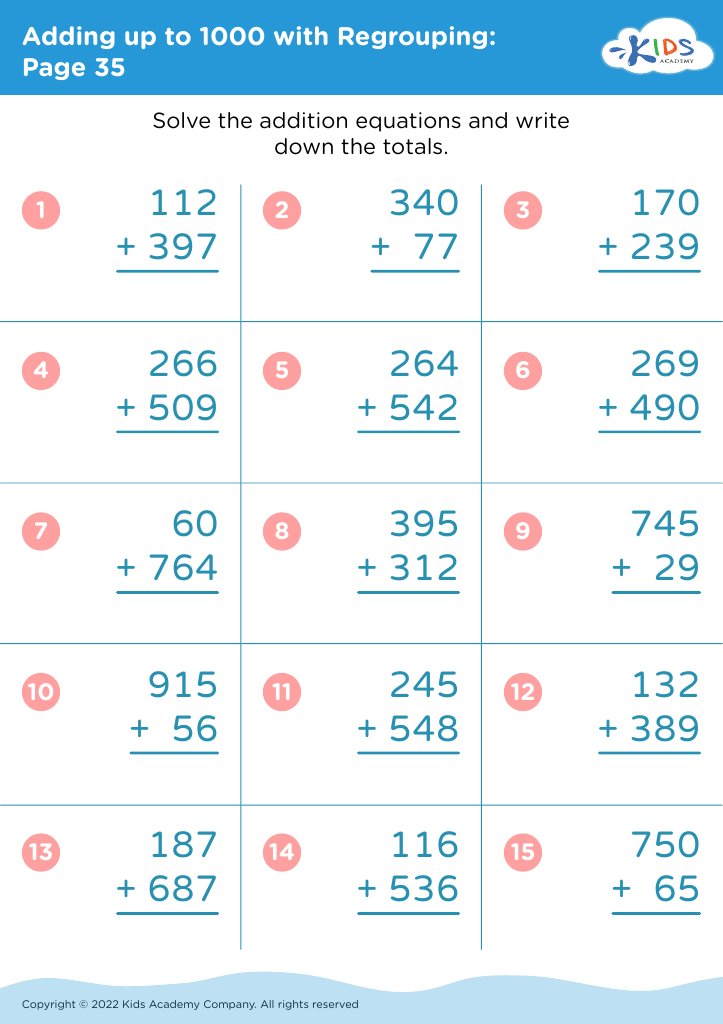
    Adding up to 1000 with Regrouping: Page 35
    Adding up to 1000 with Regrouping: Page 35
    Adding up to 1000 with Regrouping: Page 35
    Worksheet
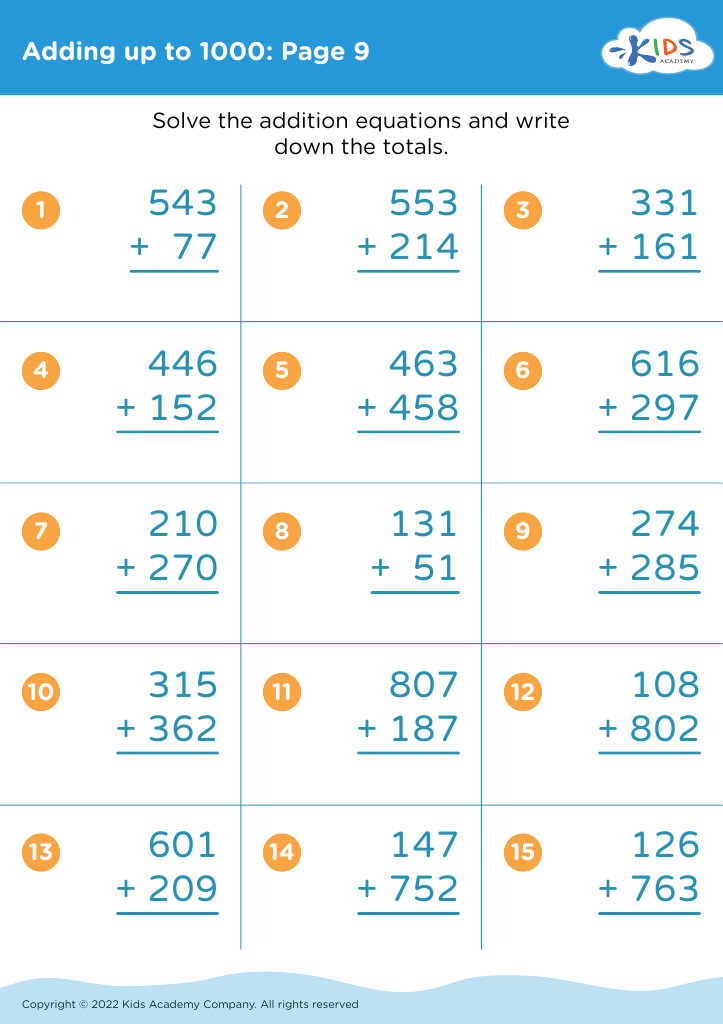
    Adding up to 1000: Page 9
    Adding up to 1000: Page 9

    Adding up to 1000: Page 9

    Adding up to 1000: Page 9
    Worksheet
    Free addition PDF worksheet for 3rd grade
    Free addition PDF worksheet for 3rd grade

    Free Addition Worksheet

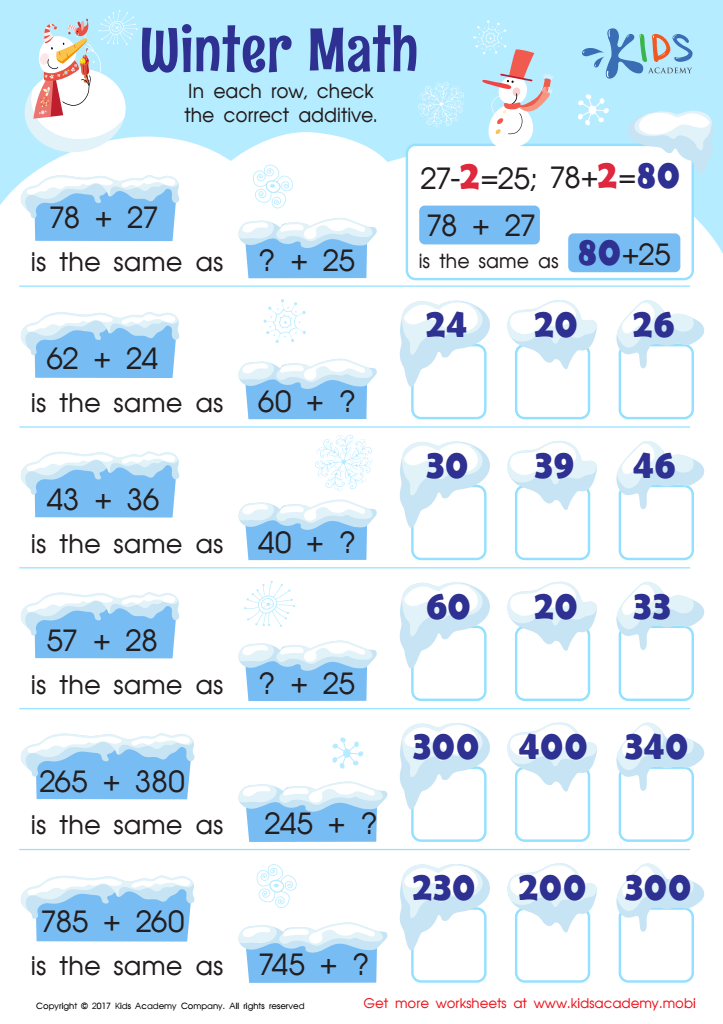
    Perfect for a wintry day, challenge your 3rd grader to compare addition equations and fill in the missing numbers in the PDF. This winter-themed worksheet is sure to bring a smile while your 3rd grader practices their addition skills. Perfect for a blustery day, challenge your child to compare addition equations and complete the missing numbers in the PDF.
    Free Addition Worksheet
    Worksheet
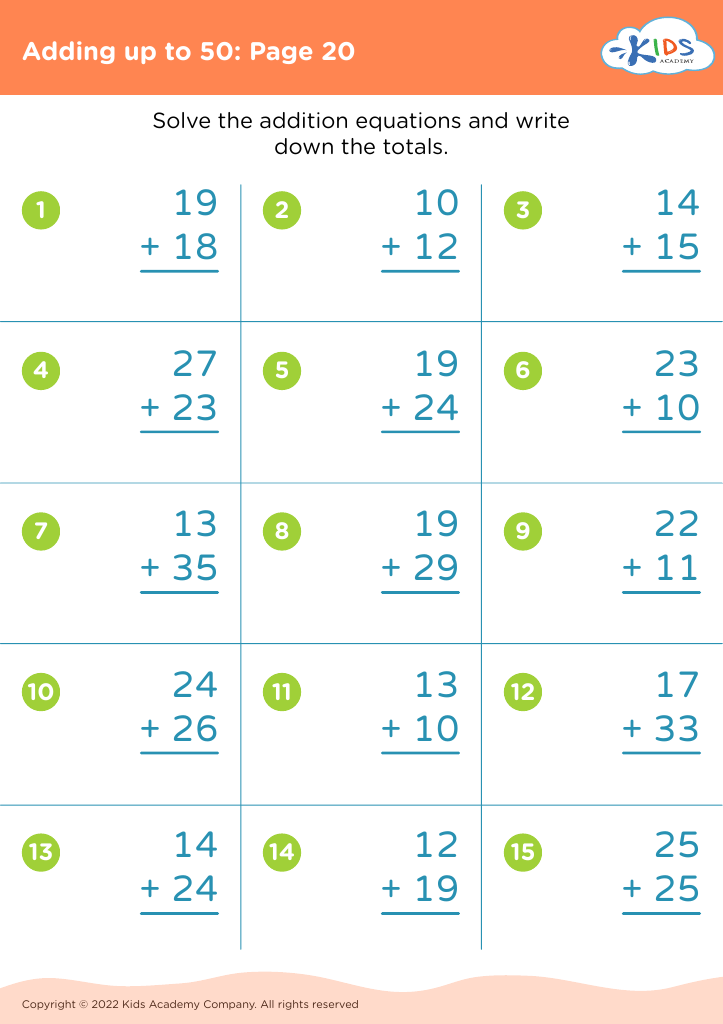
    Adding up to 50: Page 20
    Adding up to 50: Page 20

    Adding up to 50: Page 20

    Adding up to 50: Page 20
    Worksheet
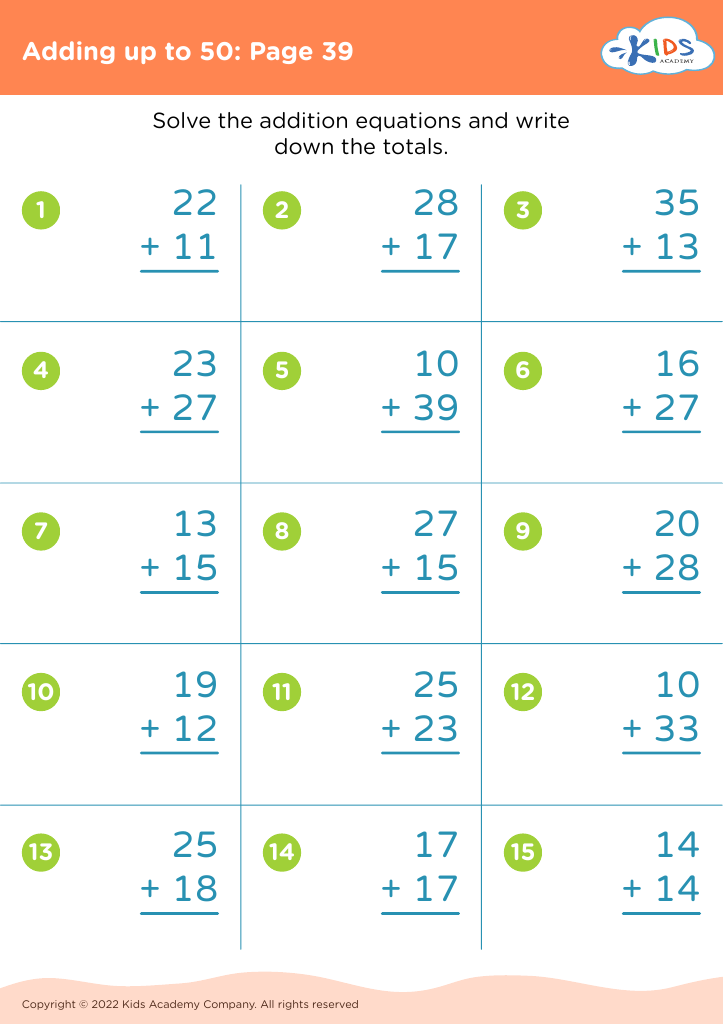
    Adding up to 50: Page 39
    Adding up to 50: Page 39

    Adding up to 50: Page 39

    Adding up to 50: Page 39
    Worksheet
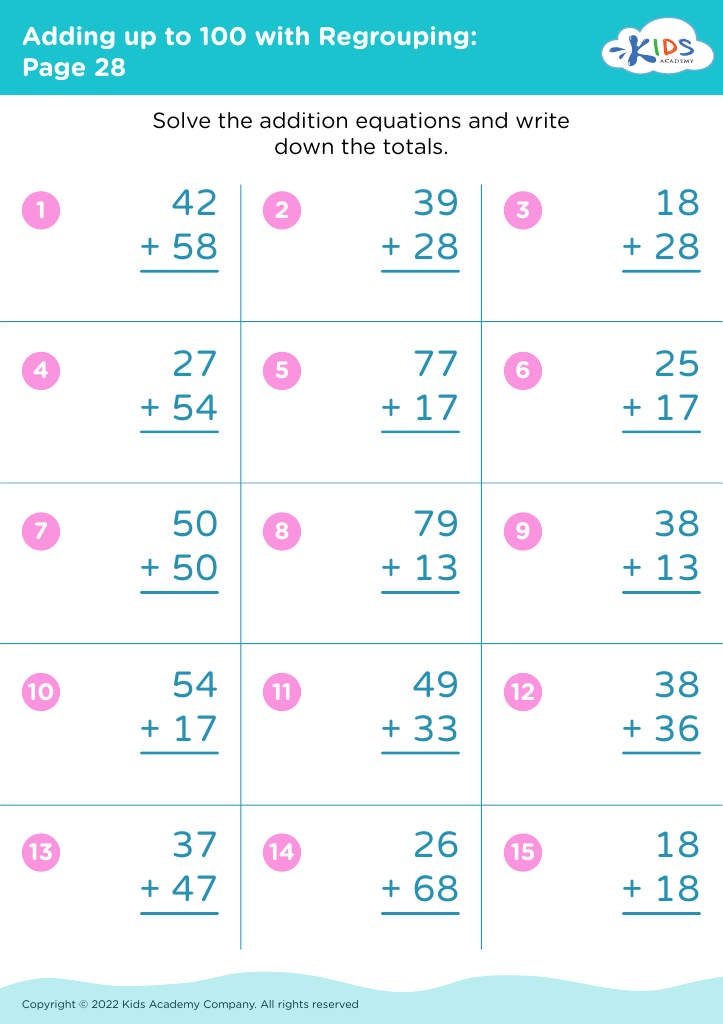
    Adding up to 100 with Regrouping: Page 28
    Adding up to 100 with Regrouping: Page 28
    Adding up to 100 with Regrouping: Page 28
    Worksheet
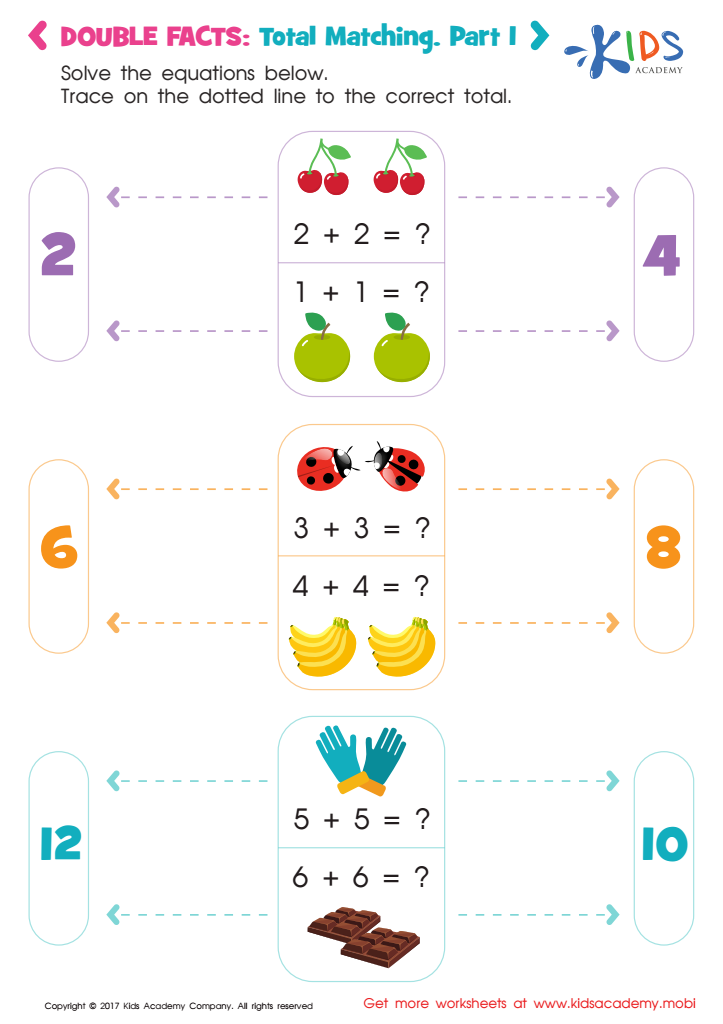
    Double Facts: Total Matching Worksheet: Part 1
    Double Facts: Total Matching Worksheet: Part 1
    Double Facts: Total Matching Worksheet: Part 1

    Help your students take their numbers knowledge further with this fun math worksheet! Solving equations has never been more fun; simply trace the dotted lines with a pencil to the correct answer. As your child gets the hang of it, watch them be amazed as math problems become playtime.
    Double Facts: Total Matching Worksheet: Part 1
    Worksheet
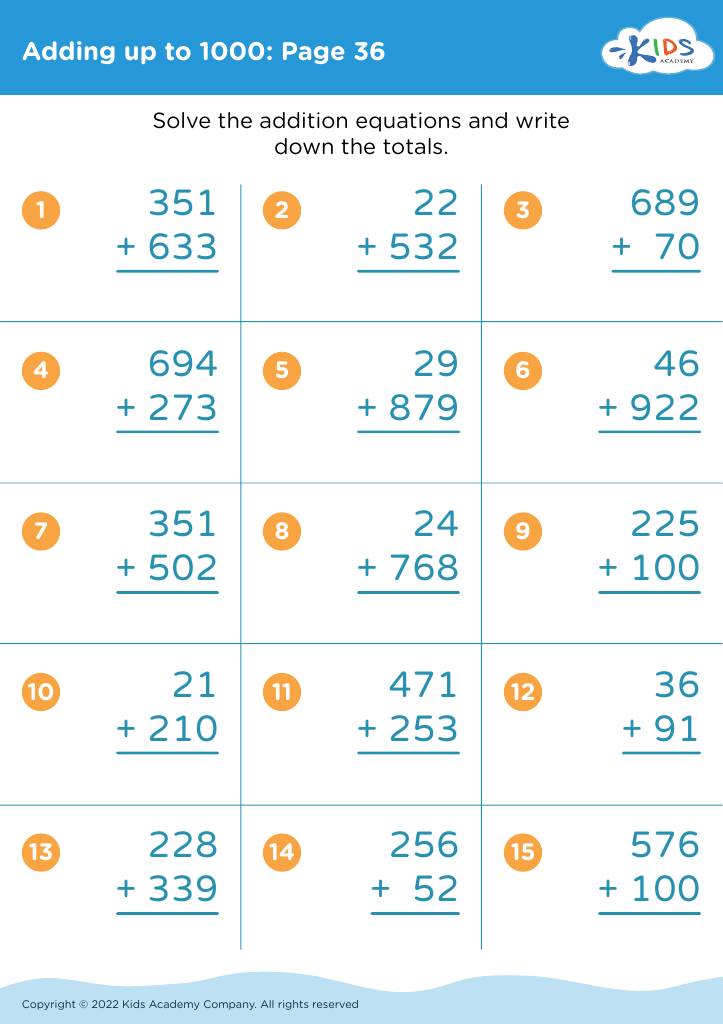
    Adding up to 1000: Page 36
    Adding up to 1000: Page 36

    Adding up to 1000: Page 36

    Adding up to 1000: Page 36
    Worksheet
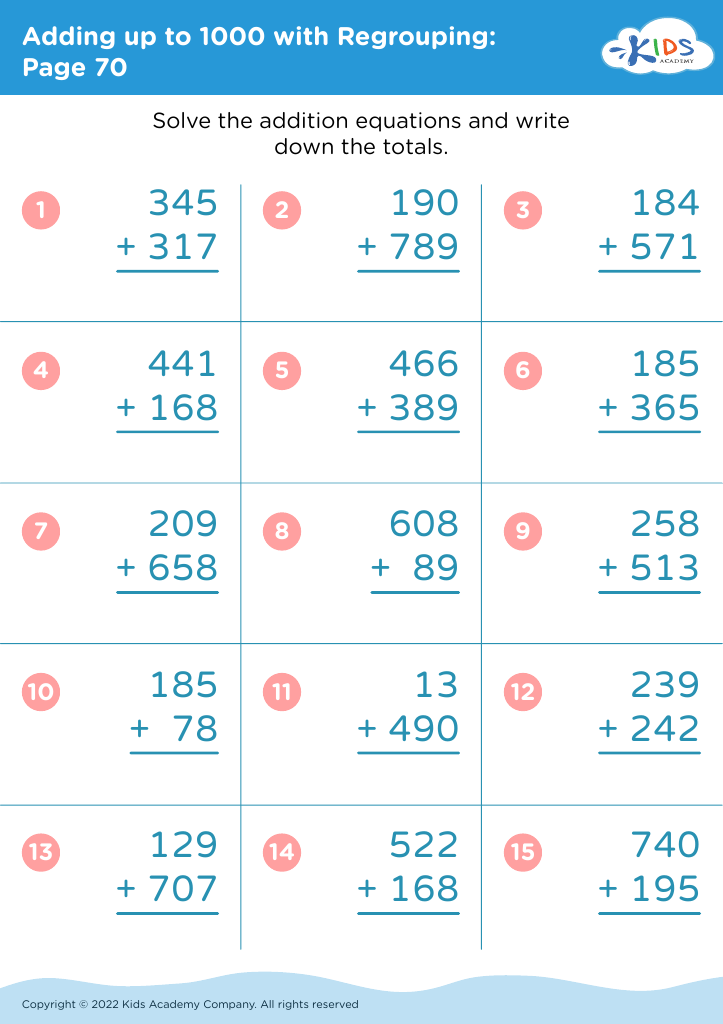
    Adding up to 1000 with Regrouping: Page 70
    Adding up to 1000 with Regrouping: Page 70
    Adding up to 1000 with Regrouping: Page 70
    Worksheet
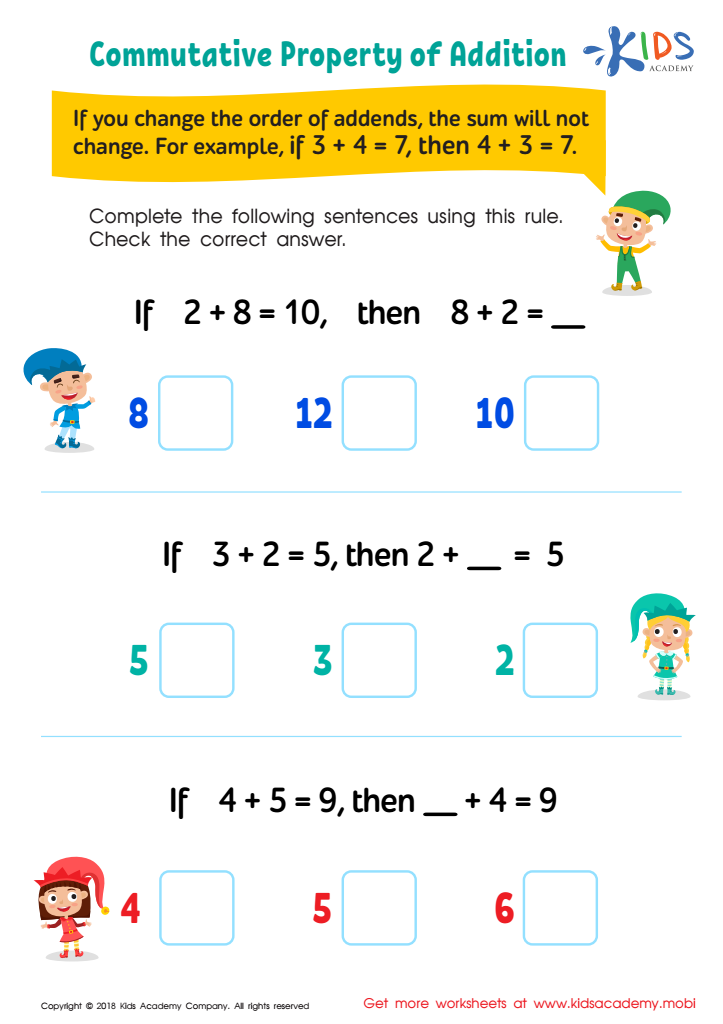
    Commutative Property of Addition Worksheet
    Commutative Property of Addition Worksheet
    Commutative Property of Addition Worksheet
    Master the commutative property of addition with Kids Academy's worksheet! Kids will have fun with silly elves as they complete the rows, switching or adding the addends. Observe that the sum stays the same no matter the order of the numbers!
    Commutative Property of Addition Worksheet
    Worksheet
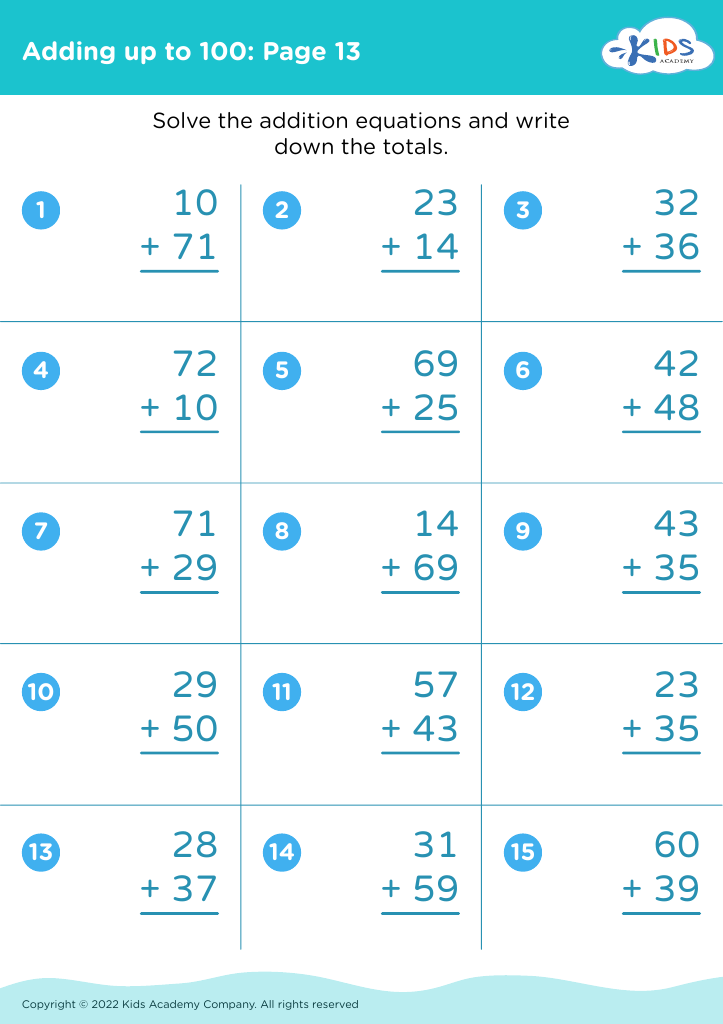
    Adding up to 100: Page 13
    Adding up to 100: Page 13

    Adding up to 100: Page 13

    Adding up to 100: Page 13
    Worksheet
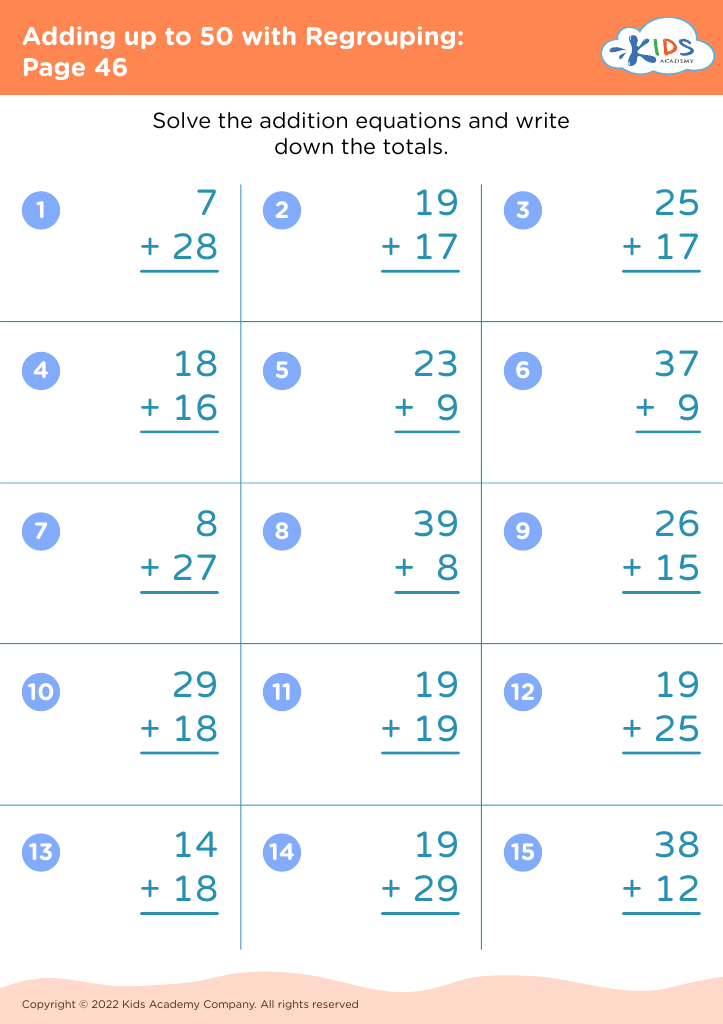
    Adding up to 50 with Regrouping: Page 46
    Adding up to 50 with Regrouping: Page 46
    Adding up to 50 with Regrouping: Page 46
    Worksheet
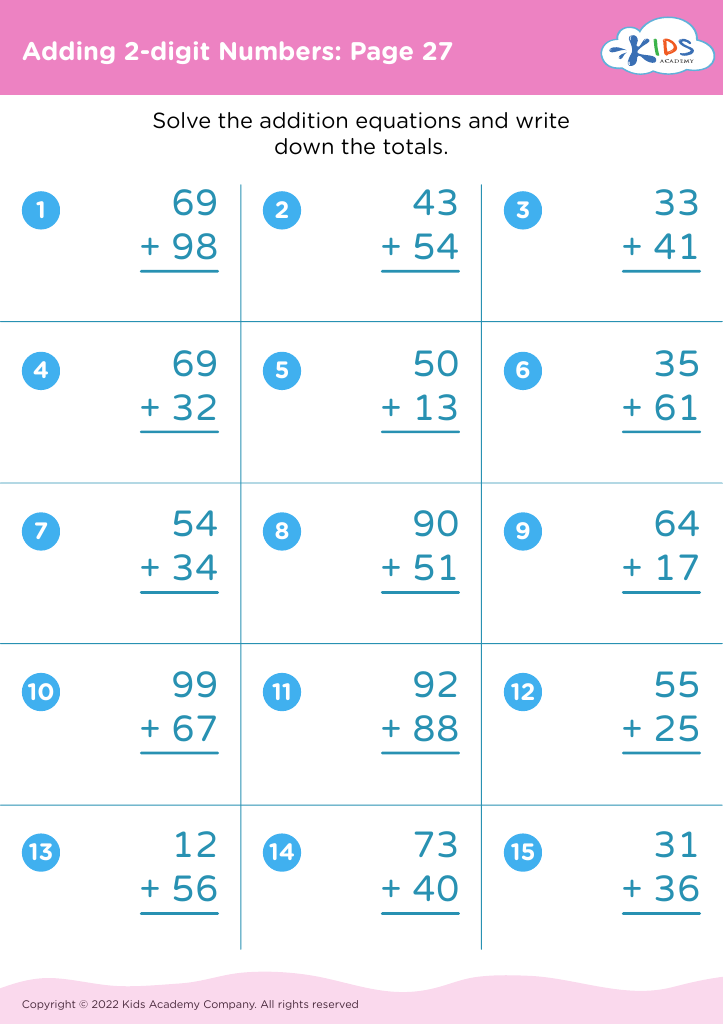
    Adding 2-digit Numbers: Page 27
    Adding 2-digit Numbers: Page 27

    Adding 2-digit Numbers: Page 27

    Adding 2-digit Numbers: Page 27
    Worksheet
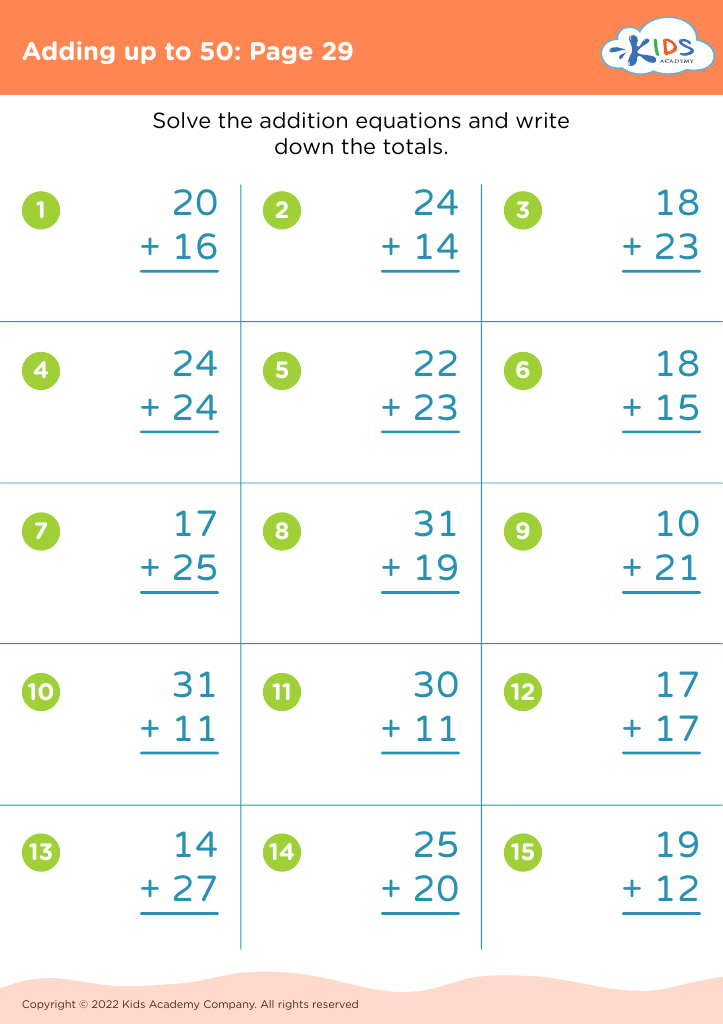
    Adding up to 50: Page 29
    Adding up to 50: Page 29

    Adding up to 50: Page 29

    Adding up to 50: Page 29
    Worksheet
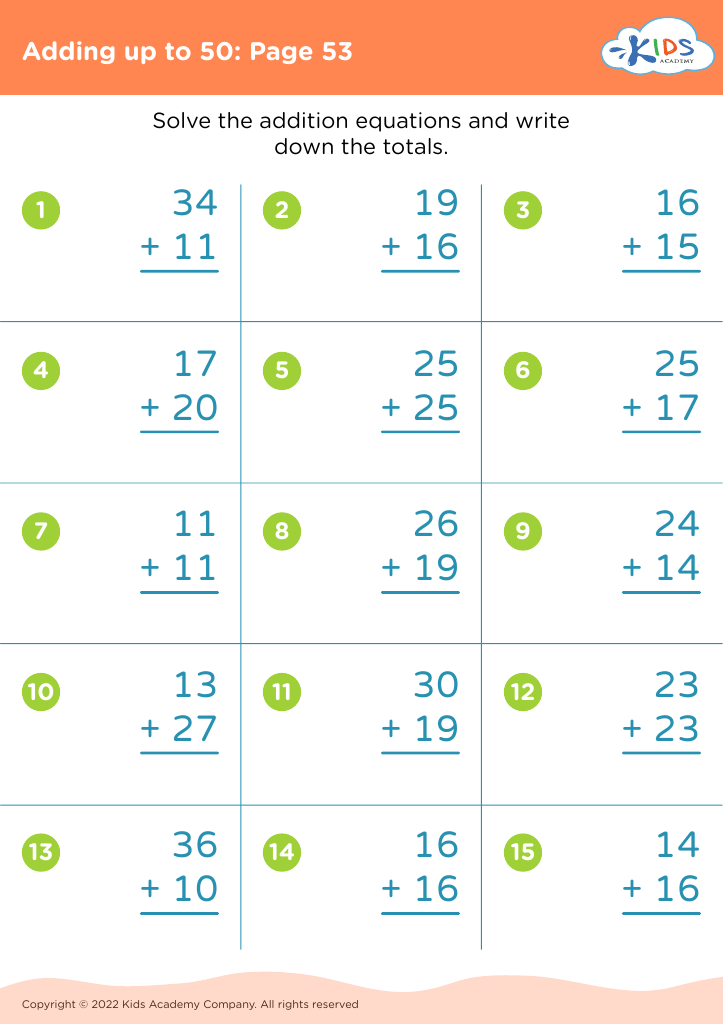
    Adding up to 50: Page 53
    Adding up to 50: Page 53

    Adding up to 50: Page 53

    Adding up to 50: Page 53
    Worksheet
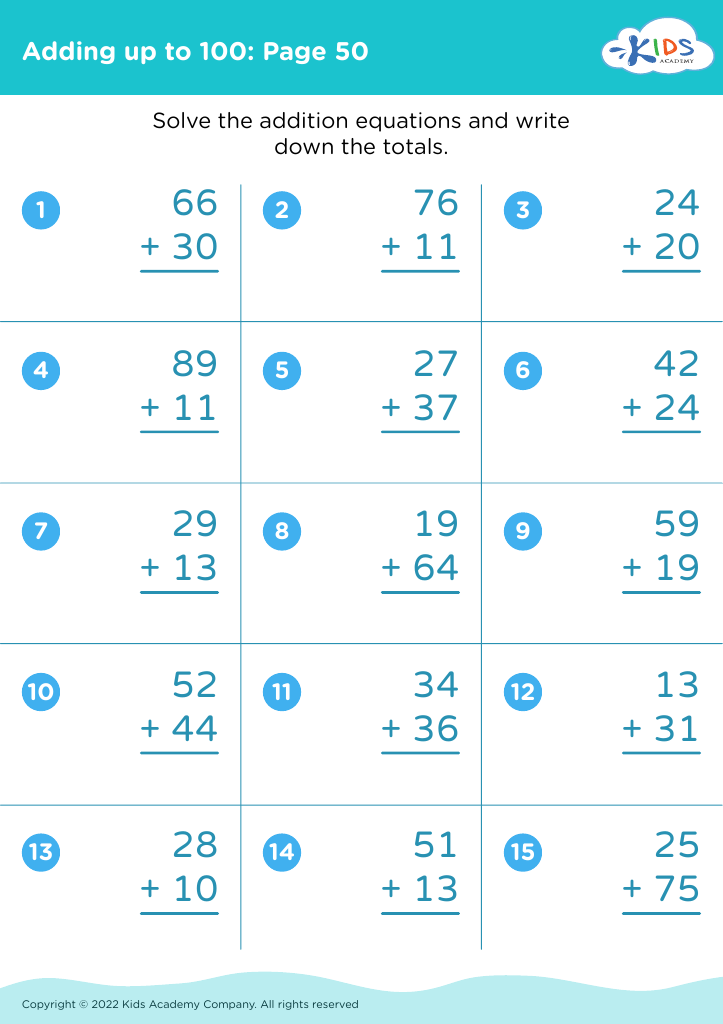
    Adding up to 100: Page 50
    Adding up to 100: Page 50

    Adding up to 100: Page 50

    Adding up to 100: Page 50
    Worksheet
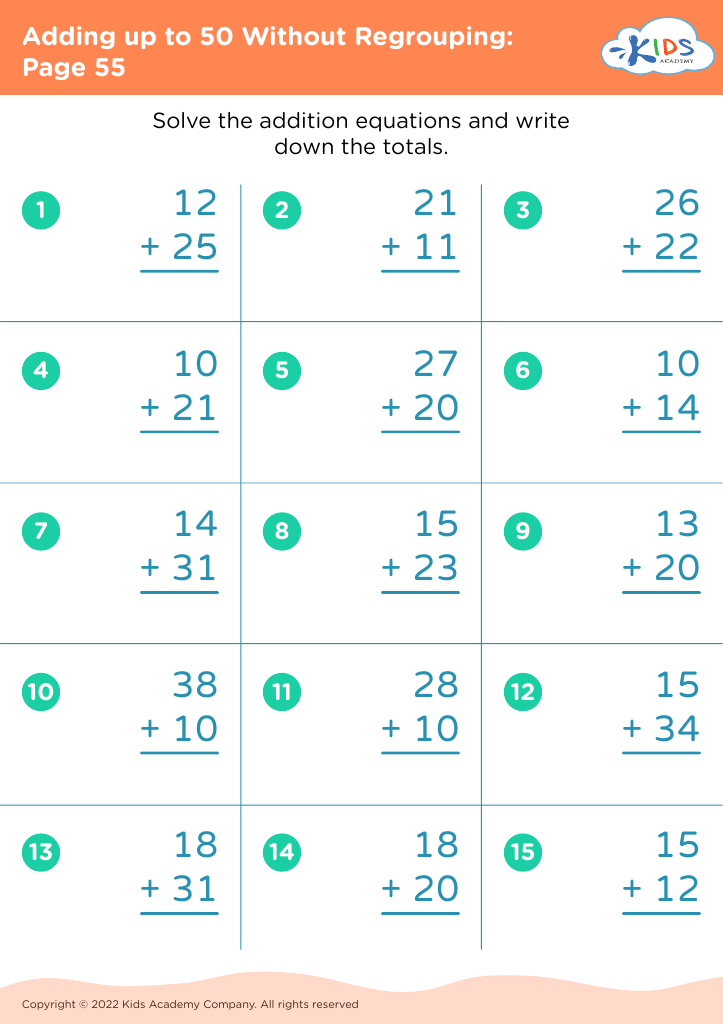
    Adding up to 50 Without Regrouping: Page 55
    Adding up to 50 Without Regrouping: Page 55
    Adding up to 50 Without Regrouping: Page 55
    Worksheet
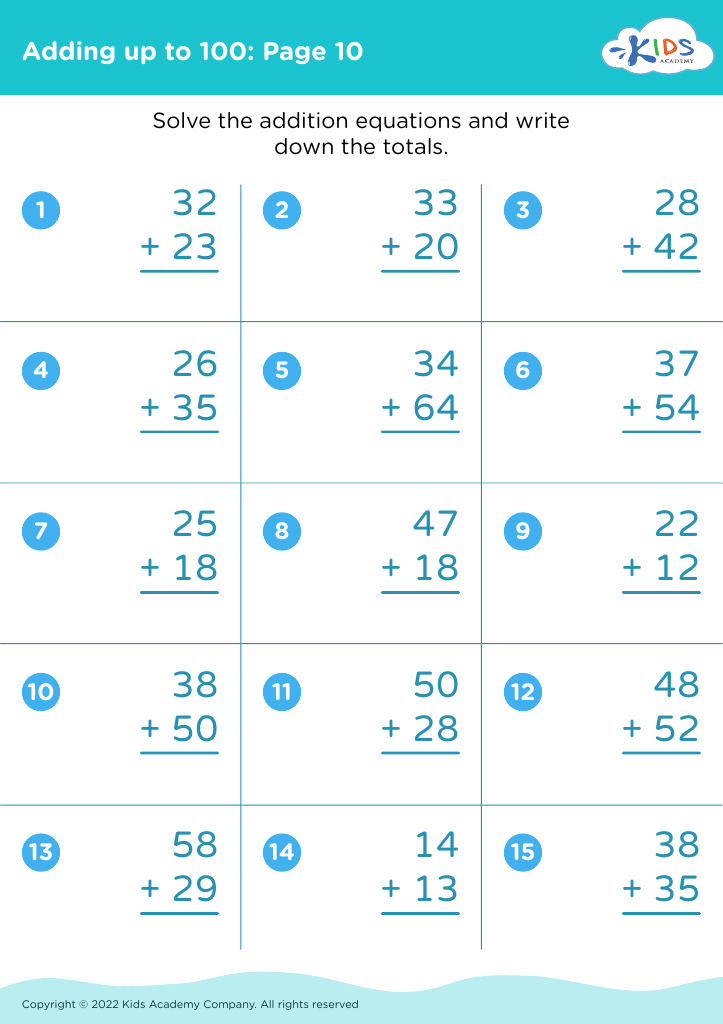
    Adding up to 100: Page 10
    Adding up to 100: Page 10

    Adding up to 100: Page 10

    Adding up to 100: Page 10
    Worksheet
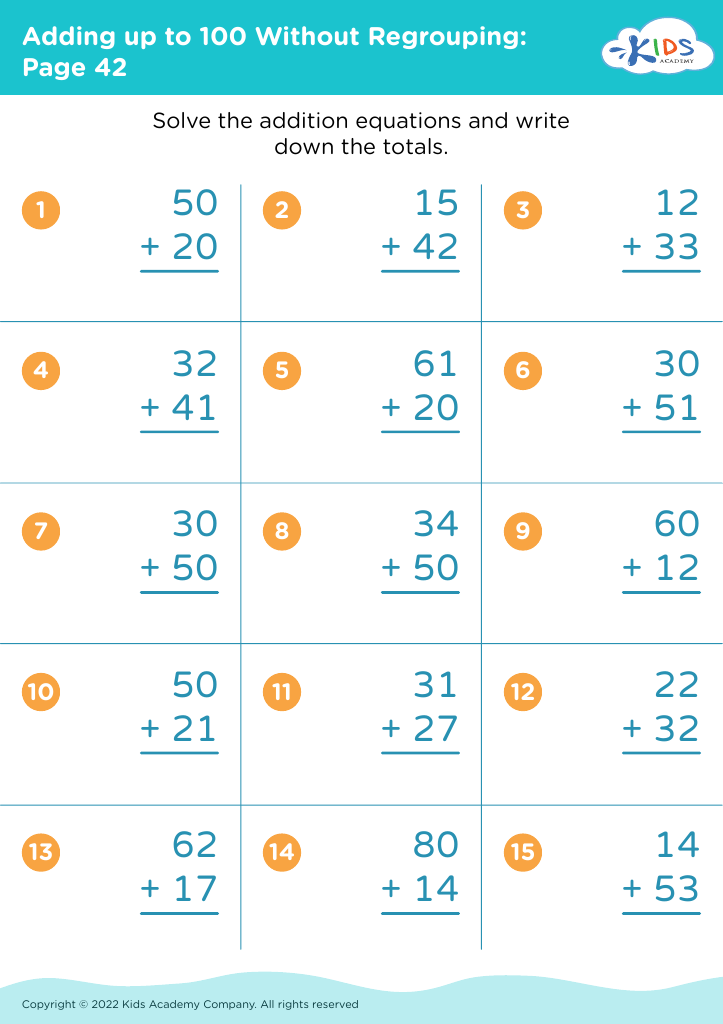
    Adding up to 100 Without Regrouping: Page 42
    Adding up to 100 Without Regrouping: Page 42
    Adding up to 100 Without Regrouping: Page 42
    Worksheet
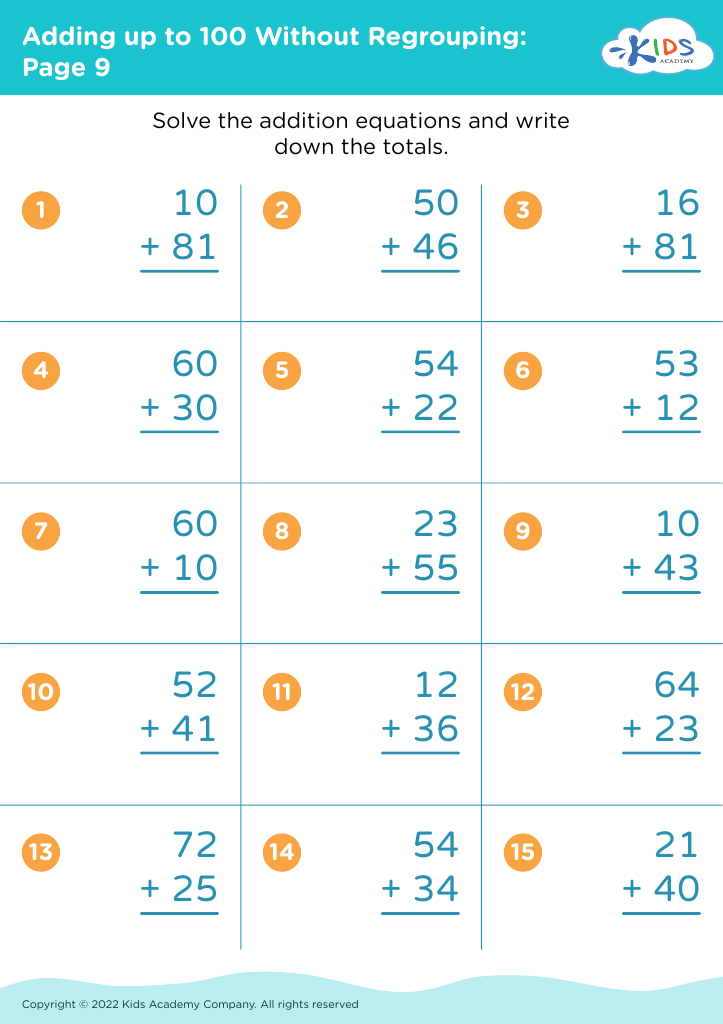
    Adding up to 100 Without Regrouping: Page 9
    Adding up to 100 Without Regrouping: Page 9
    Adding up to 100 Without Regrouping: Page 9
    Worksheet


    Parents and teachers should prioritize teaching addition to children ages 7-9, as this foundational skill plays a crucial role in a child’s overall development. At this age, children move beyond basic computation and begin to understand more complex mathematical concepts, which can influence their academic performance and future learning. Mastering addition builds confidence and fosters a positive attitude towards math, encouraging kids to tackle more challenging subjects as they progress.

    Addition is also integral to everyday life, enabling children to handle real-world situations, from managing their allowance to playing games that require point calculations. Early proficiency in addition supports the development of critical thinking and problem-solving skills, enhancing cognitive abilities. Furthermore, it lays the groundwork for understanding other important mathematical concepts, such as subtraction, multiplication, and division.

    Incorporating engaging methods, such as games and manipulatives, can make learning addition fun and relatable, reinforcing comprehension through diverse experiences. By investing in children’s addition skills, parents and teachers help create a strong mathematical foundation that will serve them well throughout their academic journeys and beyond.