Number Sequencing Addition Worksheets for Ages 7-9
9 filtered results
-
From - To
Enhance your child's math skills with our engaging Number Sequencing Addition Worksheets, tailored for ages 7-9. These worksheets provide a fun and interactive way for young learners to understand the concept of number sequencing while practicing their addition skills. Each worksheet is designed to challenge students, encouraging them to fill in missing numbers and solve addition problems in sequence. Our resources not only promote essential math understanding but also boost confidence as students track their progress. Perfect for classroom use or at-home learning, these worksheets will help children master addition in an enjoyable and effective manner. Printable and easy to use!
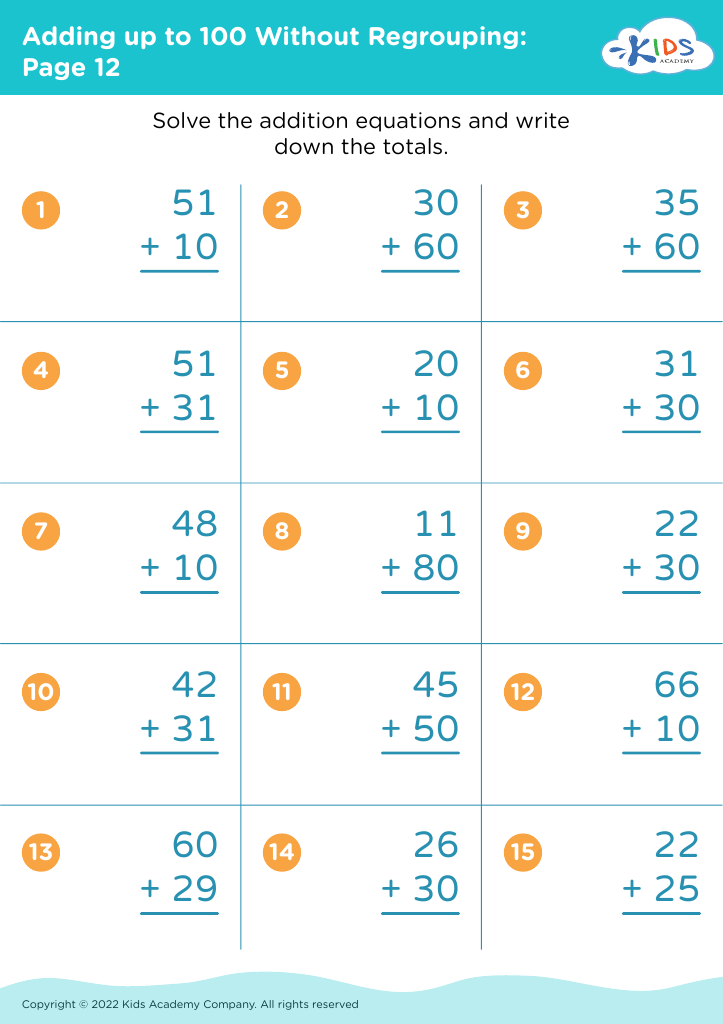
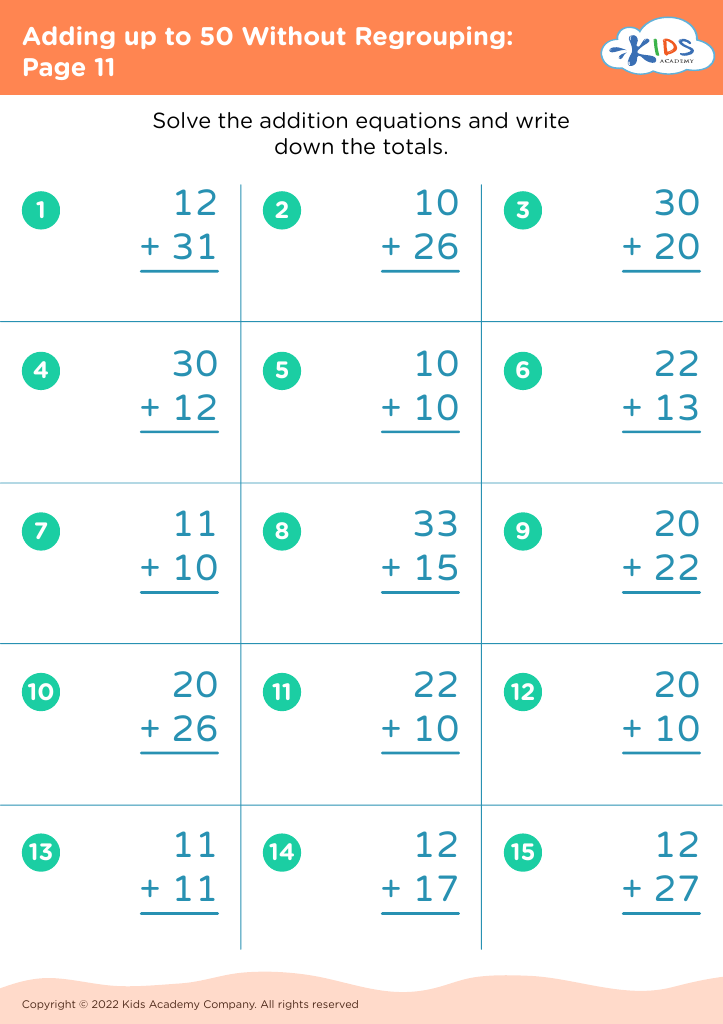
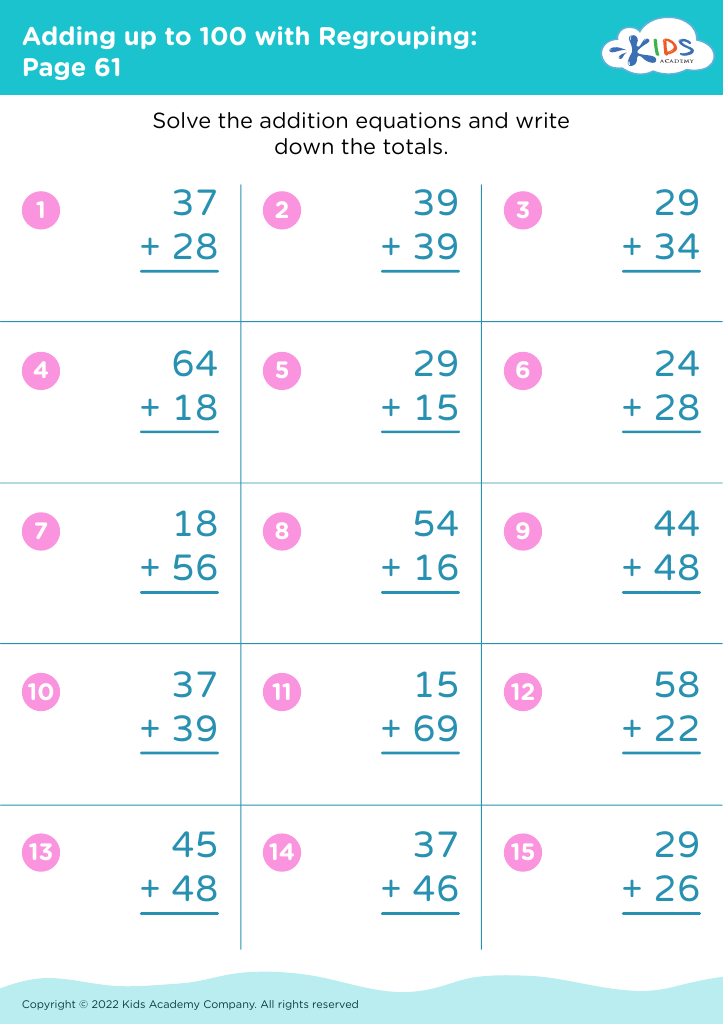
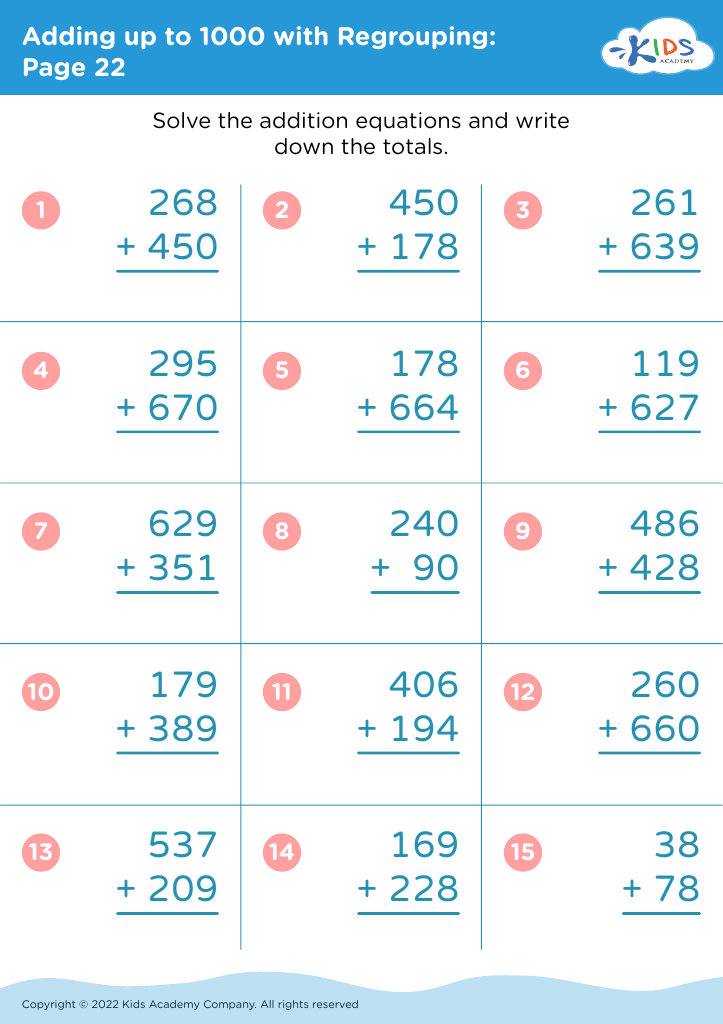
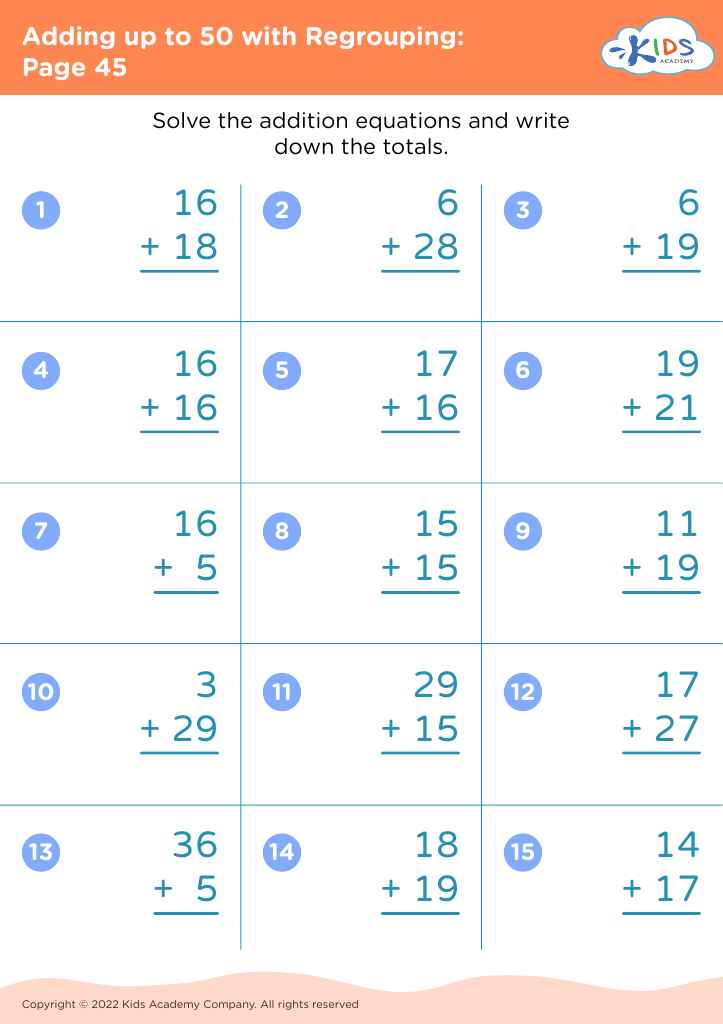
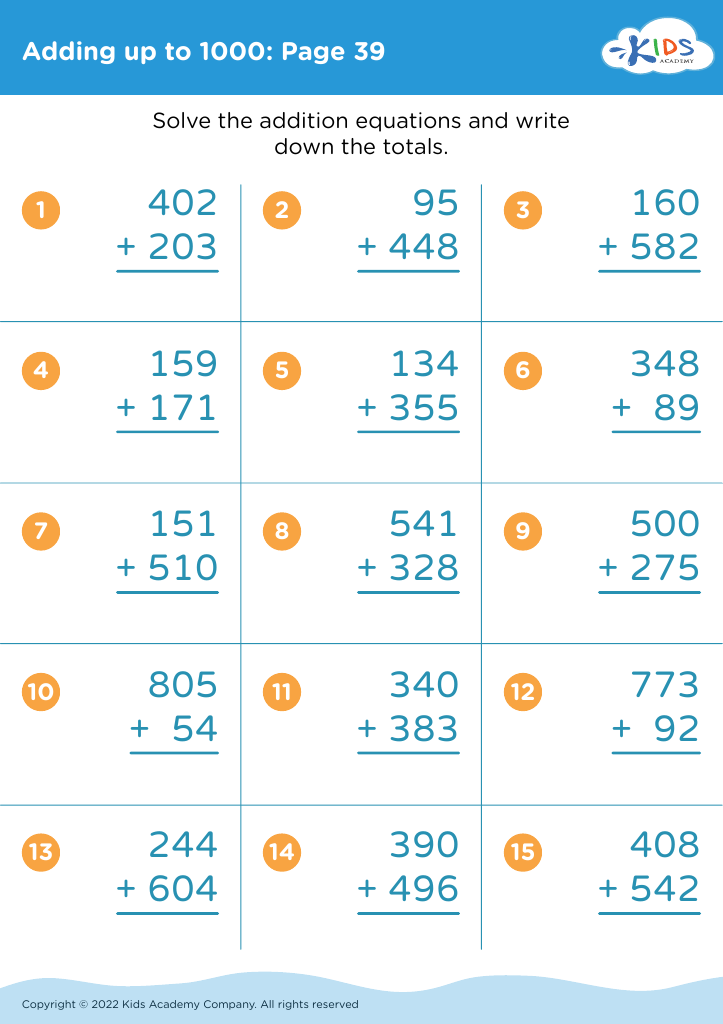
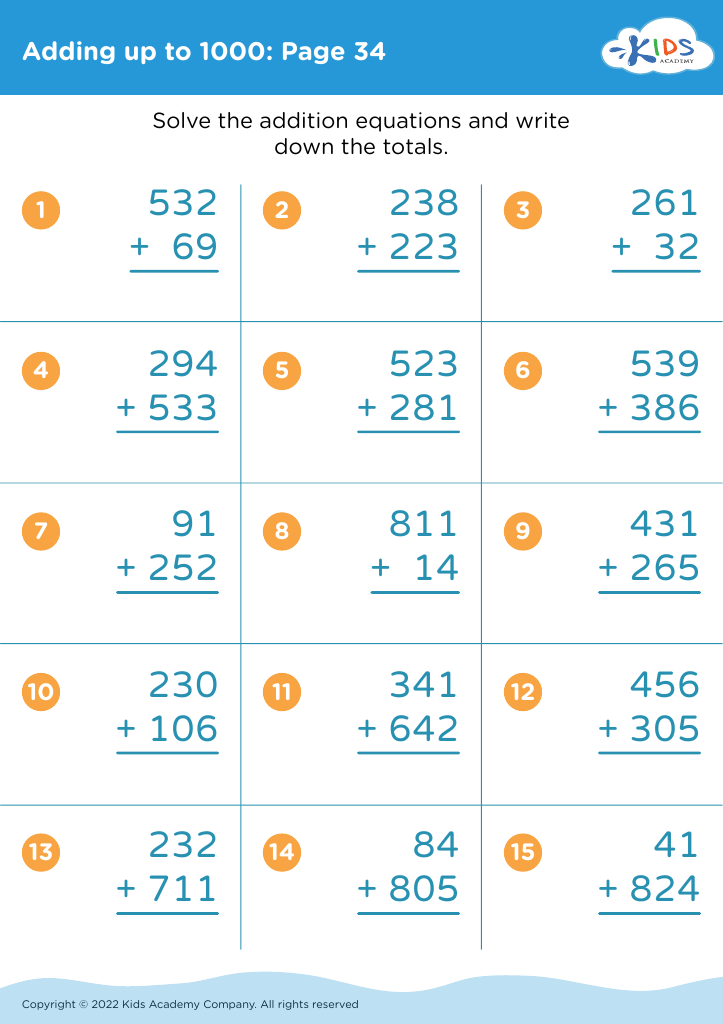
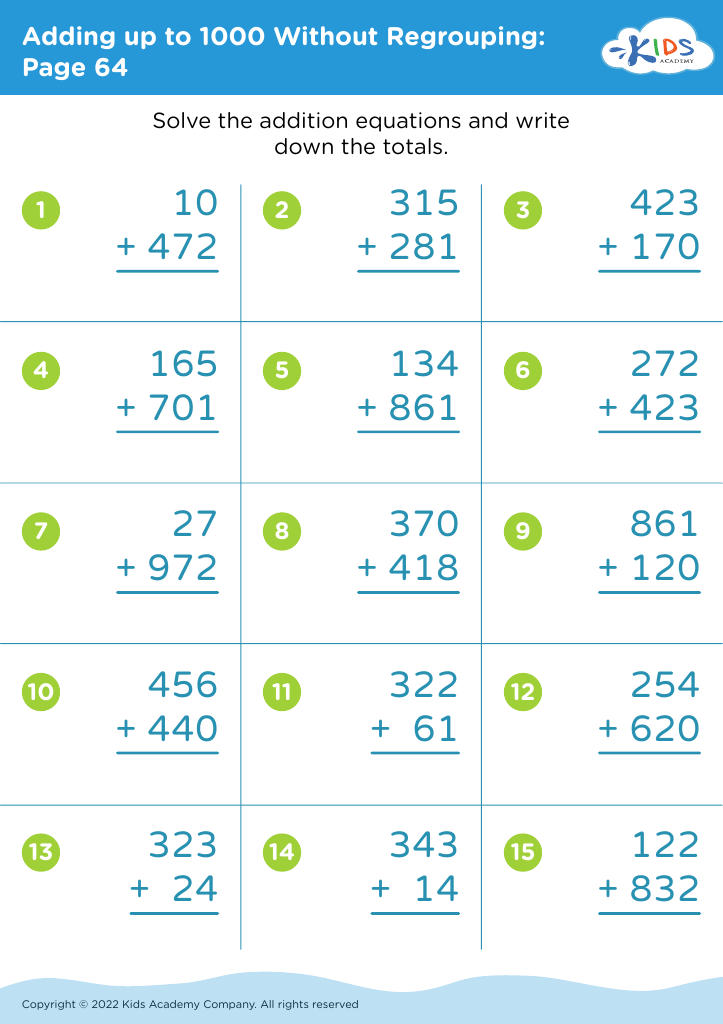
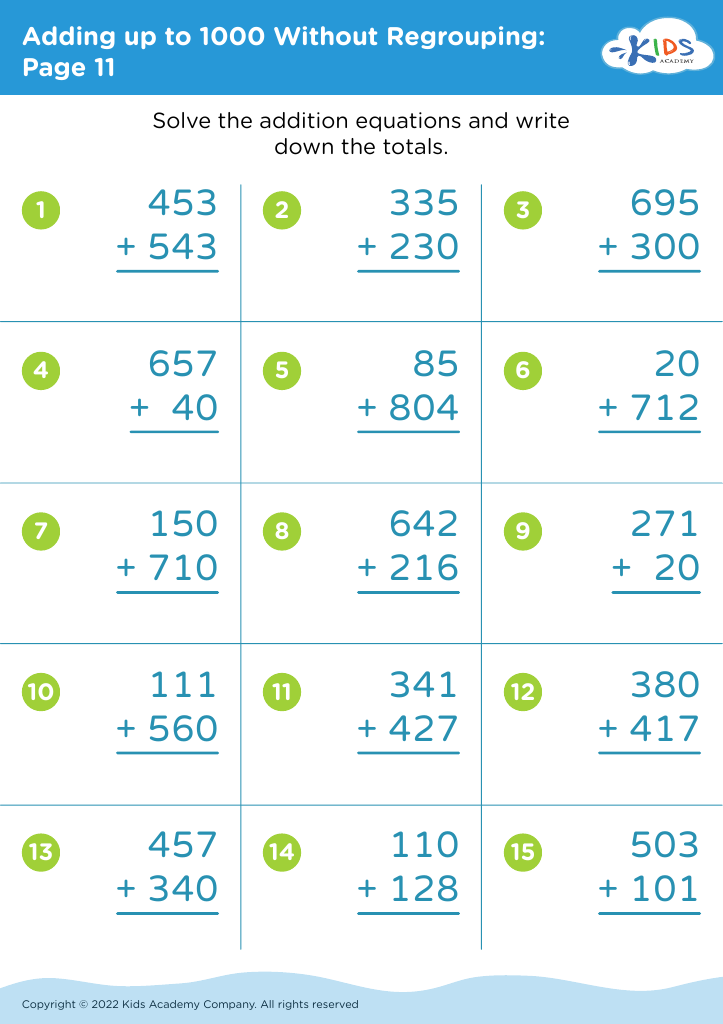








Number sequencing addition is a crucial skill for children aged 7-9, as it lays the foundation for more complex mathematical concepts they will encounter in their academic journey. At this age, students transition from basic addition to more advanced problem-solving, and understanding number sequences enhances their overall numerical comprehension.
Parents and teachers should care about number sequencing addition because it helps children develop critical thinking skills. By recognizing patterns and sequences, children improve their ability to solve problems efficiently, which is essential not only in math but across various subjects in school.
Moreover, mastering number sequencing fosters a sense of confidence in young learners. As children visualize and manipulate numbers, they become more comfortable with math-related tasks. This confidence encourages a positive attitude towards learning and nurturing a growth mindset.
Additionally, number sequences can be integrated into everyday activities, making learning fun and relevant. Engaging children in sequences during shopping, cooking, or even through games enhances their understanding and retention in a real-world context. By prioritizing number sequencing addition, parents and teachers can equip children with essential skills that promote independent thinking and lifelong learning.








