Understanding quantity Addition Worksheets for Ages 7-9
7 filtered results
-
From - To
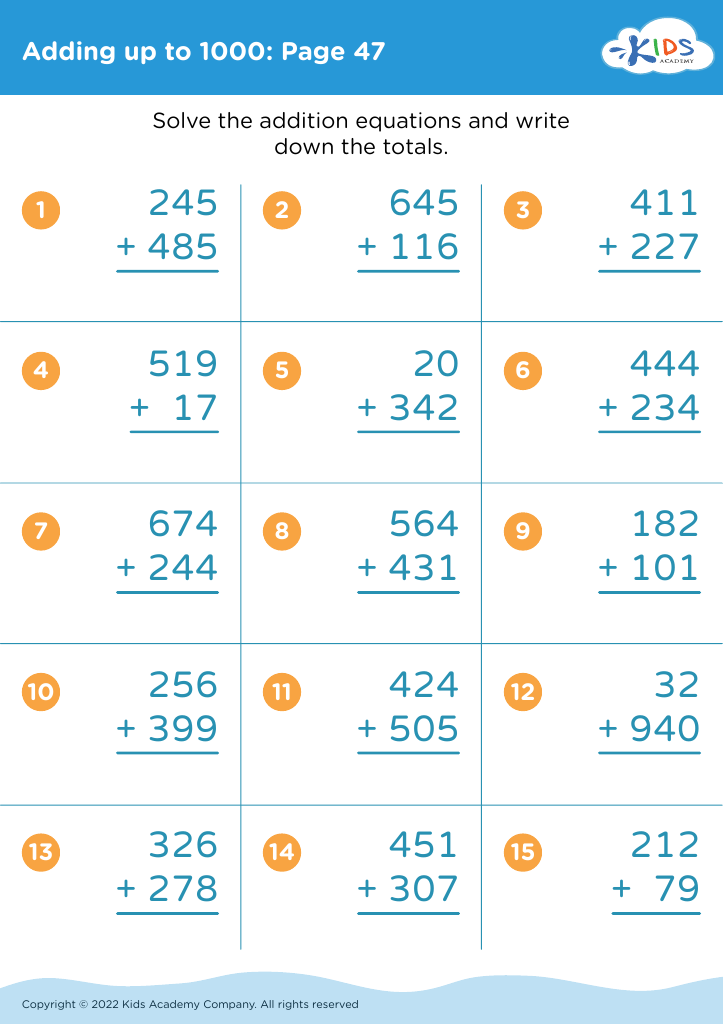
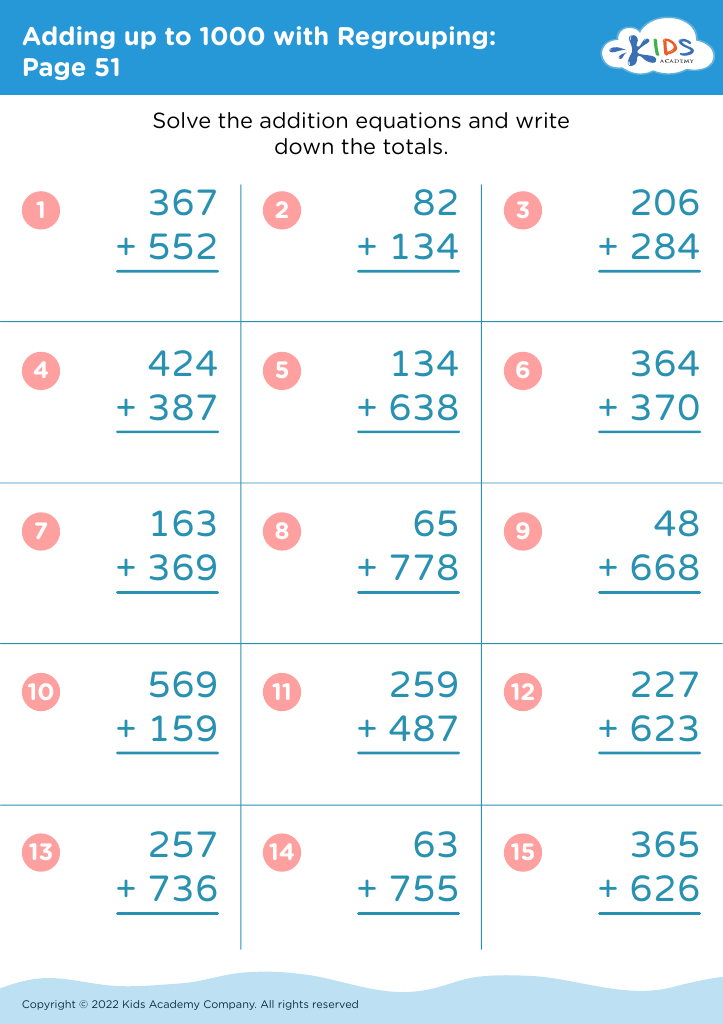
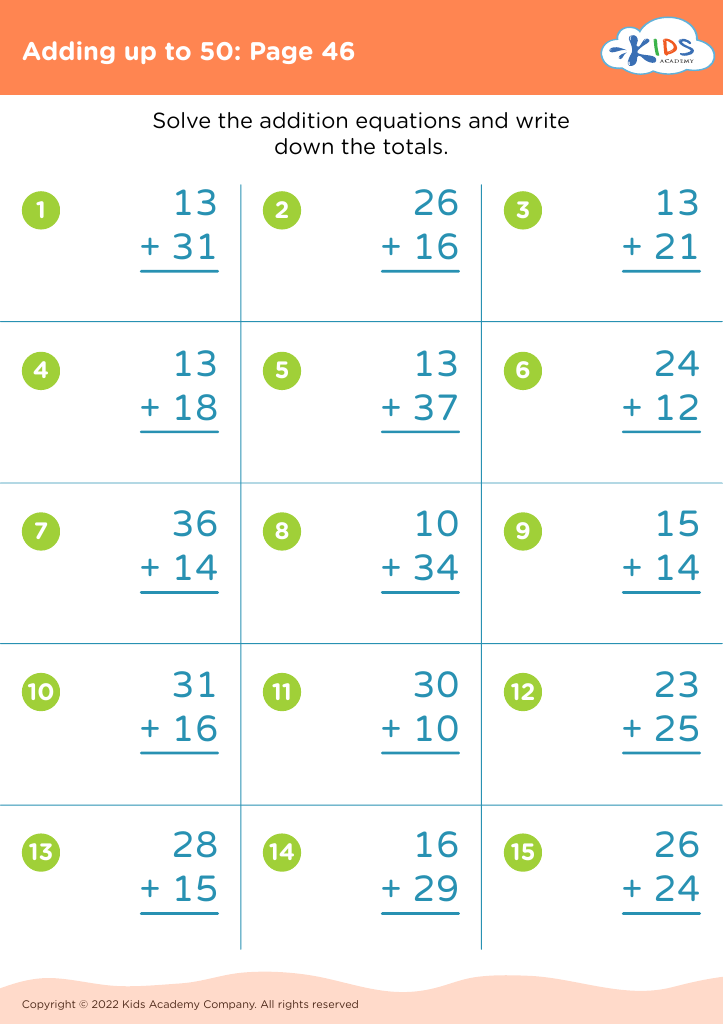
Explore our comprehensive range of "Understanding Quantity Addition Worksheets" tailored for children aged 7-9. These engaging worksheets are designed to enhance young learners' grasp of quantity and addition through fun, interactive exercises. By focusing on foundational skills, children will learn to recognize numbers, grasp numerical relationships, and perform basic addition operations. With a variety of colorful, age-appropriate activities, students will develop confidence in their math abilities while enjoying the learning process. Perfect for classroom settings or at-home practice, these worksheets foster critical thinking and problem-solving skills, ensuring a solid foundation for future mathematic challenges. Start your child's math journey today!
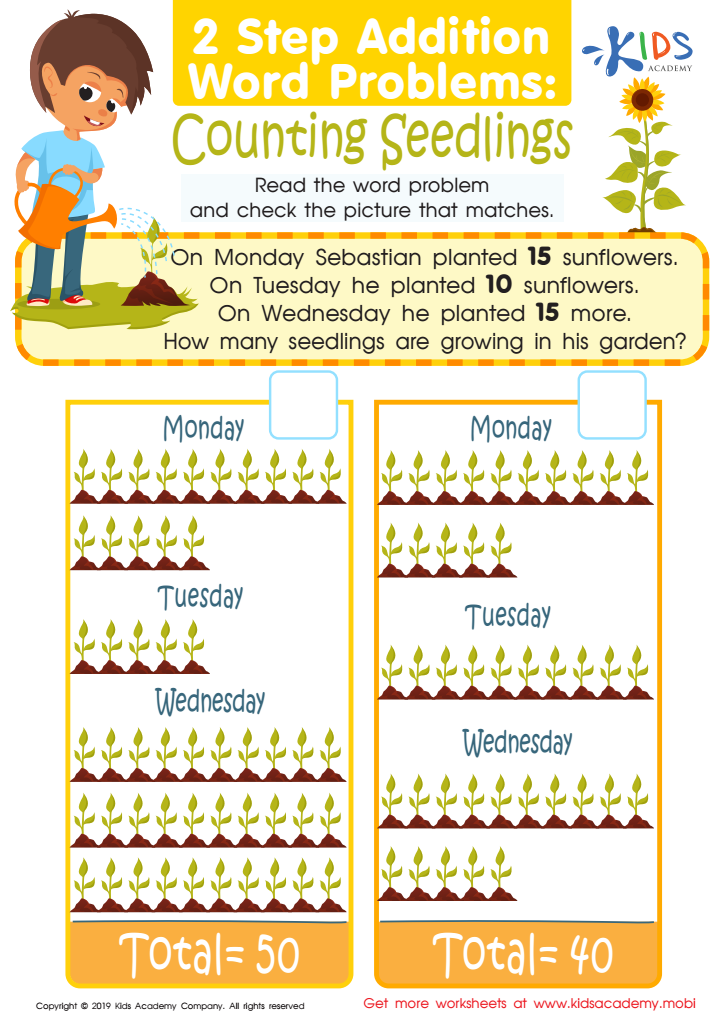
Counting Seedlings Worksheet
 Assign to My Students
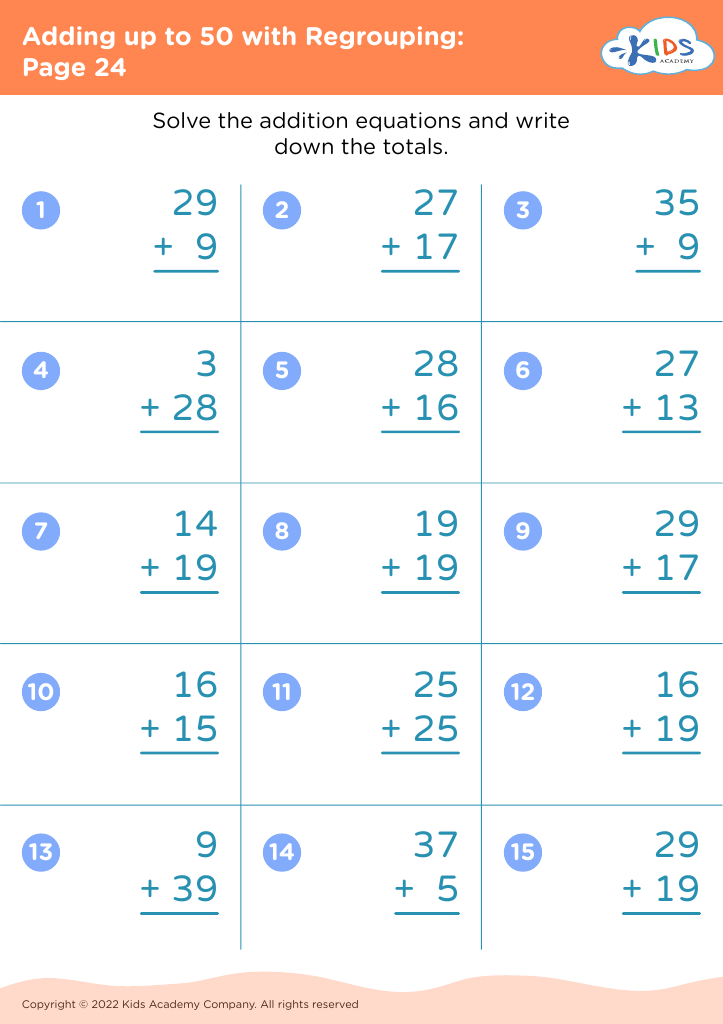
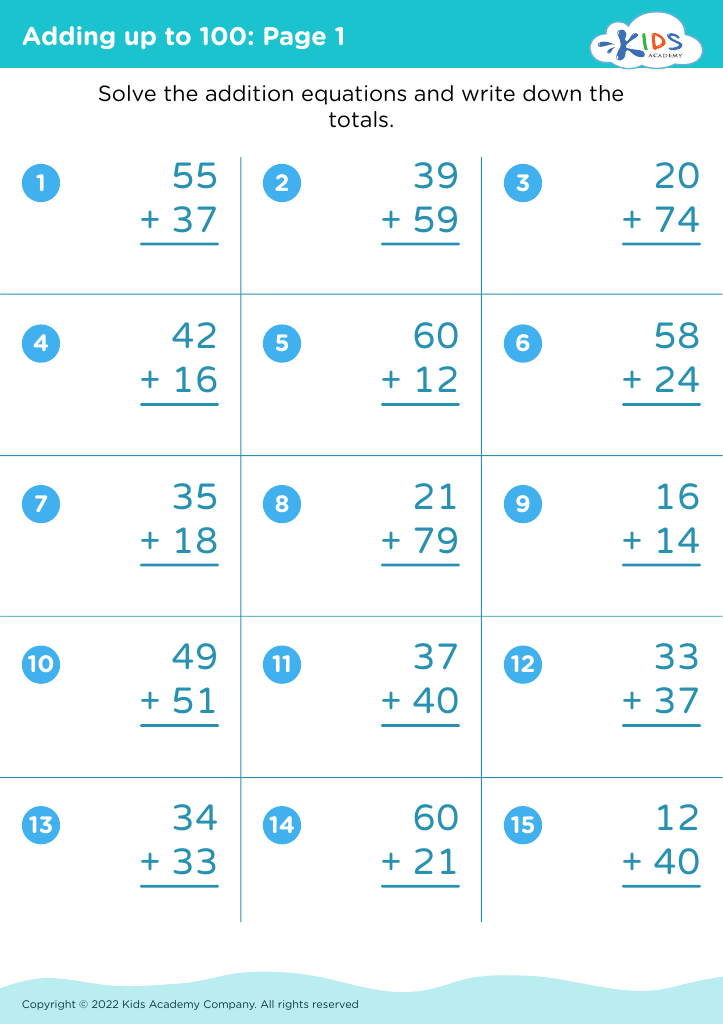
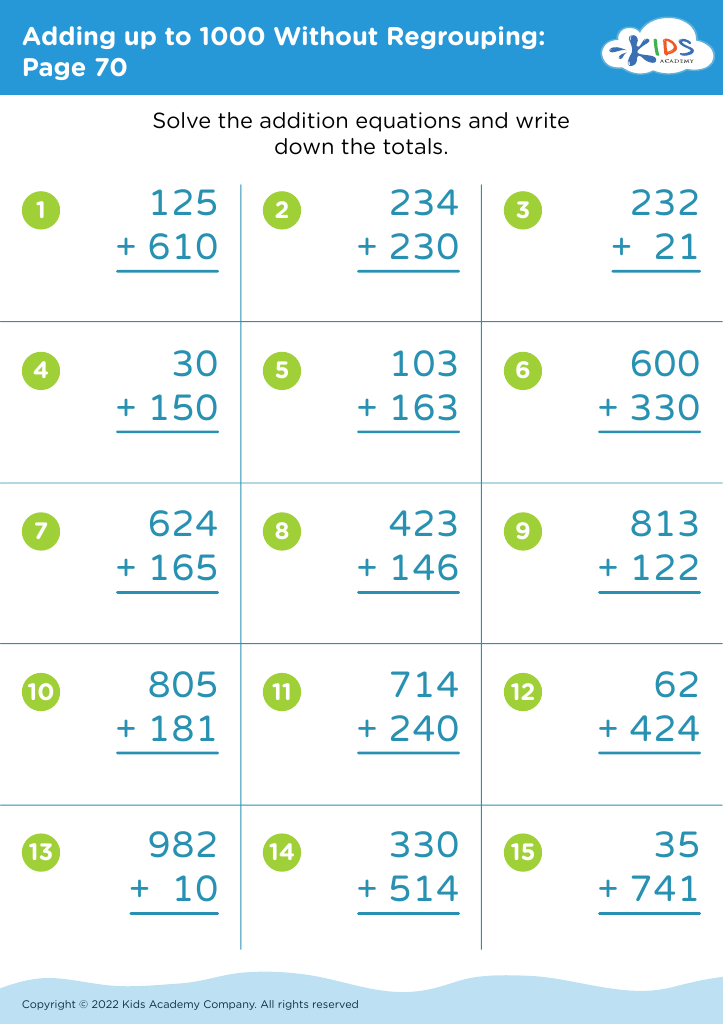








Understanding quantity addition is critical for children ages 7-9 as it forms the foundation for their mathematical skills. At this developmental stage, children transition from basic arithmetic operations to more complex problem-solving and critical thinking tasks. Incorporating quantity addition not only enhances their ability to perform calculations but also deepens their comprehension of numerical relationships, promoting mathematical fluency.
When parents and teachers prioritize quantity addition, they enable children to apply these skills in real-world contexts. This understanding fosters confidence, allowing students to tackle word problems and explore concepts like measurement, time, and budgeting—vital tools in everyday life. Moreover, mastering this concept lays the groundwork for future learning in algebra and geometry, facilitating a smoother academic progression.
Furthermore, recognizing the relationship between numbers through quantity addition encourages cognitive development. Students who grasp this concept are better equipped to understand larger mathematical ideas, improving overall academic performance. Ultimately, when parents and educators emphasize the importance of quantity addition, they are not only supporting the development of mathematical skills but also nurturing critical thinking abilities essential for lifelong learning and success. Thus, cultivating this understanding should be a key focus for families and schools alike.








