Comparing lengths Comparing Numbers Worksheets for Ages 7-9
4 filtered results
-
From - To
Discover engaging Comparing Lengths and Comparing Numbers Worksheets tailored for ages 7-9. These worksheets from Kids Academy make learning fun and interactive, featuring vibrant visuals and diverse activities. Children will develop critical math skills as they compare different objects, sizes, and numerical values. These well-designed printables cater to various learning styles, ensuring all young learners grasp foundational concepts in an enjoyable way. Ideal for teachers and parents seeking creative resources, our worksheets enhance classroom lessons and support at-home practice. Set children on the path to math confidence and success with our expertly crafted educational materials!
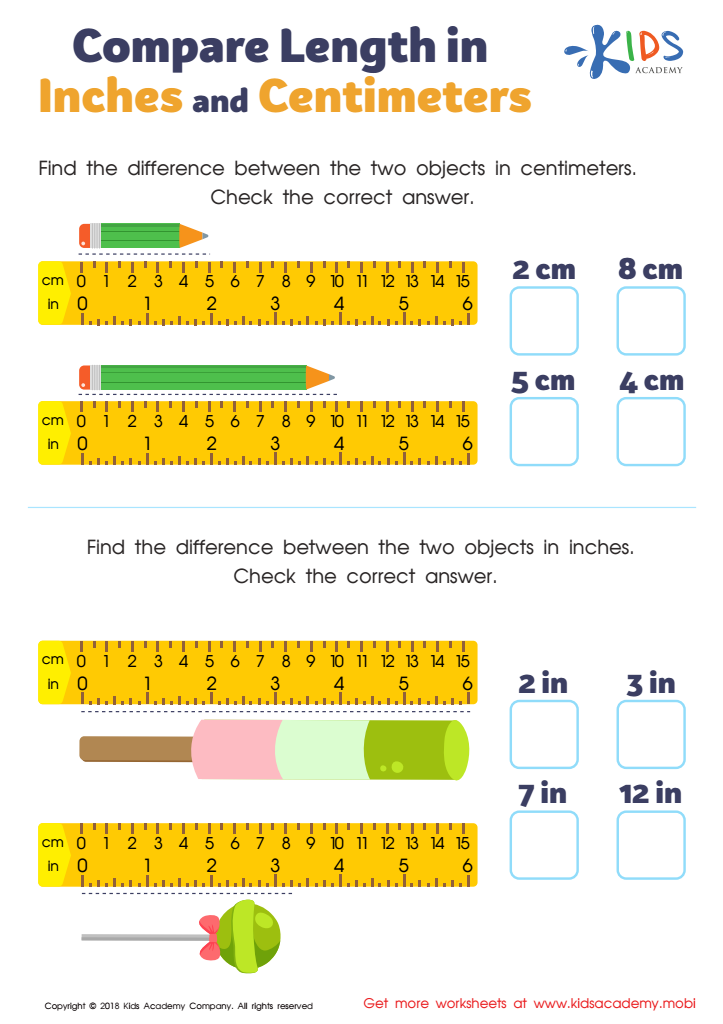
Compare Length in Inches and Centimeters Worksheet
 Assign to My Students

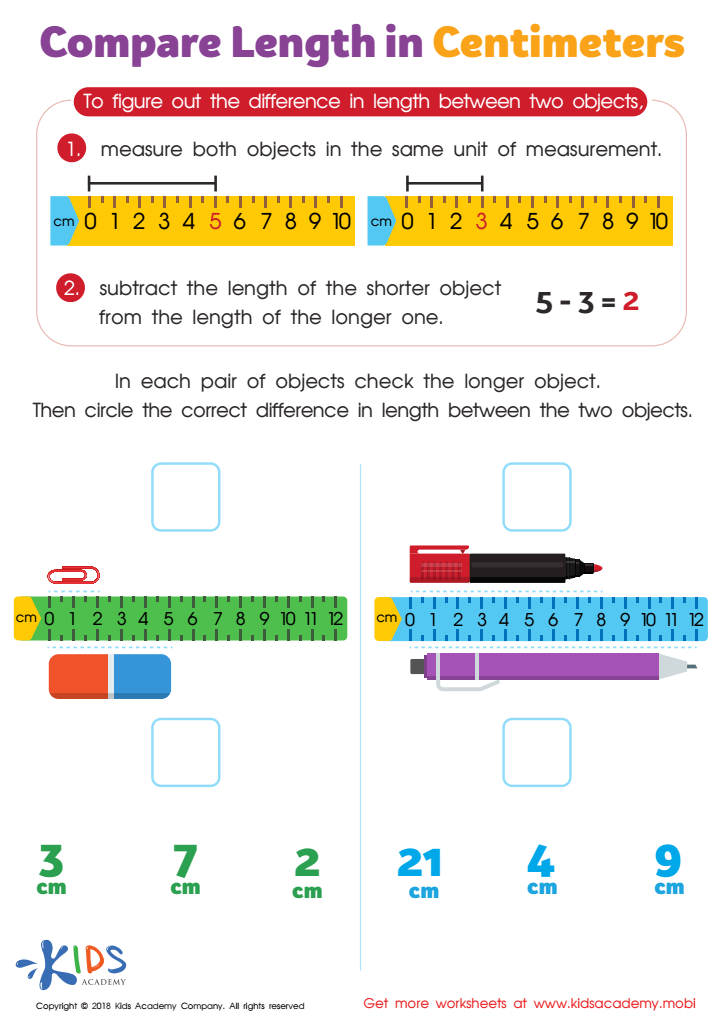
Compare Length in Centimeters Worksheet
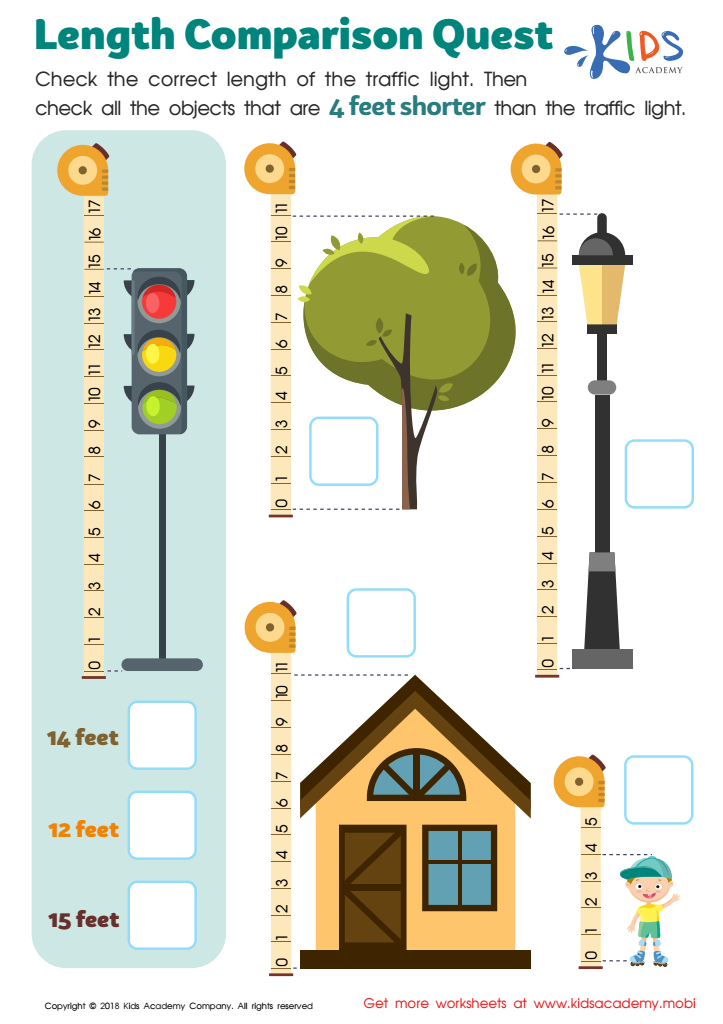
Length Comparison Quest Worksheet
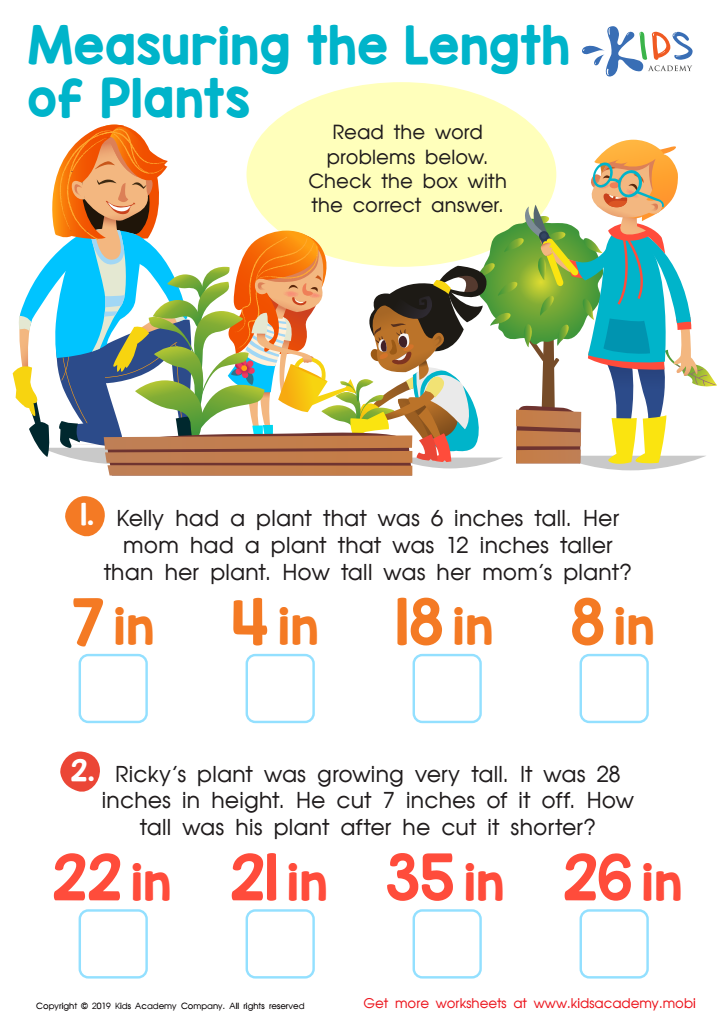
Measuring the Length of Plants Worksheet








Introducing children, especially those aged 7-9, to concepts like comparing lengths and comparing numbers holds significant educational value. At this developmental stage, kids are beginning to grasp fundamental mathematical skills, which serve as the foundation for more complex problem-solving later in life.
Comparing lengths is crucial for enhancing spatial awareness and understanding physical properties. By practicing with objects of varying sizes, children learn to make direct comparisons, grasp measurement concepts, and use tools like rulers. This skill not only applies to classroom tasks but also to everyday activities such as cooking, building, or setting up a game. It's an essential life skill that empowers them to navigate the physical world more effectively.
Likewise, comparing numbers is foundational for arithmetic fluency. It enables children to grasp the relationships between quantities, an essential precursor to addition, subtraction, multiplication, and division. Mastery in comparing numbers also enhances logical reasoning and problem-solving abilities. When children learn to differentiate between larger and smaller numbers or order a series of numbers, they build critical skills needed for effective decision-making, budgeting, and data interpretation later in life.
In summary, fostering these skills in children isn't just about meeting educational standards; it’s about equipping them with the tools they need for daily life and future learning. It builds confidence, logical thinking, and practical know-how that will benefit them well beyond the classroom.