Problem-Solving Skills Counting Worksheets for Ages 7-9
4 filtered results
-
From - To
Enhance your child's learning with our Problem-Solving Skills Counting Worksheets designed specifically for ages 7-9. These engaging, interactive worksheets foster critical thinking and mathematical reasoning while helping young learners develop essential problem-solving abilities. Kids will tackle real-life scenarios as they practice counting, organizing, and analyzing information. Our carefully crafted exercises not only reinforce counting skills but also encourage kids to think independently and creatively. Perfect for home or classroom use, these worksheets are a fantastic resource for nurturing confidence in mathematics. Empower your child to tackle challenges head-on with our comprehensive Problem-Solving Skills Counting Worksheets today!
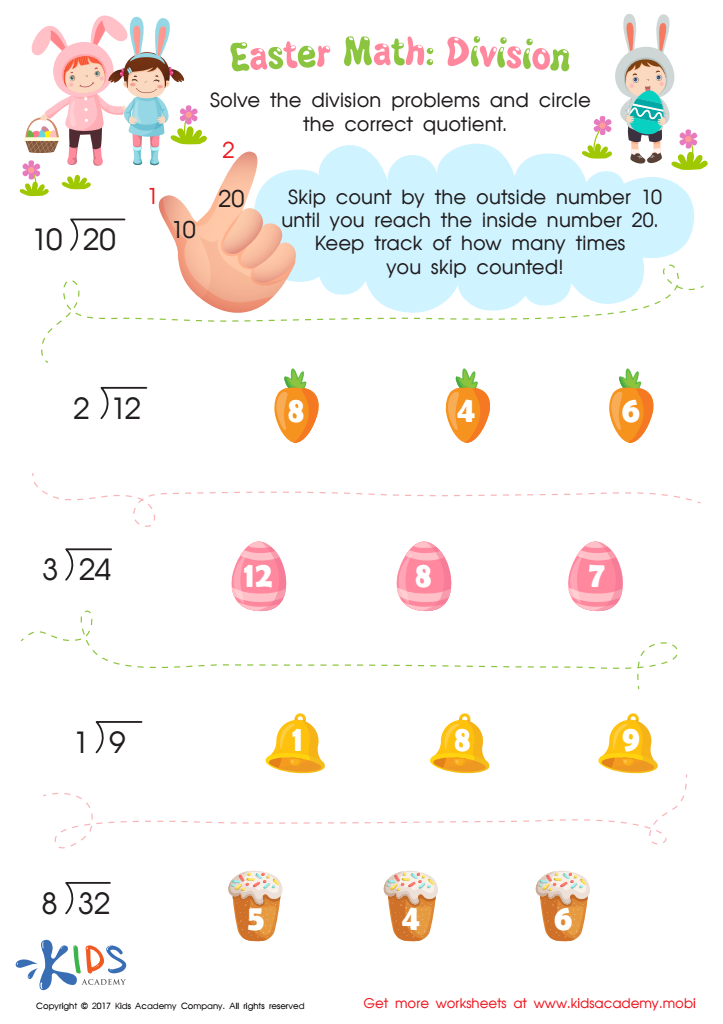
Division Worksheet
 Assign to My Students










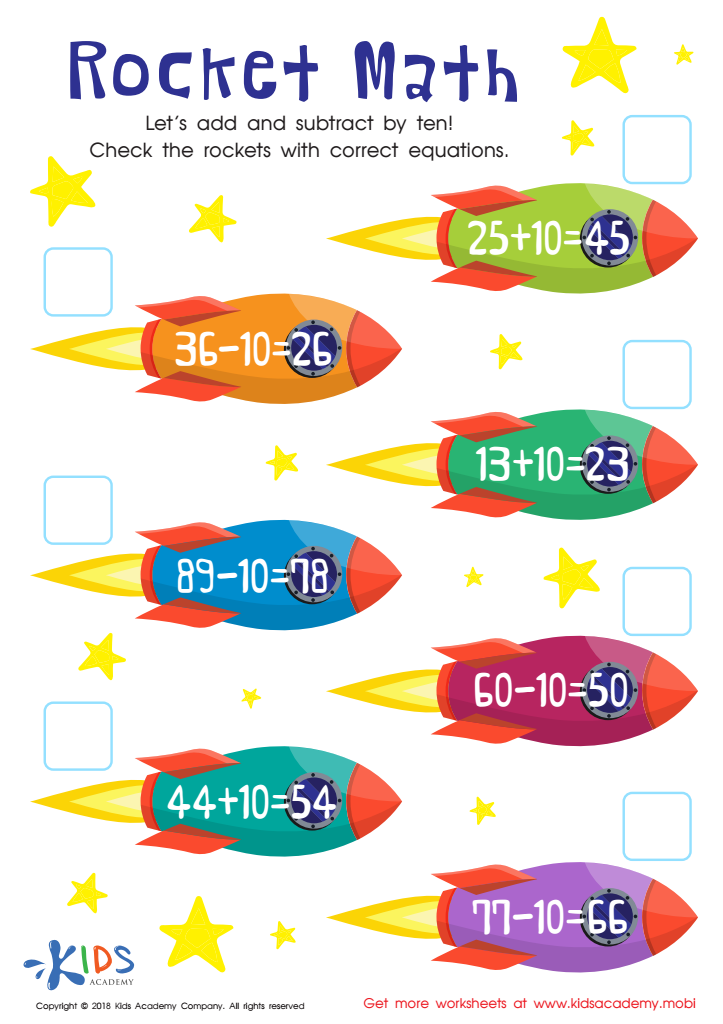
Rocket Math Worksheet
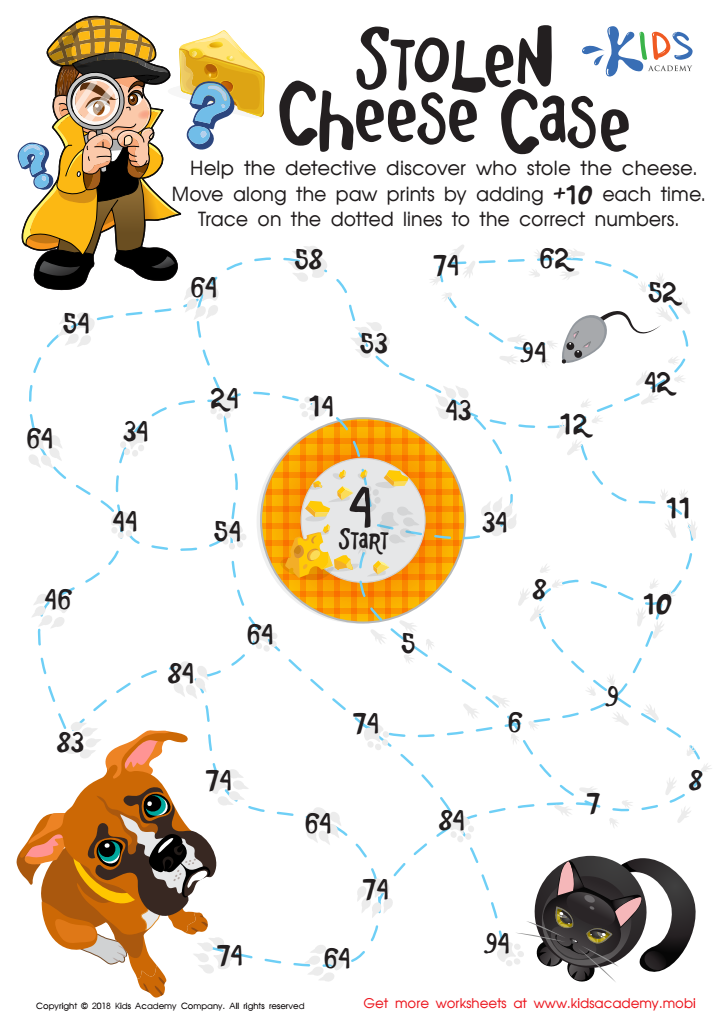
Stolen Cheese Case Maze Worksheet
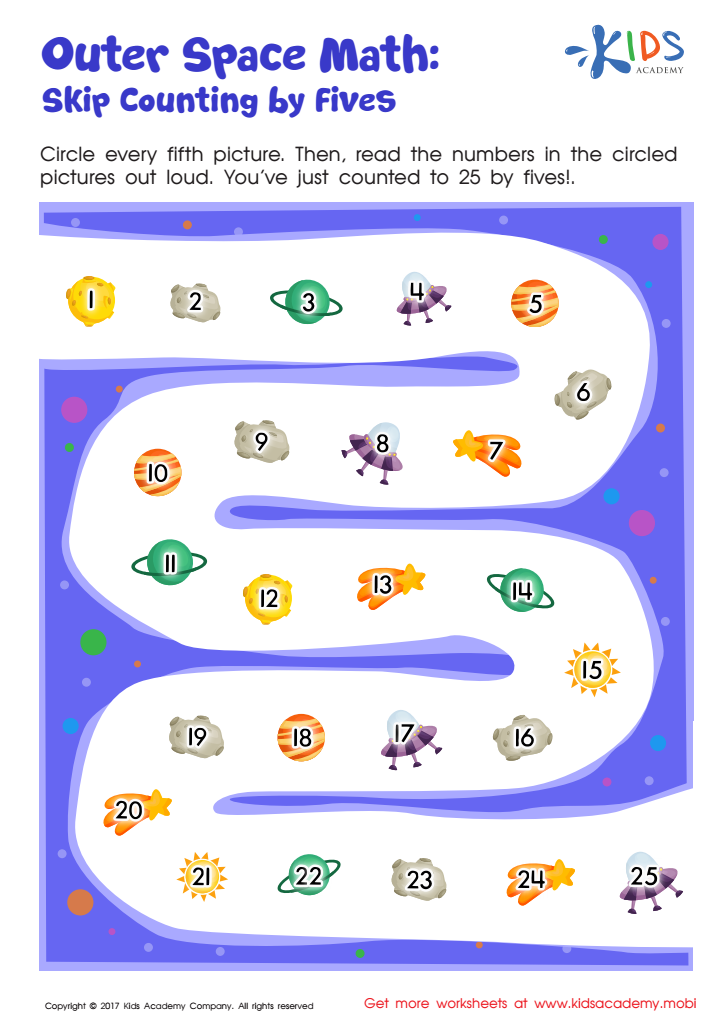
Skip Counting by 5s: Outer Space Math Printable








Developing problem-solving skills in children aged 7-9 is crucial for their cognitive and emotional growth. At this stage, children begin to transition from concrete thinking to more abstract reasoning, making it an ideal time to foster these vital skills. Problem-solving skills encourage critical thinking, which empowers children to analyze situations, weigh options, and make informed decisions—a competence applicable in academics and daily life.
For parents and teachers, nurturing these skills enhances a child's ability to tackle both academic challenges and social dilemmas confidently. Engaging with problem-solving activities, like puzzles or real-life math problems, helps children practice perseverance and resilience. It promotes a growth mindset, teaching them that making mistakes is part of learning and that they can improve through effort.
Moreover, strong problem-solving abilities contribute to better academic performance, as children develop effective strategies for understanding and approaching math, science, and reading comprehension tasks. In essence, fostering problem-solving skills not only improves children's academic outcomes but also equips them with the tools necessary for future successes in life, relationships, and careers, laying a foundation for lifelong learning. Therefore, attention from both educators and parents is vital during this formative phase.








