Understanding tally marks Numbers Worksheets for Ages 7-9
5 filtered results
-
From - To
Explore our engaging "Understanding Tally Marks Numbers Worksheets" designed for children ages 7-9. These worksheets help young learners grasp the concept of tally marks as a fun and interactive way to represent quantities. Our resources support the development of essential counting and number recognition skills while fostering an understanding of grouping and organization. Through a variety of activities and exercises, students will gain confidence in visualizing numbers alongside traditional counting methods. Perfect for use in classrooms or at home, these worksheets provide an effective learning experience that encourages independent learning and strengthens foundational math skills. Start your tally mark journey today!
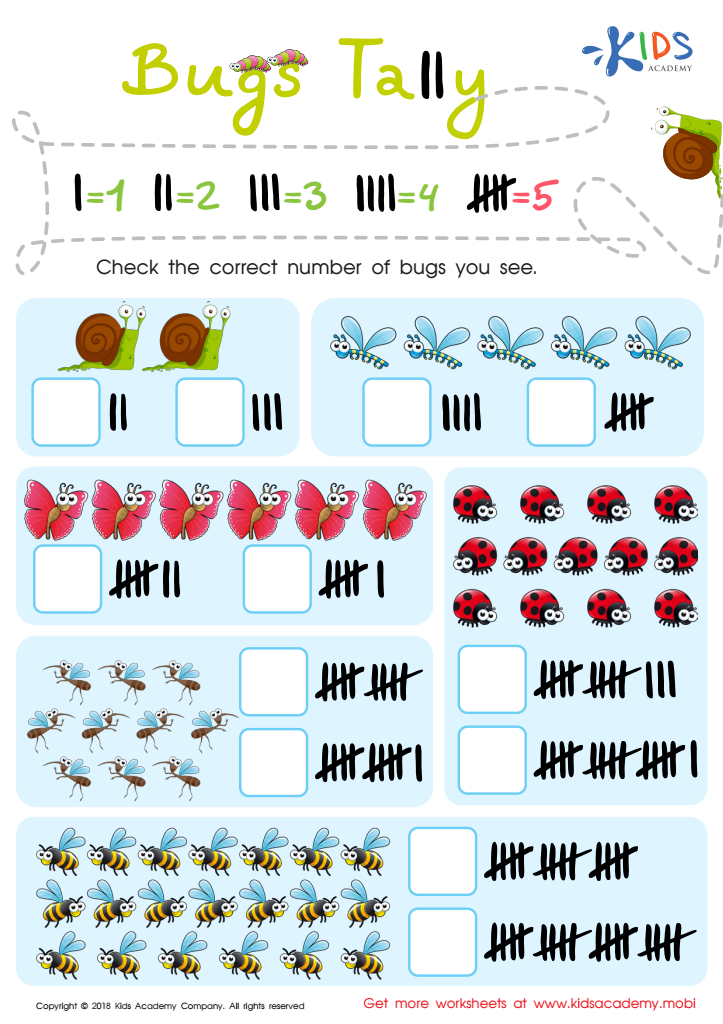
Bugs Tally Worksheet
 Assign to My Students
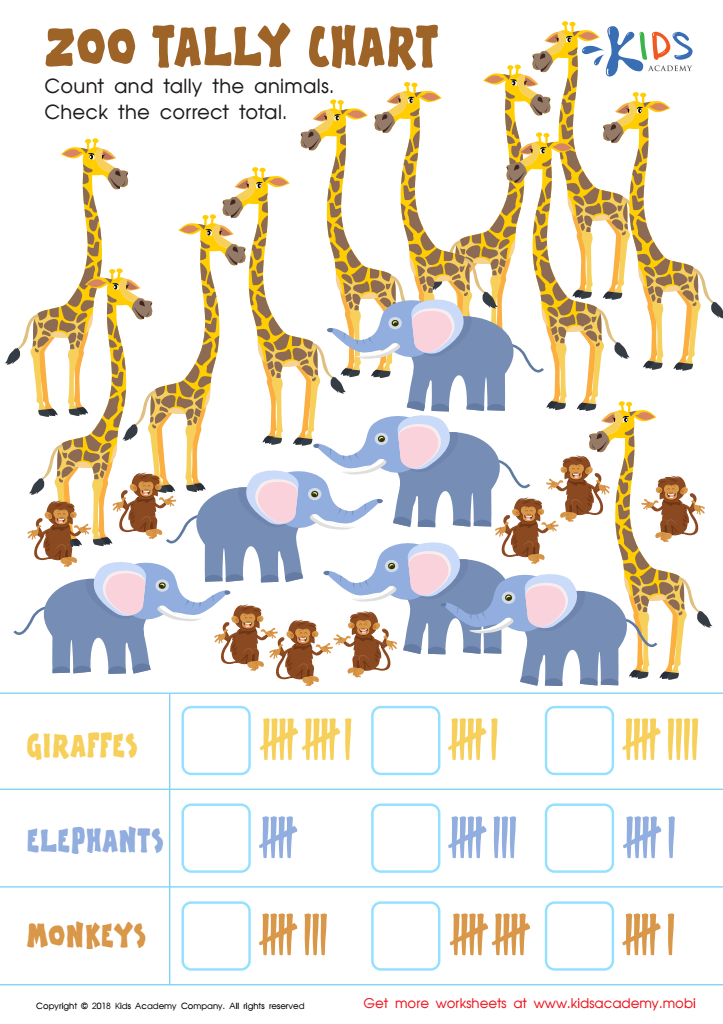
Zoo Tally Chart Worksheet
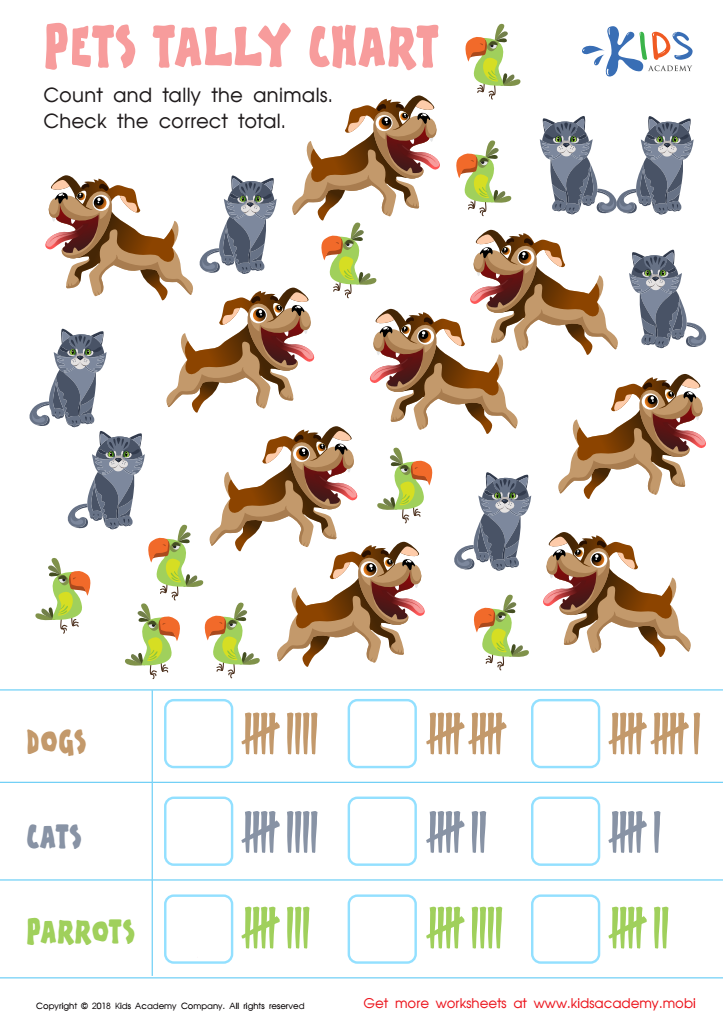
Pets Tally Chart Worksheet
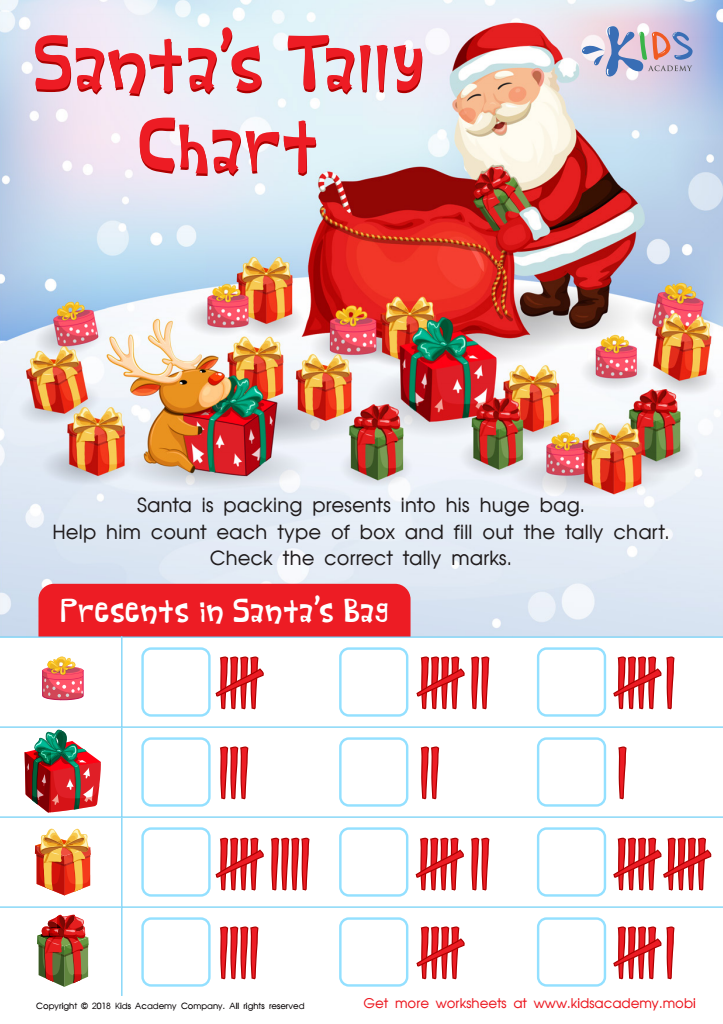
Santa Tally Chart Worksheet
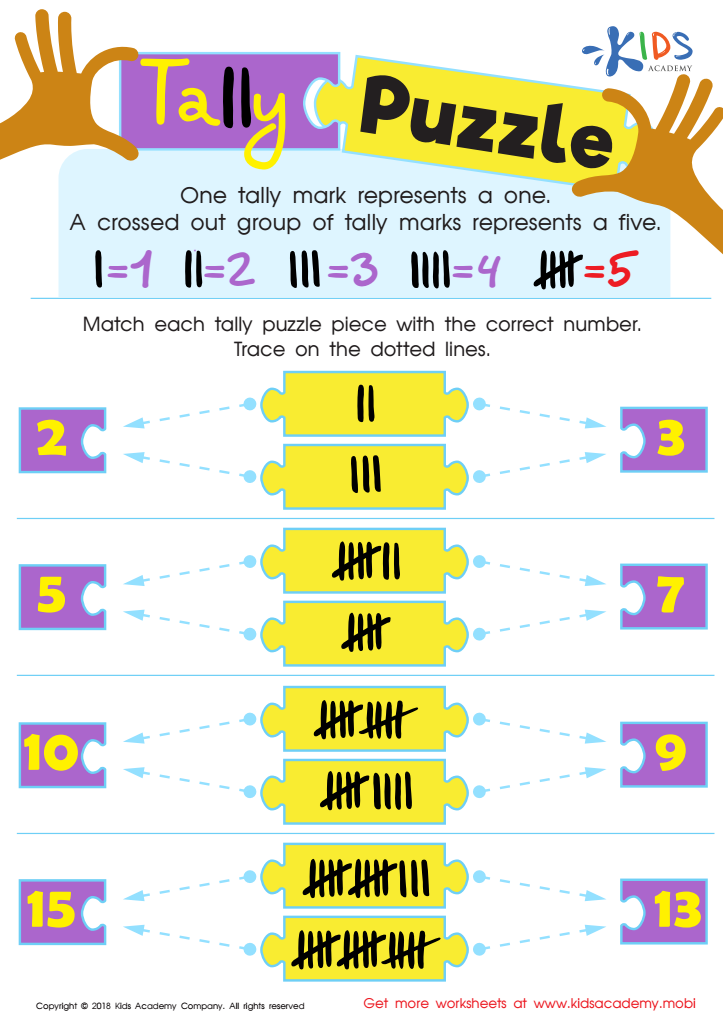
Tally Puzzle Worksheet




.jpg)



Understanding tally marks is crucial for children aged 7 to 9, as it lays a foundation for mathematical skills and fosters analytical thinking. Tally marks are a simple, visual way of representing numbers, making them accessible to young learners. They help children grasp counting concepts and improve their ability to group and categorize objects, enabling a deeper understanding of larger numbers through small, manageable sets.
Teaching tally marks also strengthens fine motor skills, as students practice drawing and interpreting marks. This hands-on learning benefits diverse learners by combining visual and kinesthetic approaches. Additionally, tally marks are practical in real-world scenarios, such as recording votes or keeping scores in games, which brings a sense of relevance and excitement to math.
For parents and teachers, taking the time to reinforce this skill nurtures a child's confidence and eagerness to explore math further. It encourages engagement in collaborative activities, promotes critical thinking, and fosters problem-solving abilities—essential skills for lifelong learning. As they master tally marks, children not only expand their mathematical toolkit but also build a positive relationship with numeracy that benefits them in future studies and everyday life.








