Check out this FREE Trial Lesson on Math for age 7-9!

Sorting Objects into 3 Categories

Favorites
With answer key
Interactive
  • 7-9
  • Comparing Fractions
  • Math
Comparing Shares Worksheet

Comparing Shares Worksheet

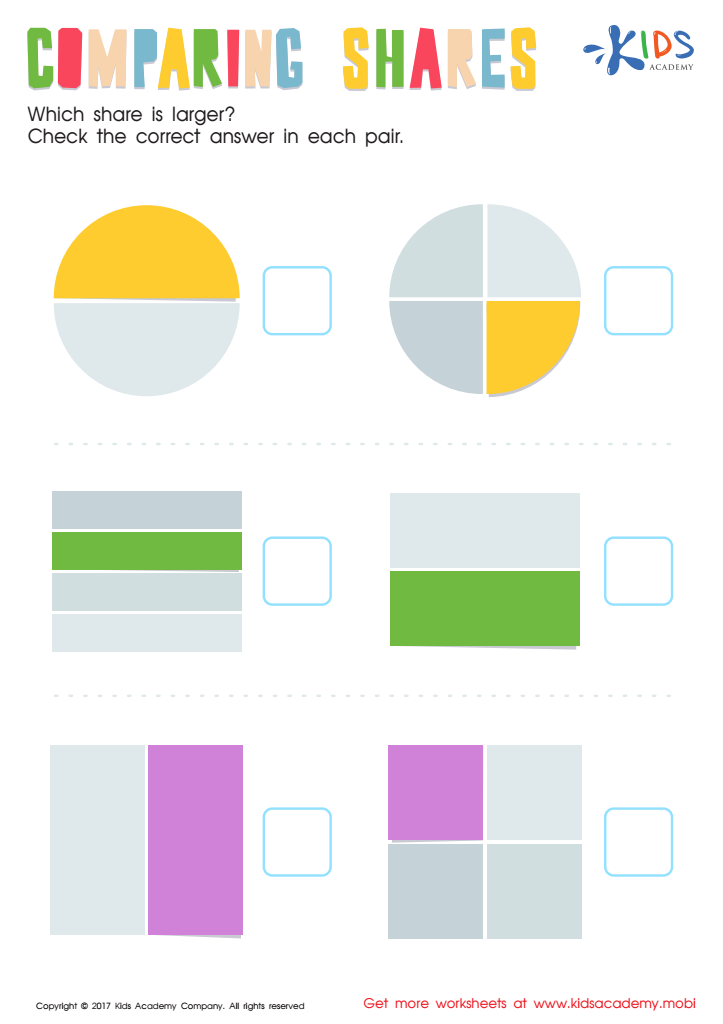
Can your students identify and draw shapes correctly? If so, this exercise may be too easy. For those who are still learning, extra help may be needed. The worksheet requires students to select which shape is larger in each pair; circles and squares are included.
Comparing Shares Worksheet
Worksheet
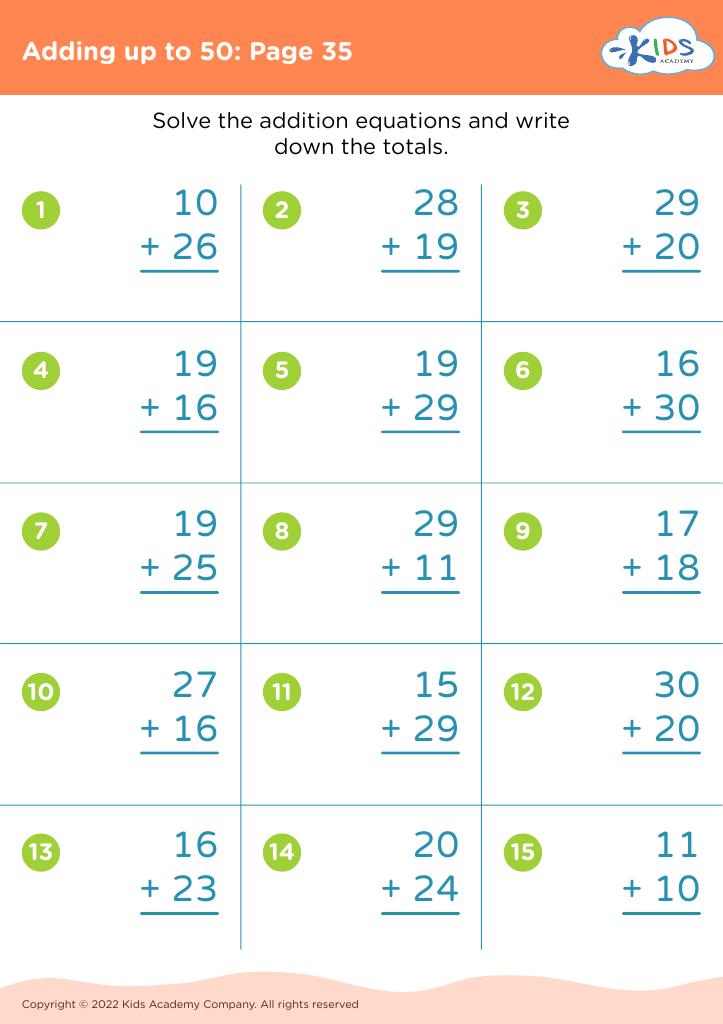
Adding up to 50: Page 35

Adding up to 50: Page 35

Adding up to 50: Page 35
Worksheet
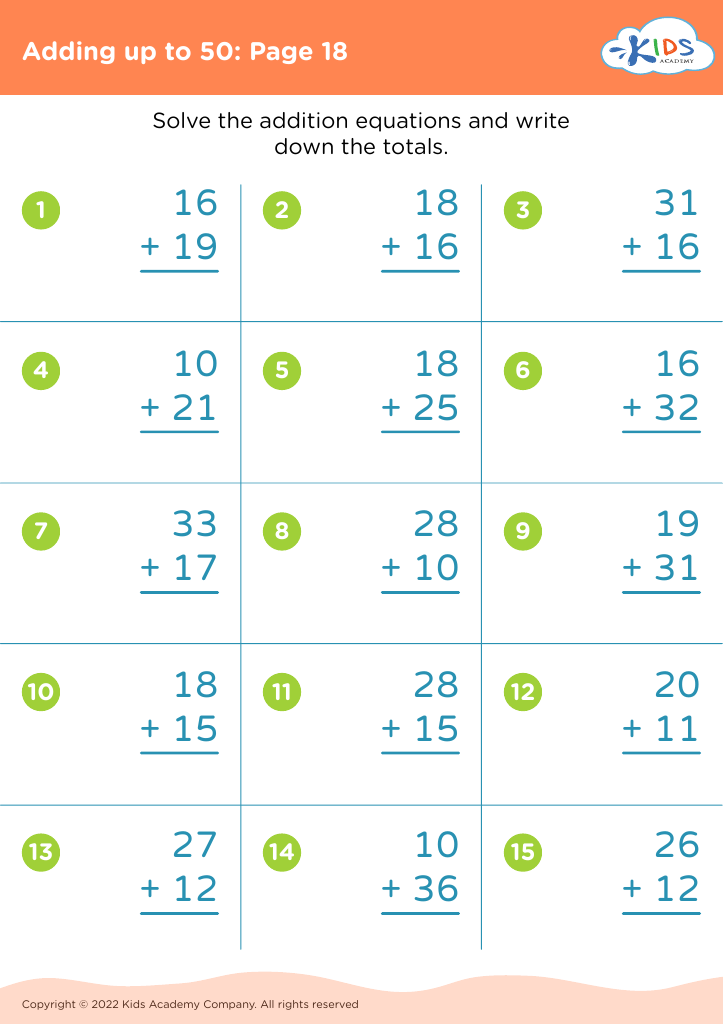
Adding up to 50: Page 18

Adding up to 50: Page 18

Adding up to 50: Page 18
Worksheet
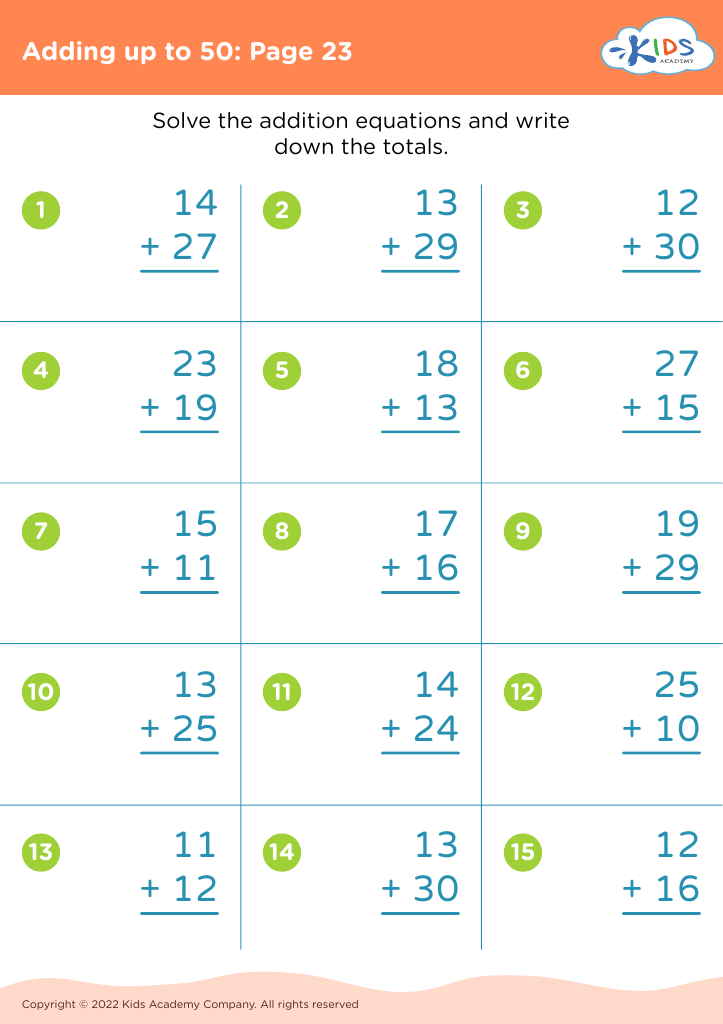
Adding up to 50: Page 23

Adding up to 50: Page 23

Adding up to 50: Page 23
Worksheet
Making Smaller Shares Worksheet
Making Smaller Shares Worksheet
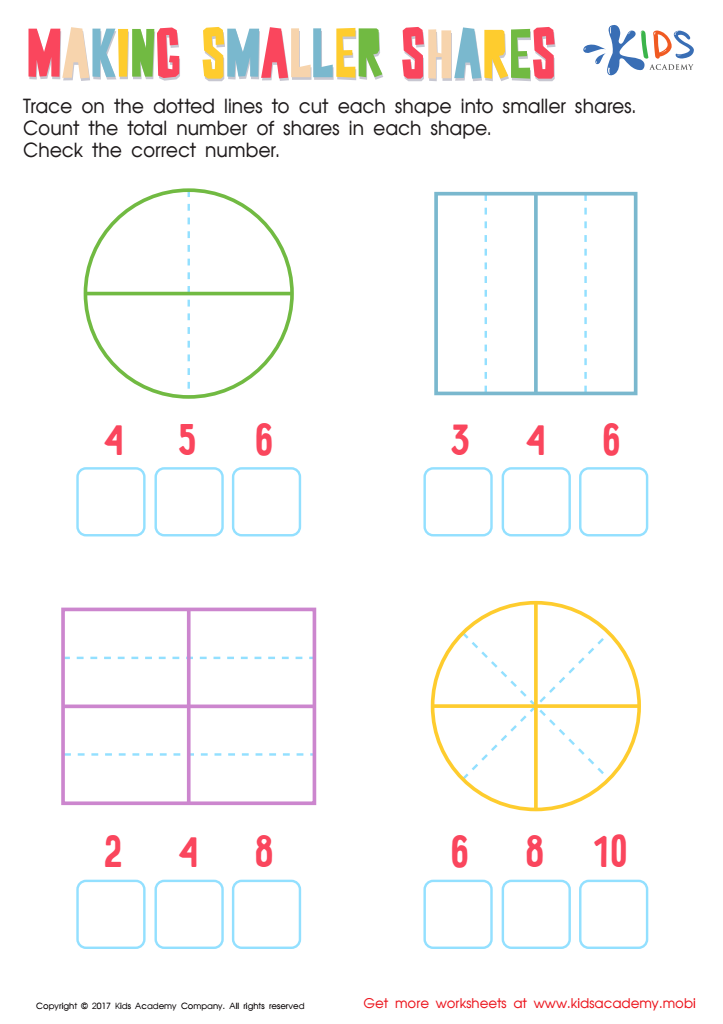
Help your kids learn shapes by having them cut out shapes on this tracing sheet. Point out the dotted lines, then guide their hand as they trace them, breaking shapes into smaller parts. Ask your children to count the number of parts and check the answers given.
Making Smaller Shares Worksheet
Worksheet
Adding up to 1000 with Regrouping: Page 56
Worksheet
Adding up to 50 with Regrouping: Page 22
Worksheet
Adding up to 100 with Regrouping: Page 13
Worksheet
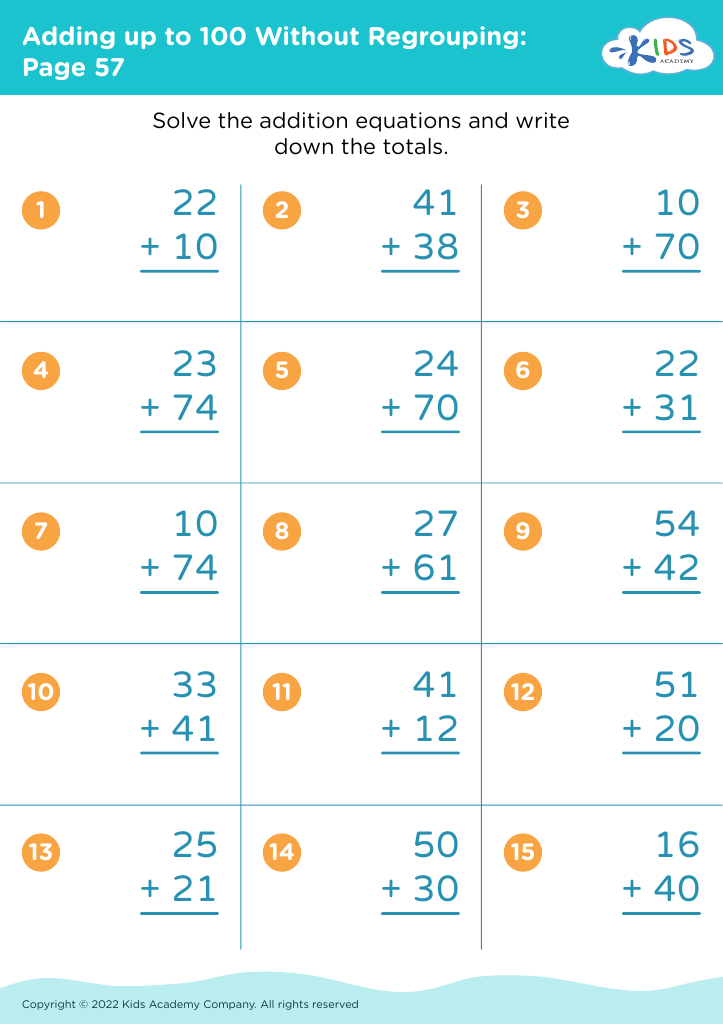
Adding up to 100 Without Regrouping: Page 57
Worksheet
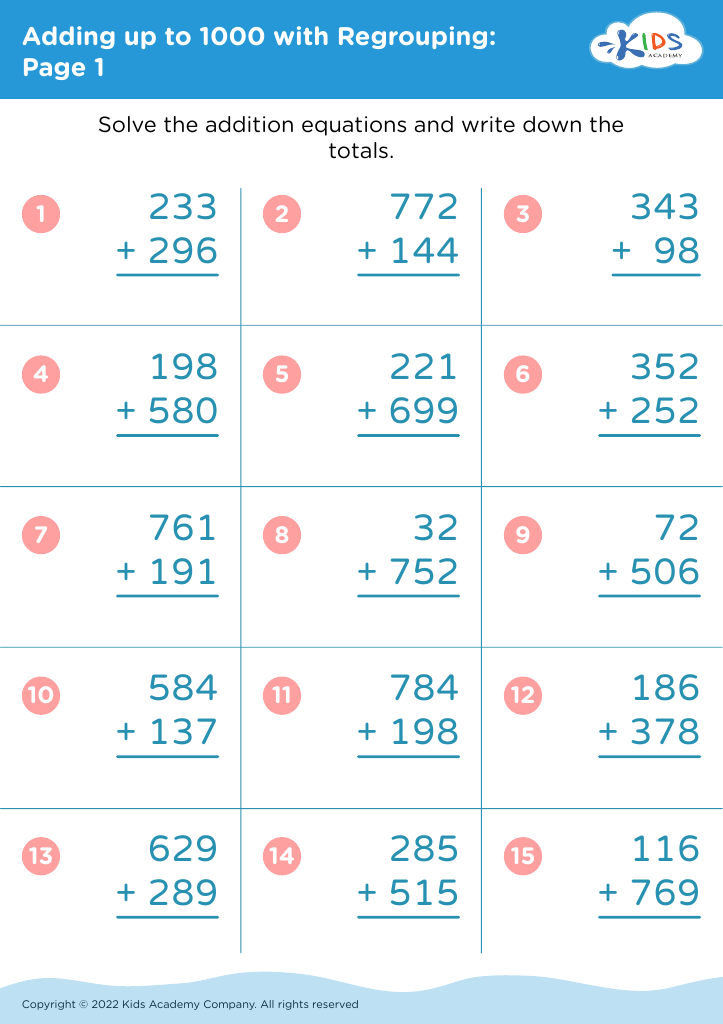
Adding up to 1000 with Regrouping: Page 1
Worksheet
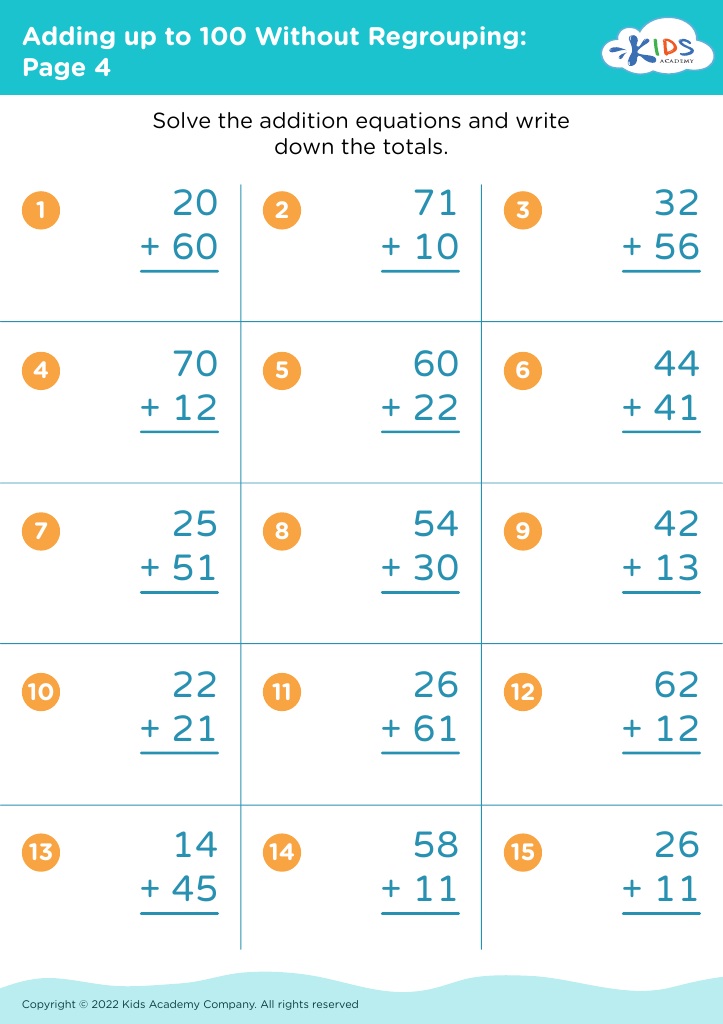
Adding up to 100 Without Regrouping: Page 4
Worksheet
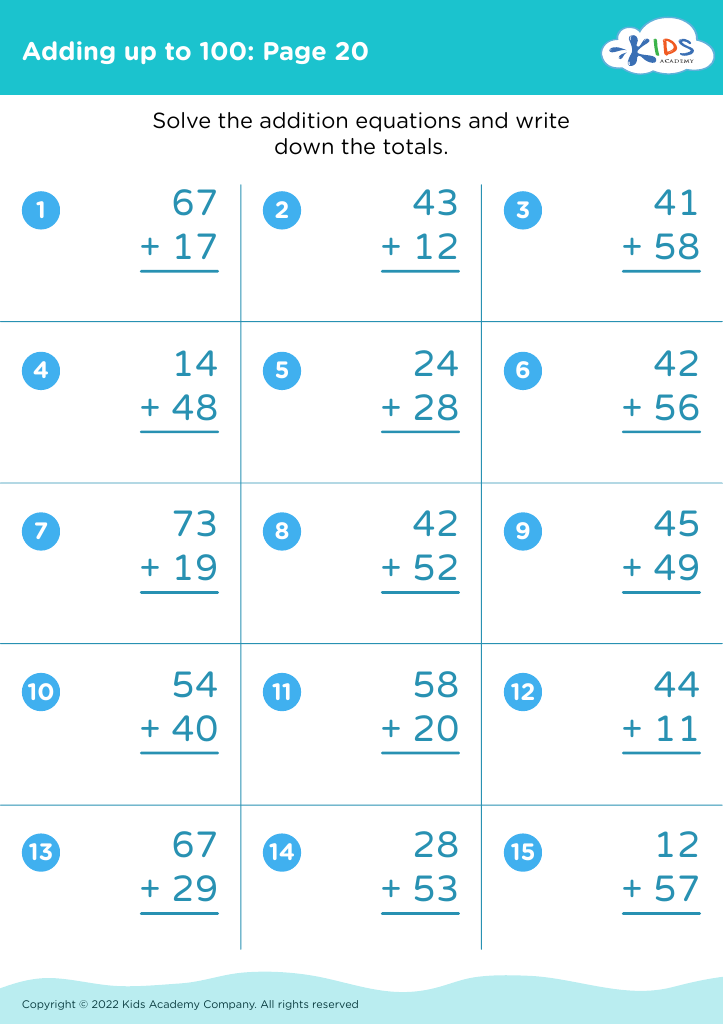
Adding up to 100: Page 20

Adding up to 100: Page 20

Adding up to 100: Page 20
Worksheet
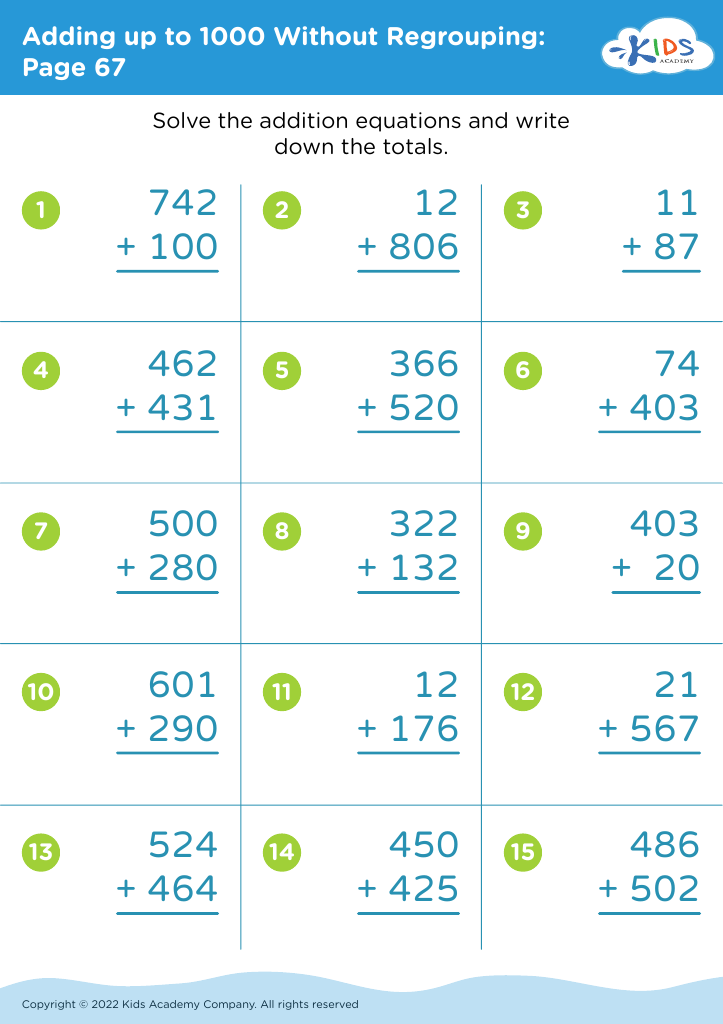
Adding up to 1000 Without Regrouping: Page 67
Worksheet
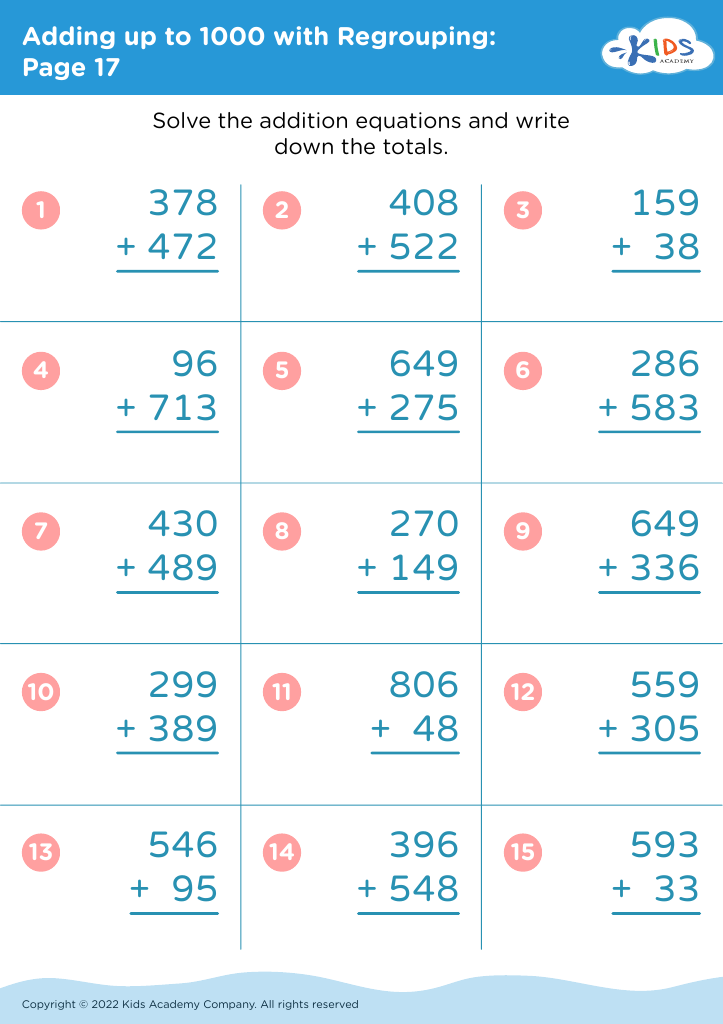
Adding up to 1000 with Regrouping: Page 17
Worksheet
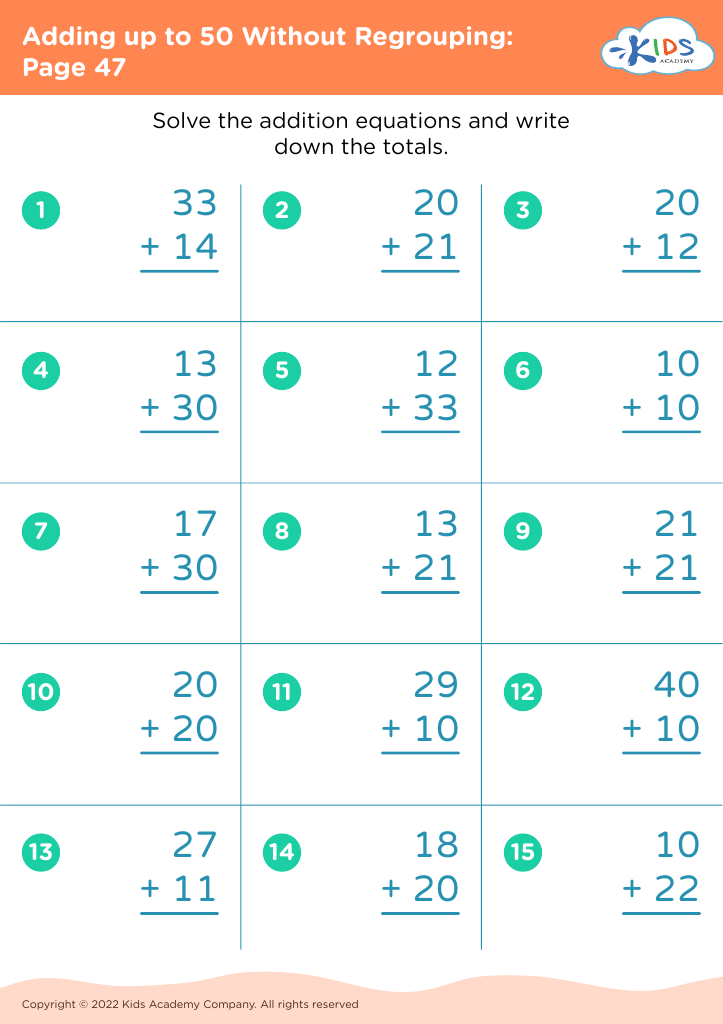
Adding up to 50 Without Regrouping: Page 47
Worksheet
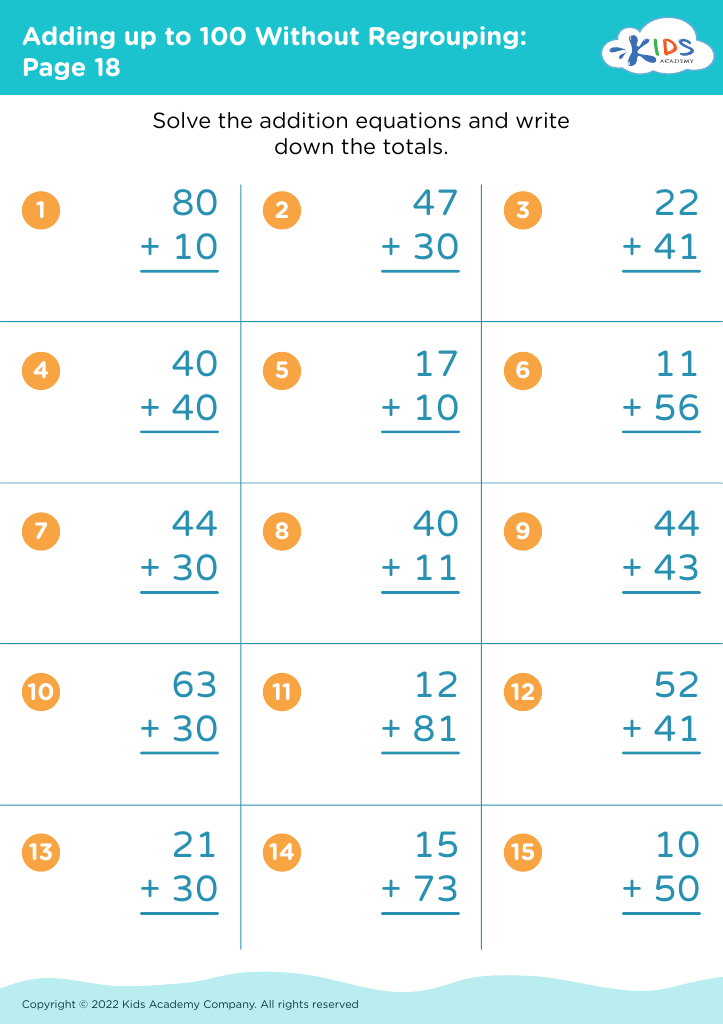
Adding up to 100 Without Regrouping: Page 18
Worksheet
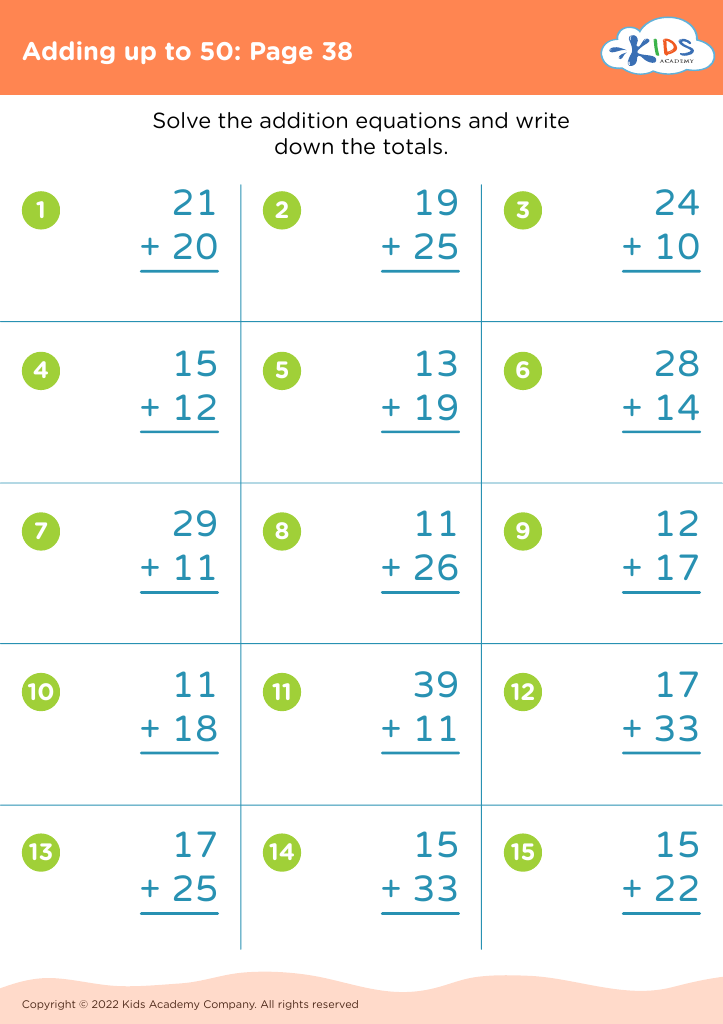
Adding up to 50: Page 38

Adding up to 50: Page 38

Adding up to 50: Page 38
Worksheet
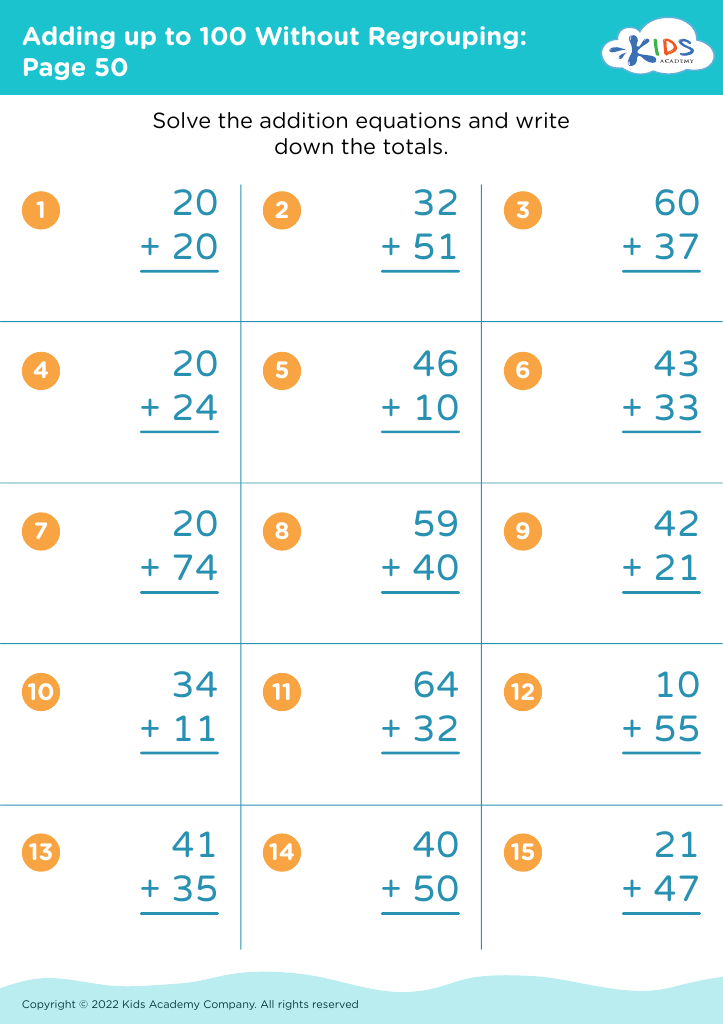
Adding up to 100 Without Regrouping: Page 50
Worksheet
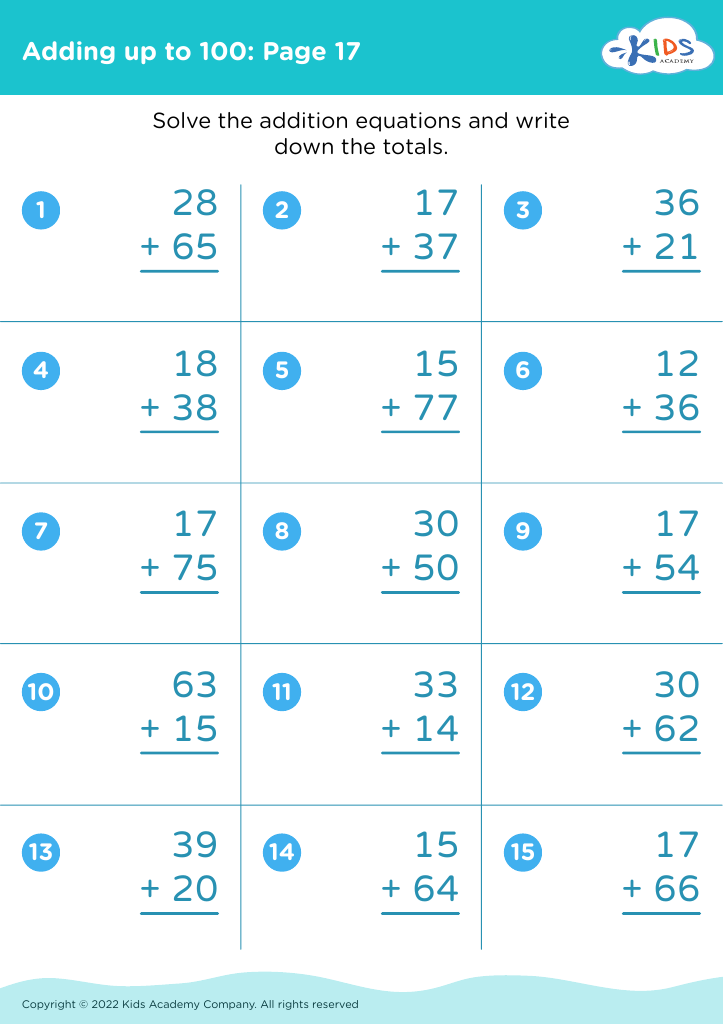
Adding up to 100: Page 17

Adding up to 100: Page 17

Adding up to 100: Page 17
Worksheet
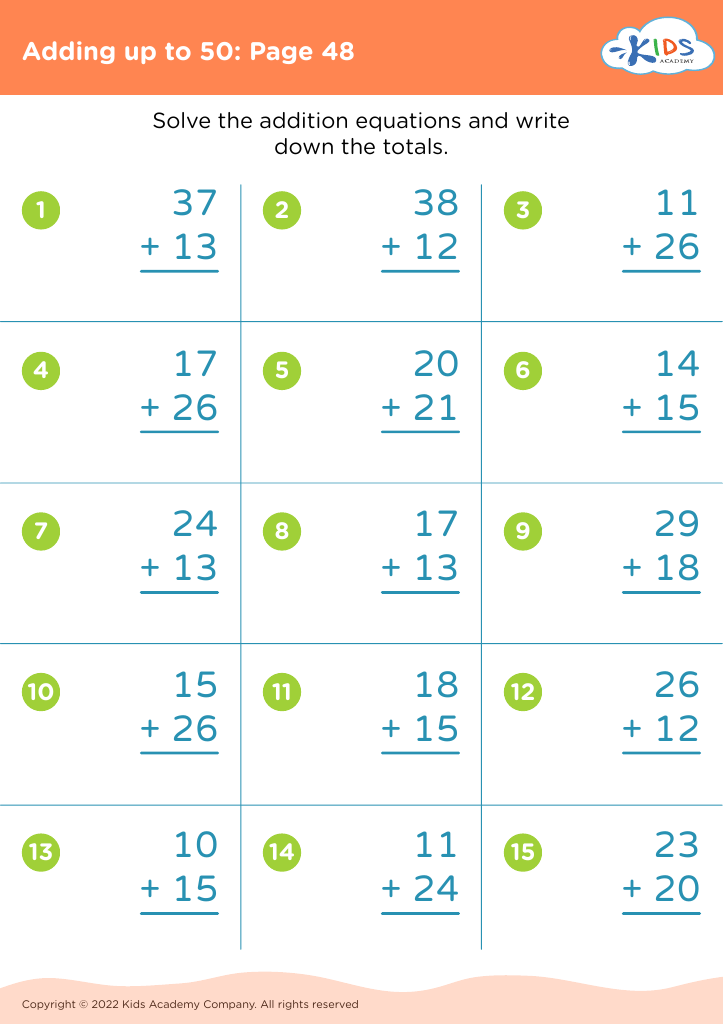
Adding up to 50: Page 48

Adding up to 50: Page 48

Adding up to 50: Page 48
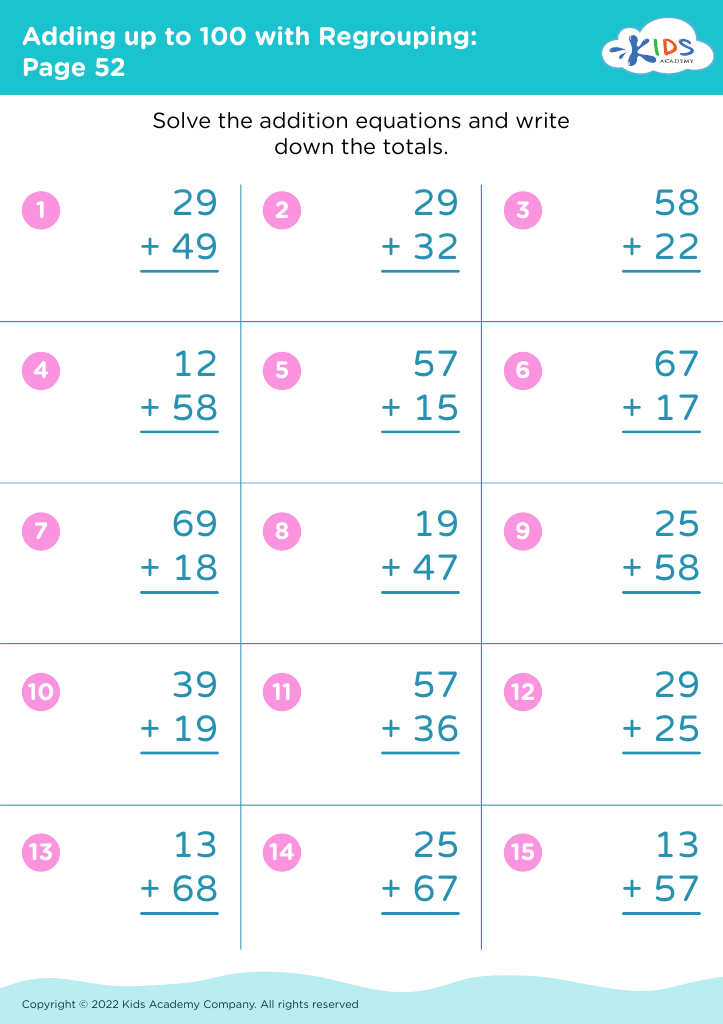
Worksheet
Adding up to 100 with Regrouping: Page 52
Worksheet
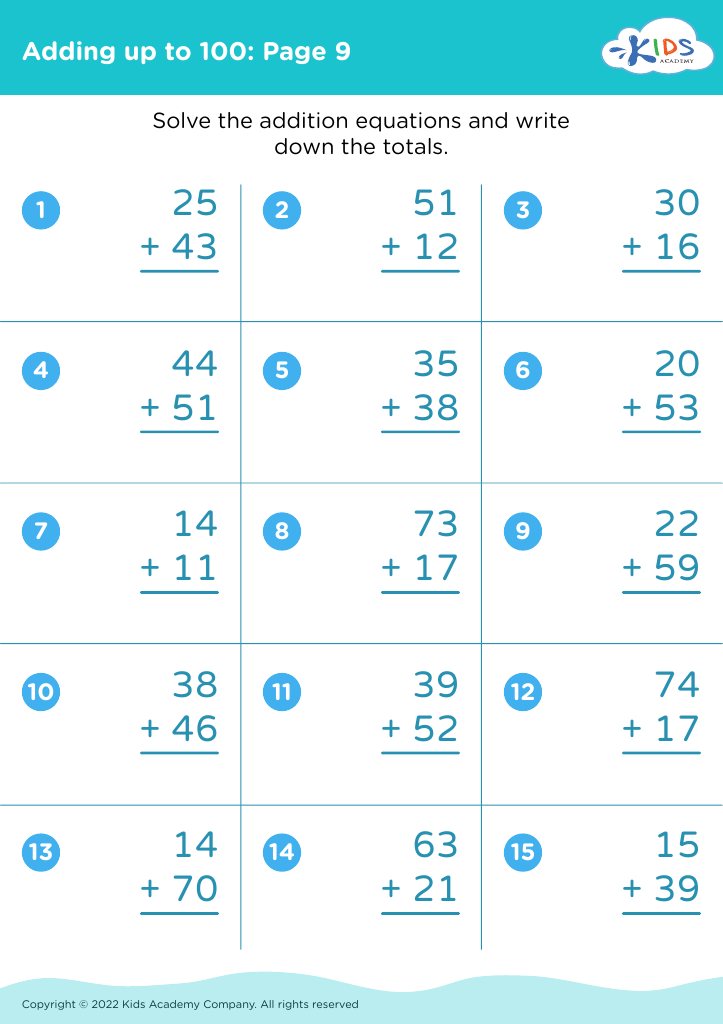
Adding up to 100: Page 9

Adding up to 100: Page 9

Adding up to 100: Page 9
Worksheet
Bike Wheel Equal Parts Worksheet

Bike Wheel Equal Parts Worksheet

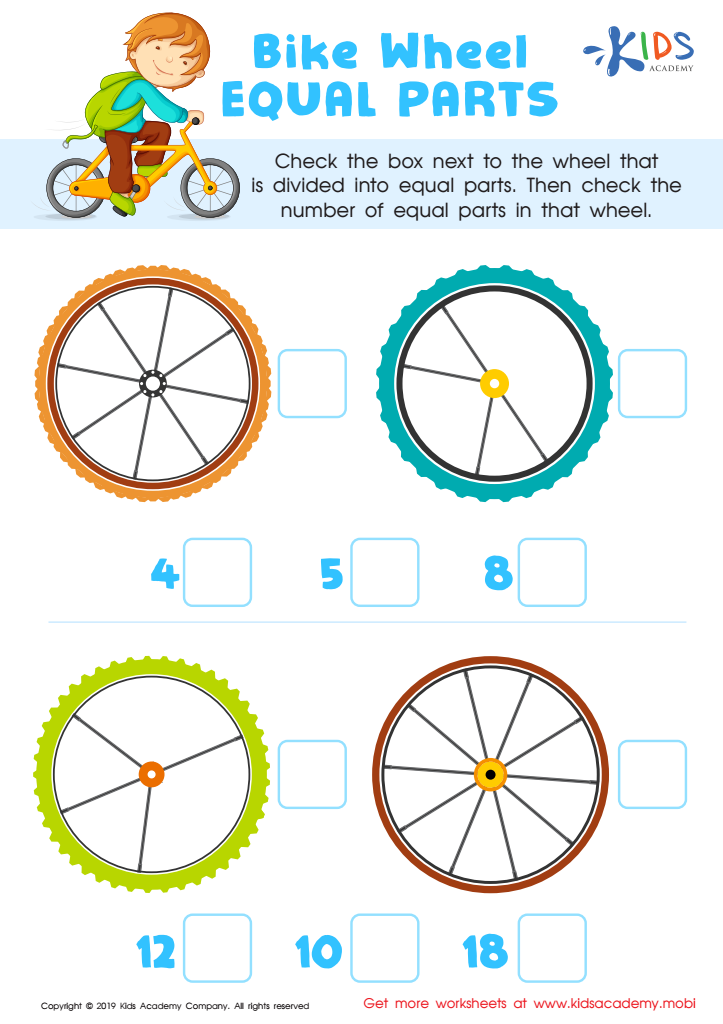
Help your kids have fun while they learn! Ask them to identify the object in the picture with four wheels. Guide them to count the spokes, then check the box on the wheel with equal parts. Lastly, check how many equal parts the wheel is divided into.
Bike Wheel Equal Parts Worksheet

Worksheet
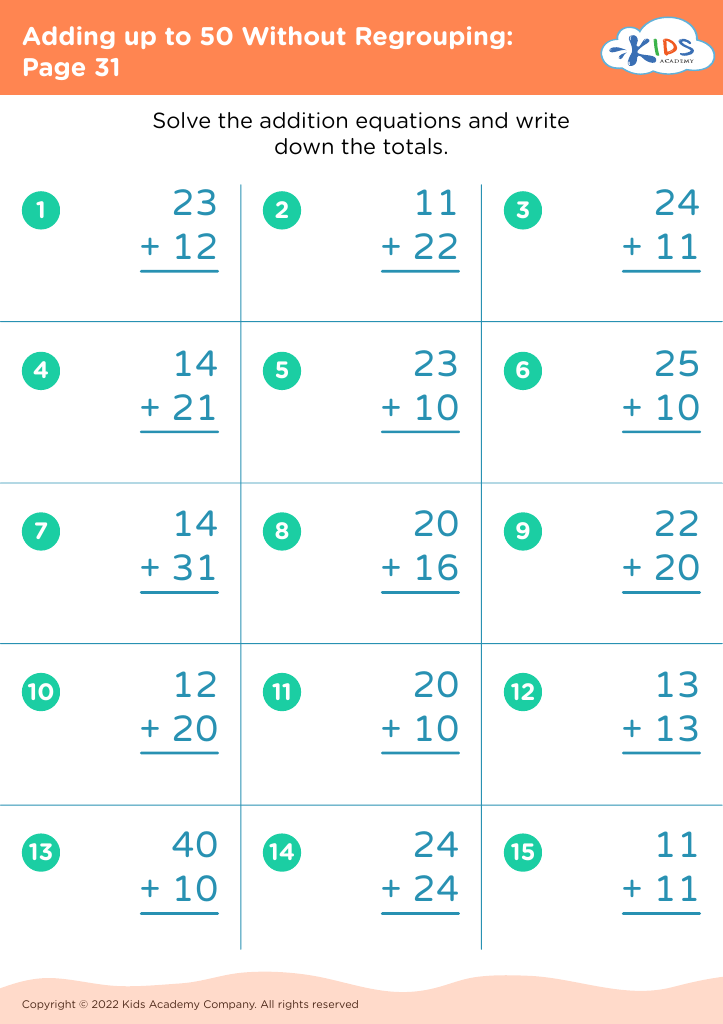
Adding up to 50 Without Regrouping: Page 31
Worksheet


Parents and teachers should care about comparing fractions for children aged 7-9 because it forms a crucial part of their mathematical development and underpins more advanced concepts they will encounter later. Understanding fractions not only helps kids grasp essential math skills but also bolsters their problem-solving abilities and logical thinking.

First, fractions are foundational in many aspects of life, such as cooking, telling time, or dividing objects. Early exposure ensures children can make sense of these everyday applications. At ages 7-9, children are transitioning from simple arithmetic to more complex forms of math. Introducing them to fractions at this stage promotes numerical literacy, enabling them to confidently tackle higher-level topics like decimals, percentages, and algebra.

Comparing fractions specifically teaches children to recognize relationships between quantities. They learn to determine which fractions are larger or smaller, fostering critical thinking about numbers. This practice sharpens their analytical skills as they often need to find common denominators or convert fractions to make comparisons.

Furthermore, mastering fraction comparison sets a positive trajectory in a child's academic journey. Success in early math builds confidence, encouraging a growth mindset where children feel more capable and ready to embrace challenges in other subjects. Thus, investing in this aspect of their education offers long-term benefits, paving the way for academic and real-life success.