Comparing Fractions Math Worksheets for Ages 7-9 - Page 2
95 filtered results
-
From - To
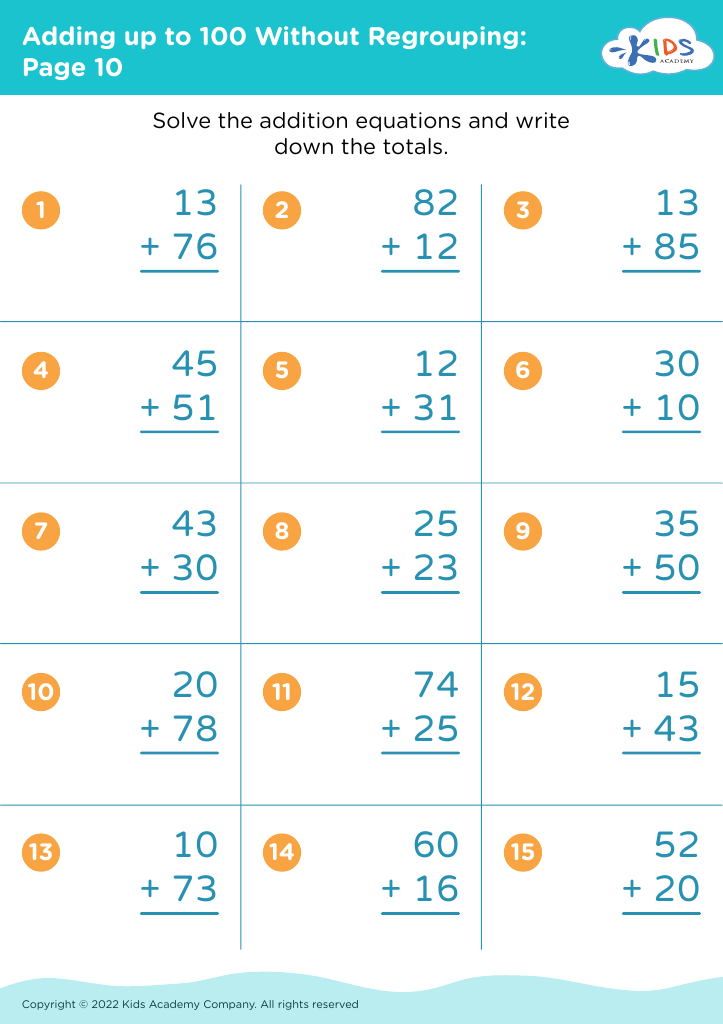
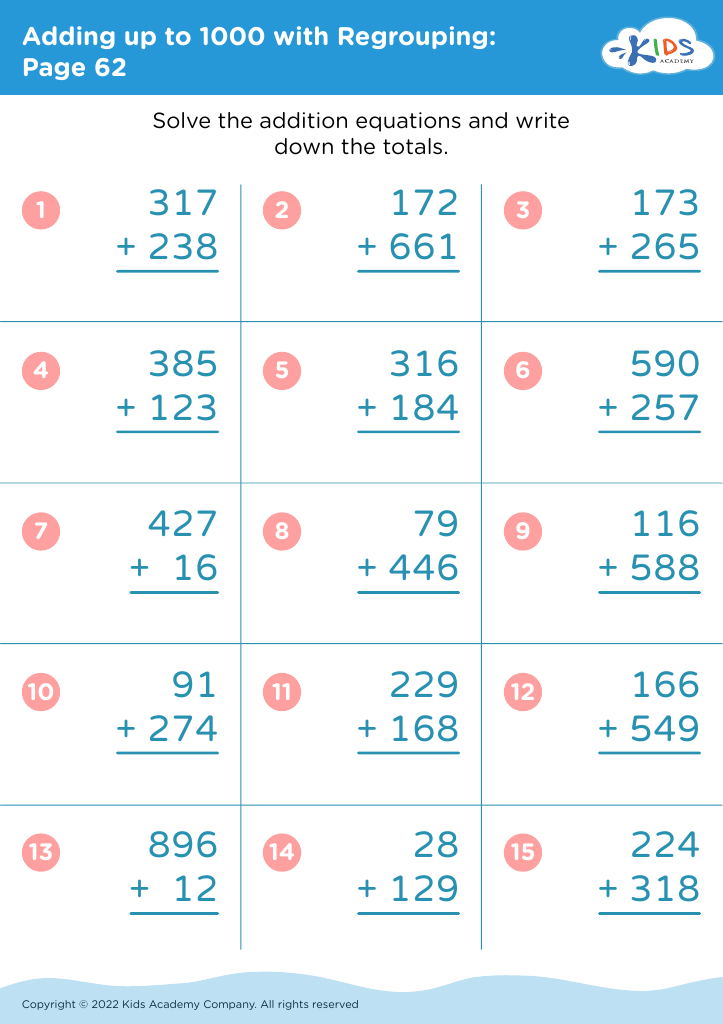
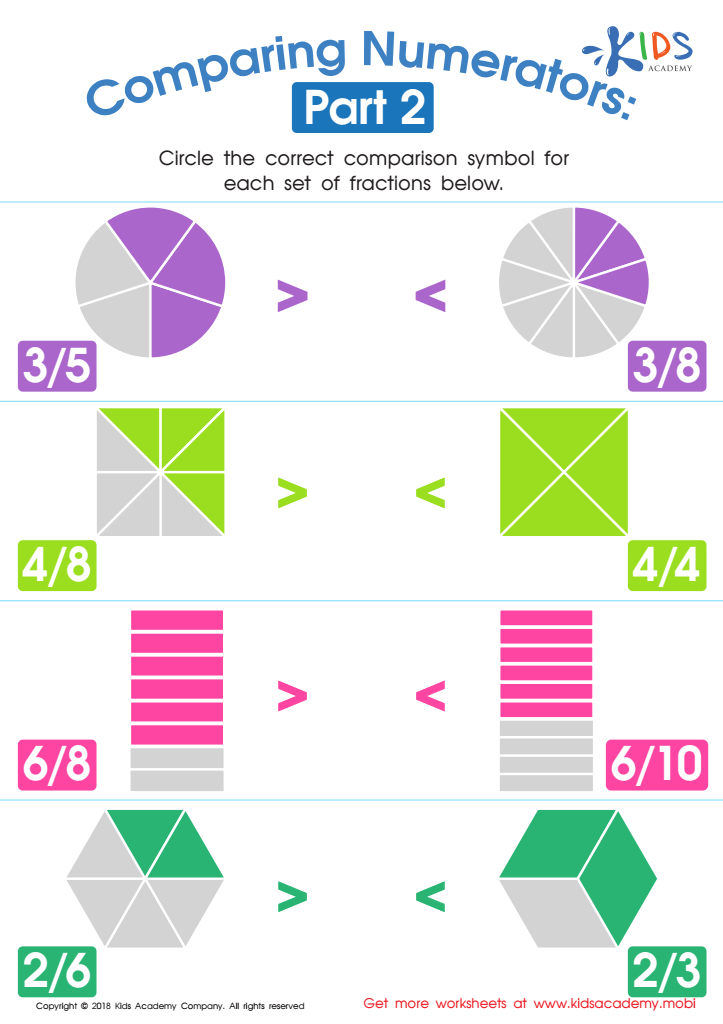
Comparing Numerators Part 2 Worksheet
 Assign to My Students
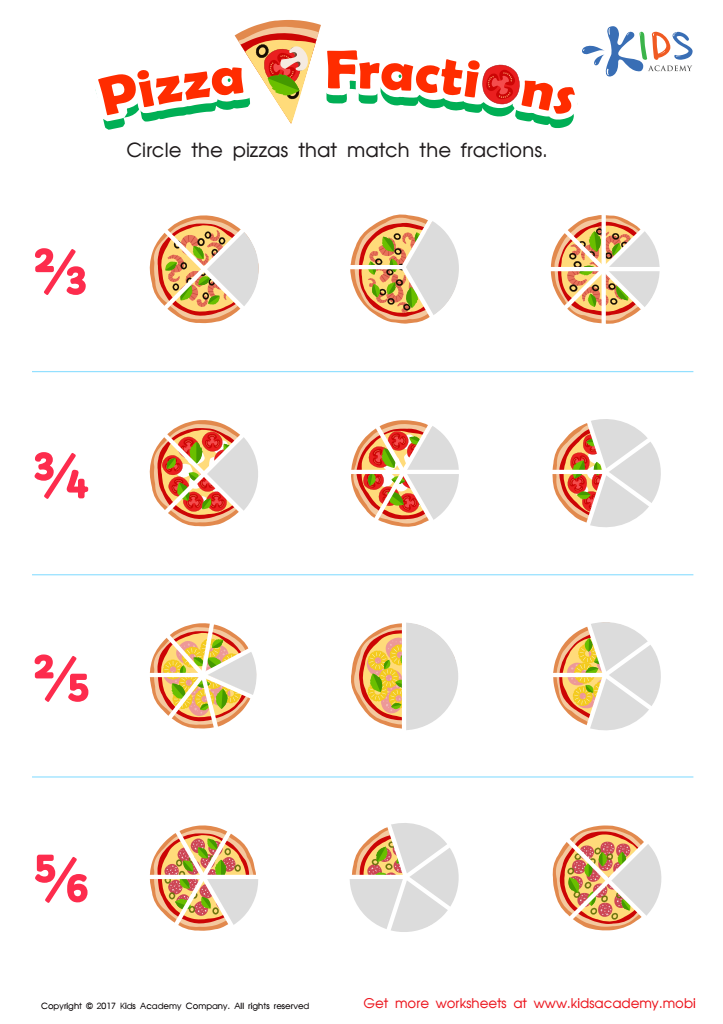
Fractions: Pizza Printable






.jpg)

Parents and teachers should care about comparing fractions for children aged 7-9 because it forms a crucial part of their mathematical development and underpins more advanced concepts they will encounter later. Understanding fractions not only helps kids grasp essential math skills but also bolsters their problem-solving abilities and logical thinking.
First, fractions are foundational in many aspects of life, such as cooking, telling time, or dividing objects. Early exposure ensures children can make sense of these everyday applications. At ages 7-9, children are transitioning from simple arithmetic to more complex forms of math. Introducing them to fractions at this stage promotes numerical literacy, enabling them to confidently tackle higher-level topics like decimals, percentages, and algebra.
Comparing fractions specifically teaches children to recognize relationships between quantities. They learn to determine which fractions are larger or smaller, fostering critical thinking about numbers. This practice sharpens their analytical skills as they often need to find common denominators or convert fractions to make comparisons.
Furthermore, mastering fraction comparison sets a positive trajectory in a child's academic journey. Success in early math builds confidence, encouraging a growth mindset where children feel more capable and ready to embrace challenges in other subjects. Thus, investing in this aspect of their education offers long-term benefits, paving the way for academic and real-life success.








