
Comparing sizes Math Worksheets for Ages 7-9
6 filtered results
Difficulty Level
Grade
Age
-
From - To
Subject
Activity
Standards
Unlock your child's potential with our "Comparing Sizes Math Worksheets for Ages 7-9" at Kids Academy! These engaging and educational worksheets help young learners develop essential math skills. Through fun and interactive activities, children will practice comparing and contrasting sizes, enhancing their understanding of measurements and basic math concepts. Perfect for both classroom and home use, our worksheets are designed to be age-appropriate, stimulating, and effective in reinforcing math skills. Give your child the tools they need to succeed in math while making learning enjoyable and effective. Explore now and watch confidence soar!
Favorites
With answer key
Interactive
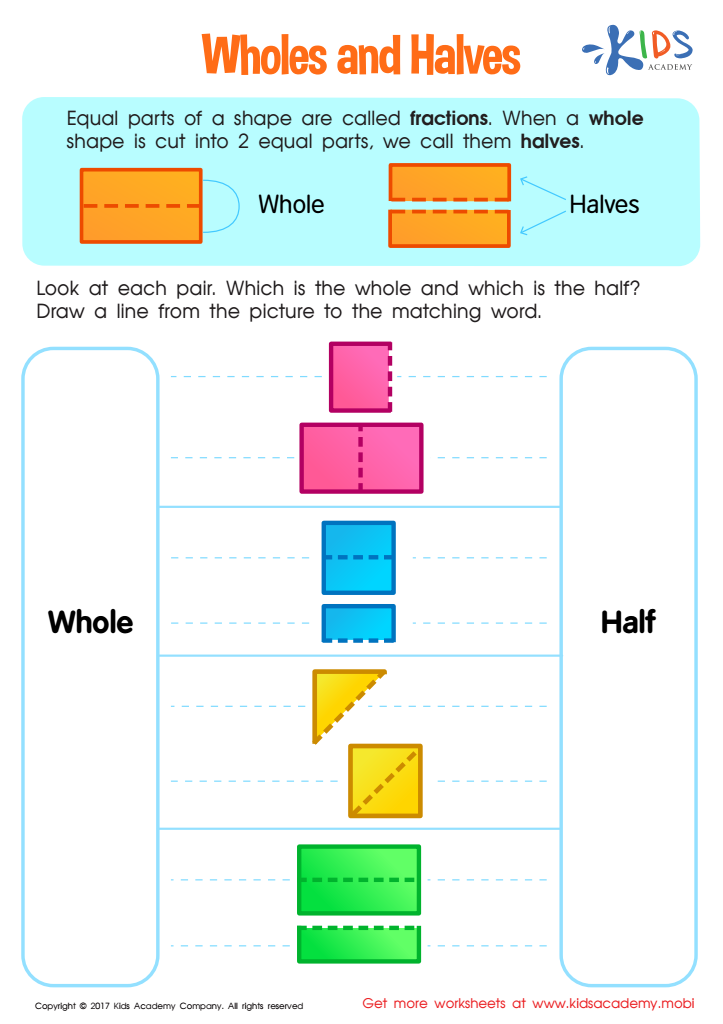
Wholes and Halves Worksheet
Students can feel overwhelmed with fractions. Help take the stress off by using a colorful worksheet to explain whole shapes and how to find halves. Ask them to identify the whole and point to the matching word for the half. A free printout can help guide them.
 Assign to My Students
Wholes and Halves Worksheet
Worksheet
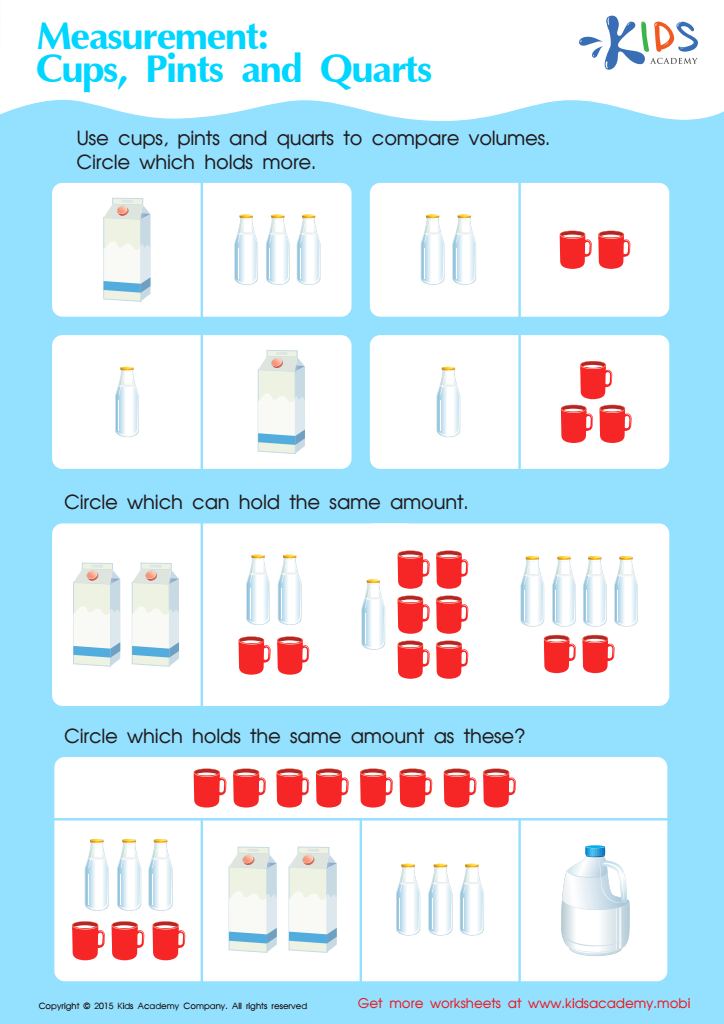
Measurement: Compare Volumes Worksheet
Compare volumes with Kids Academy and have fun! (80 words)
Practice measuring with Kids Academy and have fun! Compare volumes in pictures and circle which holds more. Keep learning with free math worksheets available on our website. Enjoy the process and have fun!
Measurement: Compare Volumes Worksheet
Worksheet
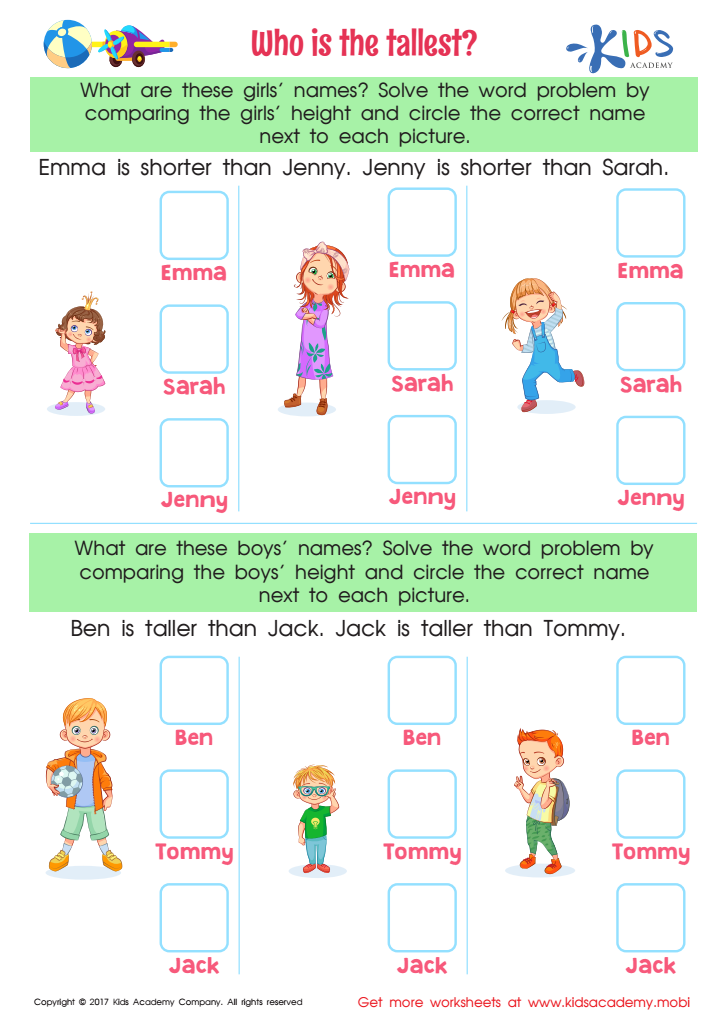
Who Tallest Printable
Help your child observe the kids in the worksheet and compare their heights to answer the question: Who is the Tallest? This is an excellent way for them to practice and better understand measurement concepts.
Who Tallest Printable
Worksheet
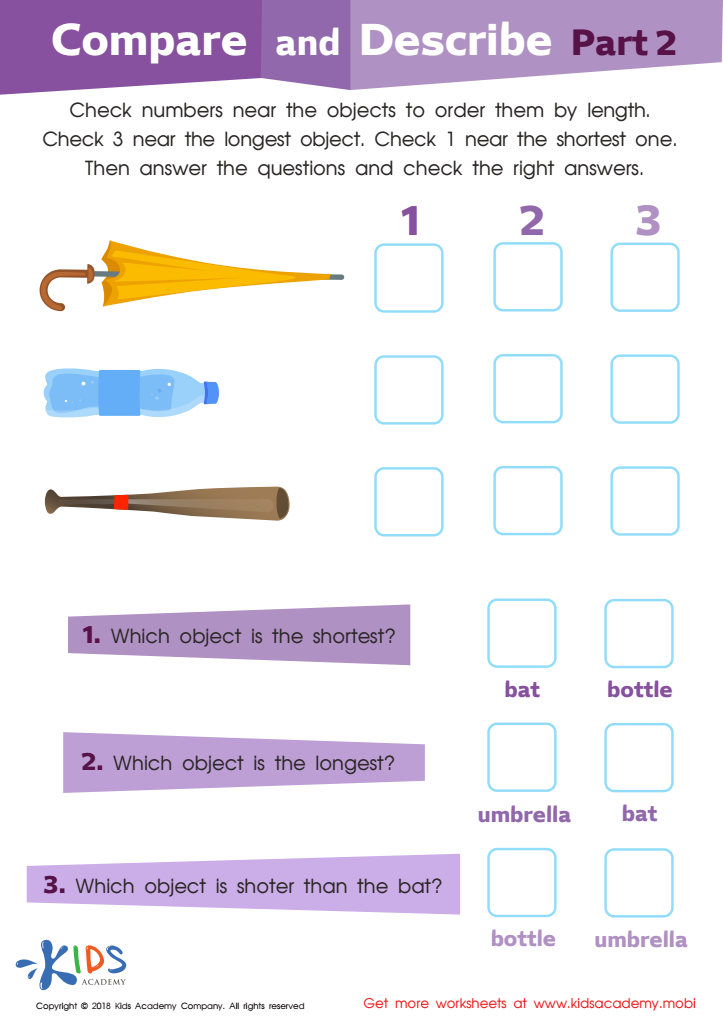
Compare and Describe: Part 2 Worksheet
Help kids hone their comparison skills with this fun measurement worksheet! Kids will sort objects by length and check off the boxes as they go. At the bottom, they'll read the questions and take a final look at the images to complete the exercise. An exciting way to learn measurement!
Compare and Describe: Part 2 Worksheet
Worksheet
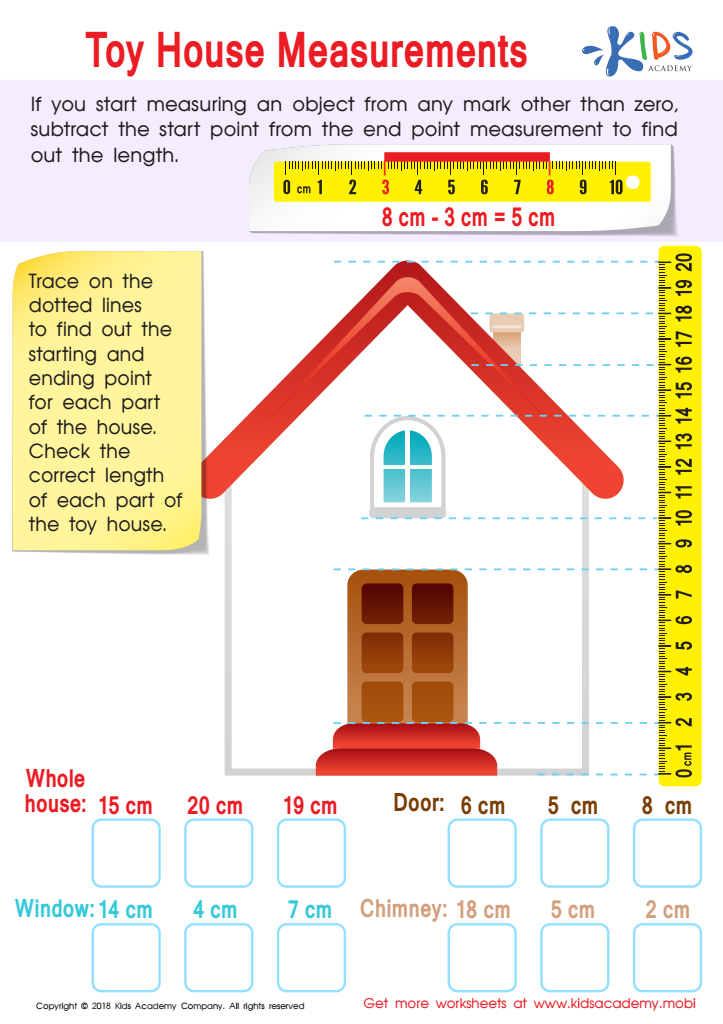
Toy House Measurements Worksheet
This worksheet requires math and measuring skills. When measuring an object from a non-zero starting point, subtract the start point from the end point to get the correct length. Kids must trace the dotted lines to get the right length for each part of the house.
Toy House Measurements Worksheet
Worksheet
Join Kids Academy for Free
Who is primarily going to use this learning content?





.jpg)


Understanding and comparing sizes in math for children aged 7-9 is crucial because it forms the foundation for essential mathematical concepts and daily problem-solving skills. Children at this age begin to engage with the world around them in more complex ways, and recognizing differences in size—whether in length, weight, or volume—helps sharpen their critical thinking and analytical skills.
Incorporating lessons on comparing sizes helps children develop their understanding of measurement, an essential skill in both academic and real-world contexts. For instance, distinguishing which container holds more water or which object is heavier can be basic yet powerful exercises in developing spatial reasoning. These abilities are foundational for more complex topics in math and science, such as geometry, algebra, and physics.
Moreover, engaging in size comparison activities supports language development, as students learn and use comparative vocabulary such as "longer," "shorter," "heavier," and "lighter." This dual development—both linguistic and mathematical—can enhance overall cognitive growth, making them better equipped to face various learning challenges as they progress in their academic journey.
For teachers and parents, focusing on size comparison allows them to provide hands-on, interactive learning experiences that can be both educational and fun. This interactive learning can ignite curiosity and foster a positive attitude towards math, increasing a child's confidence and enthusiasm for the subject.








