Boost your child's learning experience with our Visual Perception Improvement Math Worksheets for ages 7-9! Designed to enhance visual awareness, these engaging exercises help young learners sharpen their observational skills essential for math success. Our worksheets include fun and interactive activities that focus on identifying patterns, spatial relationships, and shape recognition, allowing children to strengthen their cognitive abilities while developing a solid mathematical foundation. Ideal for parents and educators, these printable resources provide a seamless way to reinforce classroom learning at home. Empower your child's confidence in math and visual perception – explore our expertly crafted worksheets today!
Check out this FREE Trial Lesson on Math for age 7-9!

Place Value Adding with Base 10 blocks (no regrouping)

Favorites
With answer key
Interactive
  • 7-9
  • Visual perception improvement
  • Math
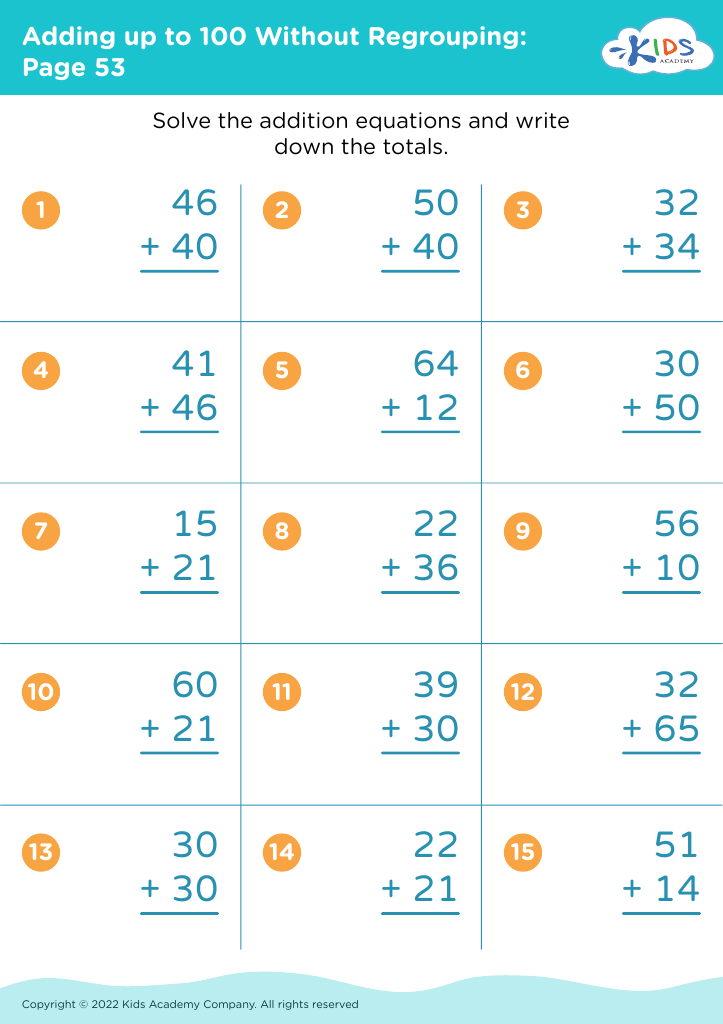
Adding up to 100 Without Regrouping: Page 53
Worksheet
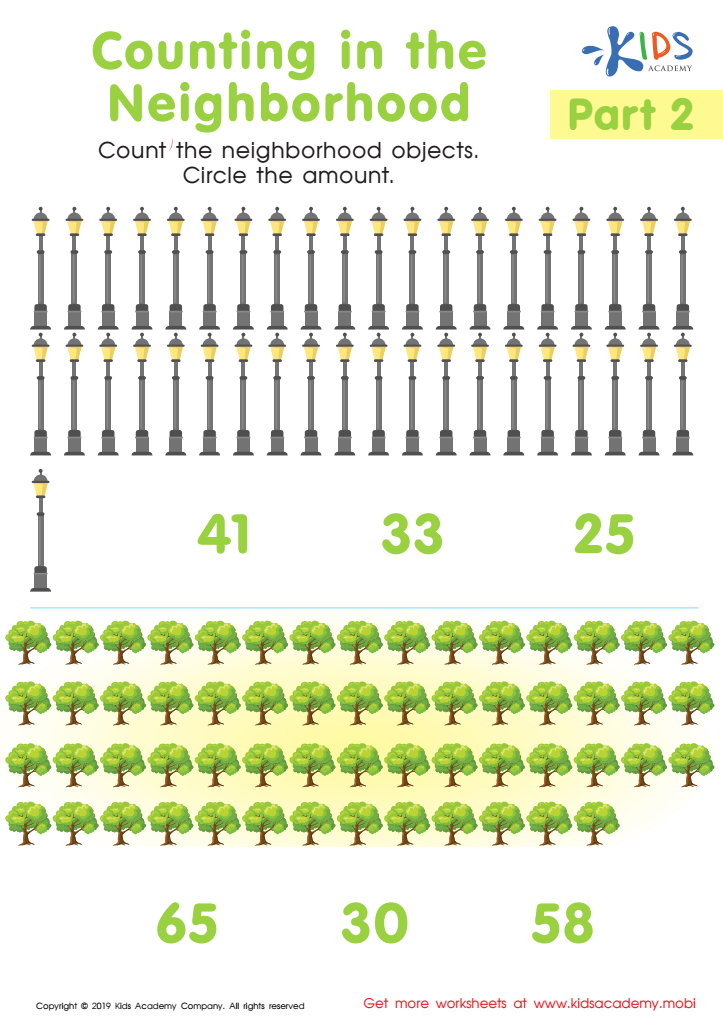
Counting In The Neighborhood Part 2 Worksheet

Counting In The Neighborhood Part 2 Worksheet

Download this free worksheet to help your child build number sense and math reasoning skills! It uses pictures of objects they know, letting your child count and match the right numeral to the objects to count past 10. Let them feel successful in mastering numbers.
Counting In The Neighborhood Part 2 Worksheet
Worksheet
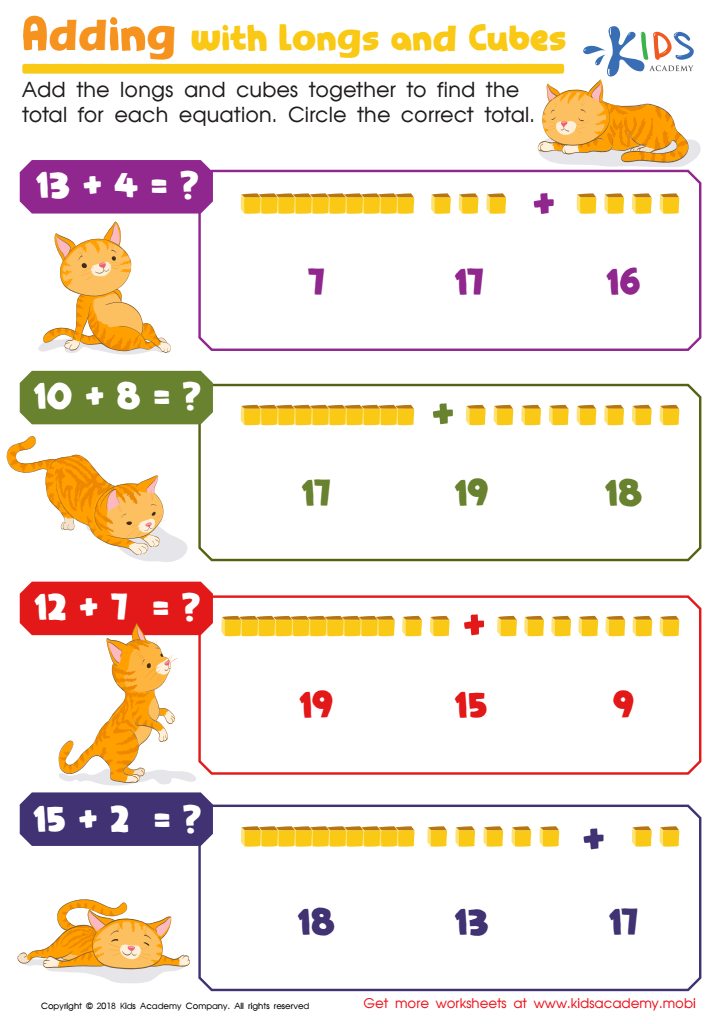
Adding With Longs and Cubes Worksheet

Adding With Longs and Cubes Worksheet

Math might not be your child's favorite, but they must master it to advance. If they're having difficulties or don't like it, use this worksheet to make it easier. Have them add longs and cubes together to find the total for each question, then circle the correct answer. This exercise can help make math experiences better.
Adding With Longs and Cubes Worksheet
Worksheet
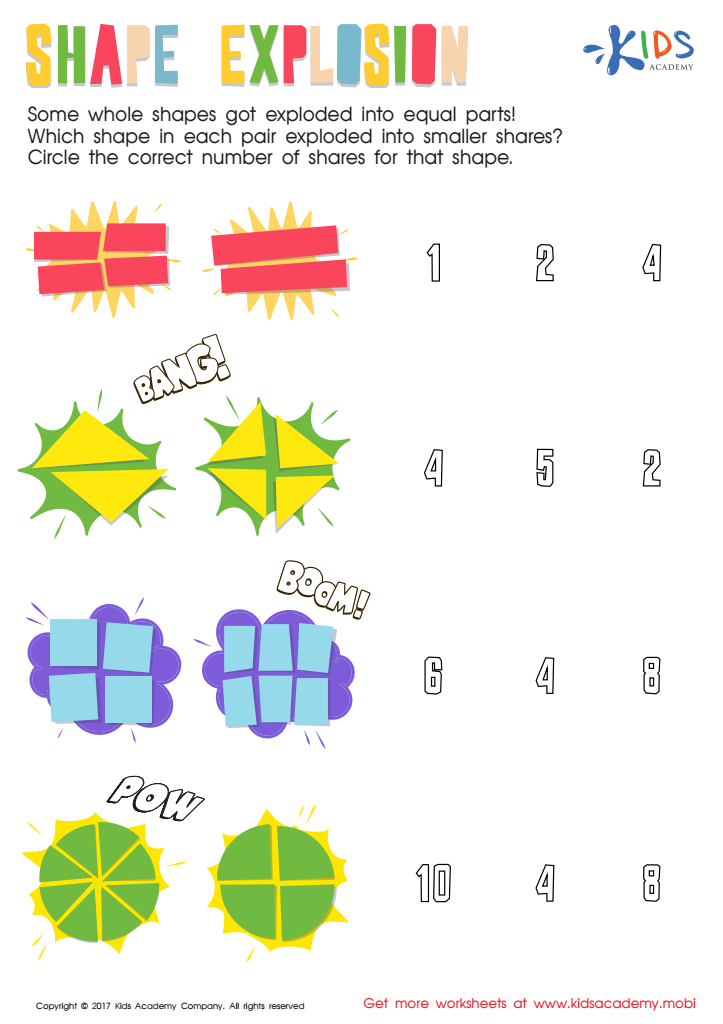
Shape Explosion Worksheet

Shape Explosion Worksheet

This worksheet shows students how some shapes explode into two or more equal parts. On the left side are four shapes, each splitting into two or more parts. Ask your child to point out which shape has the smaller share, and help them circle the correct number of shares.
Shape Explosion Worksheet
Worksheet
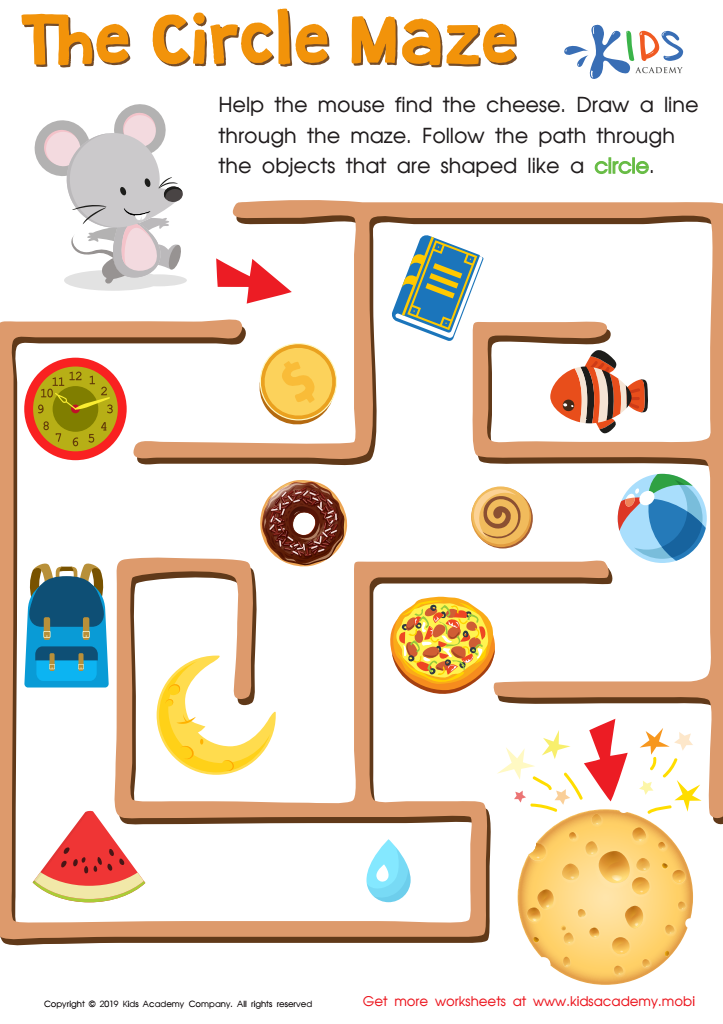
The Circle Maze Worksheet

The Circle Maze Worksheet

Kids can have fun learning shapes with this maze worksheet. They can help the mouse find its cheese by tracing the path of a circle through the maze. This printable is great for classroom learning or as an activity at home.
The Circle Maze Worksheet
Worksheet
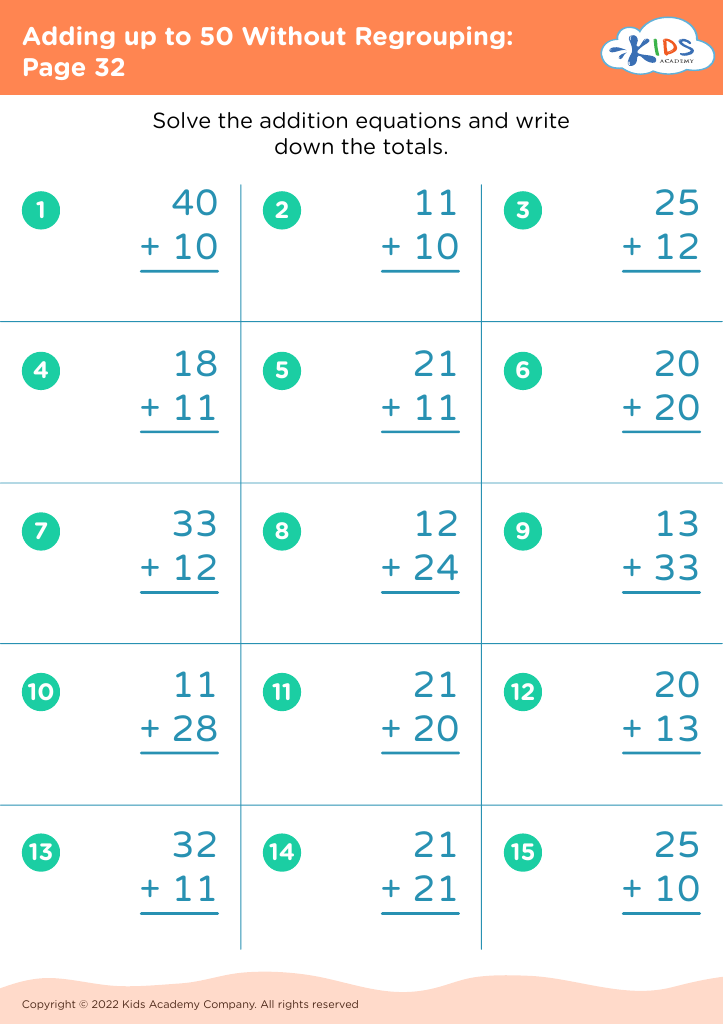
Adding up to 50 Without Regrouping: Page 32
Worksheet
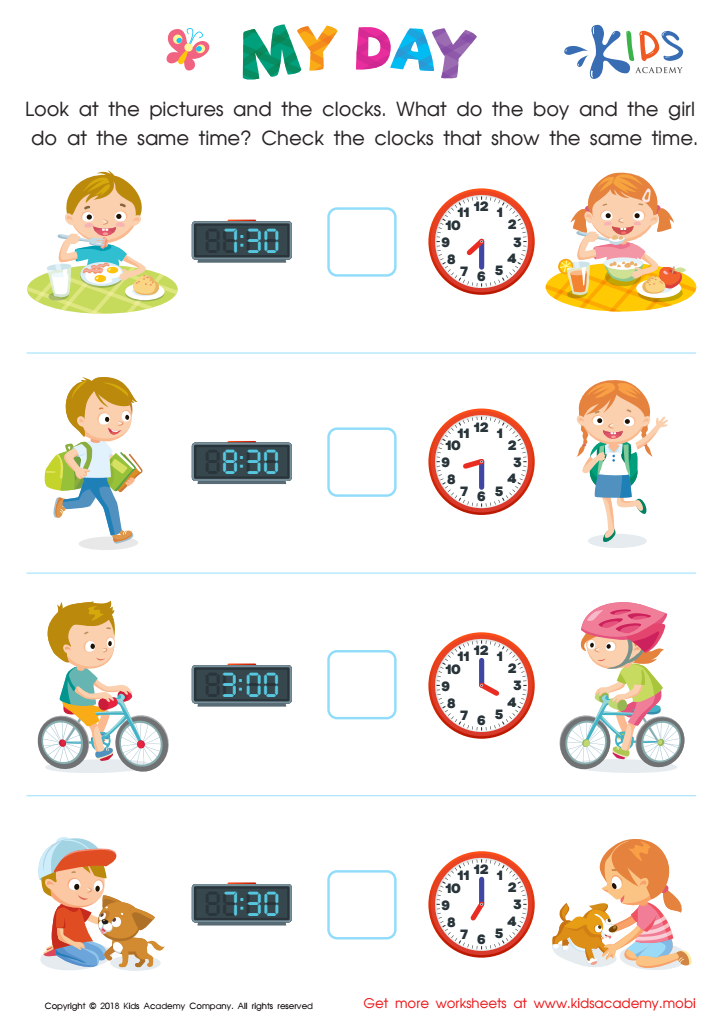
My Day Worksheet
My Day Worksheet

My Day Worksheet

Show your students the pictures and clocks in the colorful worksheet. Ask what the boy and girl are doing in each, then what time the clocks show. Finally, ask what activities they both do at the same time. Help them check the clocks showing the same time in both pictures.
My Day Worksheet
Worksheet
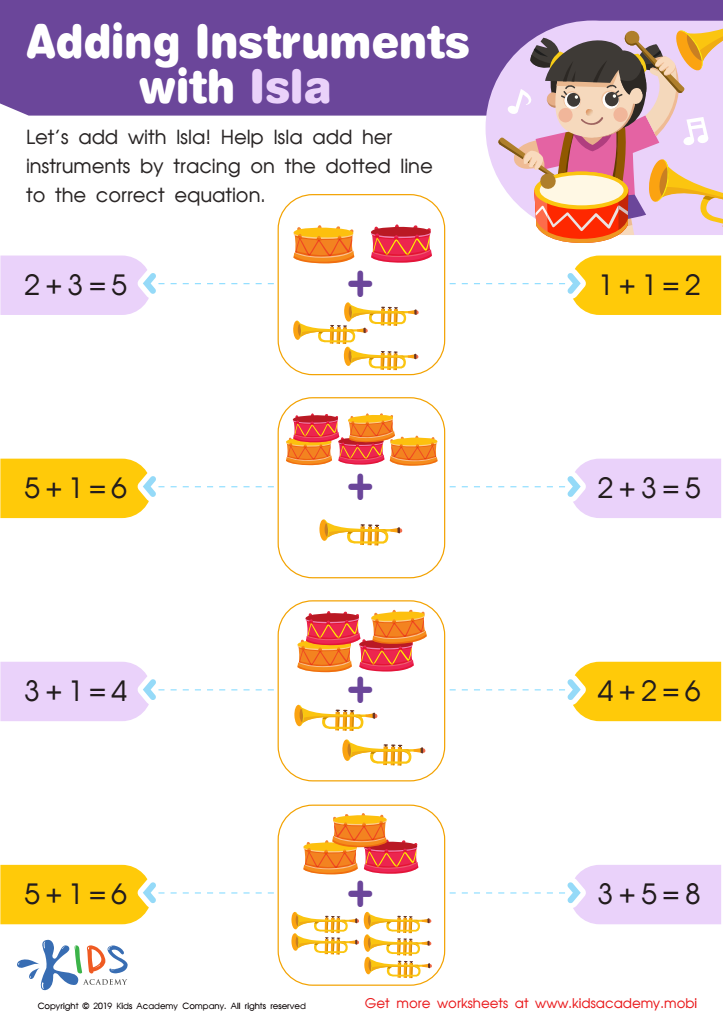
Adding Instruments with Isla Worksheet


Adding Instruments with Isla Worksheet
Your kids can have fun helping Isla add her musical instruments. With colorful pics and one-to-one representation, they can pick the correct addition sentence. They can connect each pic with traceable lines and get to the right sum up to 10.
Adding Instruments with Isla Worksheet

Worksheet


Visual perception is essential for children's overall academic and cognitive development, particularly in subjects like math, which rely heavily on visual-spatial skills. For children aged 7-9, improved visual perception means they can better interpret graphs, charts, and diagrams, leading to a clearer understanding of mathematical concepts. Enhanced visual perception aids in recognizing patterns, an essential skill for solving mathematical problems and developing logical reasoning.

Parents and teachers should care about visual perception because it directly impacts children's confidence and enthusiasm for learning math. When children struggle to visualize math concepts, they can become frustrated, leading to a negative attitude toward the subject. By fostering visual perception skills, adults can help children develop a stronger foundation in math, promoting better problem-solving abilities and critical thinking skills.

Additionally, strong visual perception contributes to better overall academic performance, as these skills are not limited to math but extend to reading, science, and everyday tasks. Encouraging activities that enhance visual perception, such as puzzles, drawing, and interactive games, can constructively engage children while ensuring they are not only proficient in math but also prepared for future educational challenges. Hence, supporting the improvement of visual perception can lead to holistic developmental benefits.