
Vocabulary Building Math Worksheets for Ages 7-9
9 filtered results
Difficulty Level
Grade
Age
-
From - To
Subject
Activity
Standards
Boost your child's math proficiency and language skills with our Vocabulary Building Math Worksheets, designed specifically for ages 7-9. These educational resources seamlessly integrate mathematical concepts with key vocabulary terms, making learning both engaging and effective. Each worksheet is crafted to enhance your child’s understanding of math terminology while reinforcing crucial math skills, such as addition, subtraction, multiplication, and division. Delight in a variety of exercises that build foundational knowledge and improve problem-solving abilities. Perfect for classroom use or at-home practice, these worksheets are an excellent tool for enriching your child's educational journey.
Favorites
With answer key
Interactive
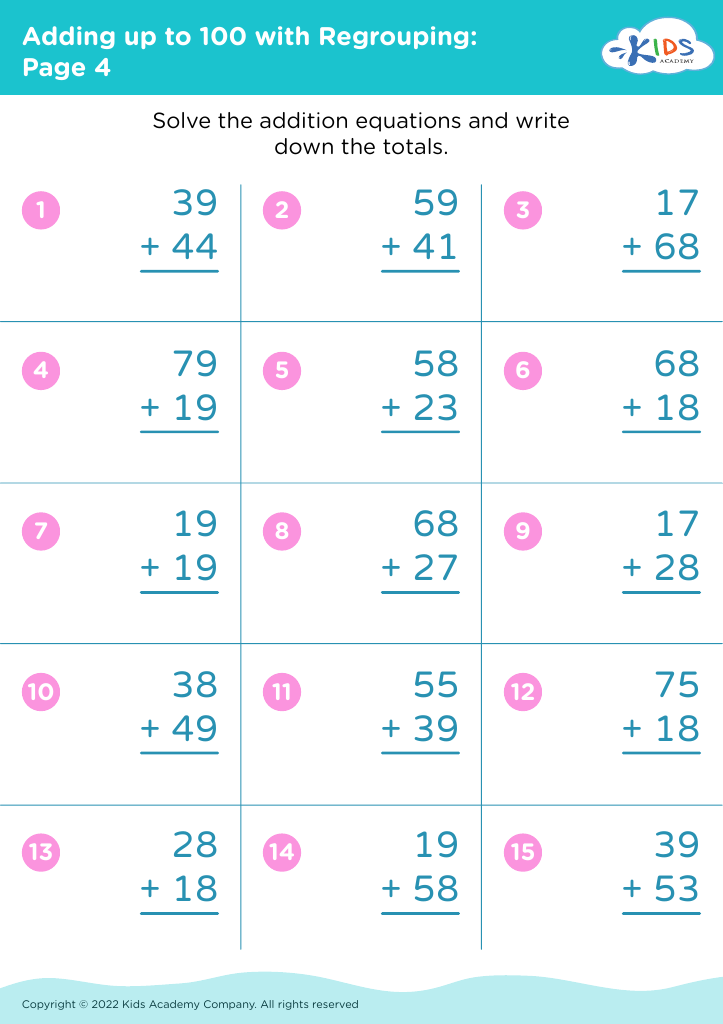
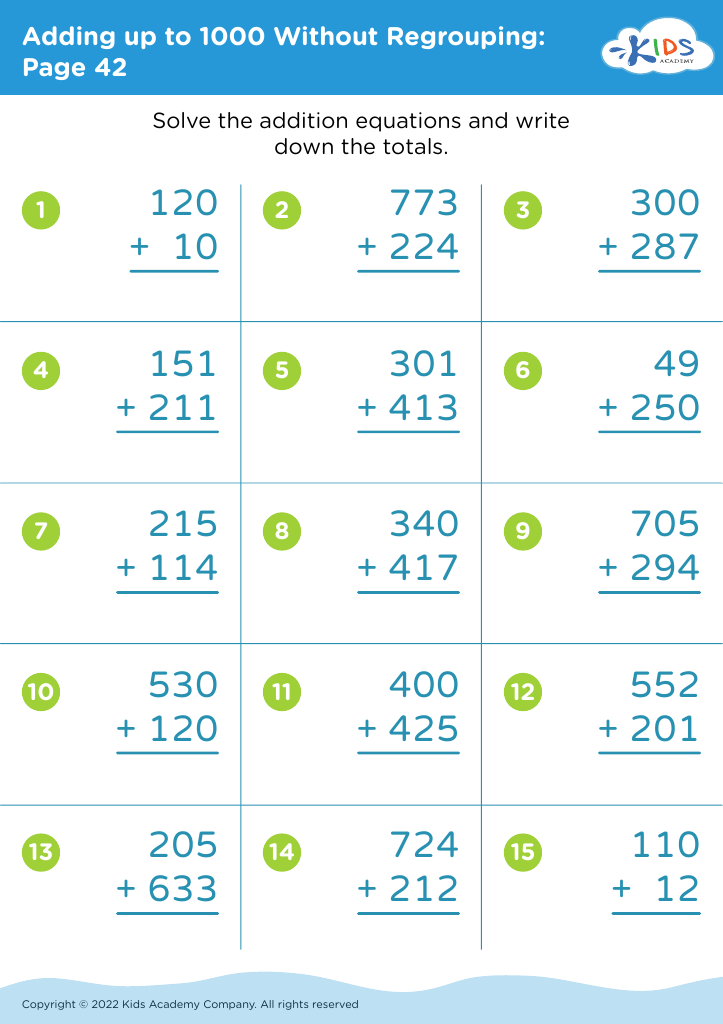
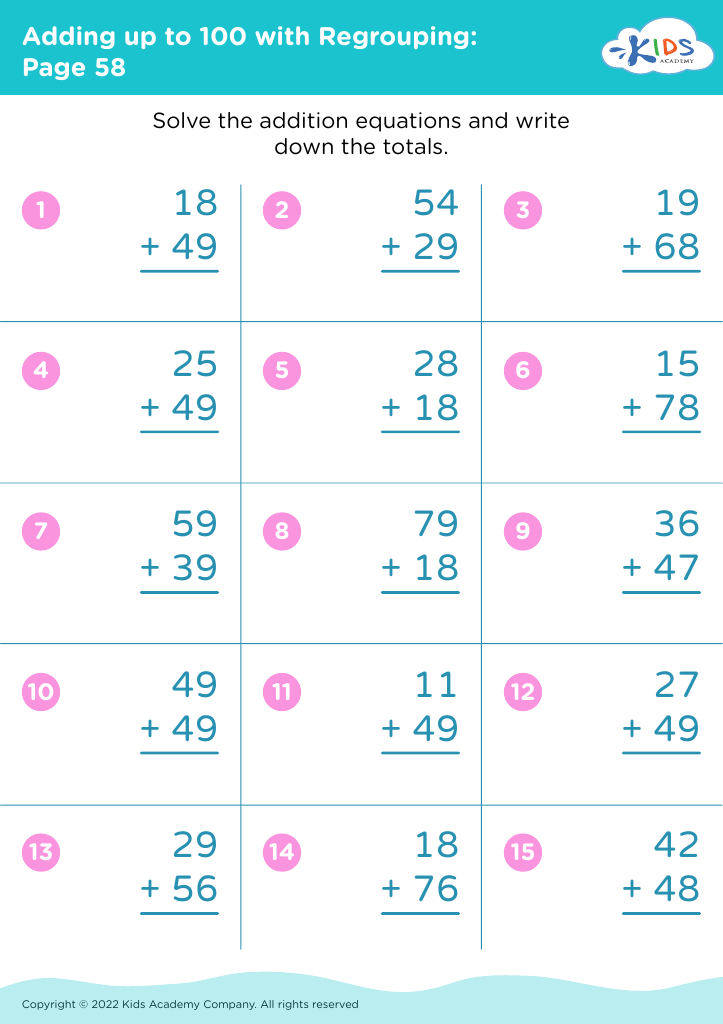
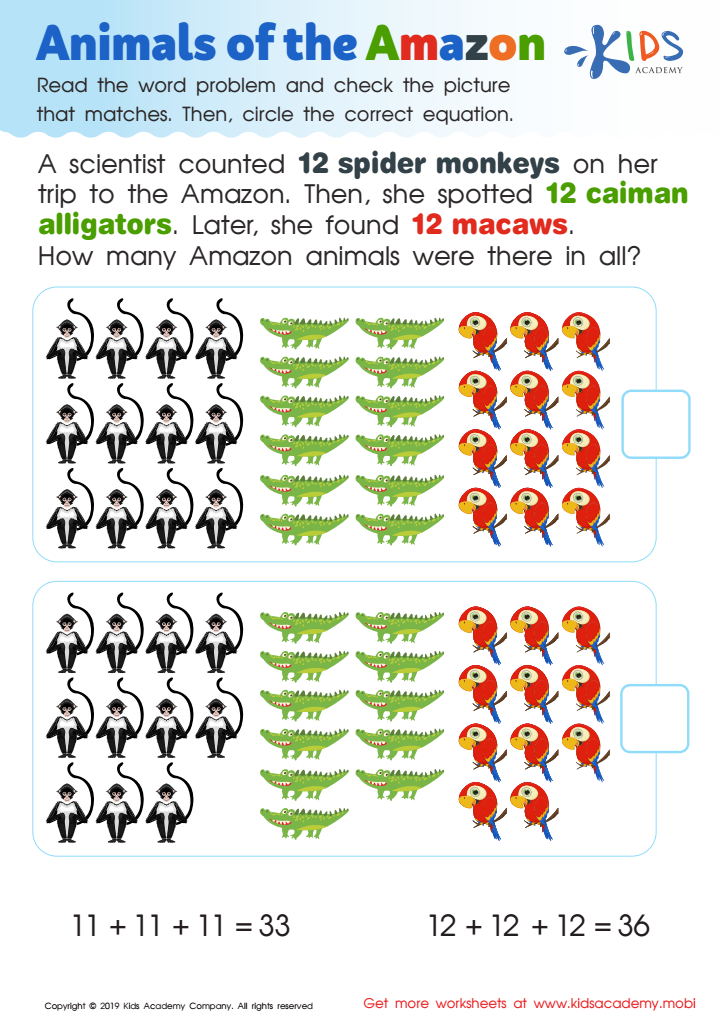
Animals of Amazon Worksheet
Kids will love exploring the Amazon while solving addition problems on this colorful PDF worksheet. They need to pay attention to the bolded info in each word problem to figure out the equation picture that matches. It's an exciting way to learn about the Amazon and practice adding multiple numbers!
 Assign to My Students
Animals of Amazon Worksheet
Worksheet
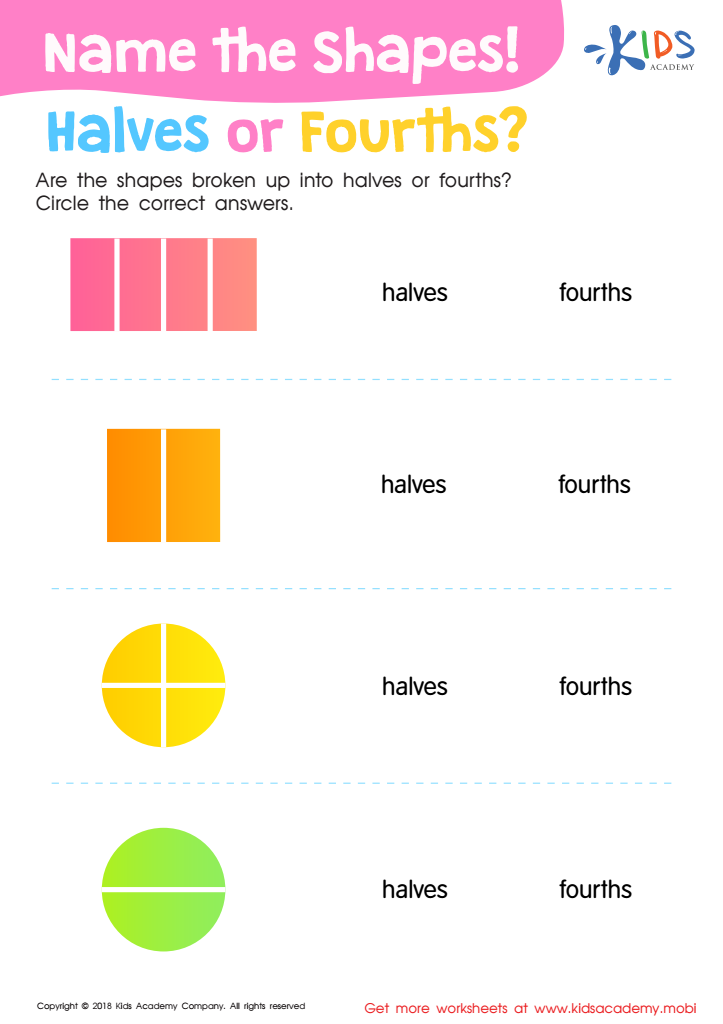
Name the Shapes Halves or Fourths? Worksheet
Before starting, ask your child if they understand what halves and fourths are. If they can answer correctly, move on with the worksheet. Help them circle the right option beside each shape, showing if it's split into halves or fourths.
Name the Shapes Halves or Fourths? Worksheet
Worksheet
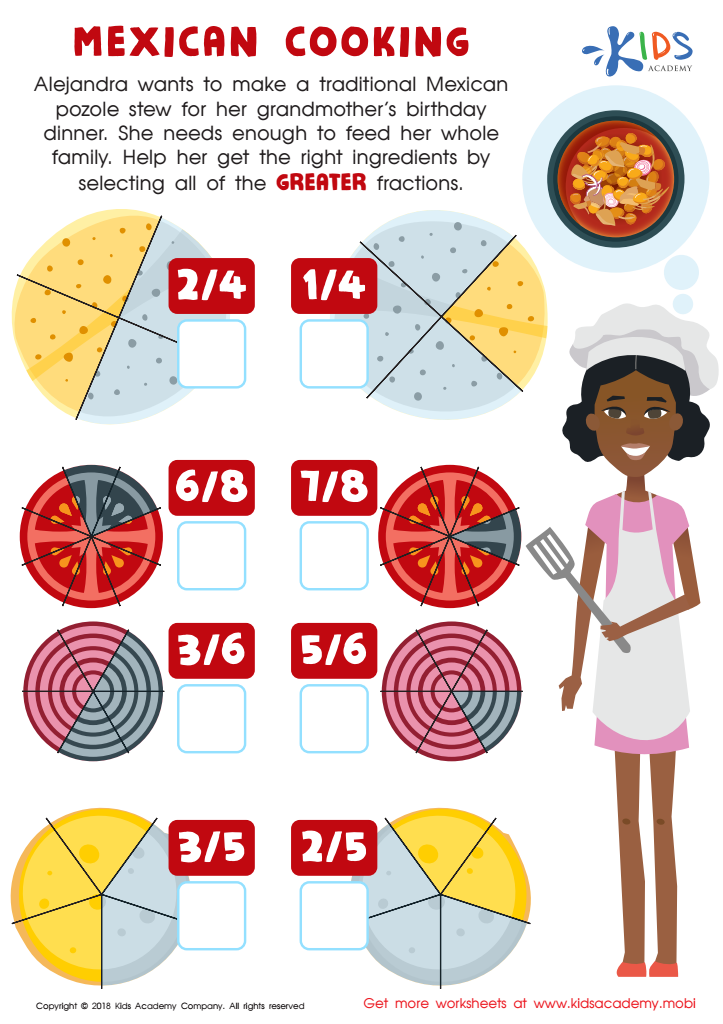
Mexican Cooking Worksheet
Alejandra needs to make a traditional Mexican pazole stew that will feed her whole family. Help her select the right ingredients by choosing the greater fractions in this worksheet. Mexicans have an amazing culture with many unique holidays, customs and dishes - explore it with your kids in your local neighbourhood!
Mexican Cooking Worksheet
Worksheet
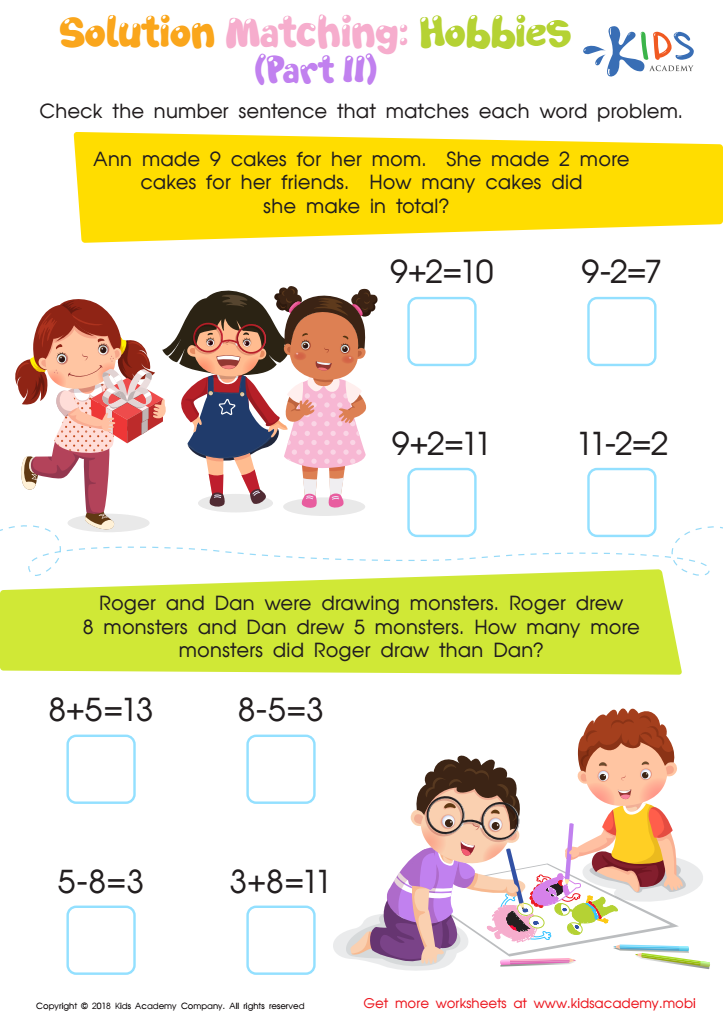
Solution Matching: Hobbies. Part 2 Worksheet
This fun printable worksheet has word problems featuring hobbies your children enjoy! With your child, read through each problem, understanding the numbers and key phrases indicating addition or subtraction. Then, match the correct equation with the solution by checking the box. Math problems are more enjoyable to solve when they’re realistic and engaging!
Solution Matching: Hobbies. Part 2 Worksheet
Worksheet
Join Kids Academy for Free
Who is primarily going to use this learning content?








Parents and teachers should prioritize Vocabulary Building Math for children aged 7-9 because it enhances both their mathematical understanding and language skills, creating a robust foundation for future learning. At this critical developmental stage, children are rapidly absorbing new concepts and terms. Integrating vocabulary with math helps to demystify complex ideas by providing clear, understandable language to describe them. This dual approach bolsters their cognitive abilities, encouraging the comprehension of not just ‘how’ but ‘why’ certain math processes and operations work.
Furthermore, strong mathematical vocabulary empowers students to communicate their reasoning and thinking logically. When children can articulate their thought processes, it aids teachers and parents in identifying misunderstandings and providing targeted support. This confidence in expression also fosters collaborative learning, allowing students to engage more deeply with peers and educators, cultivating a love for problem-solving and critical thinking.
Additionally, vocabulary-rich math instruction aligns with curricular goals, helping students meet educational standards and succeed in assessments, which often emphasize word problems and the application of math concepts in real-world scenarios. Ultimately, an investment in math vocabulary nurtures well-rounded learners prepared for more complex subjects, laying the groundwork for lifelong academic and personal success.








