Practical math application Measurement Worksheets for Ages 7-9
5 filtered results
-
From - To
Explore our "Practical Math Application Measurement Worksheets" designed specifically for ages 7-9! These engaging worksheets help young learners grasp measurement concepts through real-life scenarios, fostering a deeper understanding of math in everyday contexts. Your child will practice measuring length, weight, and volume while solving fun, interactive problems that encourage critical thinking. With a variety of exercises, these worksheets promote hands-on learning and boost confidence in math skills. Perfect for home or classroom use, our resources will make math enjoyable and accessible, empowering children to apply their knowledge practically. Discover the joy of measurement with our thoughtfully crafted worksheets today!
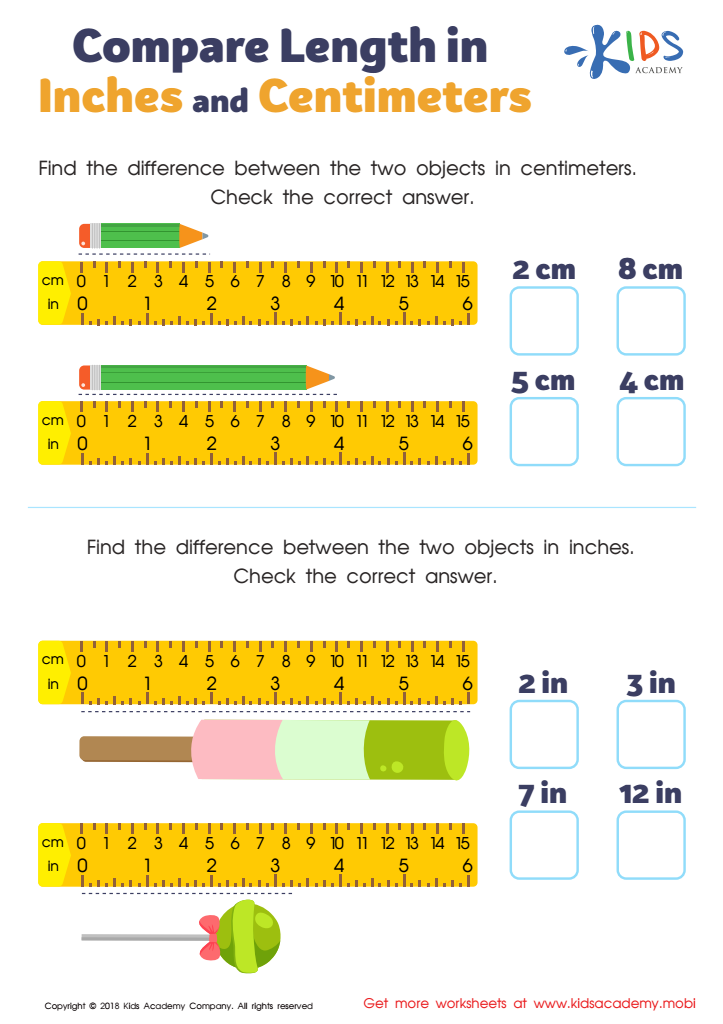
Compare Length in Inches and Centimeters Worksheet
 Assign to My Students
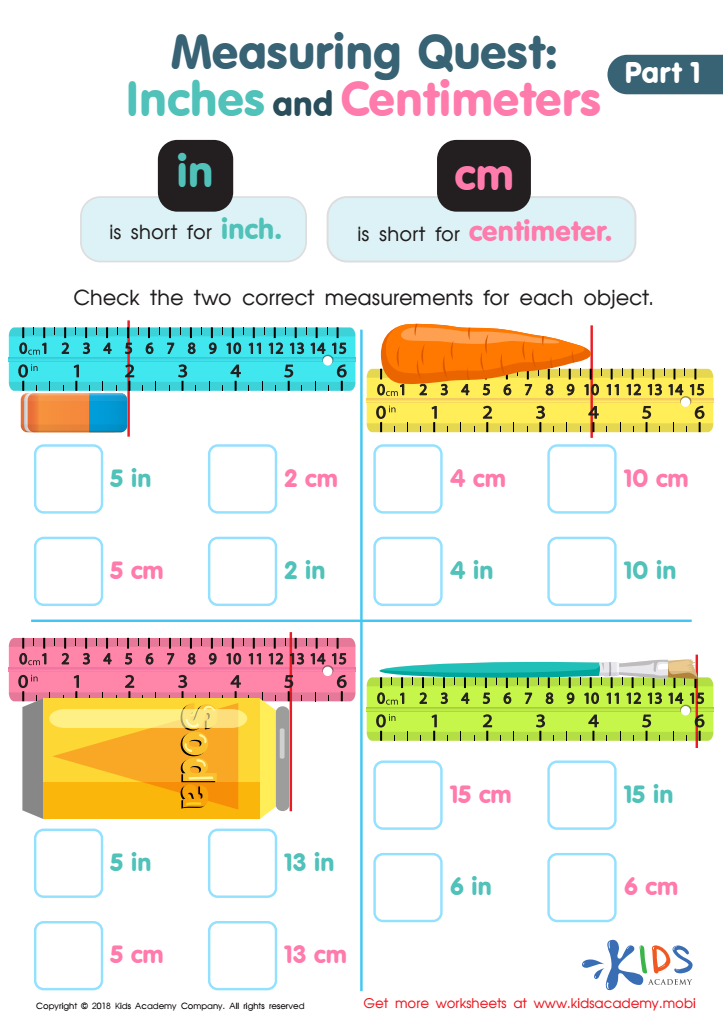
Measuring Quest: Inches and Centimeters Worksheet
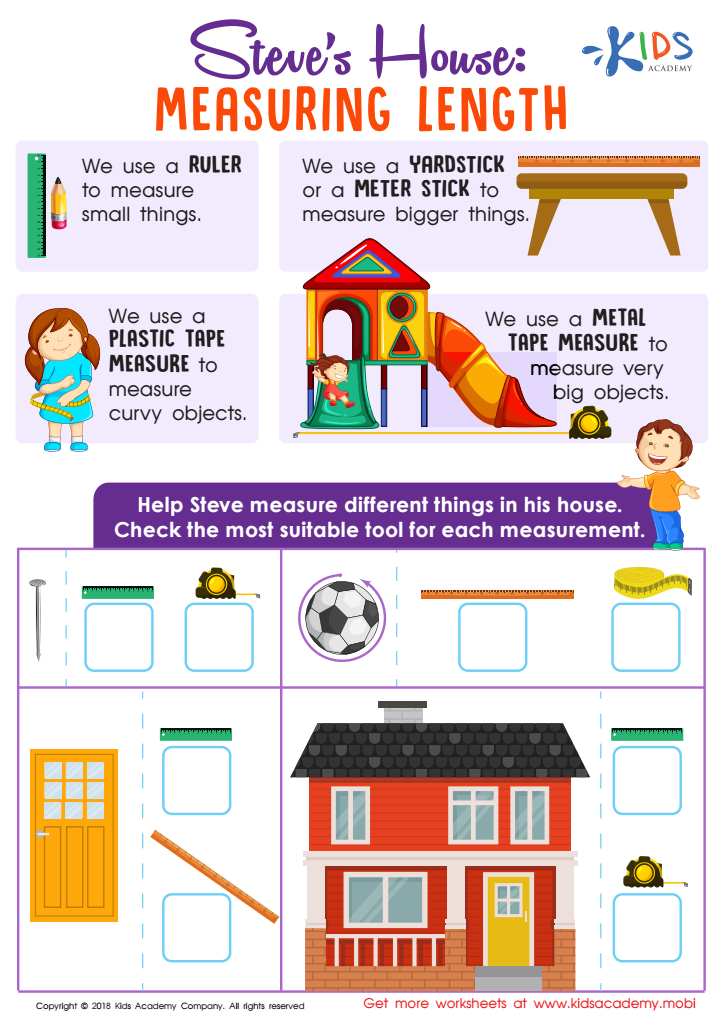
Steve's House: Measuring Length Worksheet
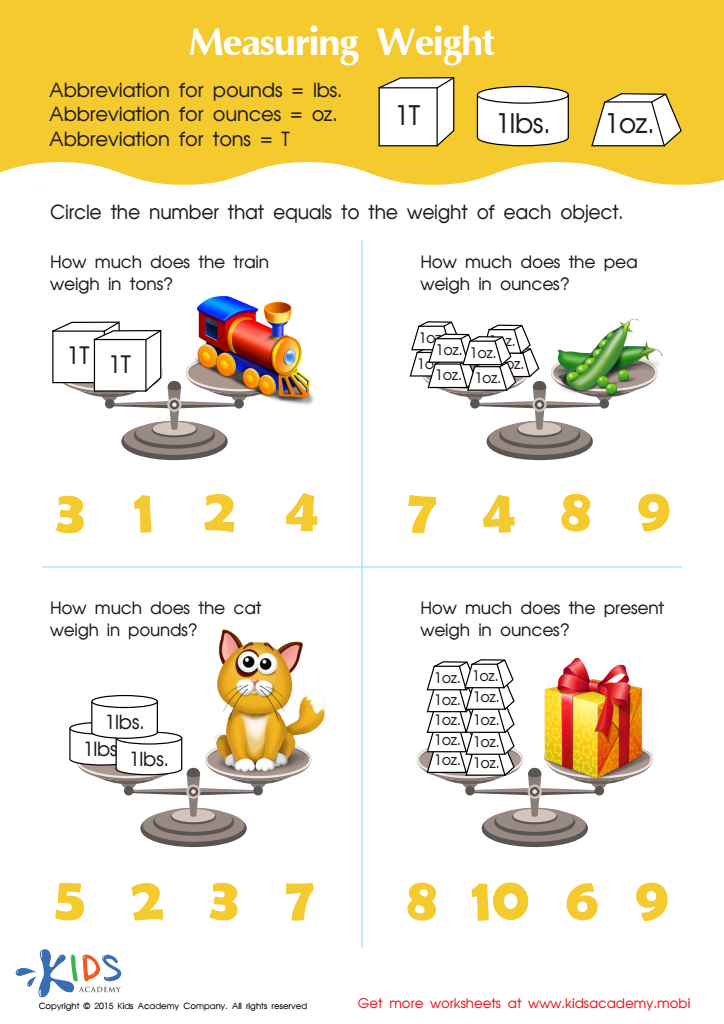
Measuring Weight in Ounces, Pounds and Tons Worksheet
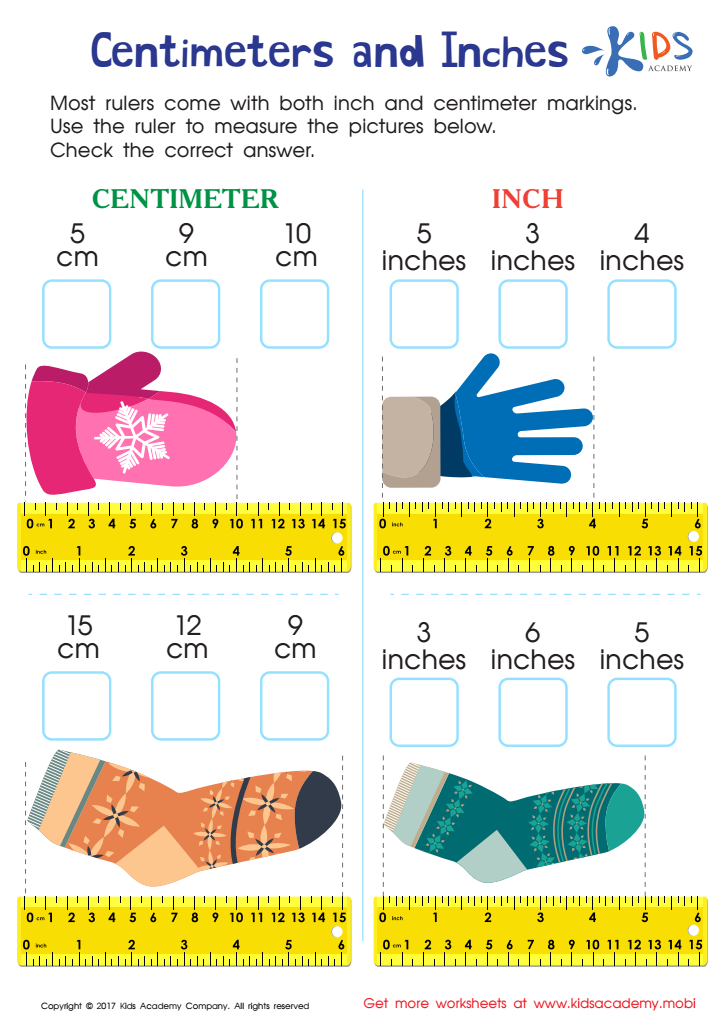
Centimeters and Inches Worksheet








Practical math application, particularly measurement, is crucial for children ages 7-9 as it fosters essential life skills that extend beyond the classroom. At this age, children are developing their problem-solving abilities and logical thinking—skills that are fundamental for everyday situations. Understanding measurement helps children grasp concepts such as length, weight, volume, and time, enabling them to make sense of their environment. For instance, when cooking or baking, children learn to follow recipes, which requires accurate measurement, thereby enhancing their comprehension of fractions and proportions.
Additionally, measurement connects mathematical concepts to real-world applications, increasing engagement and interest in math. When children see the relevance of math in daily activities, such as measuring ingredients for a favorite dish or timing themselves in a game, their motivation to learn increases. It also helps them build spatial awareness and improve their organizational skills as they work with different systems of measurement (metric vs. standard).
Furthermore, mastery of practical measurement lays a foundation for more complex mathematical concepts in the future and prepares them for activities in science, technology, engineering, and mathematics (STEM). Overall, teaching measurement enriches children's academic experience and equips them with skills for future success.








