Understanding patterns Multiplication Worksheets for Ages 7-9
11 filtered results
-
From - To
Unlock your child's potential with our "Understanding Patterns Multiplication Worksheets" designed for ages 7-9! At Kids Academy, we’ve crafted engaging and educational worksheets that seamlessly blend fun with fundamental multiplication concepts. These worksheets are specially designed to help young learners recognize patterns, making multiplication easier and intuitive. As they explore, kids will gain confidence and proficiency in multiplying numbers, ensuring a solid mathematical foundation. Perfect for both classroom use and at-home practice, our worksheets are an excellent resource to support your child's arithmetic journey. Start today and make learning multiplication a delightful experience!
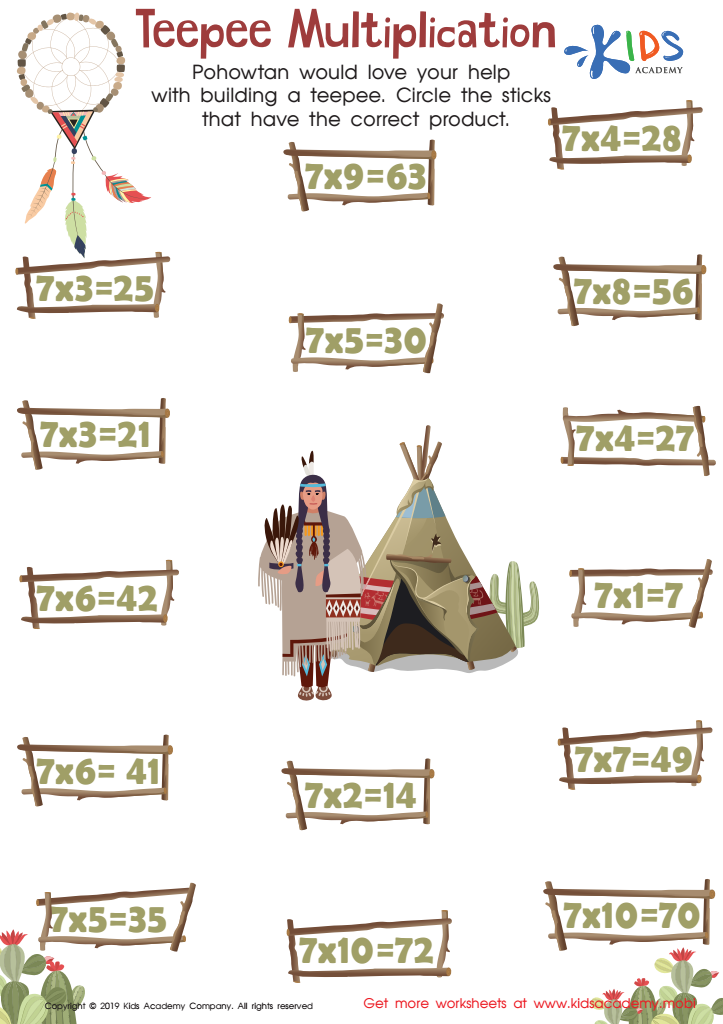
Teepee Multiplication Worksheet
 Assign to My Students
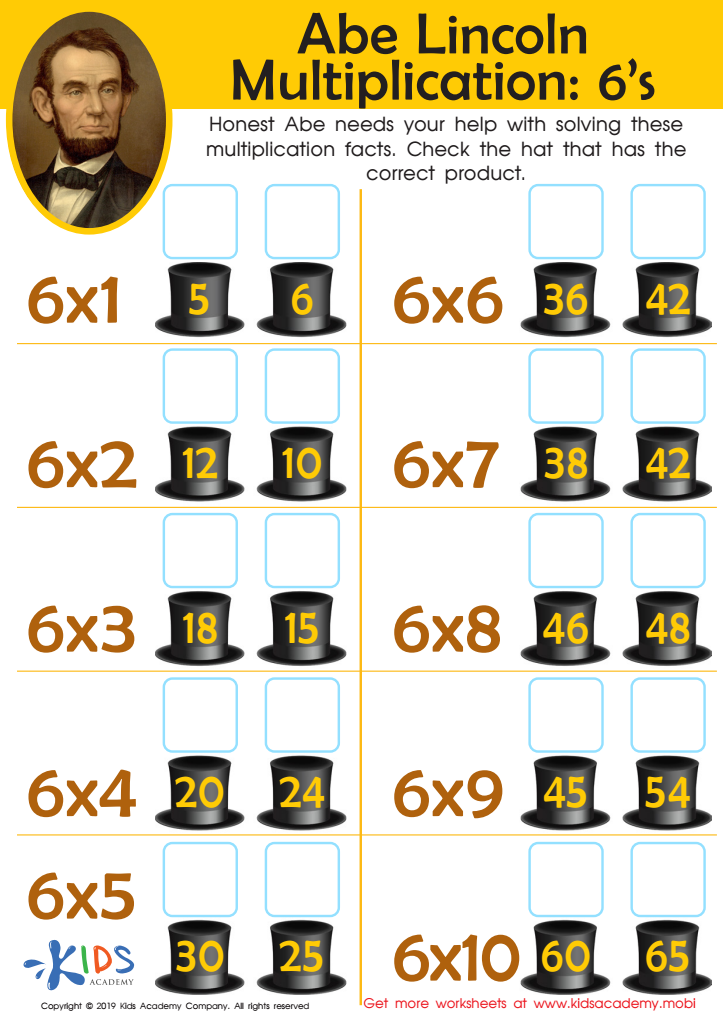
Abe Lincoln Multiplication: 6’s Worksheet
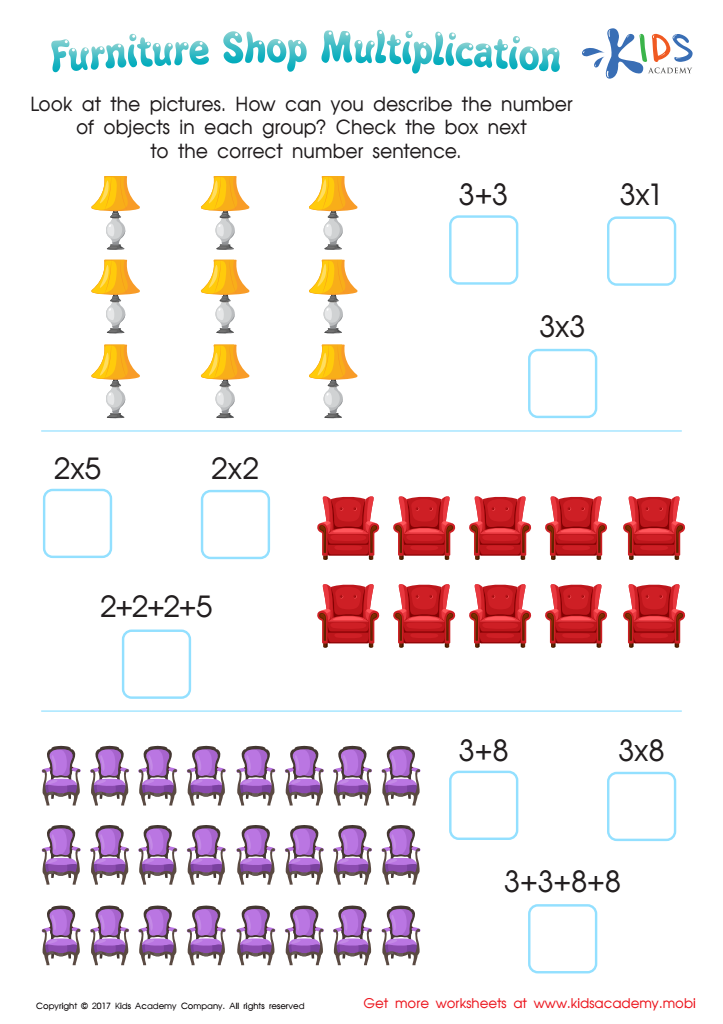
Furniture Shop Worksheet
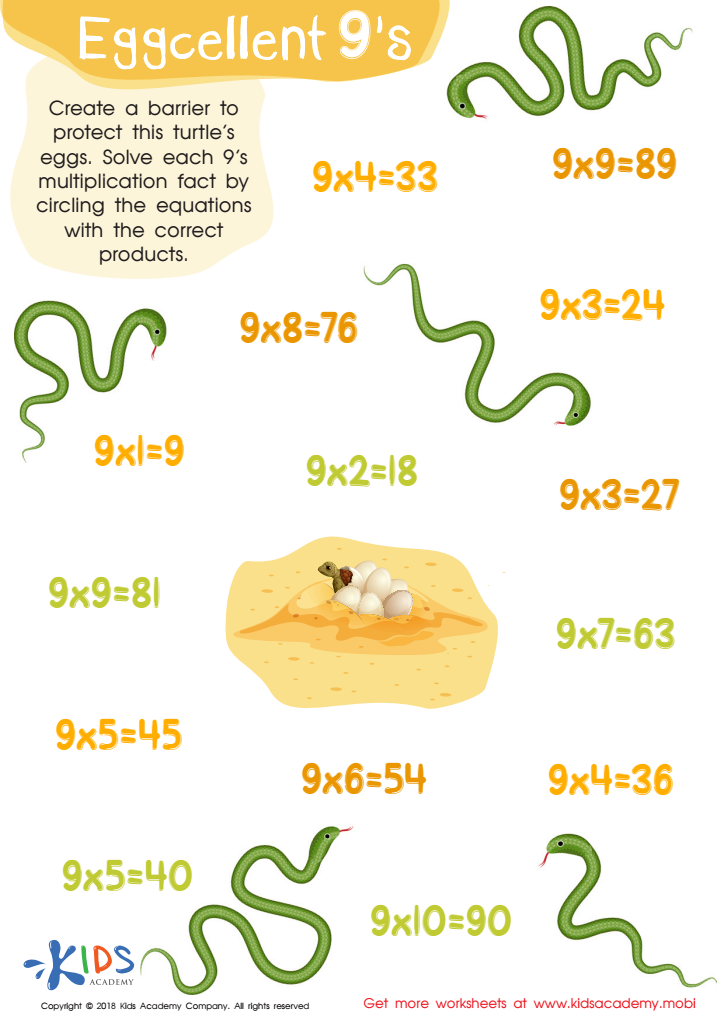
Eggcellent 9’s Worksheet
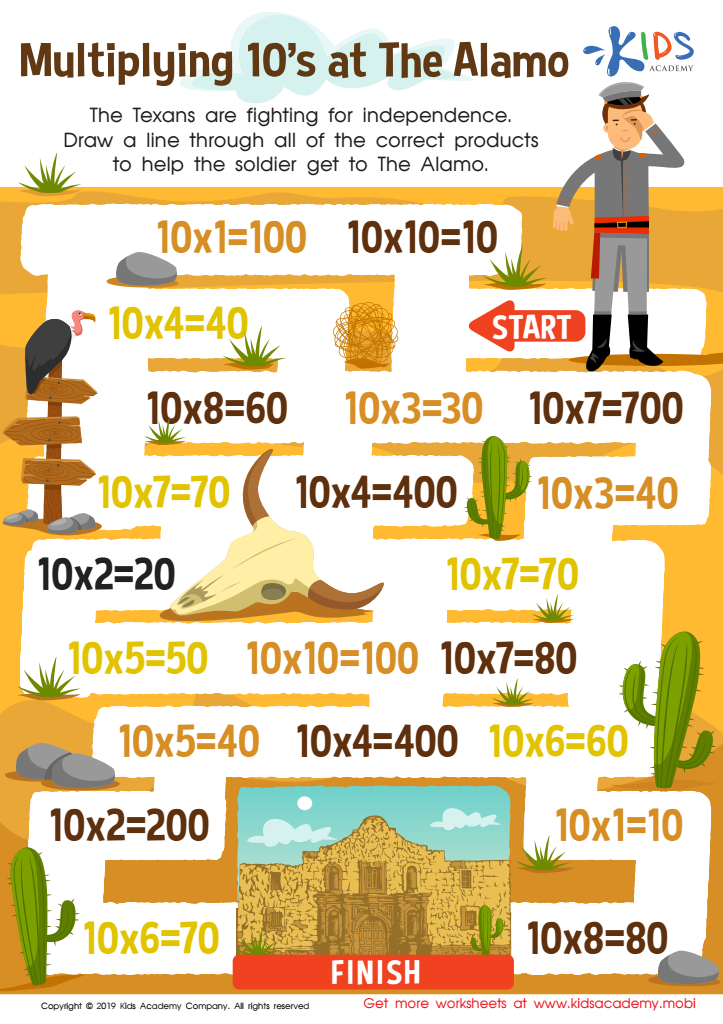
Multiplying 10’s at The Alamo Worksheet
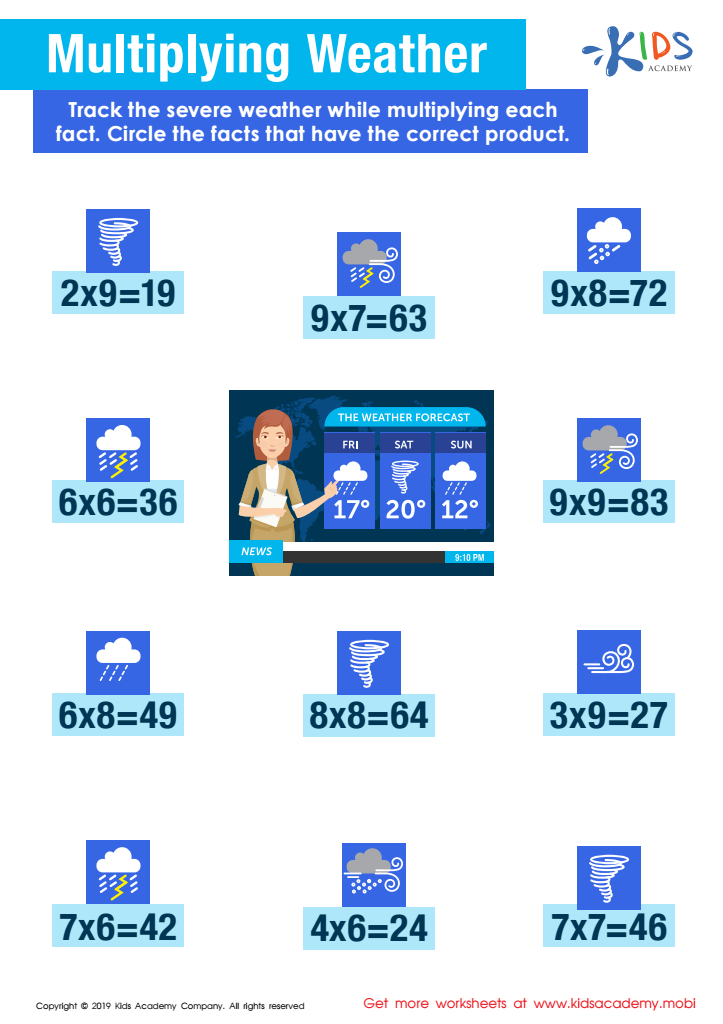
Multiplying Weather Worksheet
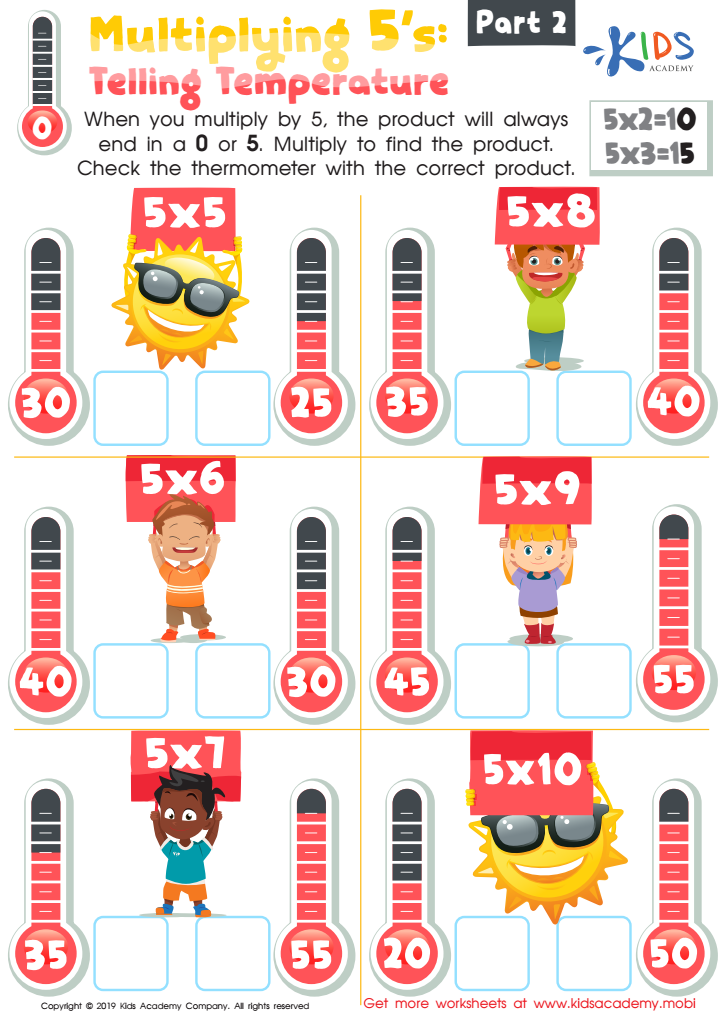
Multiplying 5’s: Telling Temperature Part 2 Worksheet
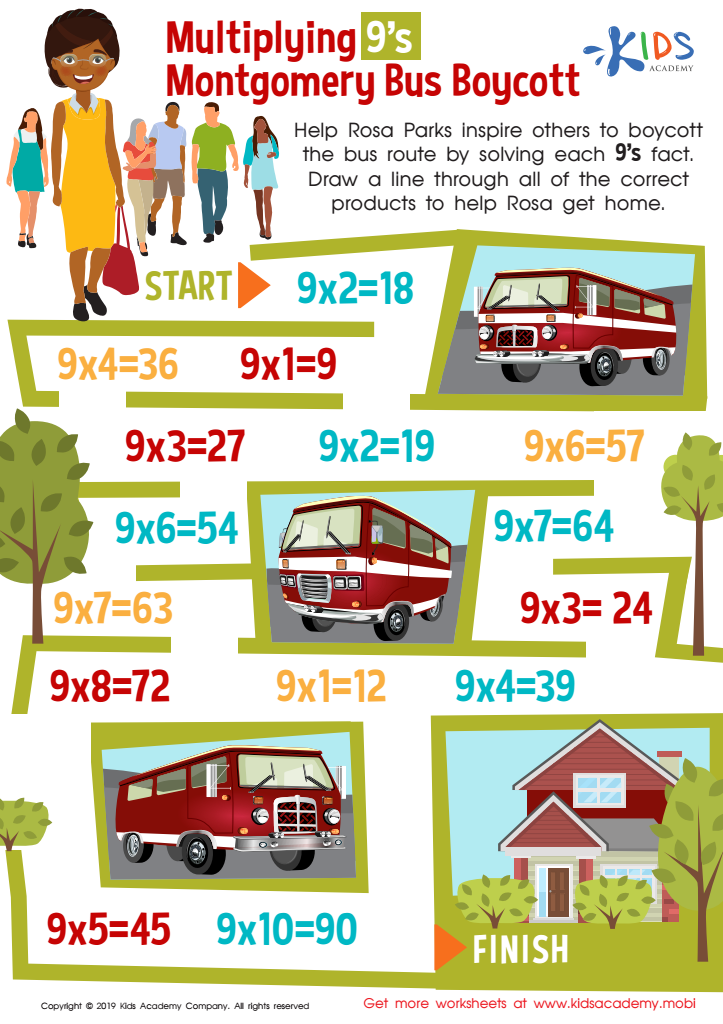
Multiplying 9’s Montgomery Bus Boycott Worksheet
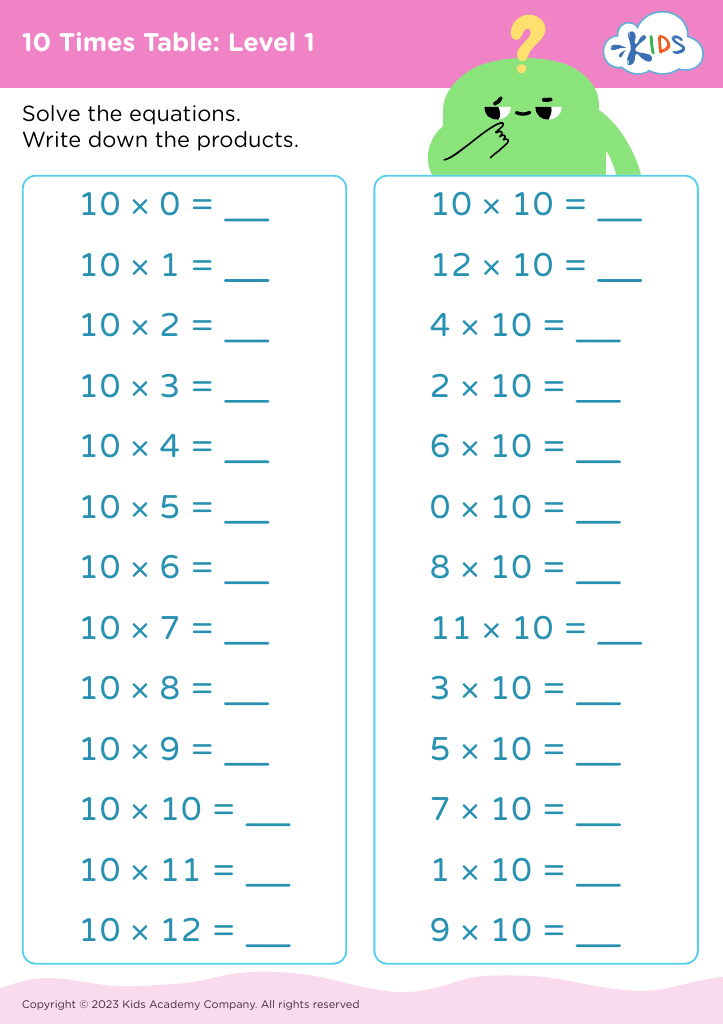
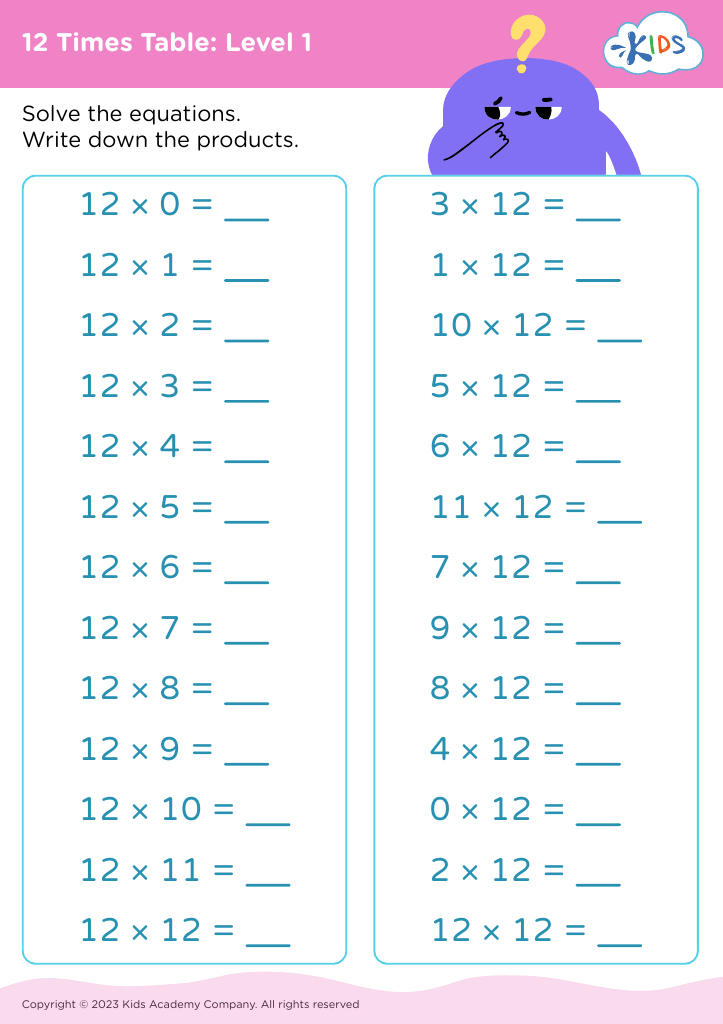
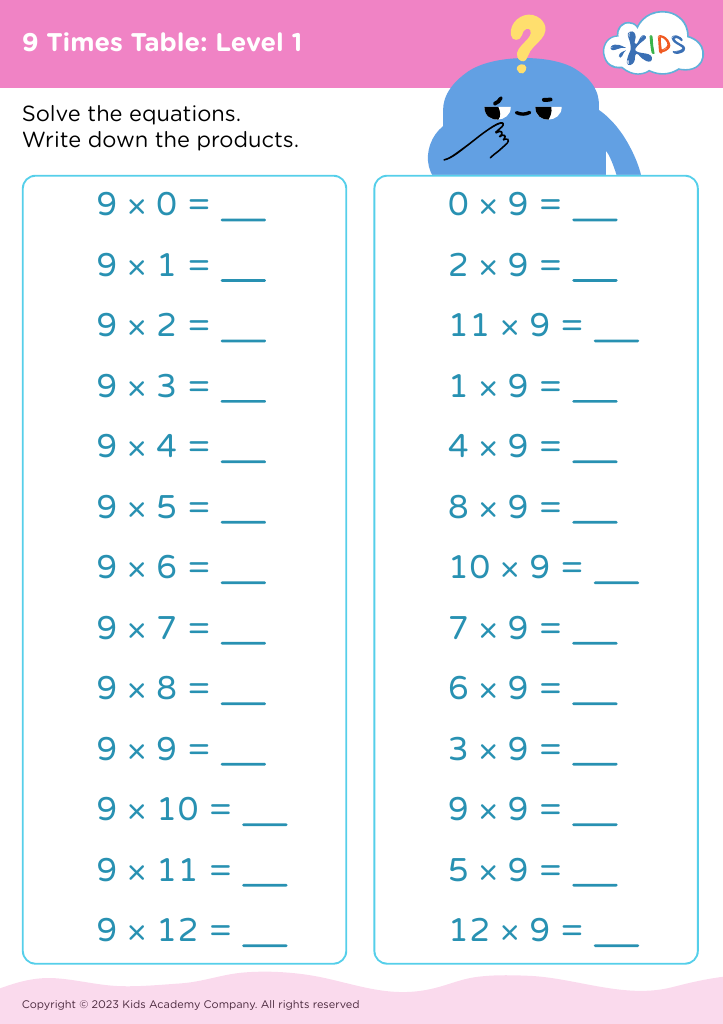







Understanding patterns in multiplication is crucial for children aged 7-9, as it builds a strong mathematical foundation. At this developmental stage, children are naturally curious and beginning to grasp more complex concepts. Recognizing multiplication patterns helps them see the connections between numbers, enabling easier recall and application of facts.
First, patterns make learning multiplication less daunting. Children quickly perceive the structure behind numbers, transforming what could be mere rote memorization into an engaging, logical puzzle. For instance, recognizing that the products of multiplying by five always end in zero or five makes the learning process more intuitive and enjoyable.
Second, such familiarity with patterns supports overall numeracy. Children who understand the underlying rules can navigate higher mathematical concepts like division, fractions, and algebra with greater confidence. They are more adept at problem-solving and reasoning critically since they can predict and verify outcomes based on observed patterns.
Also, this knowledge fosters a growth mindset where children appreciate that math is about understanding relationships and logic rather than just memorizing facts. Such a mindset not only enhances math performance but also encourages lifelong learning skills, critical thinking, and resilience in overcoming challenges.
Therefore, prioritizing an understanding of multiplication patterns in these early years sets children up for sustained academic success and a positive attitude toward learning mathematics.








