Number Sequencing Numbers up to 100 Worksheets for Ages 7-9
4 filtered results
-
From - To
Discover our engaging "Number Sequencing Numbers up to 100 Worksheets" designed specifically for children aged 7-9. These worksheets provide a fun and interactive way to enhance your child’s understanding of number order, patterns, and sequencing skills. Each activity encourages critical thinking and problem-solving while reinforcing essential math concepts. Perfect for both classroom use and at-home learning, these resources will help your child build confidence in working with numbers up to 100. Foster a love for math while ensuring a solid foundation in sequencing. Download our worksheets today and embark on an exciting math adventure with your child!
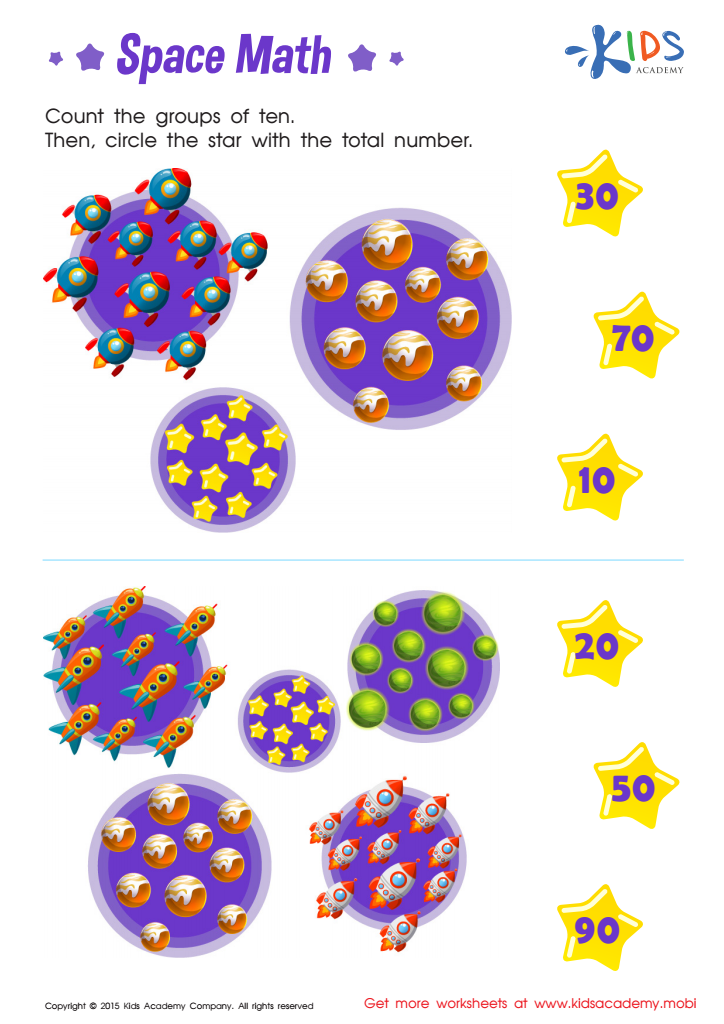
Learn dozens: Space math Worksheet
 Assign to My Students
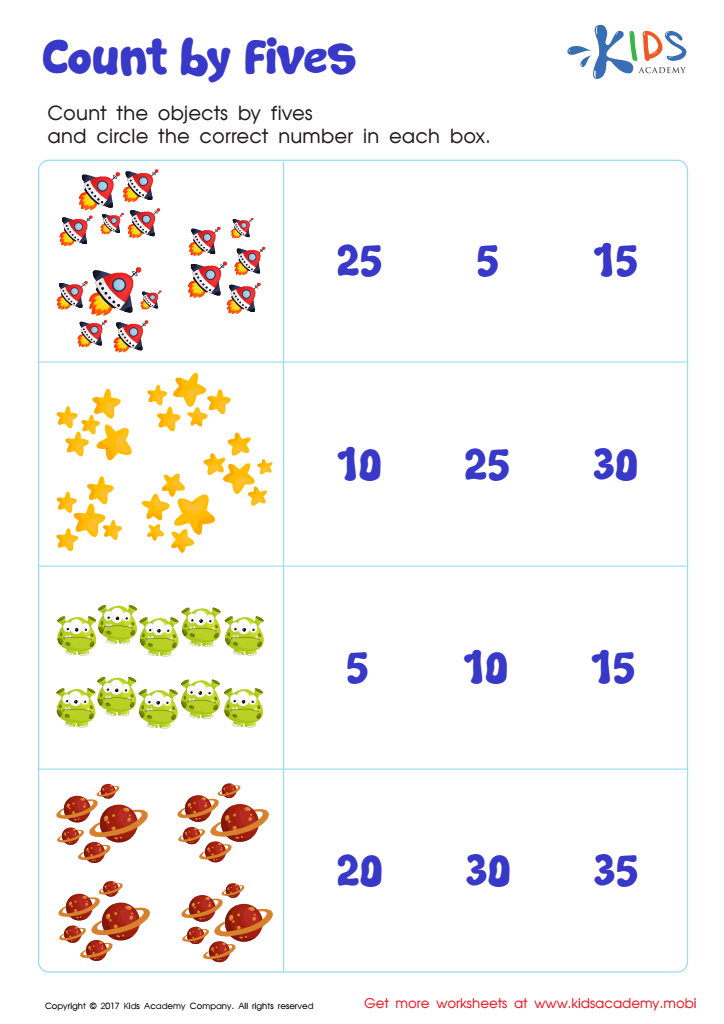
Skip Counting by 5s: Space Math Printable
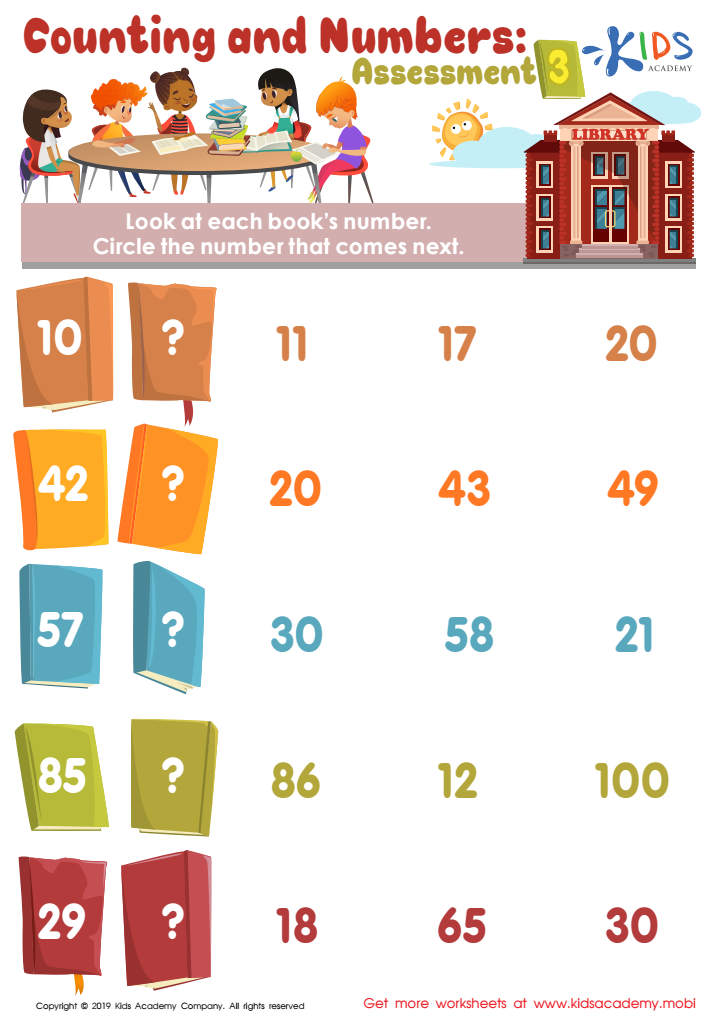
Counting and Numbers: Assessment Worksheet
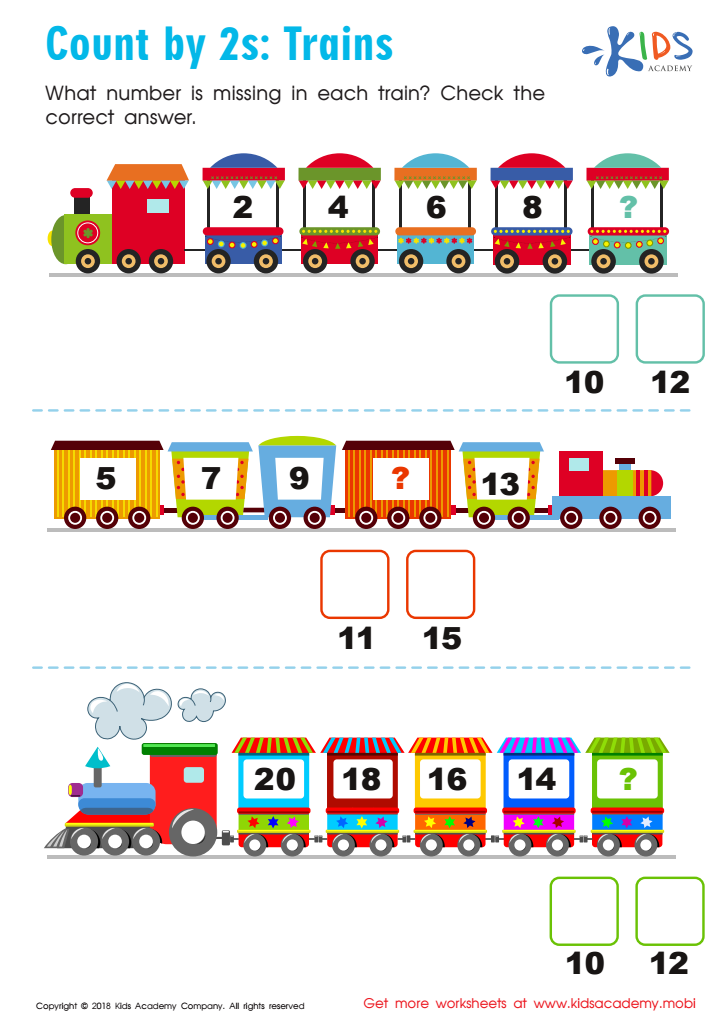
Count by 2's: Trains Worksheet








Number sequencing is a foundational skill for children aged 7-9, integral to their mathematical development and cognitive growth. When parents and teachers prioritize number sequencing up to 100, they equip children with essential tools for understanding numerical relationships, patterns, and place values.
First, mastering number sequences enhances children's ability to perform basic arithmetic operations, such as addition and subtraction. Recognizing patterns in sequences helps them predict future numbers, fostering critical thinking. For instance, knowing that numbers increase by one helps them apply this concept in broader mathematical contexts, such as multiplication and division.
Moreover, sequencing supports skills beyond mathematics. It encourages logical reasoning and problem-solving abilities, competencies that are vital across all academic areas. In everyday scenarios, number sequencing aids in organizing tasks, following steps in directions, and time management—skills crucial for both classroom success and real-world applications.
Additionally, mastery of number sequences up to 100 builds a child's confidence in their mathematical abilities. When they feel competent, they’re more likely to engage enthusiastically with math. For all these reasons, strengthening number sequencing skills fosters a well-rounded mathematical foundation that significantly contributes to lifelong learning and academic achievement.