Problem-Solving Skills Skip Counting Worksheets for Ages 7-9
4 filtered results
-
From - To
Enhance your child's problem-solving skills with our engaging Skip Counting Worksheets designed for ages 7-9! These worksheets provide a fun and interactive way for young learners to practice skip counting while developing critical mathematical thinking abilities. As children work through various exercises, they will encounter real-world scenarios that require them to apply their counting skills, fostering both confidence and competence. Ideal for homeschoolers, teachers, and parents, our worksheets are perfect for reinforcing math concepts in a playful manner. Dive into a world of discovery and watch your child uncover the joy of learning through skip counting today!
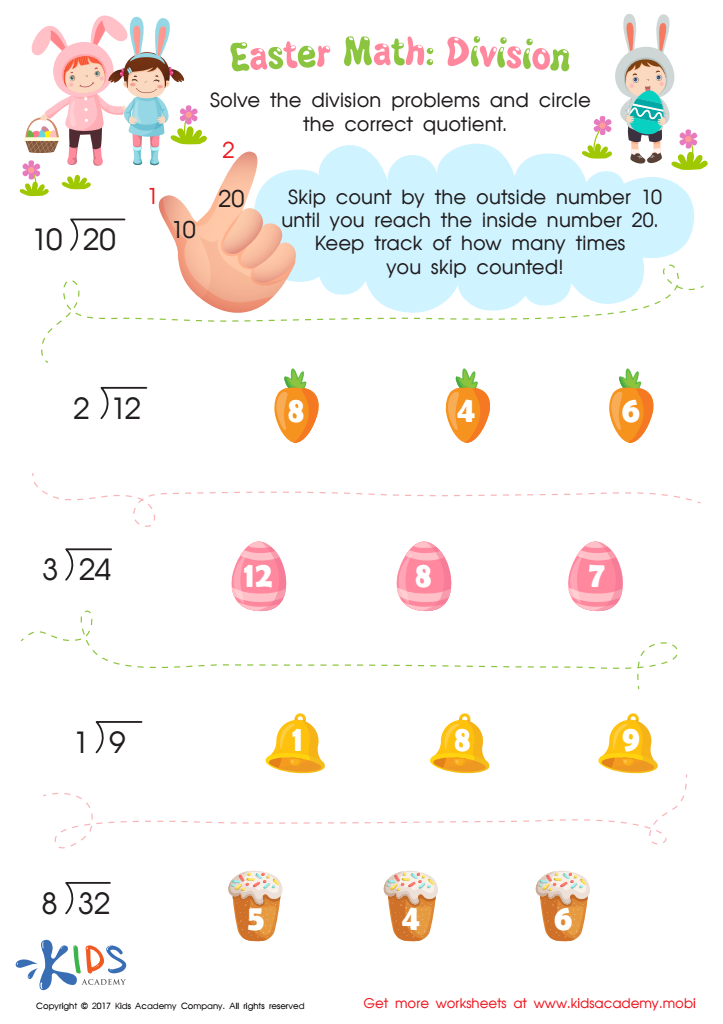
Division Worksheet
 Assign to My Students
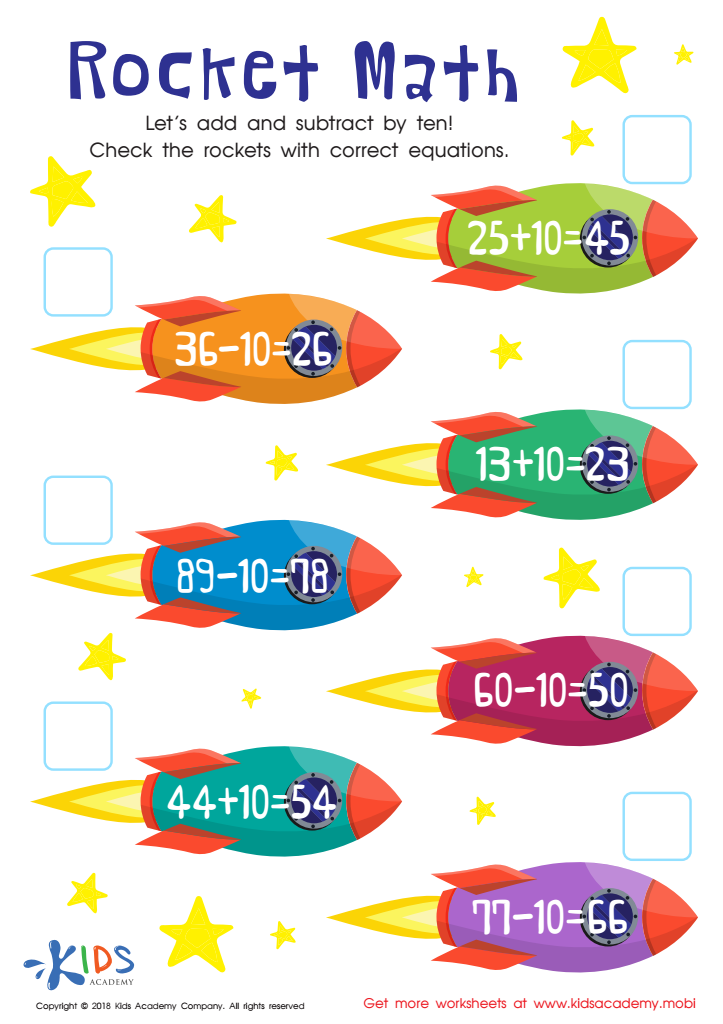
Rocket Math Worksheet
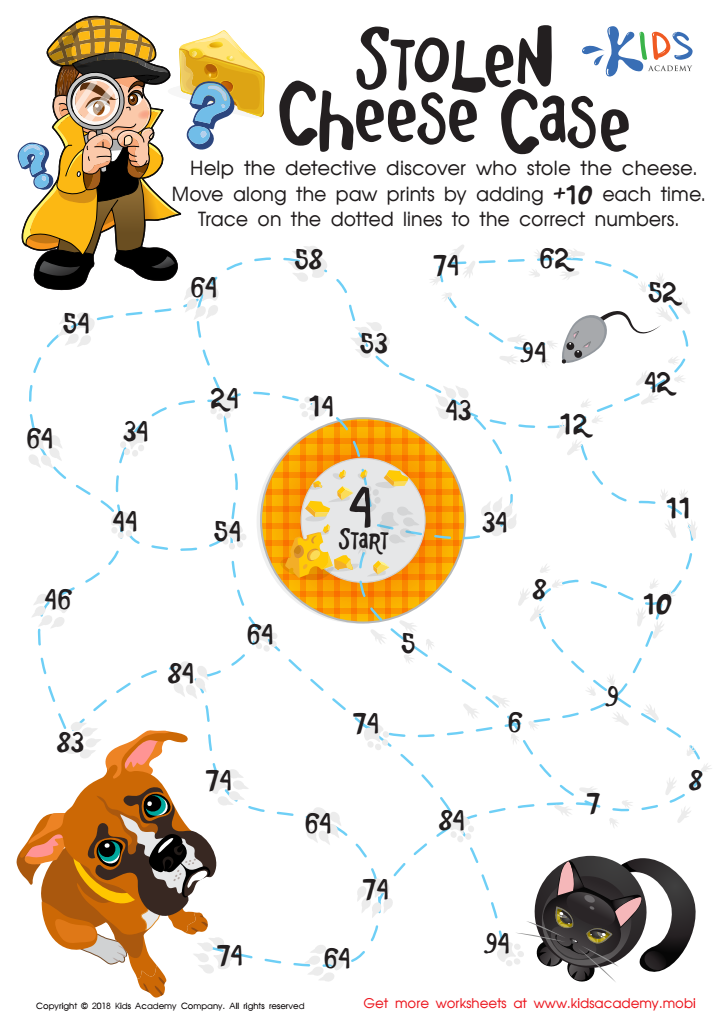
Stolen Cheese Case Maze Worksheet
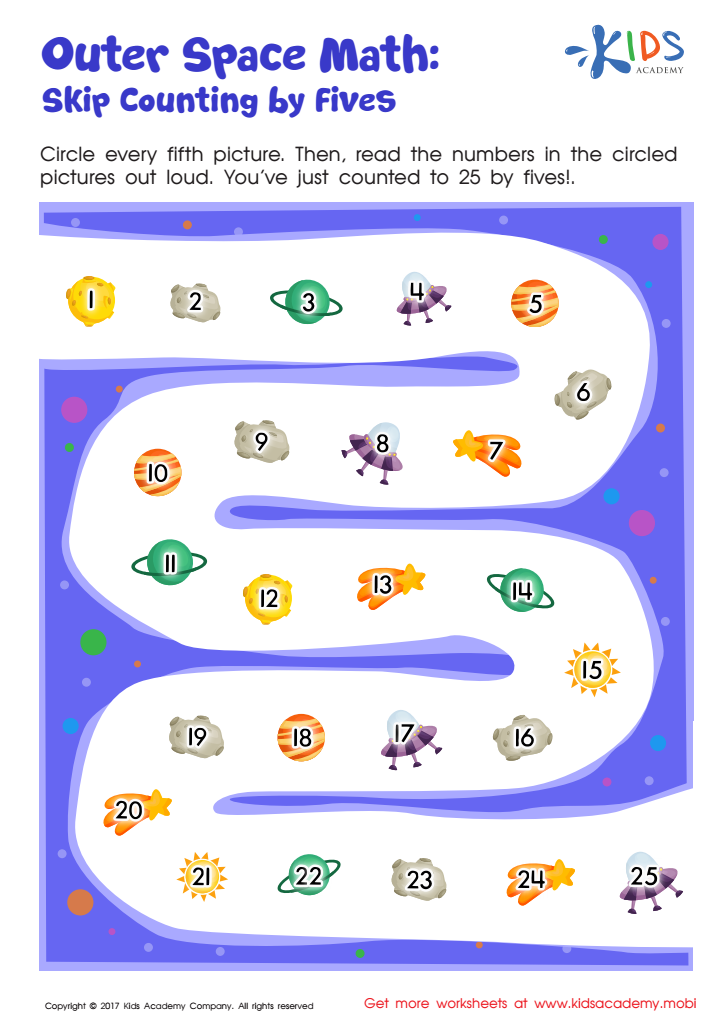
Skip Counting by 5s: Outer Space Math Printable








Problem-solving skills, including skip counting, are crucial for children aged 7-9 as they lay the foundation for higher-level mathematical understanding and everyday skills. Skip counting, which involves counting by twos, threes, fives, or tens, not only enhances arithmetic fluency but also promotes critical thinking. This skill helps children recognize patterns and develop number sense, setting the stage for more complex mathematical concepts like addition, subtraction, and multiplication.
Furthermore, skip counting fosters cognitive development as children learn to approach problems systematically, analyze information, and derive solutions. These foundational skills are transferable beyond math; they encourage young learners to tackle challenges creatively and confidently in various subjects and real-life situations.
By integrating skip counting into everyday activities or classroom lessons, parents and teachers can create engaging and relatable experiences that reinforce learning. Whether it’s counting objects during a game or measuring ingredients for a recipe, these practical applications make learning meaningful. Encouraging skip counting also promotes persistence and resilience, as children learn that mistakes are a part of the learning process. Ultimately, fostering problem-solving skills through skip counting helps shape well-rounded, capable individuals ready to face future academic and life challenges.








