
Story sequencing Building Vocabulary Worksheets for Ages 7-9
3 filtered results
Difficulty Level
Grade
Age
-
From - To
Subject
Activity
Standards
Enhance your child's reading skills with our engaging "Story Sequencing Building Vocabulary Worksheets" tailored for ages 7-9. These interactive worksheets focus on developing comprehension by helping children organize events in a logical order and understand their narratives. Through fun activities and visuals, kids will enrich their vocabulary and enhance critical thinking and problem-solving abilities. Perfect for at-home learning or classroom activities, these worksheets provide an enjoyable way for children to explore storytelling and sequence events. Empower your young learners to boost their literacy skills while cultivating a love for reading with our thoughtfully designed resources!
Favorites
With answer key
Interactive
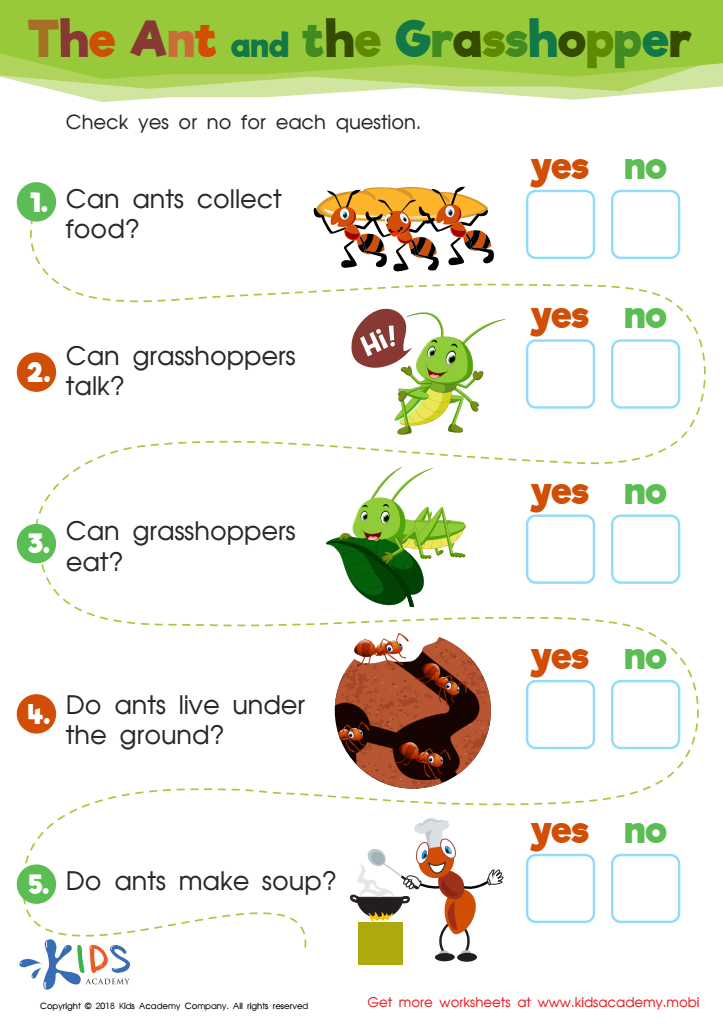
The Ant and The Grasshopper Worksheet
Does your child know about insects? If they're a nature lover or scared of them, use this worksheet to learn more. Read each of the questions and help them fill in the yes or no boxes. This may help them become less scared of insects.
 Assign to My Students
The Ant and The Grasshopper Worksheet
Worksheet











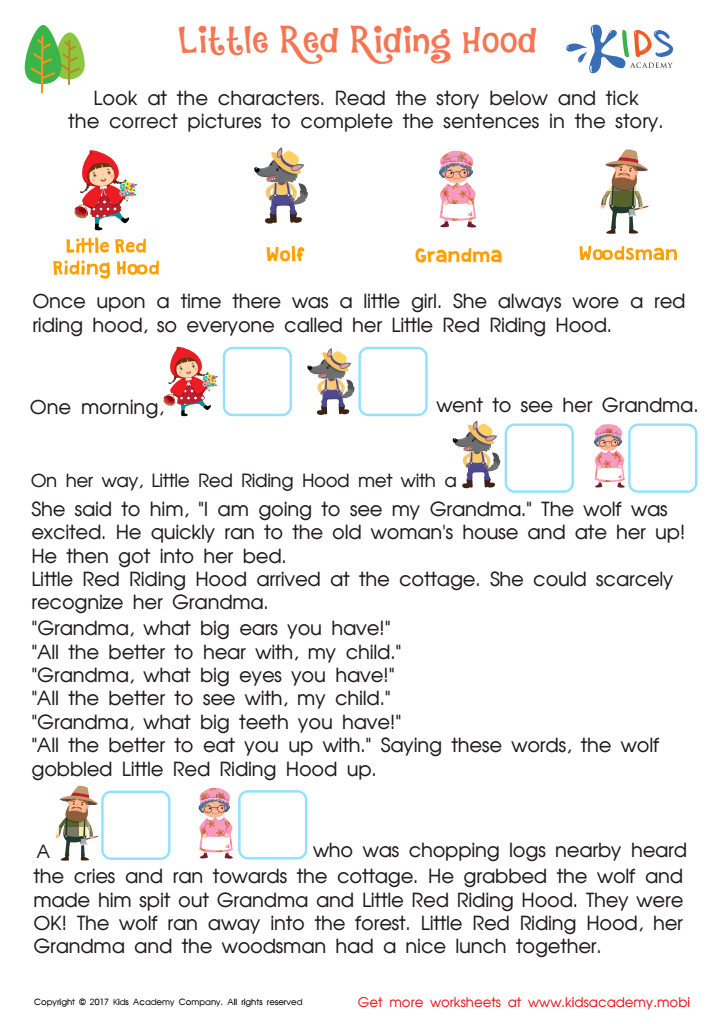
Little Red Riding Hood Printable
Give them this worksheet to practice.
Help your child strengthen their reading skills with this worksheet. It asks them to read Little Red Riding Hood and fill in the missing words using context clues from the text. Encourage your child to look at the surrounding words to determine the answer and get the best results!
Little Red Riding Hood Printable
Worksheet
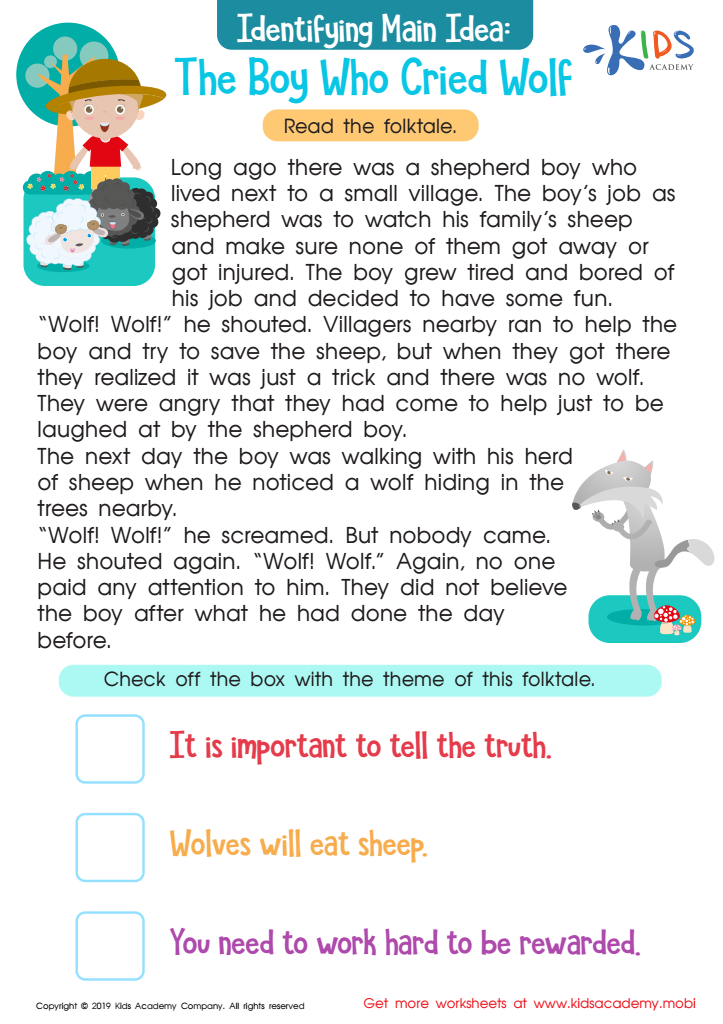
The Boy Who Cried Wolf Part 2 Worksheet
Kids love story time - no doubt they know their favorites! This worksheet tells a story with a theme or main idea. Read it carefully with your kids and ensure they understand every word. Then, help them answer the simple questions at the bottom of the page.
The Boy Who Cried Wolf Part 2 Worksheet
Worksheet
Join Kids Academy for Free
Who is primarily going to use this learning content?




.jpg)



Story sequencing and building vocabulary are crucial components of literacy development for children aged 7-9. At this stage, children are transitioning from learning to read to reading to learn. Understanding the sequence of events in a story enhances their comprehension skills, enabling them to follow plots, identify main ideas, and predict outcomes. This foundational skill bolsters critical thinking, as children learn to connect the sequence of events to broader themes and messages.
Moreover, building vocabulary during this period is essential for effective communication and academic success. A rich vocabulary allows children to articulate their thoughts, understand complex texts, and engage more deeply in conversations. As they encounter new words in context, they become better equipped to interpret diverse materials across subjects.
When parents and teachers prioritize story sequencing and vocabulary building, they are not only fostering literacy skills but also instilling a love for reading. Engaging with stories helps children develop empathy and cultural awareness, as they explore different characters and settings. This holistic approach empowers children, helping them become confident readers, critical thinkers, and enthusiastic learners prepared for future academic challenges. Ultimately, such engagement lays a sturdy foundation for lifelong learning and effective communication.








