Animal identification Reading Worksheets for Ages 7-9
5 filtered results
-
From - To
Enhance your child's reading skills with our engaging Animal Identification Reading Worksheets designed for ages 7-9. These fun, interactive worksheets help young learners develop their reading comprehension abilities while exploring various animals and their habitats. With captivating illustrations and informative text, children will enjoy identifying different species and learning interesting facts about them. Each worksheet targets essential reading skills such as vocabulary development, context clues, and comprehension. Perfect for classroom use or home learning, our Animal Identification Worksheets make education enjoyable, encouraging a love for reading and the natural world. Help your child discover the wonders of animals today!
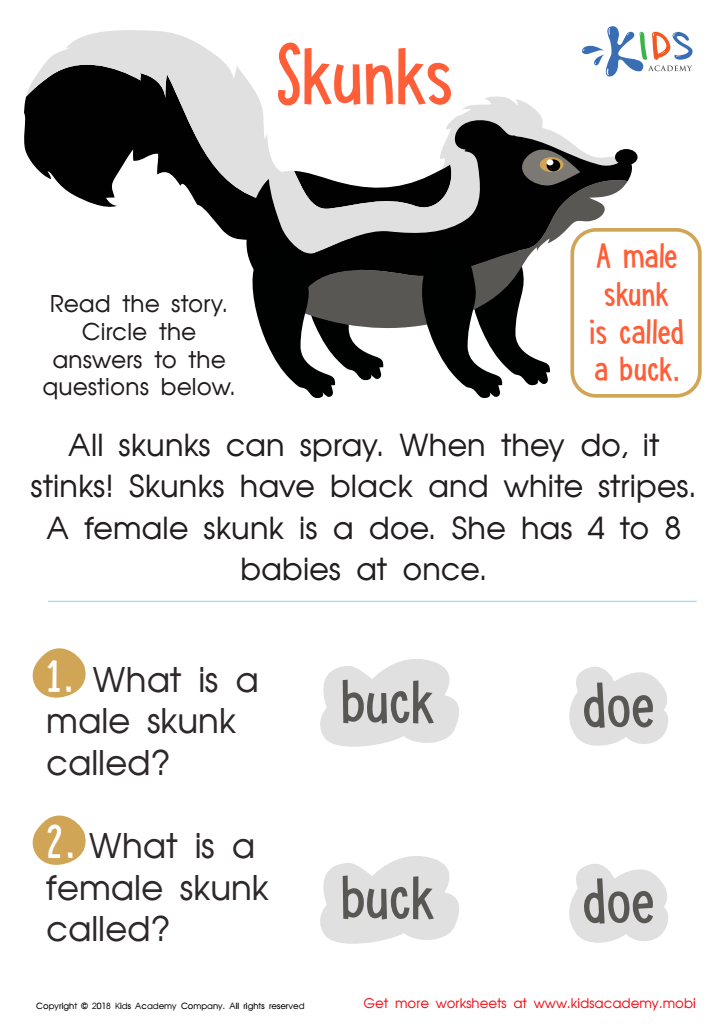
Skunks Worksheet
 Assign to My Students
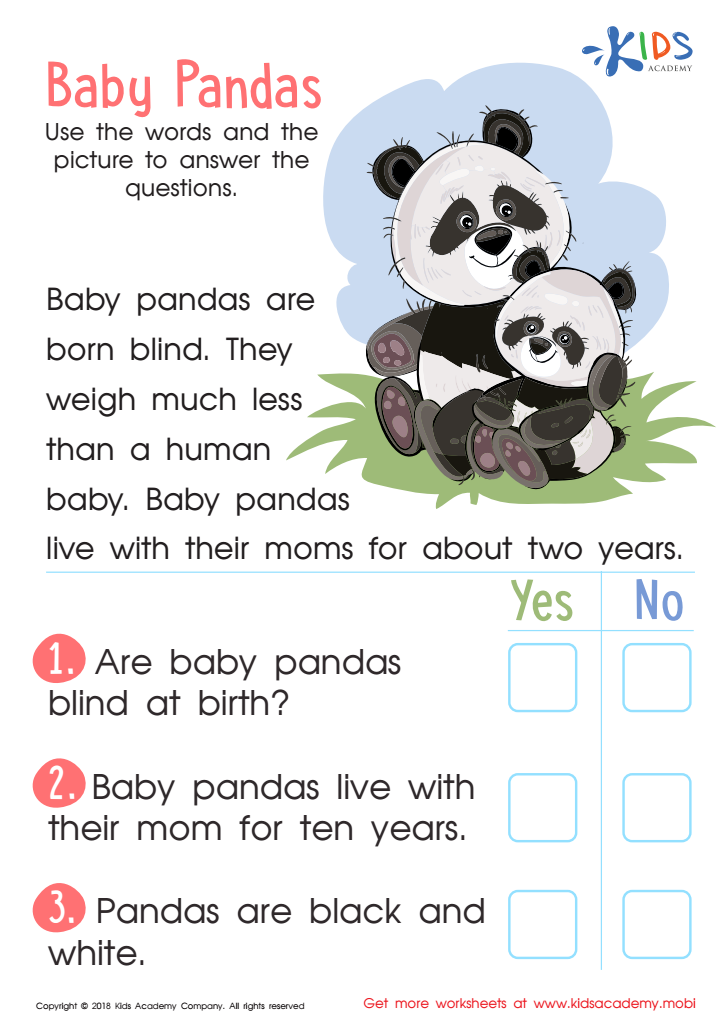
Baby Pandas Worksheet
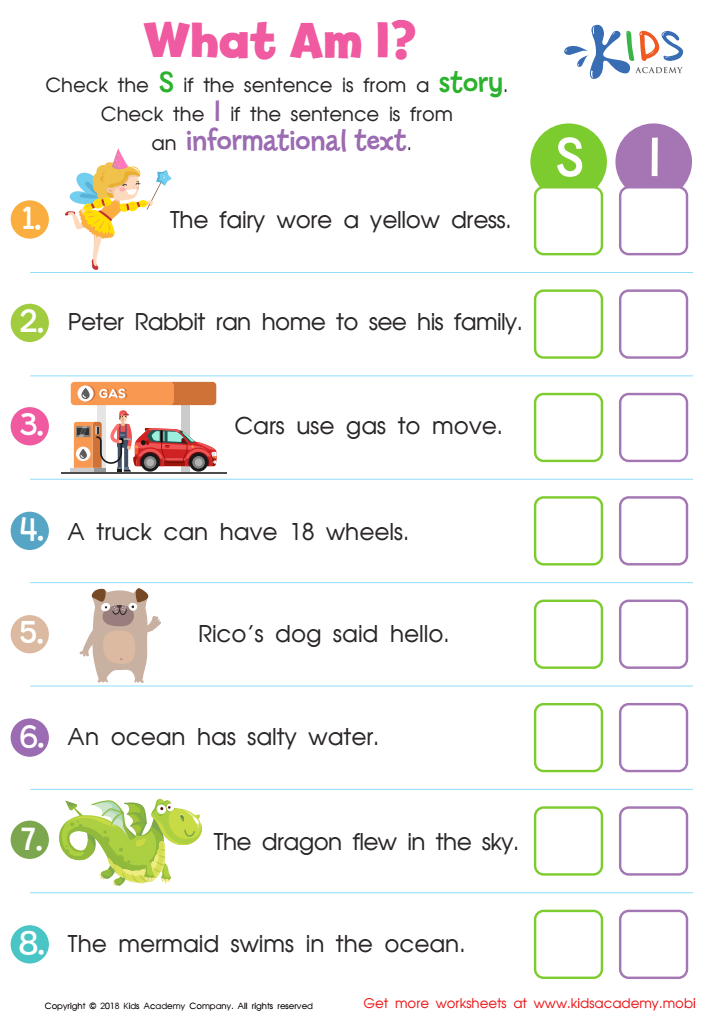
What Am I? Worksheet
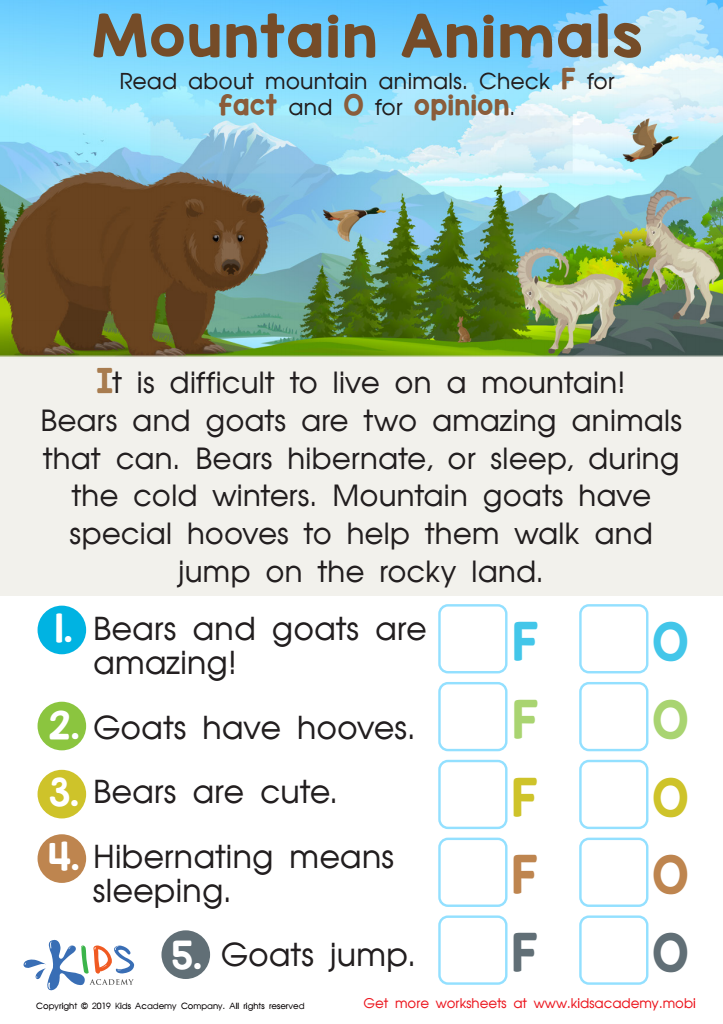
Mountain Animals Worksheet
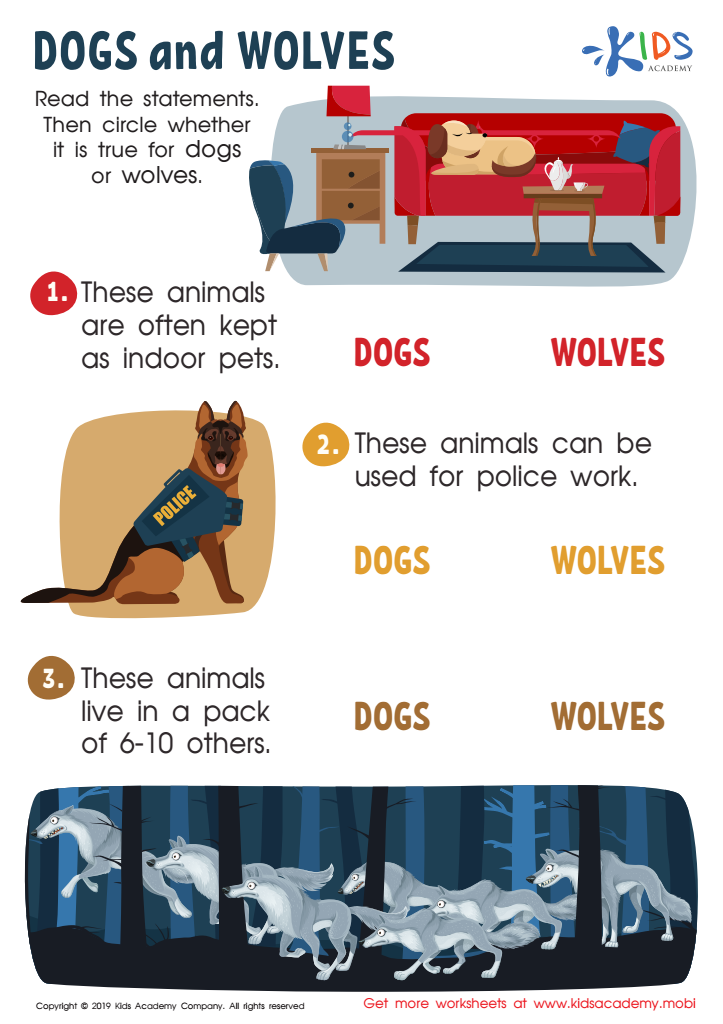
Dogs and Wolves Worksheet







Animal identification reading for children aged 7-9 is crucial for both parents and teachers for several reasons. First, it enhances literacy skills by introducing new vocabulary, sentence structures, and comprehension strategies. Children learn to recognize and process different types of texts, which strengthens their reading abilities and boosts their confidence in literacy.
Secondly, animal identification reading fosters curiosity and engagement with the natural world. It encourages children to explore various species, their habitats, and behaviors, promoting a sense of empathy and respect for animals. This helps cultivate a sense of environmental stewardship, vital in today's context of preserving biodiversity.
Furthermore, understanding animal classifications aids in the development of critical thinking skills. Children learn to categorize information, make connections, and develop logical reasoning as they compare and contrast different animals.
Lastly, these reading activities can spark interests in science, ecology, and conservation. By nurturing a fascination for wildlife, parents and teachers are laying the groundwork for children to become informed citizens who care about the environment and advocate for animal welfare in the future. Overall, animal identification reading serves as a multi-faceted tool that promotes literacy while encouraging a deeper ethical and ecological understanding.








