Rhyming skills development Reading Worksheets for Ages 7-9
3 filtered results
-
From - To
Enhance your child's reading skills with our Rhyming Skills Development Worksheets, specially designed for ages 7-9. These engaging printable worksheets focus on fostering phonemic awareness and reinforcing the concept of rhymes, making learning enjoyable and effective. Children will participate in fun activities that promote critical thinking while improving their vocabulary and pronunciation. The worksheets include a variety of exercises, such as matching, filling in the blanks, and creative writing prompts, to keep young learners motivated. Boost your child's confidence in reading and rhyming with our thoughtfully crafted resources that support early literacy development in a playful and educational way.
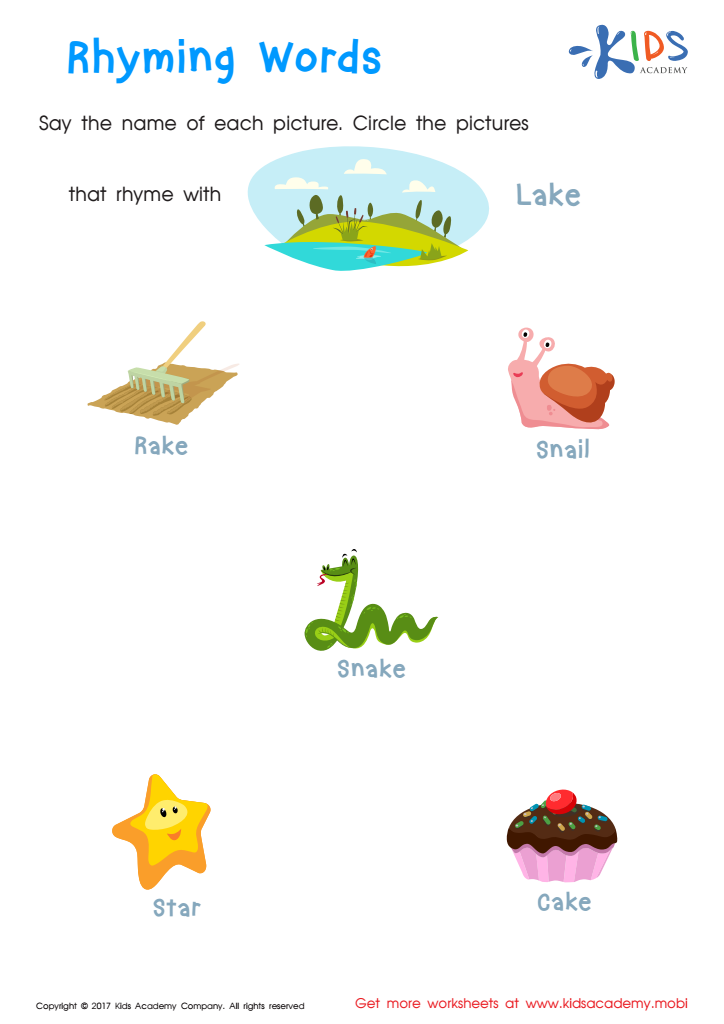
Rhyming Words Rhyming Worksheet
 Assign to My Students
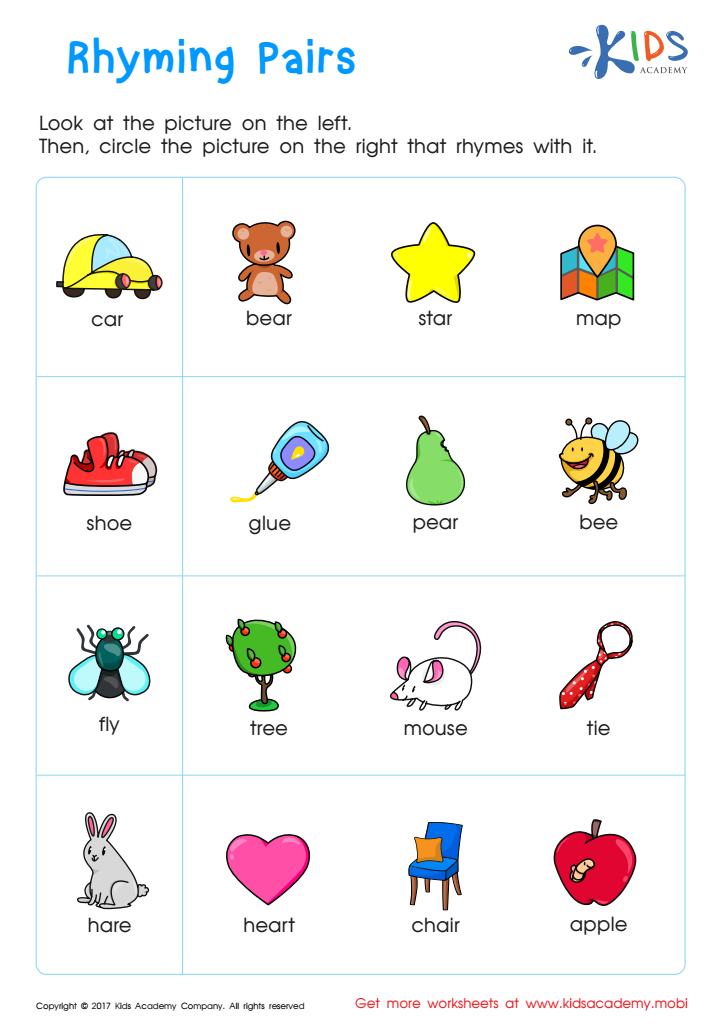
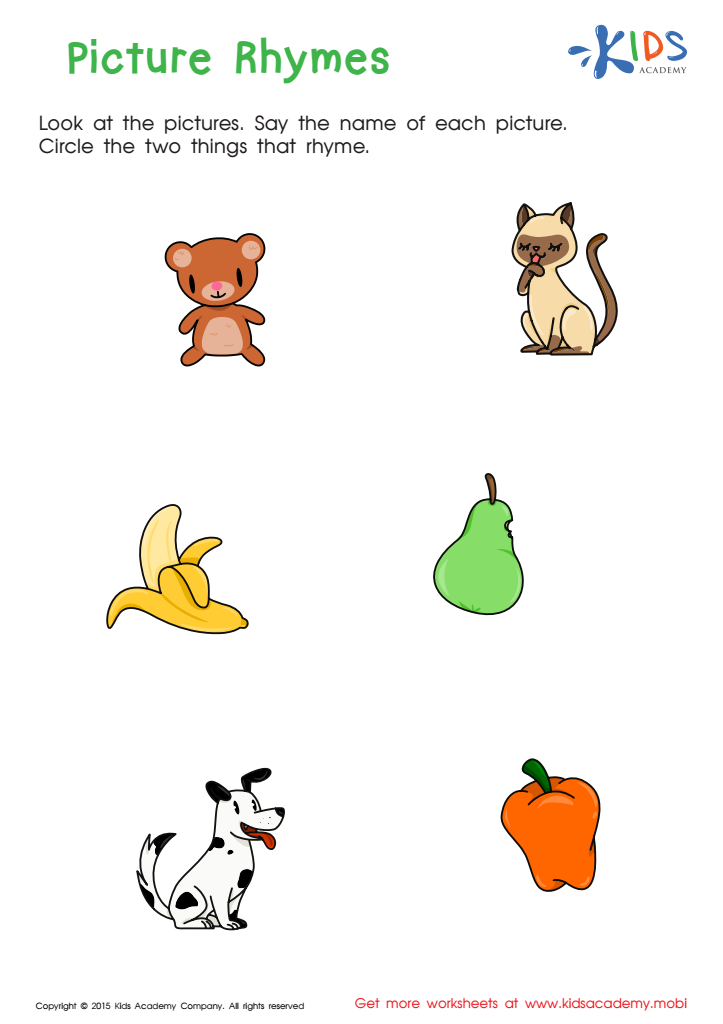
First Words: Picture Rhymes Worksheet




.jpg)



Rhyming skills are essential for reading development in children aged 7 to 9, as they play a crucial role in language and cognitive growth. First and foremost, rhyming helps children become aware of sound patterns in words, which enhances their phonemic awareness—a key predictor of reading success. When children can identify and produce rhymes, they develop an understanding of how sounds fit together, making it easier for them to decode unfamiliar words.
Furthermore, rhyming enriches vocabulary. Children are exposed to a variety of words through rhyming games and literature, expanding their vocabulary and improving their language skills. This exposure is critical during a time when many children are starting to read more complex texts independently.
Additionally, engaging in rhyming activities can enhance auditory discrimination and listening skills. These abilities are foundational for effective reading comprehension and overall academic success.
Moreover, rhyming fosters a love for language and books. Children enjoy the playful nature of rhymes, which can make reading a fun and engaging experience. This positive association can encourage lifelong reading habits.
In summary, parents and teachers should prioritize rhyming skill development to support children's literacy, foster language acquisition, and promote an enduring passion for reading.








