Sentence comprehension Reading Worksheets for Ages 7-9
3 filtered results
-
From - To
Enhance your child's reading skills with our Sentence Comprehension Worksheets, designed specifically for ages 7-9. These engaging and interactive worksheets help young learners improve their understanding of sentence structures and boost their critical thinking abilities. Each worksheet features age-appropriate texts that encourage kids to analyze context, infer meaning, and answer comprehension questions. As they explore various topics and practice categorizing information, children will develop essential reading strategies that lay the foundation for future academic success. Suitable for home learning or classroom use, our worksheets are a fun and effective way to support your child's literacy journey.
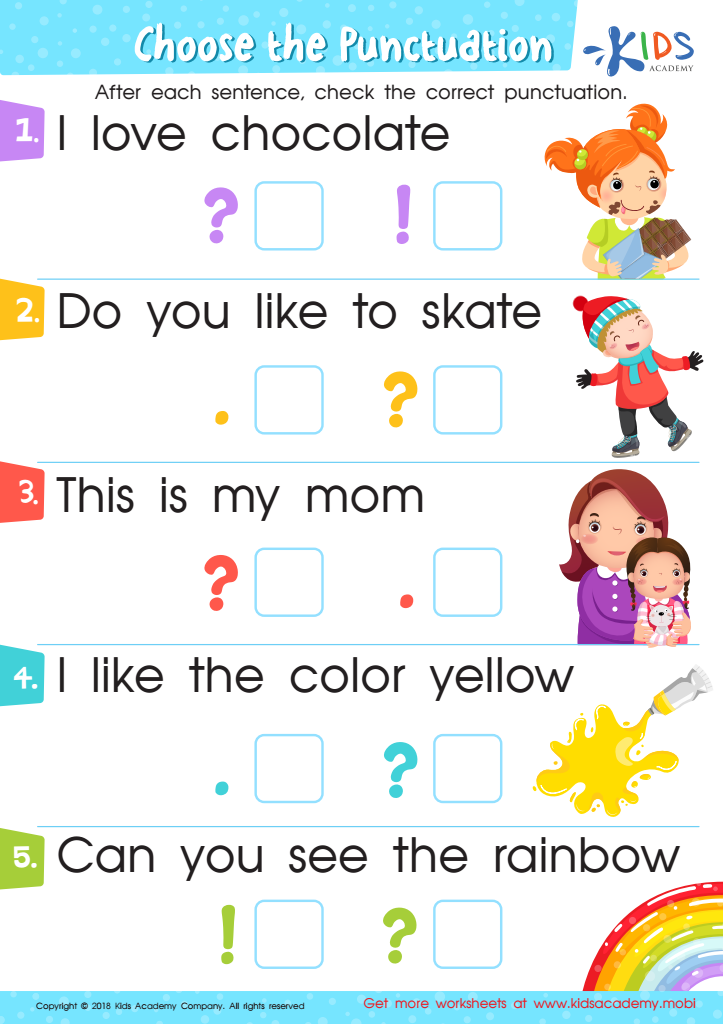
Choose the Punctuation: Assessment Worksheet
 Assign to My Students
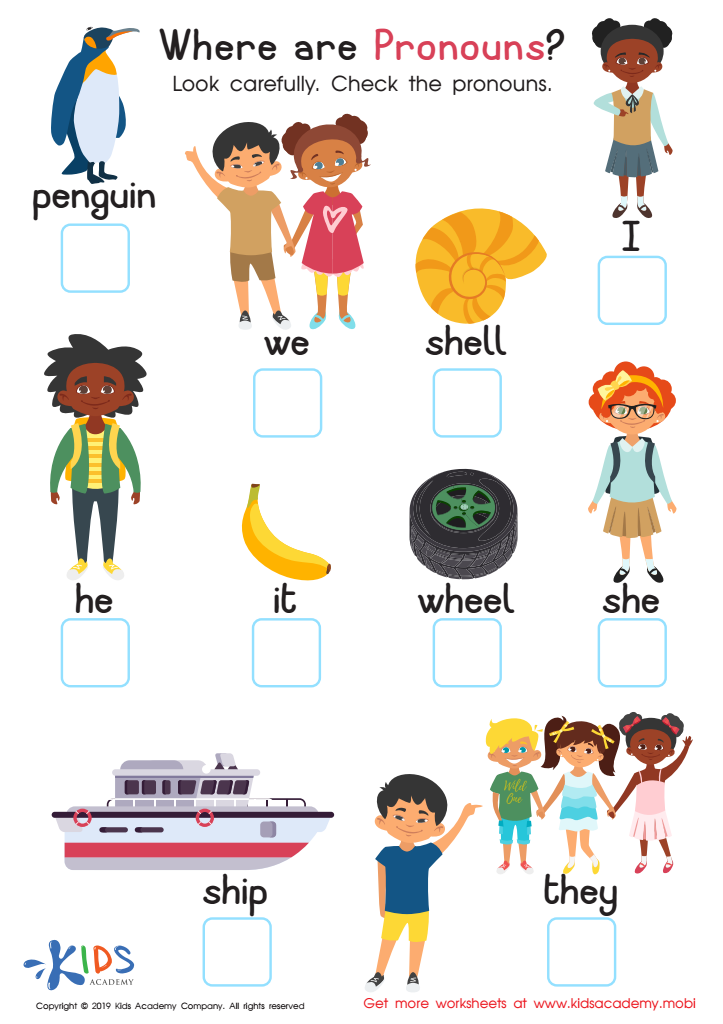
Where Are Pronouns? Worksheet
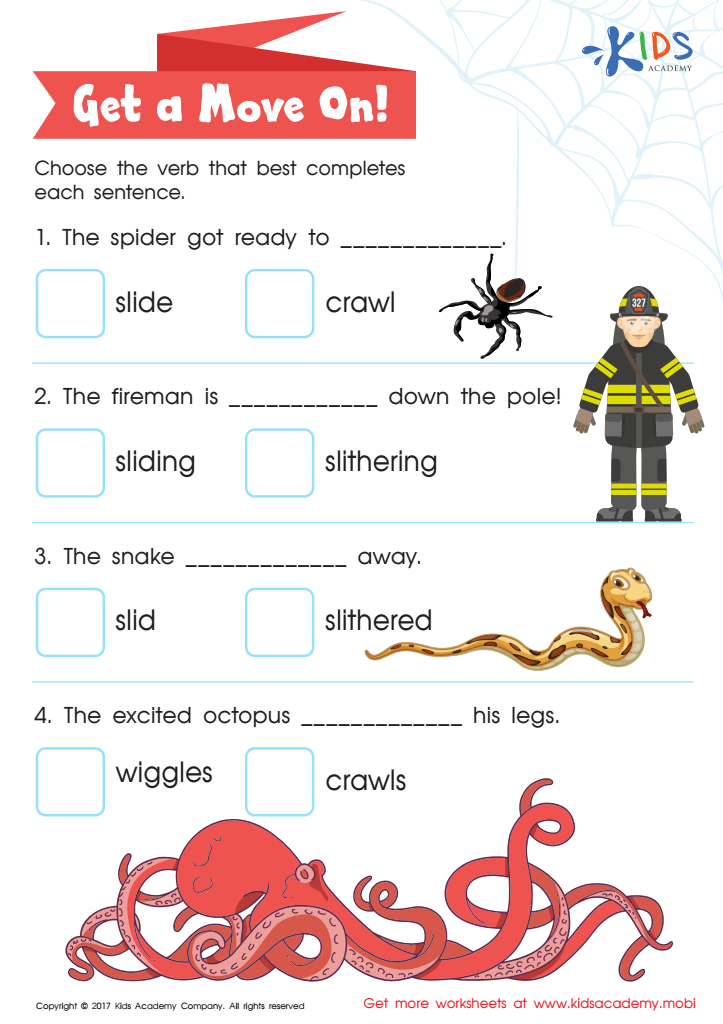
Verb Worksheet








Sentence comprehension is a critical skill for children aged 7 to 9, directly impacting their overall literacy development and academic success. At this age, children transition from learning to read to reading to learn, making a solid understanding of sentences crucial for grasping more complex texts. Effective sentence comprehension involves recognizing the main idea, understanding details, and connecting concepts, which are foundational for subjects like math, science, and history.
Parents and teachers should prioritize sentence comprehension because it fosters higher-order thinking skills, enabling children to analyze, synthesize, and evaluate information. Children proficient in comprehension are more likely to engage meaningfully with texts, enhancing their enjoyment of reading and broadening their vocabulary.
Additionally, strong sentence comprehension skills can boost a child's self-esteem and motivation. When children understand what they read, they feel more confident in their abilities, which can lead to greater participation in class discussions and a love for reading. Furthermore, understanding how to break down sentences helps students become capable writers themselves.
In summary, focusing on sentence comprehension during these formative years equips children with essential skills for lifelong learning, making it a vital priority for parents and educators alike.








