Visual interpretation Reading Worksheets for Ages 7-9
3 filtered results
-
From - To
Elevate your child's reading skills with our Visual Interpretation Reading Worksheets designed for ages 7-9! These engaging and educational activities encourage children to analyze and understand visual information within texts, enhancing their comprehension and critical thinking abilities. Each worksheet offers diverse tasks, such as interpreting graphs, charts, and images, tailored to captivate young minds while building essential reading skills. Perfect for both classroom and home use, our expertly crafted worksheets support your child's reading journey, making learning interactive and fun. Nurture a deeper understanding of visual content and boost academic success with Kids Academy's thoughtfully designed resources!
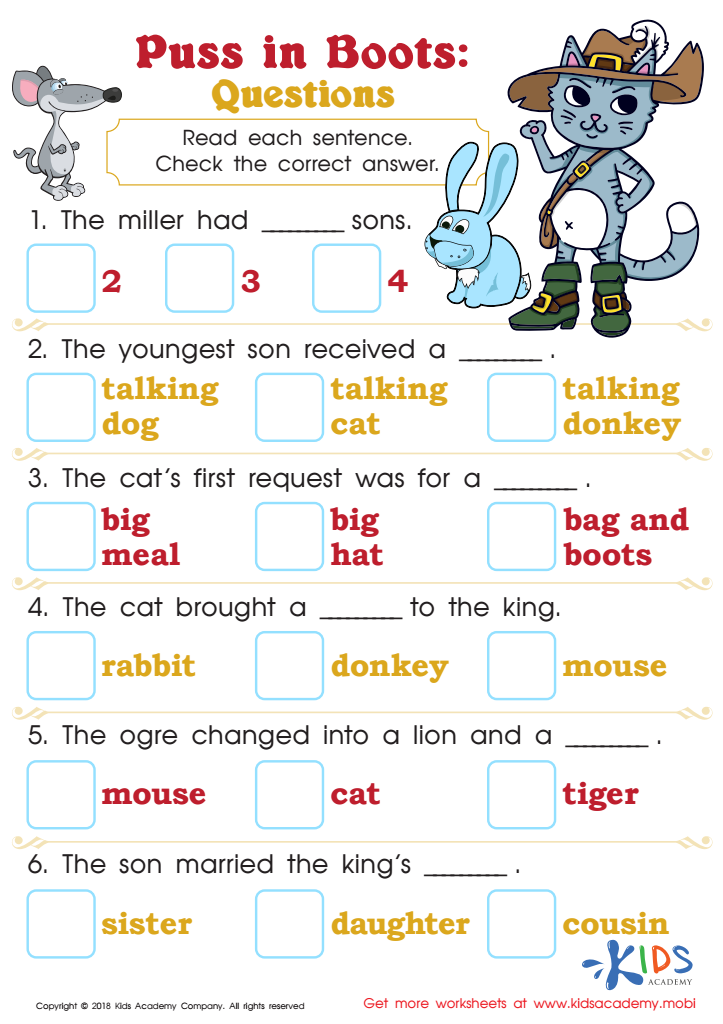
Puss in Boots: Questions Worksheet
 Assign to My Students
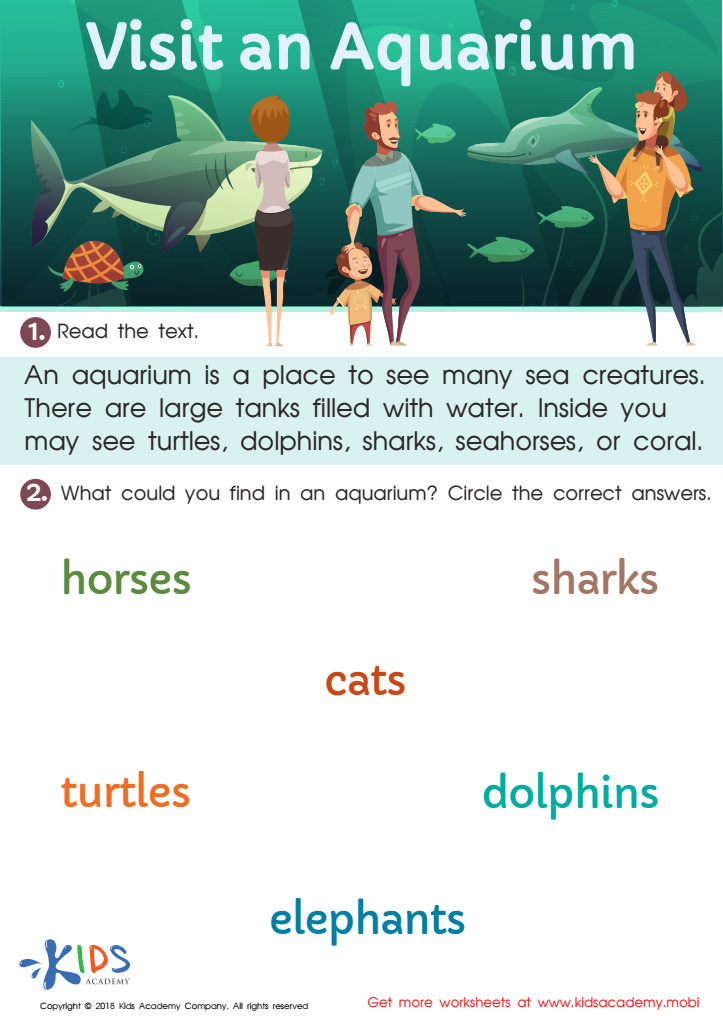
Visit an Aquarium Worksheet
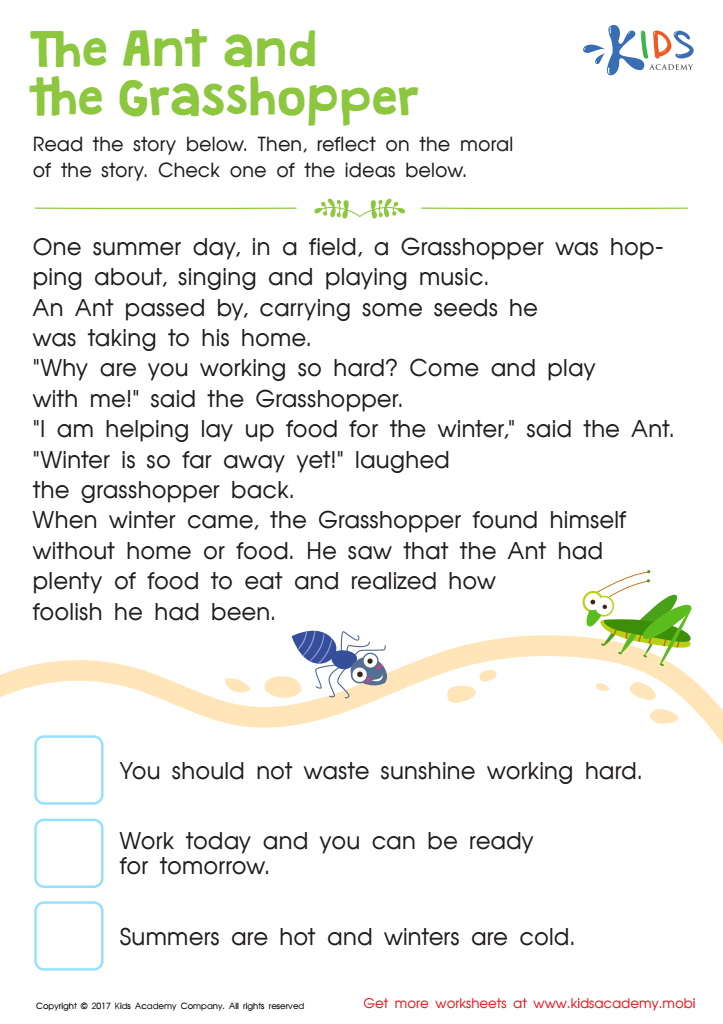
The Ant and The Grasshopper Printable




.jpg)



Visual interpretation reading is crucial for children aged 7-9 due to its role in developing comprehensive reading skills and cognitive growth. At this stage, kids are not only learning to read text but also understanding how pictures, charts, and other visual aids contribute to the narrative or information. Integrating visual elements with reading aids in language development by expanding vocabulary and enhancing comprehension skills.
When children analyze visuals, they engage in higher-order thinking, such as inferring, predicting, and summarizing. This lays a foundation for critical thinking, as they learn to interpret and derive meaning beyond what is explicitly stated. Visual reading also fosters imagination and creativity by encouraging children to visualize scenes, characters, and events.
Moreover, visuals can serve as contextual clues that facilitate understanding of complex ideas and concepts, making reading a more enjoyable and less daunting experience. This is especially beneficial for visual learners who might struggle with text-only materials. For parents and teachers, focusing on visual interpretation cultivates a holistic approach to literacy, ensuring that children develop not only the ability to decode words but also to fully grasp the multi-dimensional aspects of information presented to them. Fostering these skills can lead to more engaged and independent readers, better prepared for future academic challenges.








