Critical thinking skills Reading Comprehension Worksheets for Ages 7-9
5 filtered results
-
From - To
Enhance your child's reading comprehension with our engaging Critical Thinking Skills Worksheets, designed specifically for ages 7-9. These worksheets encourage young learners to analyze information, infer meanings, and critically evaluate texts. Each activity is crafted to strengthen their ability to think deeply about what they read, fostering both comprehension and confidence. With a variety of fun and interactive exercises, kids will develop essential skills by making connections and answering thought-provoking questions. Perfect for reinforcing classroom learning or as enjoyable home practice, our worksheets promote curiosity and joy in reading, cultivating lifelong critical thinking habits. Empower your child's learning journey today!
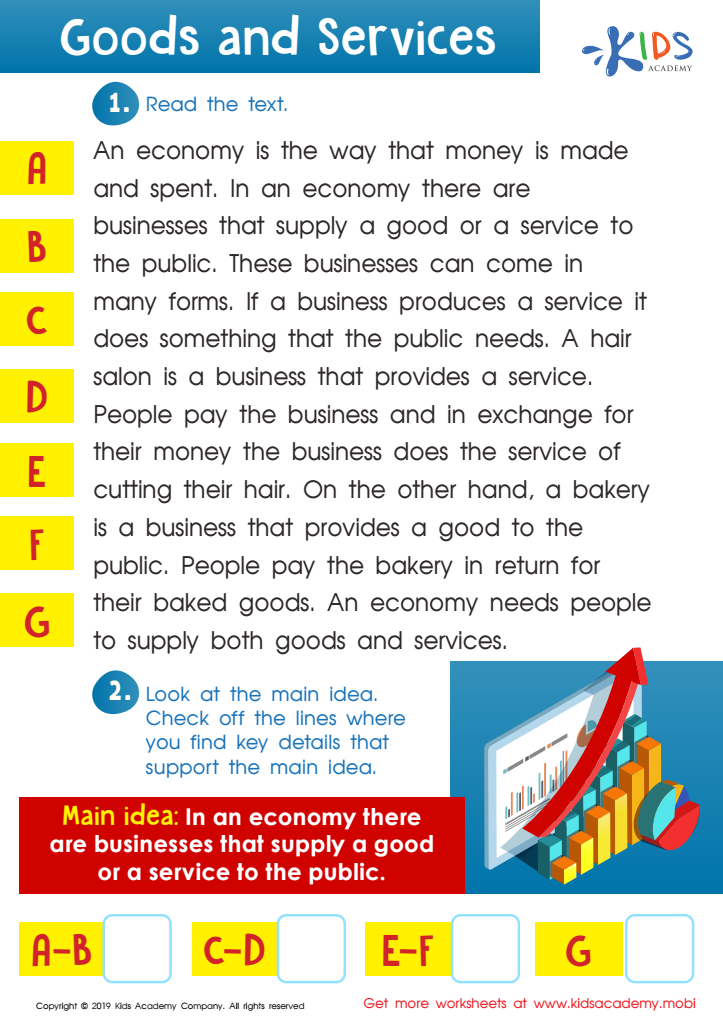
Goods and Services Worksheet
 Assign to My Students
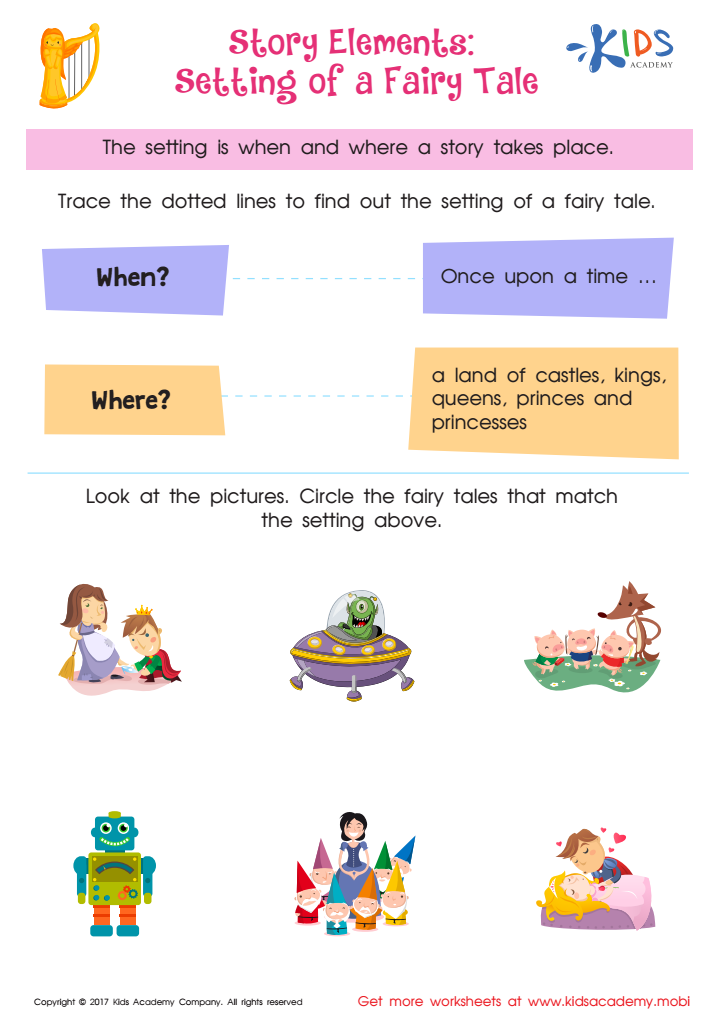
Story Elements: Setting of a Fairy Tale Printable
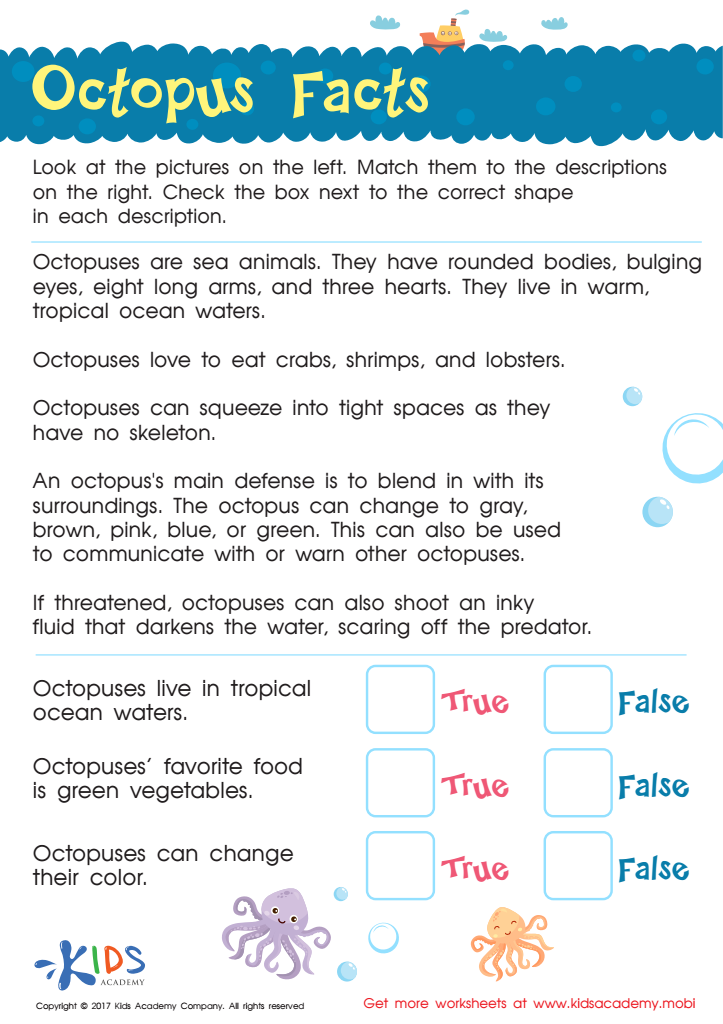
Octopus Facts Worksheet For Kids
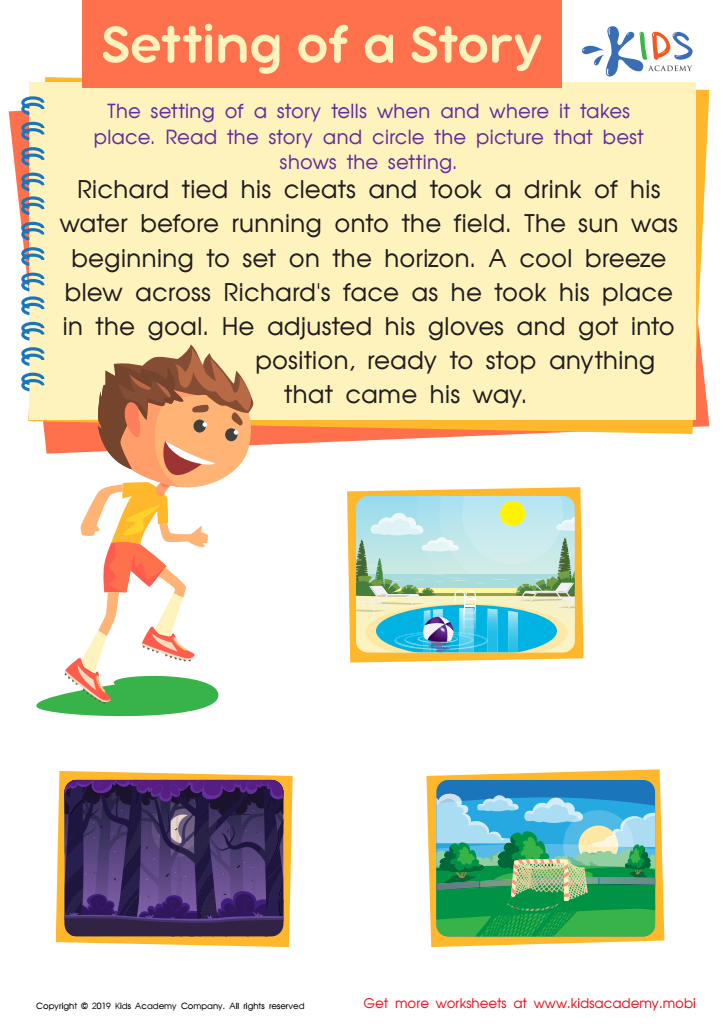
Setting of a Story Worksheet
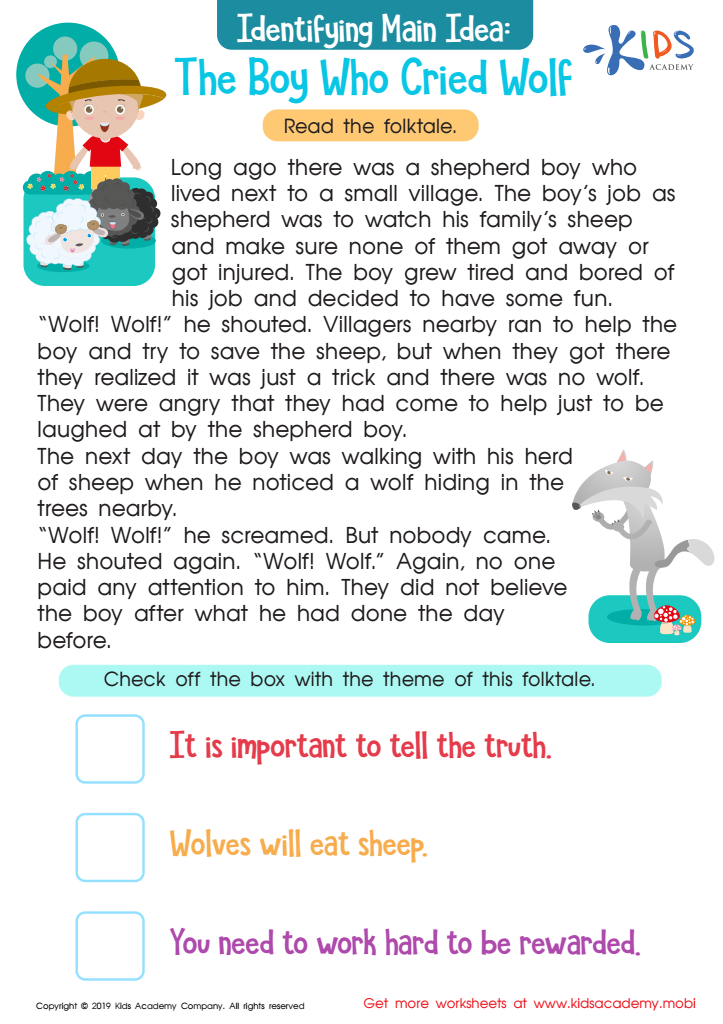
The Boy Who Cried Wolf Part 2 Worksheet







Parents and teachers should prioritize critical thinking skills and reading comprehension for children aged 7-9, as these abilities form the foundation for academic success and lifelong learning. At this age, children are developing cognitive skills and are more receptive to understanding complex ideas. Critical thinking empowers them to analyze information, make connections, and evaluate arguments, fostering independence and self-confidence.
Reading comprehension is equally crucial, as it directly impacts how children interpret texts. Strong comprehension skills not only improve academic performance across subjects like math and science but also enhance communication skills, which are essential in everyday interactions. As young readers encounter diverse texts, they learn to appreciate different perspectives and cultures, building empathy and social awareness.
Moreover, nurturing critical thinking and reading comprehension prepares children to navigate a multifaceted world filled with information. In an era characterized by misinformation, these skills enable them to discern credible sources, critically evaluate differing viewpoints, and make informed decisions. Ultimately, attention to these developmental skills during ages 7-9 lays the groundwork for future learning, emotional intelligence, and responsible citizenship, equipping children with the tools they need to thrive academically and personally.








