Historical Knowledge Reading Comprehension Worksheets for Ages 7-9
5 filtered results
-
From - To
Elevate your child's understanding of history with our "Historical Knowledge Reading Comprehension Worksheets for Ages 7-9". These carefully crafted worksheets blend engaging historical tales with skill-building questions designed to develop critical thinking and comprehension. Ideal for young learners, each worksheet immerses students in intriguing historical events and figures while enhancing their reading abilities. Explore a variety of topics, from ancient civilizations to pivotal moments in global history. Perfect for classroom use or as a supplementary resource at home, these worksheets inspire a love for history and foster essential reading skills in a fun, educational format.
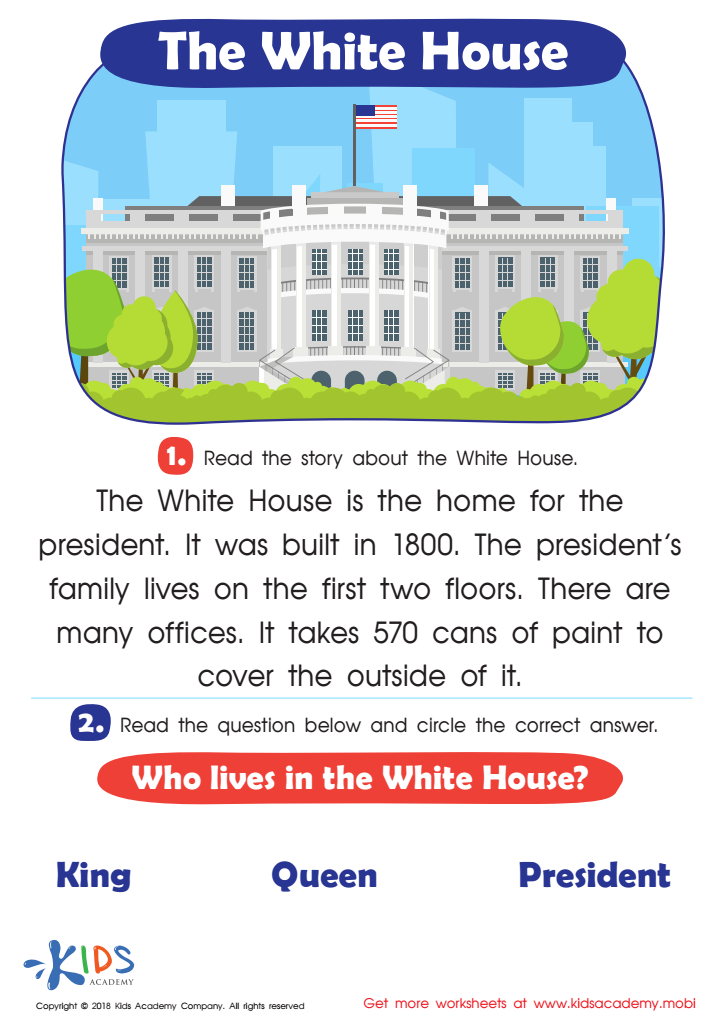
White House Worksheet
 Assign to My Students
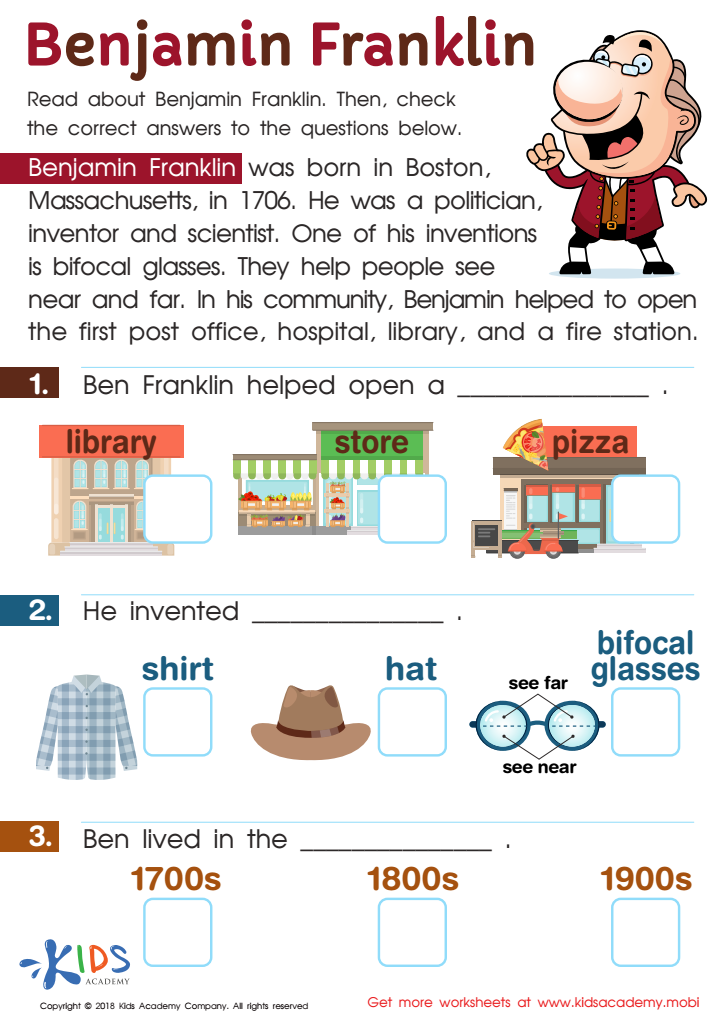
Benjamin Franklin Worksheet
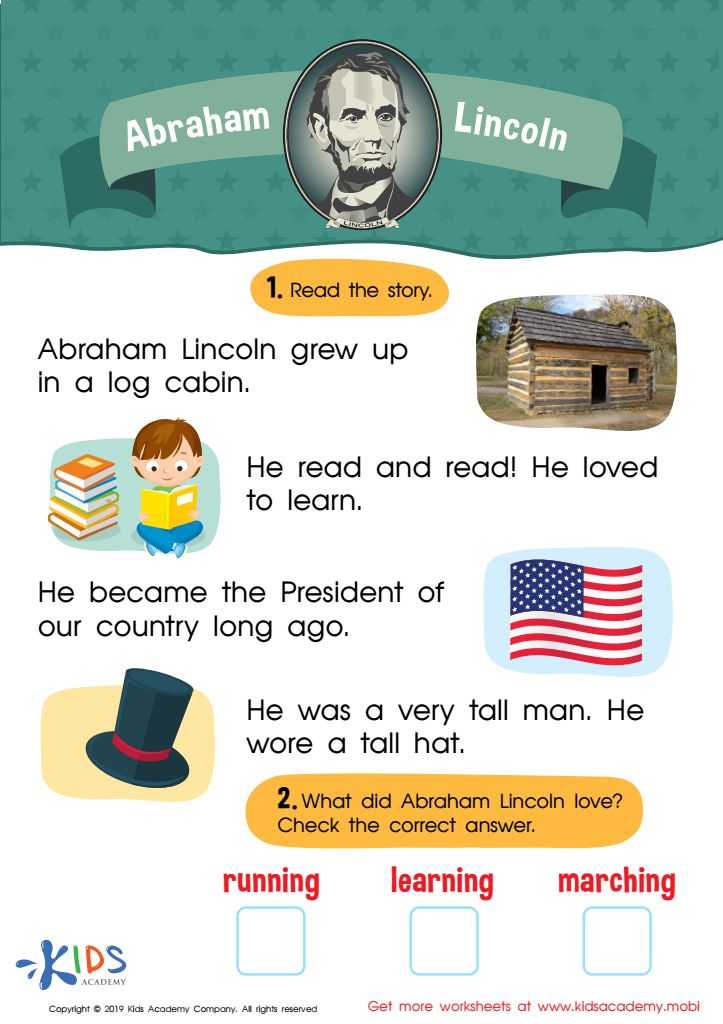
Abraham Lincoln Worksheet
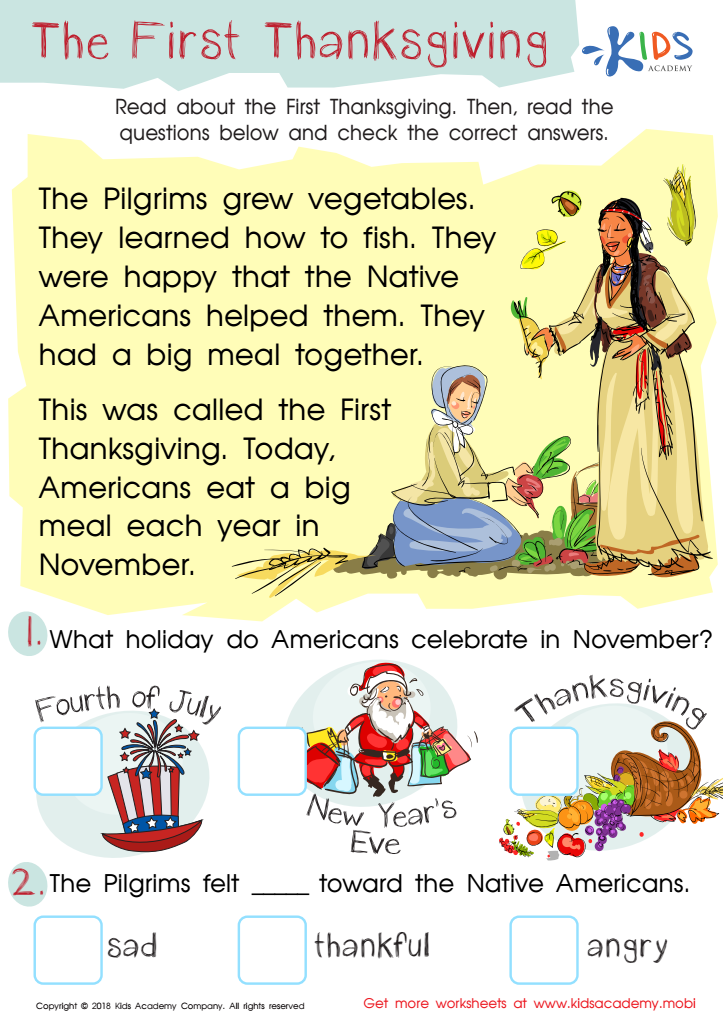
Assessment: First Thanksgiving Worksheet
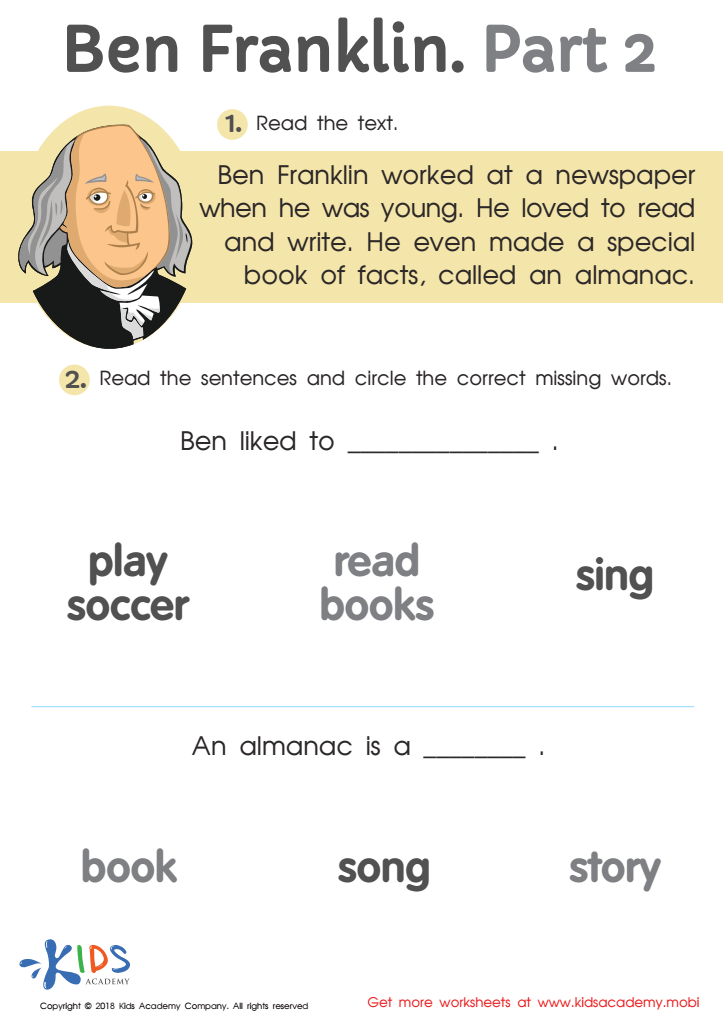
Ben Franklin Part 2 Worksheet








Parents and teachers should place a high value on historical knowledge and reading comprehension for children aged 7-9 because it lays the foundation for a well-rounded education and critical thinking skills. At this developmental stage, children are primed to absorb information and develop a love for learning. Understanding history provides context for the world around them, thereby fostering a deeper appreciation for diverse cultures and societal progress.
Historical knowledge helps children make sense of the present by learning about the past. For instance, they understand holidays, traditions, and significant societal changes, which nurtures their sense of identity and community. Reading comprehension, particularly in history, equips them with the ability to analyze texts, discern main ideas, and make connections between different pieces of information. These skills are crucial not just academically, but for becoming informed and thoughtful citizens.
Moreover, engaging with historical content can enhance vocabulary and language skills, as well as encourage empathy by allowing students to step into others’ shoes and understand different perspectives. In summary, prioritizing historical knowledge and reading comprehension in early education supports cognitive development, fosters curiosity, and builds the foundation for a more informed, culturally aware, and empathetic future generation.








