Moral understanding Reading Fiction Worksheets for Ages 7-9
5 filtered results
-
From - To
Introduce your young reader to the world of moral understanding with our engaging Reading Fiction Worksheets for ages 7-9. These thoughtfully designed worksheets help children decode life lessons and ethical values through captivating stories. As they explore the adventures of relatable characters, kids will gain insights into right and wrong, empathy, honesty, and more. Each worksheet emphasizes key reading skills while prompting discussions about morals, cultivating both literacy and emotional growth. Perfect for classrooms and homes alike, these resources aim to build a strong moral foundation, fostering well-rounded, thoughtful individuals ready to understand and reflect on the complexities of human experiences.
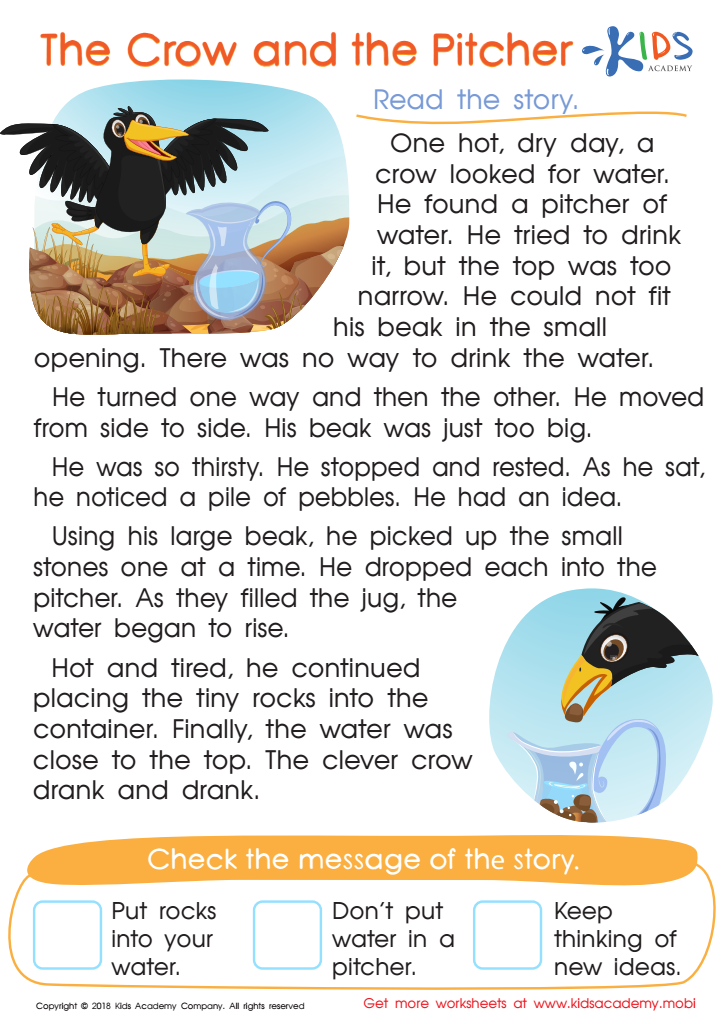
The Crow and the Pitcher Worksheet
 Assign to My Students
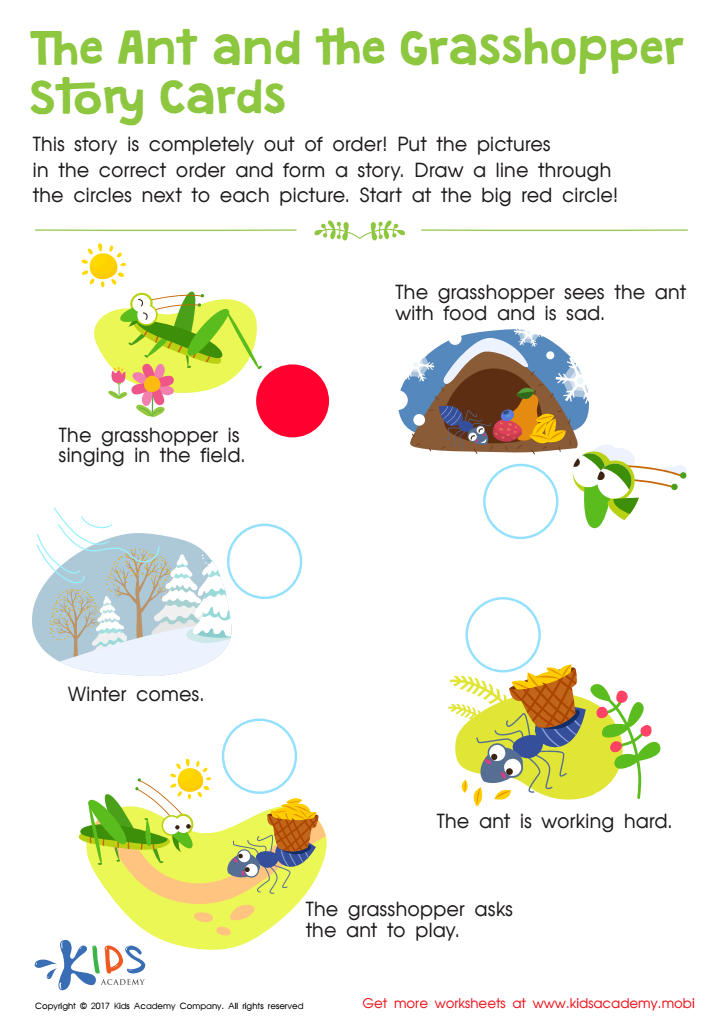
The Ant and The Grasshopper Worksheet
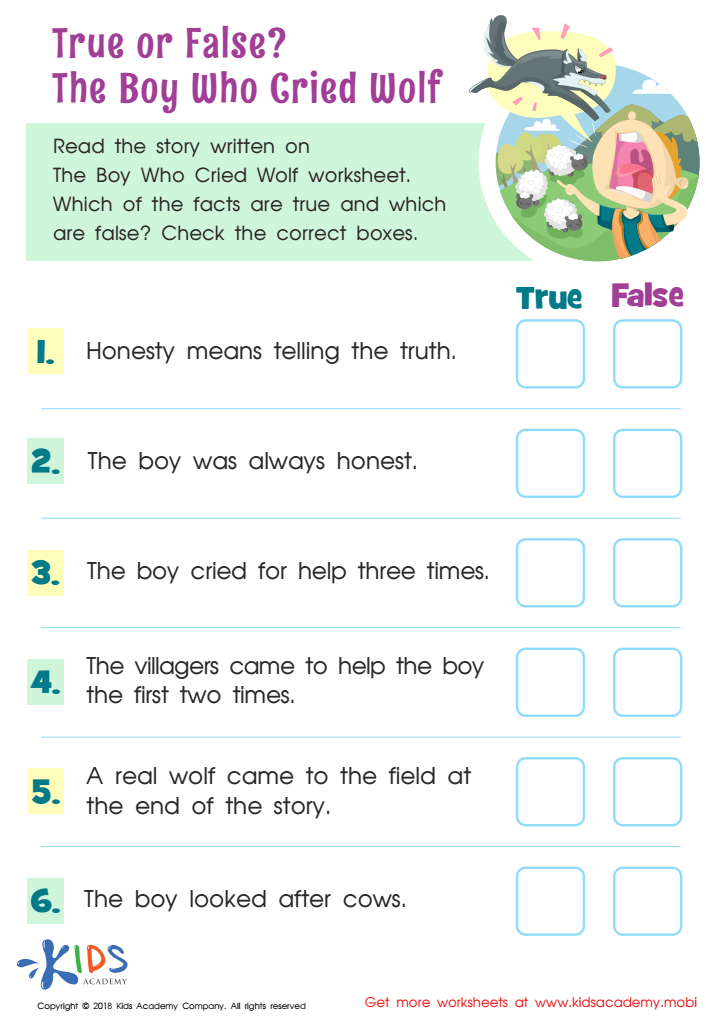
True or False? The Boy Who Cried Wolf Worksheet
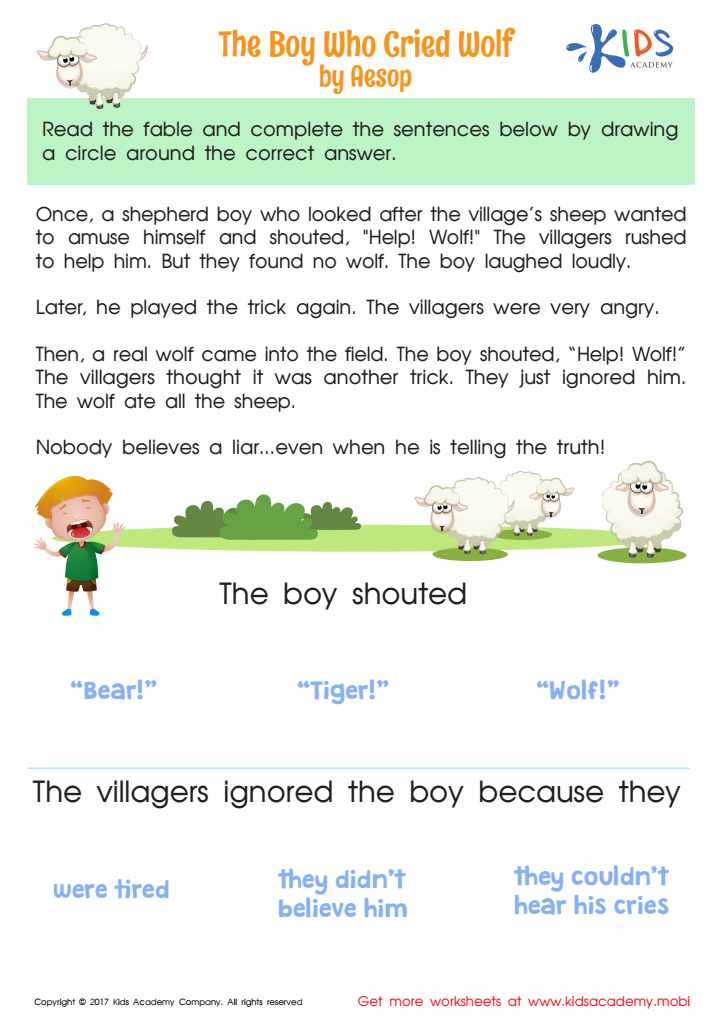
The Boy Who Cried Wolf Worksheet
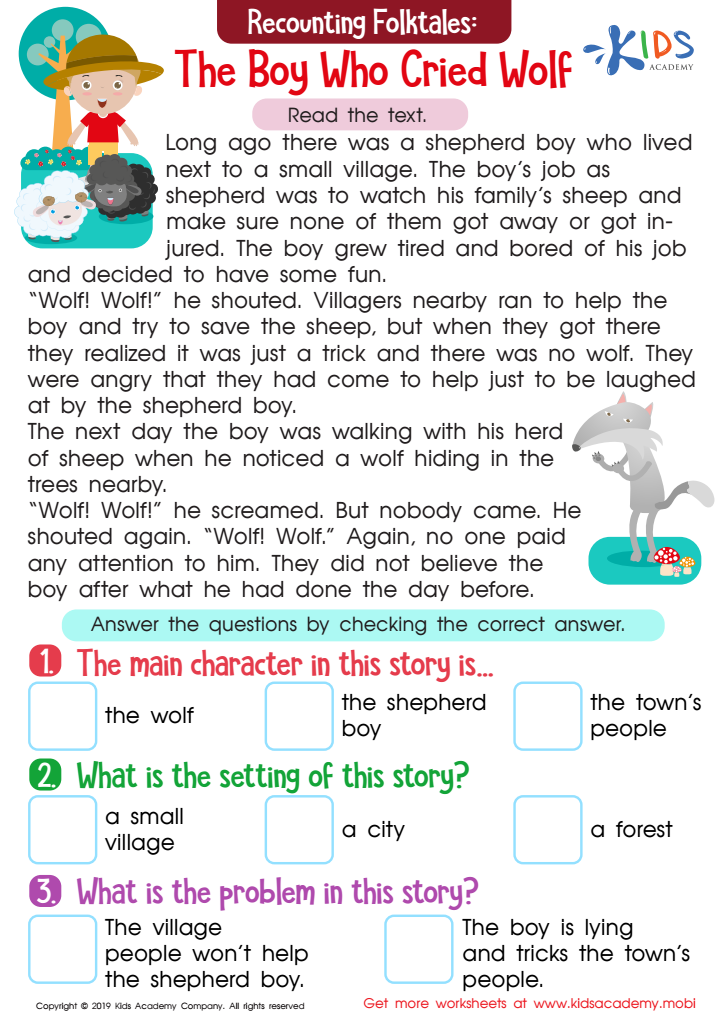
The Boy Who Cried Wolf Part 1 Worksheet





.jpg)

Parents and teachers should prioritize moral understanding and encourage reading fiction for children aged 7-9 because these formative years are critical for developing empathy, decision-making skills, and social awareness. Fictional stories provide a safe environment for children to explore complex situations and emotions, helping them understand the perspectives of different characters. This is particularly important as it can cultivate empathy, enabling children to recognize and respect the feelings and rights of others. Through engaging narratives, characters often face moral dilemmas, allowing young readers to witness the consequences of various actions without real-world repercussions.
Furthermore, age-appropriate fiction can offer valuable lessons about honesty, kindness, responsibility, and other core values in an impactful and memorable way. When children read about characters they care about making good and bad choices, it provides a framework for their own decision-making processes. For instance, a story about sharing during a difficult time can encourage generosity and compassion in readers.
Reading also enhances literacy skills, comprehension, vocabulary, and critical thinking, fostering better academic performance overall. By integrating moral lessons seamlessly into engaging stories, parents and teachers can make learning about ethics both enjoyable and impactful. In essence, reading fiction enriches both the intellectual and emotional growth necessary for children to develop into well-rounded, morally conscious individuals.








