Critical Thinking Animals Worksheets for Ages 7-9
6 filtered results
-
From - To
Empower your child's imagination and analytical skills with our "Critical Thinking Animals Worksheets for Ages 7-9." These carefully crafted worksheets challenge young minds to analyze, compare, and draw conclusions about various animals. Each activity encourages kids to ask questions, explore different scenarios, and develop problem-solving abilities while enhancing their understanding of the natural world. Ideal for building a strong foundation in scientific thinking, our worksheets are perfect for home or classroom use. Delight in watching your child grow intellectually as they engage in fun, educational activities that promote critical thinking and a love for learning.
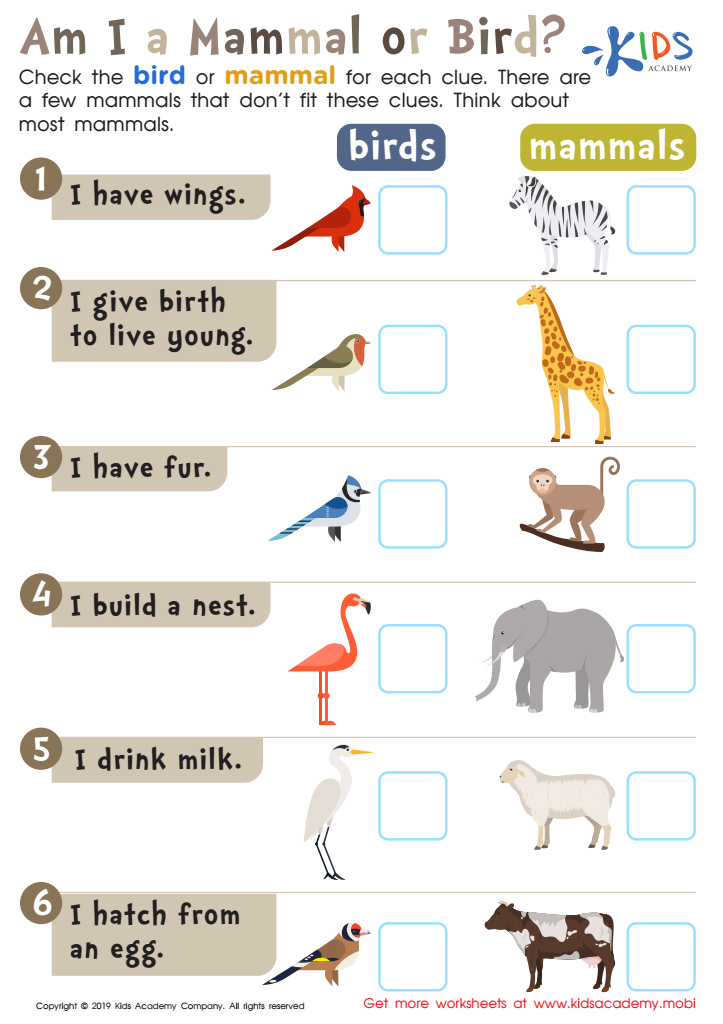
Am I a Mammal or Bird? Worksheet
 Assign to My Students
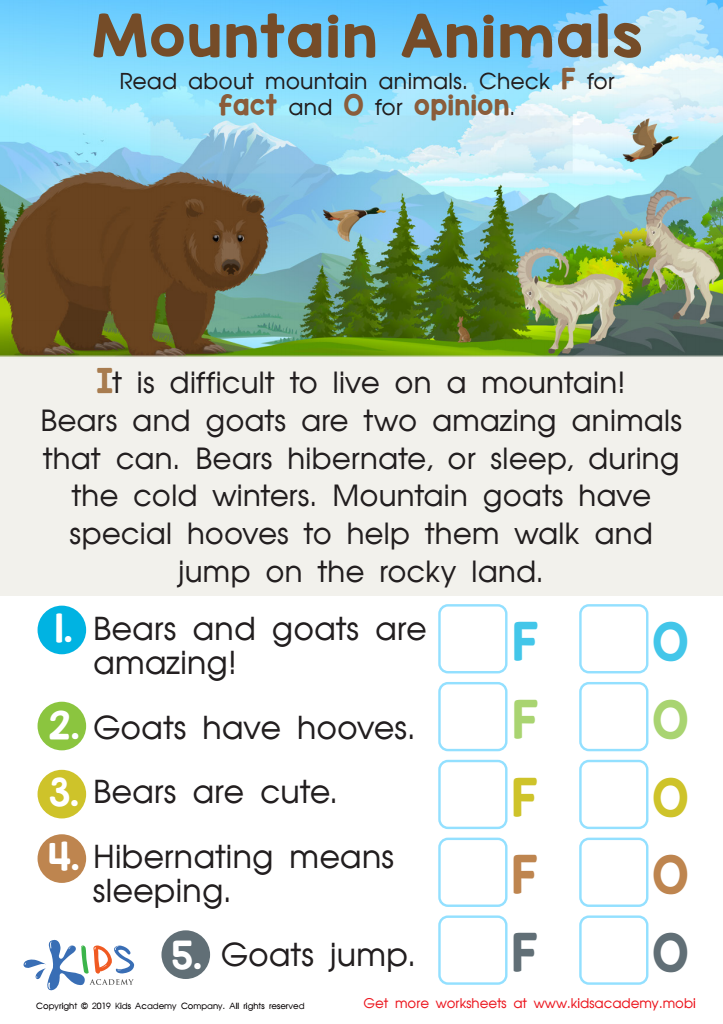
Mountain Animals Worksheet
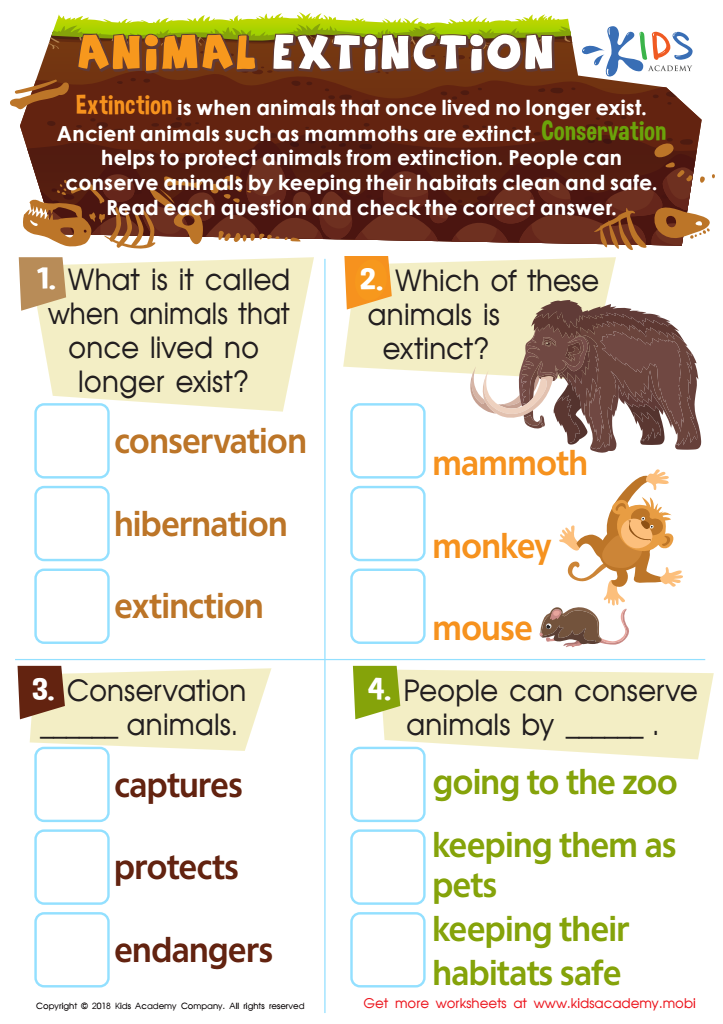
Animal Extinction Worksheet
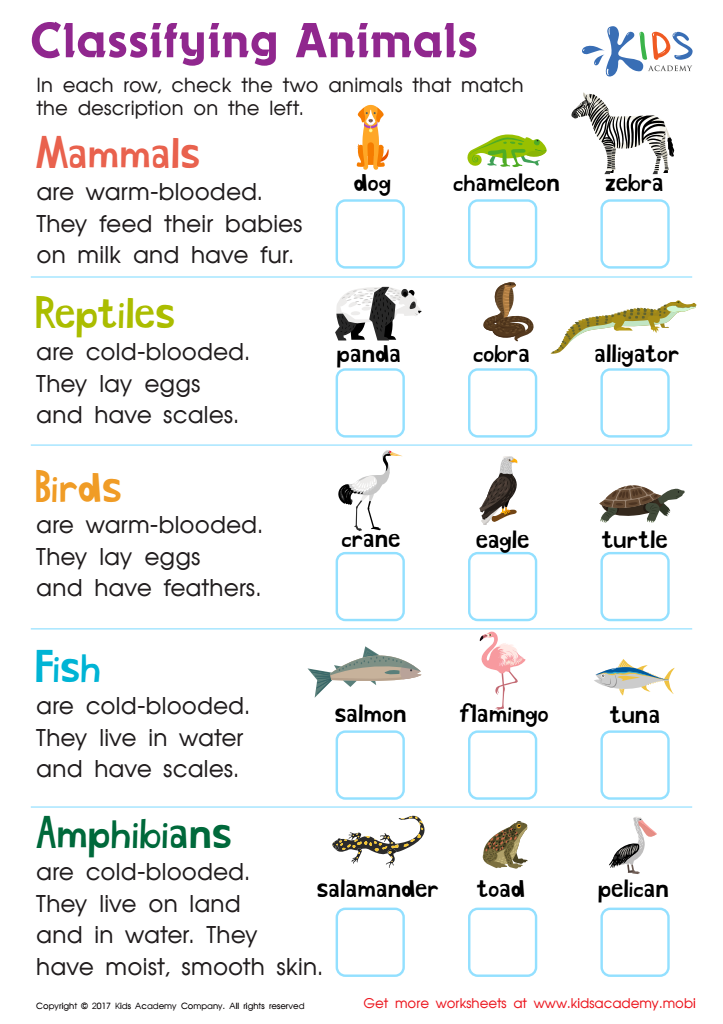
Classifying Animals Worksheet
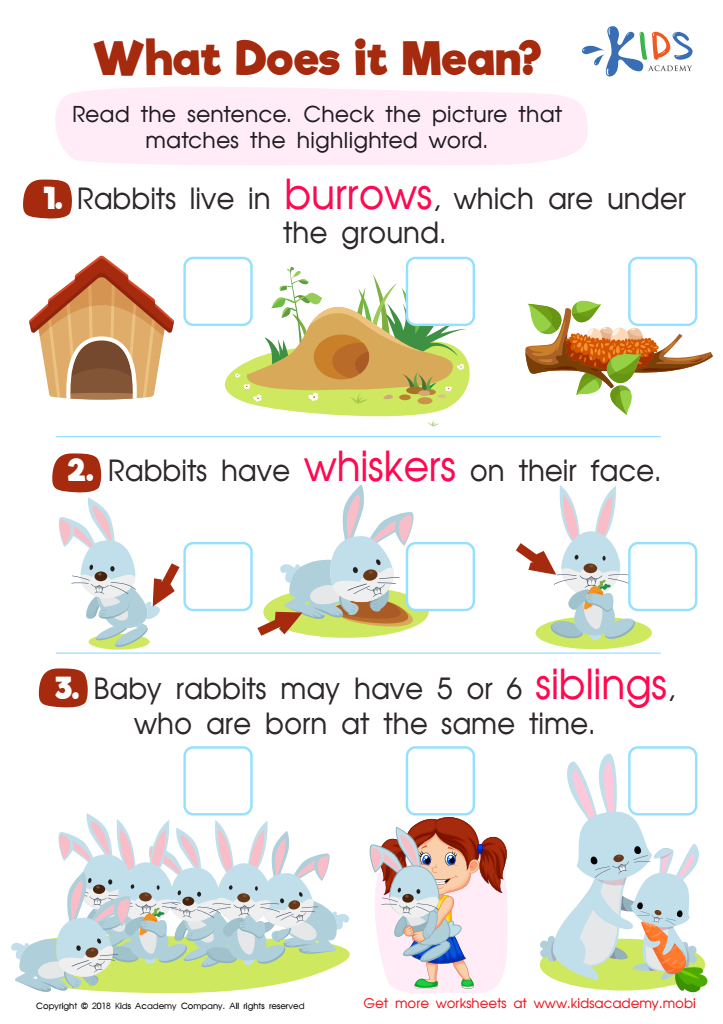
What Does It Mean? Worksheet
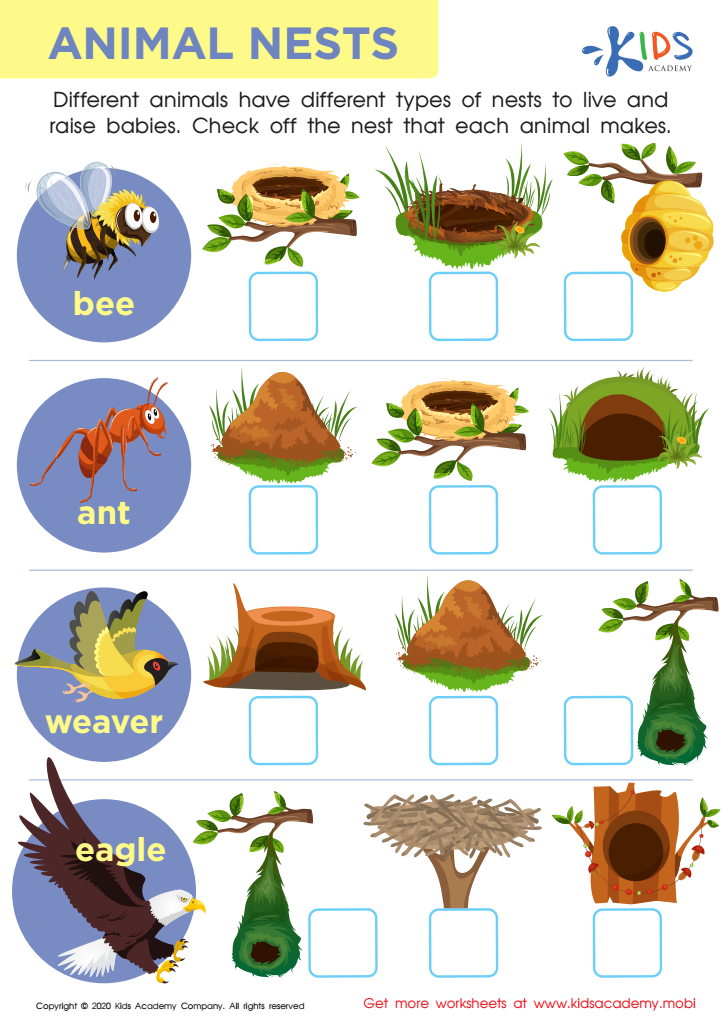
Animal Nests Worksheet








Critical Thinking Animals for Ages 7-9 is a vital educational tool that helps young minds develop essential problem-solving and analytical skills in an engaging and accessible way. Parents and teachers should care about this concept because it fosters cognitive development, creativity, and logical reasoning during a crucial period of child growth.
At this age, children are naturally curious and are building the foundations of their understanding of the world. Integrating animals into critical thinking exercises leverages their innate fascination with animals to make learning more compelling. These activities challenge children to observe, infer, and make connections, skills that are fundamental to their intellectual growth.
Furthermore, critical thinking skills enhance academic performance across all subjects. When children learn to think critically, they can better understand complex texts, solve mathematical problems more efficiently, and grasp scientific concepts with more depth. Beyond academics, these skills also prepare them for real-world situations where decision-making, reasoning, and problem-solving are crucial.
In addition, these activities promote social and emotional development. Working in groups to discuss animal behavior and strategies fosters collaboration and empathy. By directly engaging with age-appropriate, interest-driven challenges through the lens of animals, children are more likely to remain motivated and eager to learn.
Overall, Critical Thinking Animals strengthens a child’s ability to think independently and flexibly, preparing them for future academic challenges and personal growth.








