Animal Classification Science Worksheets for Ages 7-9
5 filtered results
-
From - To
Explore our engaging Animal Classification Science Worksheets designed specifically for children ages 7-9. These fun, interactive resources help young learners discover the fascinating world of animals and their classifications. Through a variety of activities, including sorting, matching, and diagrams, kids will enhance their understanding of different animal groups, such as mammals, reptiles, birds, and more. Our worksheets not only align with national education standards but also foster critical thinking and observational skills. Perfect for home or classroom use, these resources make learning about science enjoyable and memorable. Start your journey into the animal kingdom today!
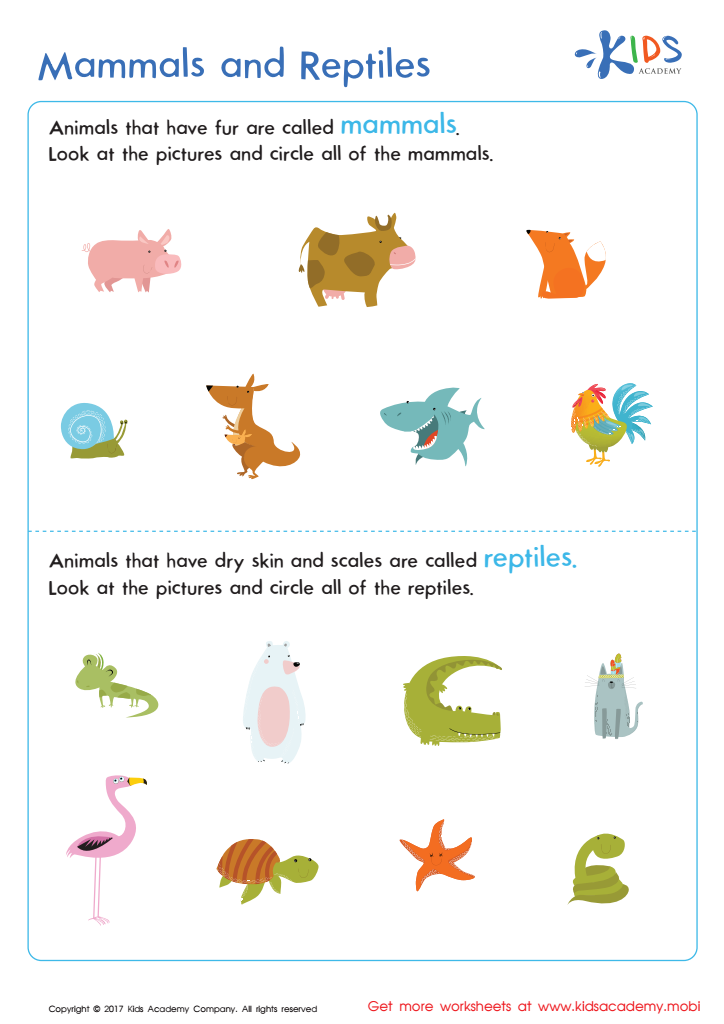
Mammals and Reptiles Worksheet
 Assign to My Students
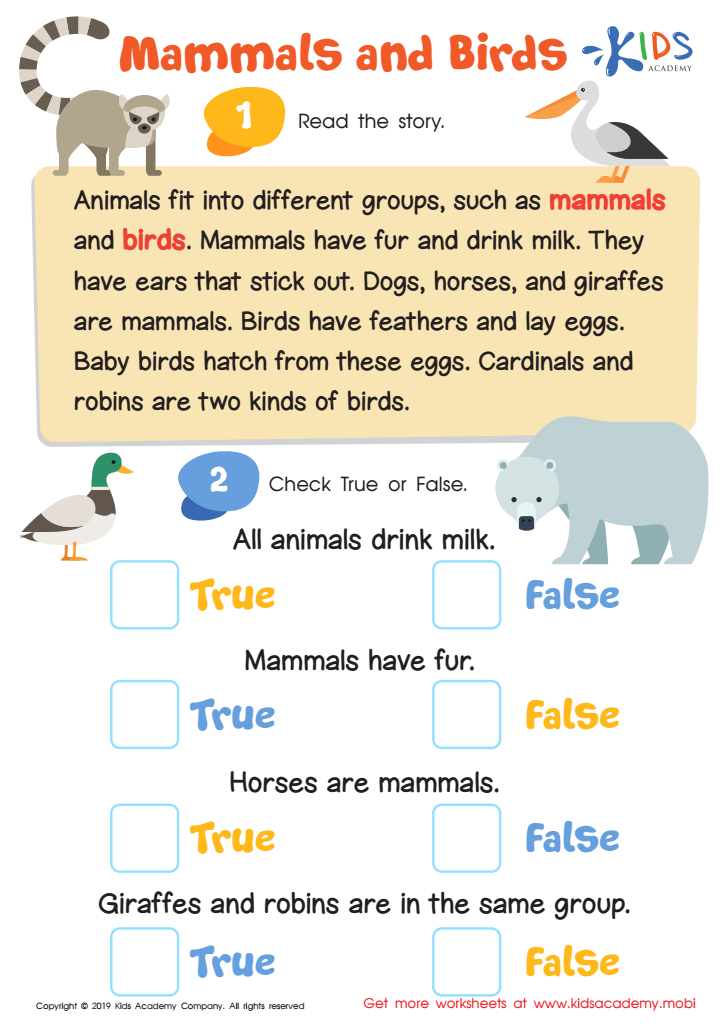
Mammals and Birds Worksheet
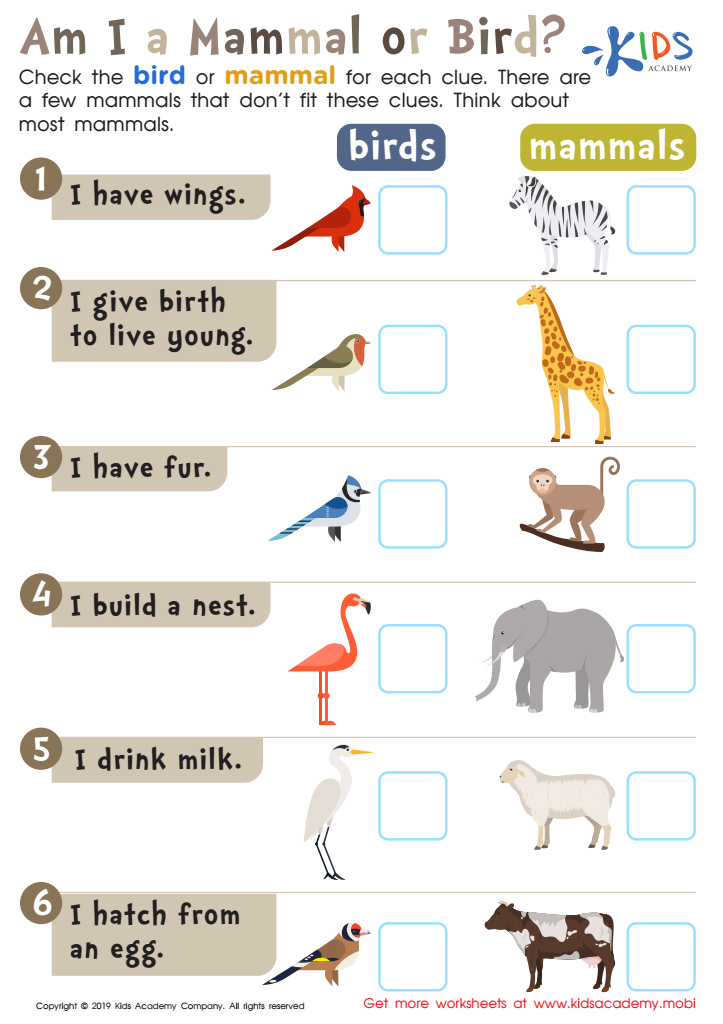
Am I a Mammal or Bird? Worksheet
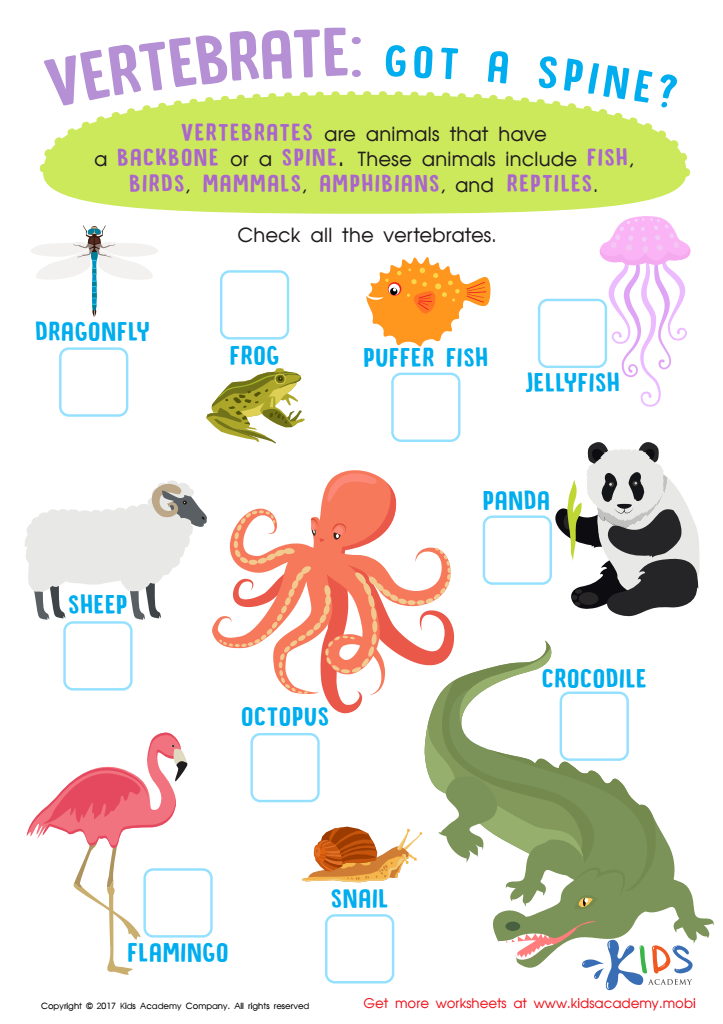
Vertebrates Animals Worksheet for 3rd Grade
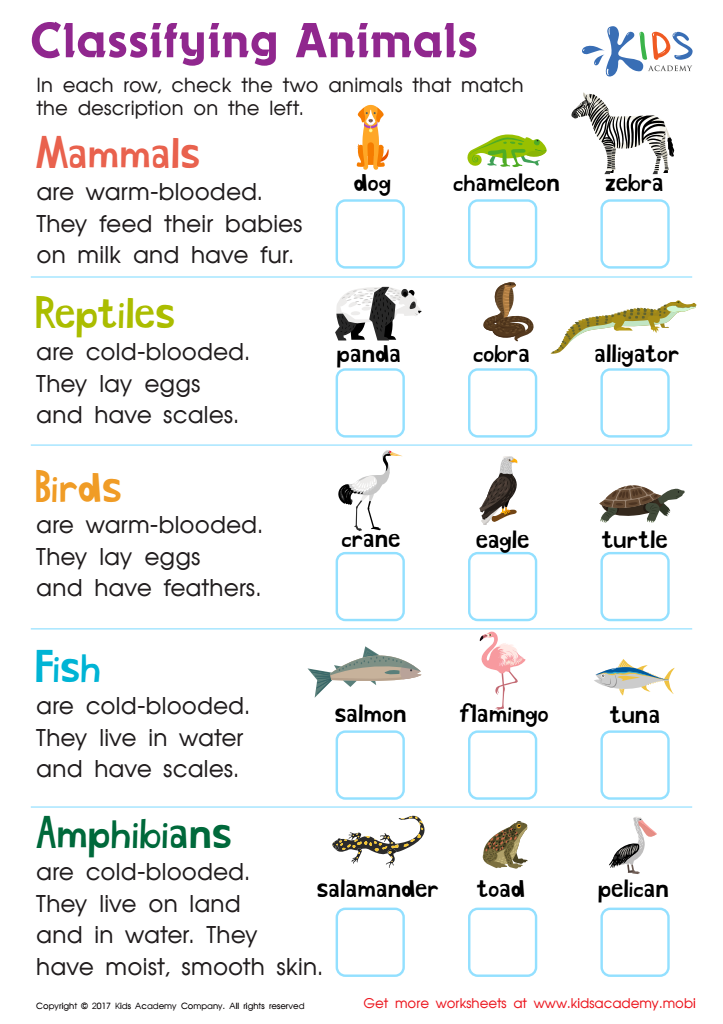
Classifying Animals Worksheet





Animal classification science is essential for children aged 7-9 as it lays the foundation for understanding the natural world. At this age, children are incredibly curious and eager to learn about their surroundings. By teaching them about how animals are classified into groups such as mammals, birds, reptiles, amphibians, and fish, we help them develop critical thinking and observation skills.
Understanding animal classification fosters a deeper appreciation for biodiversity and the environment. Children learn to recognize traits that distinguish different species, encouraging them to observe nature more closely. This awareness can cultivate empathy and a sense of responsibility towards wildlife conservation, instilling values that can last a lifetime.
Additionally, animal classification integrates various subjects such as biology, geography, and even art, making learning interdisciplinary and engaging. It aligns with educational standards and supports skills in inquiry-based learning, where students ask questions and explore answers actively.
For parents and teachers, promoting animal classification science not only enhances a child's academic experience but also prepares them for future studies in science, ecology, and environmental stewardship. Ultimately, by caring about animal classification, adults can inspire young learners and nurture a generation who values and respects the natural world.







