Reading thermometers Science Worksheets for Ages 7-9
3 filtered results
-
From - To
Explore our engaging "Reading Thermometers Science Worksheets" designed specifically for ages 7-9! These educational resources help young learners understand temperature reading concepts using various types of thermometers. With interactive activities, colorful visuals, and real-life scenarios, children will enhance their observational skills and practice interpreting temperature scales. Each worksheet is crafted to foster critical thinking and reinforce science knowledge in a fun, creative manner. Ideal for both classroom use and at-home learning, our worksheets encourage hands-on experiences that spark curiosity about the world around them. Download now and watch your child's confidence in science grow while mastering thermometer reading skills!
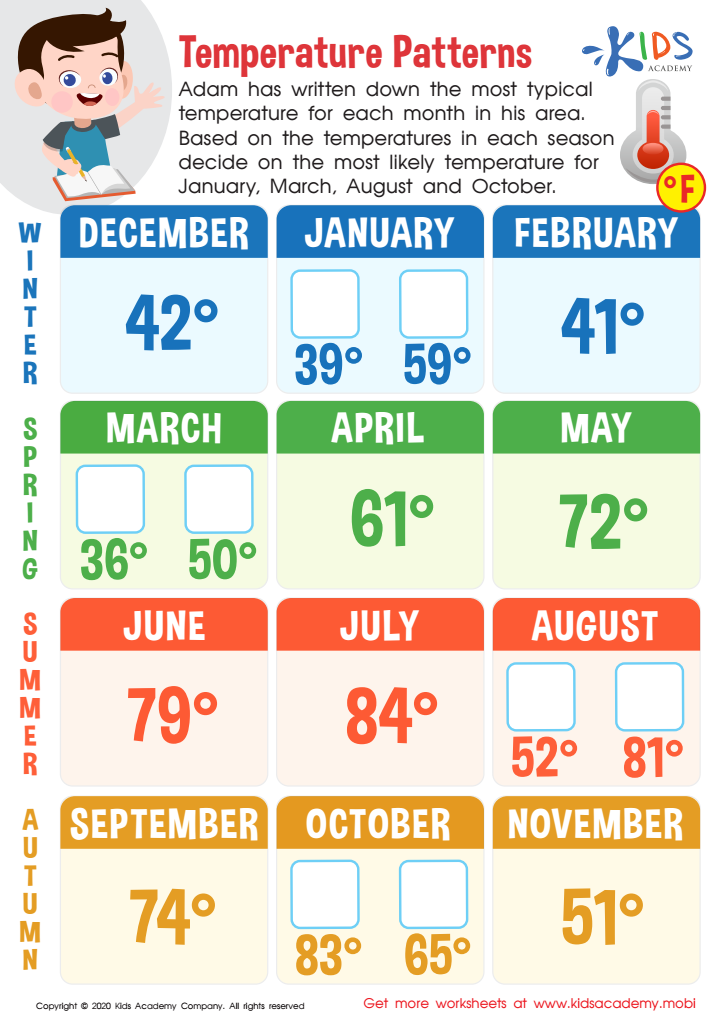
Temperature Patterns Worksheet
 Assign to My Students
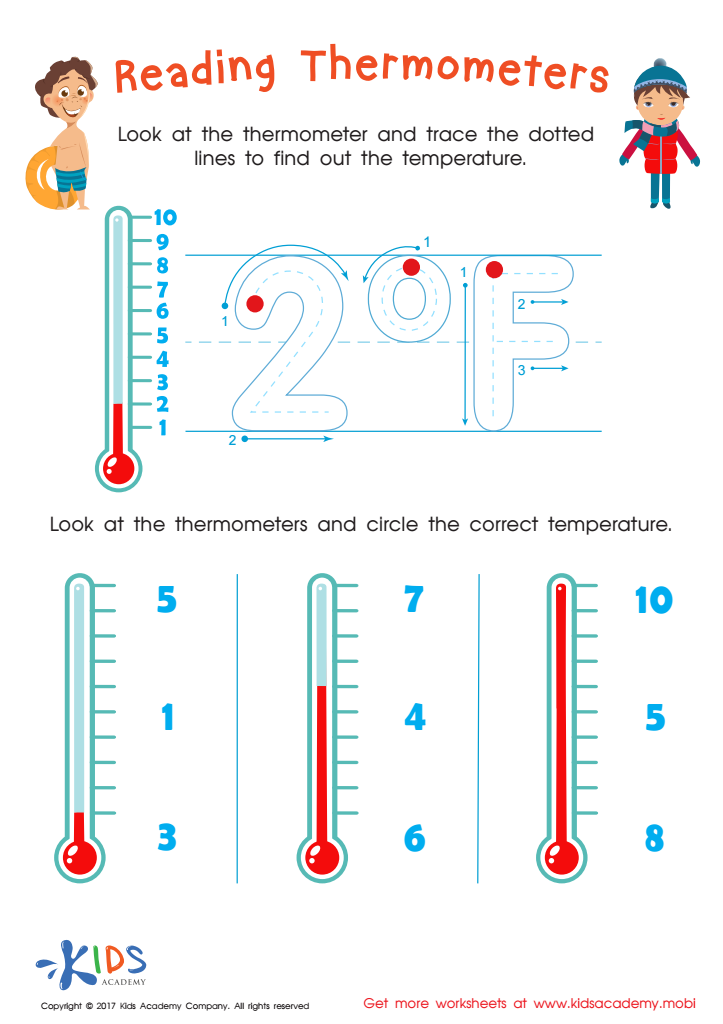
Reading Thermometers Printable
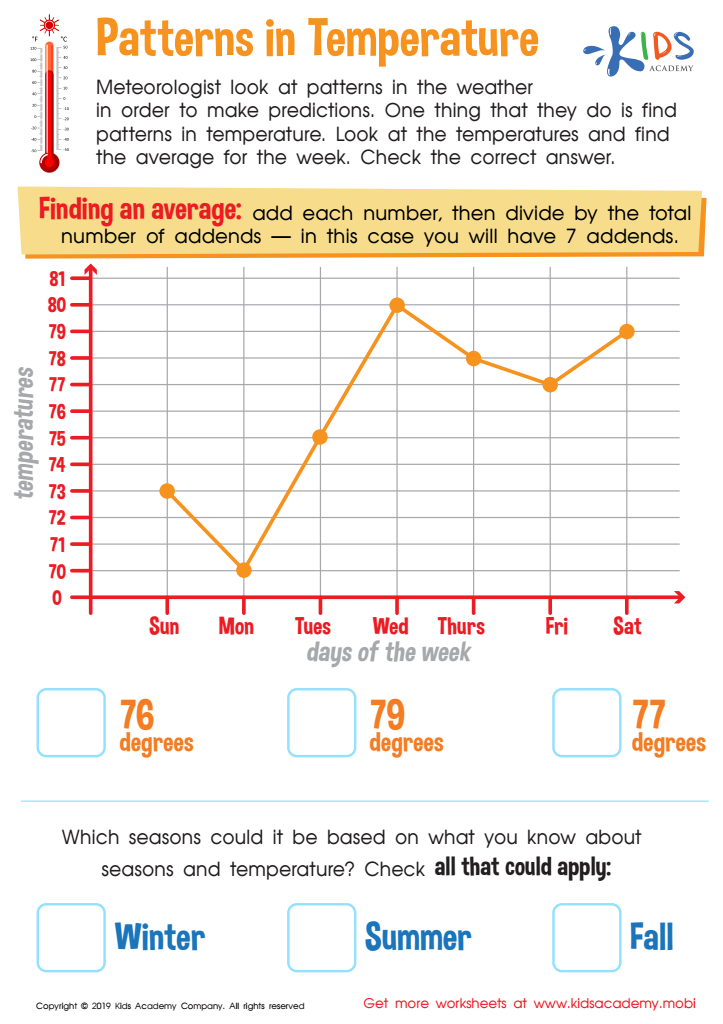
Patterns in Temperature Worksheet






Parents and teachers should care about reading thermometers for children aged 7-9 because it builds foundational scientific skills and promotes understanding of the world around them. At this age, children are naturally curious, and introducing them to concepts like temperature encourages inquiry and exploration. Understanding how to read a thermometer helps children grasp abstract concepts like temperature, measurement, and the properties of heat.
Moreover, reading thermometers can lead to practical applications; for instance, it teaches children about weather patterns and why certain clothing is appropriate for different conditions. This hands-on experience can enhance their observation skills and develop critical thinking as they learn to interpret and analyze data.
Incorporating thermometer reading into lessons also promotes communication and literacy skills, as children may describe their findings or collaborate with peers. Furthermore, engaging with this scientific tool can foster a lifelong interest in science, encouraging children to ask questions and seek answers—a key aspect of personal and academic growth. Ultimately, fostering these skills at a young age nurtures a generation of informed and inquisitive individuals who appreciate the role of science in their daily lives.







