Understanding life cycles Science Worksheets for Ages 7-9
8 filtered results
-
From - To
Unlock young minds' curiosity with our "Understanding Life Cycles" science worksheets designed for ages 7-9. These educational printables guide children through the fascinating stages of different organisms' lifespans, from plants to animals. By engaging in hands-on activities and interactive exercises, kids will develop a deeper comprehension of the biological processes that sustain life. Perfect for classroom use or at-home learning, our worksheets align with educational standards and promote critical thinking skills. Help your child explore the wonders of nature and cultivate a love for science with these informative and fun resources. Download now to start the learning adventure!
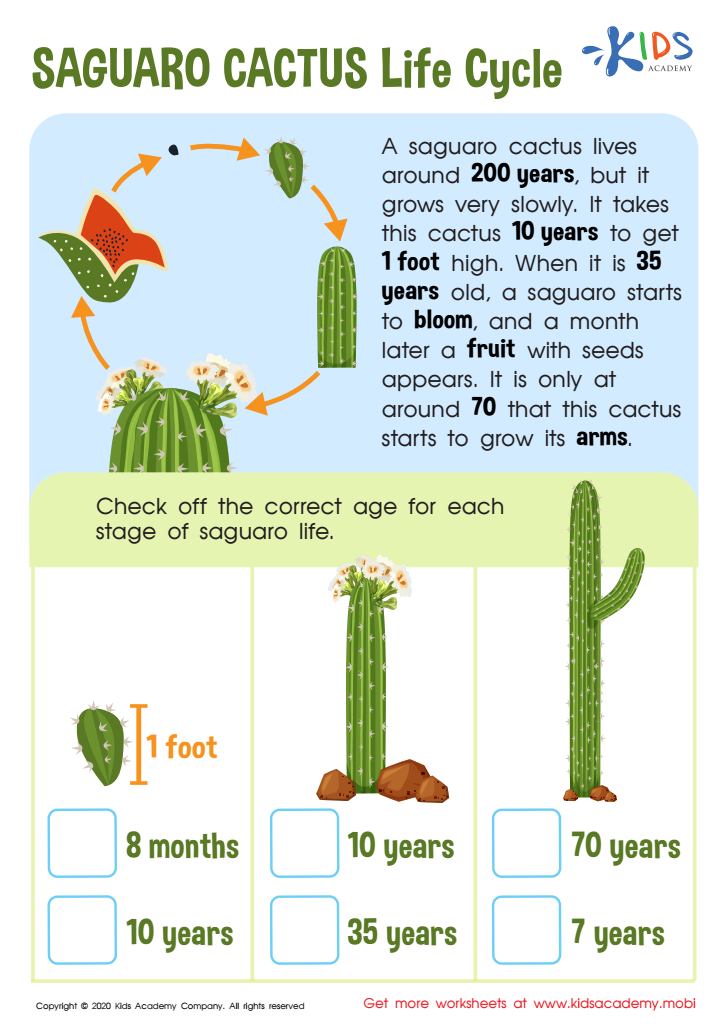
Saguaro Cactus Life Cycle Worksheet
 Assign to My Students
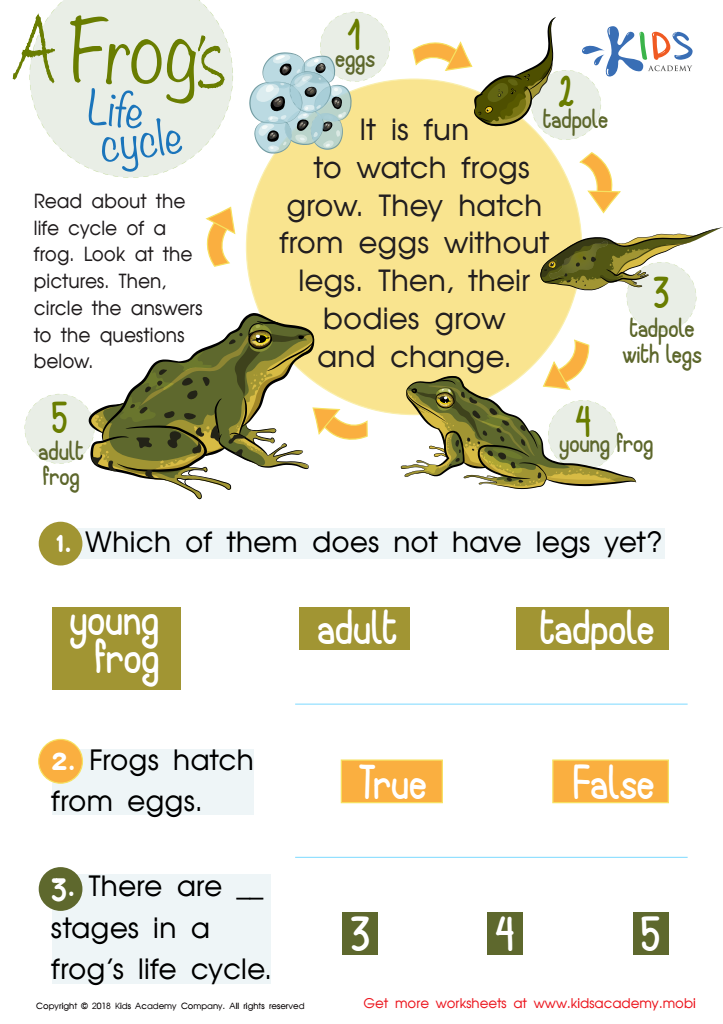
A Frog’s Life Cycle Worksheet
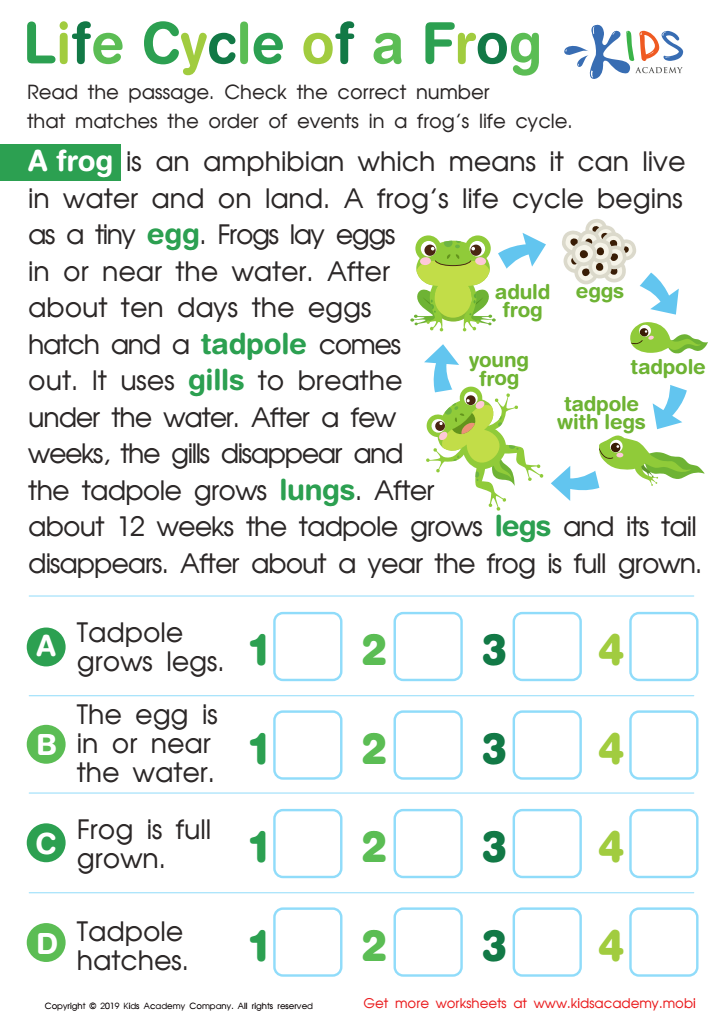
Life Cycle of a Frog Worksheet
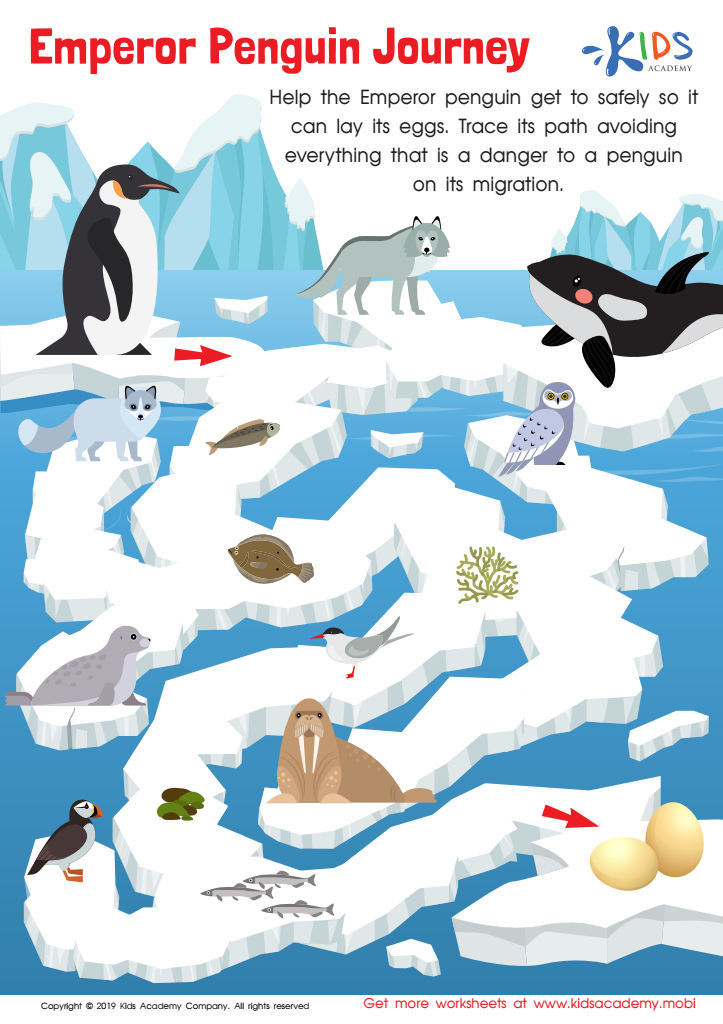
Emperor Penguin Journey Worksheet
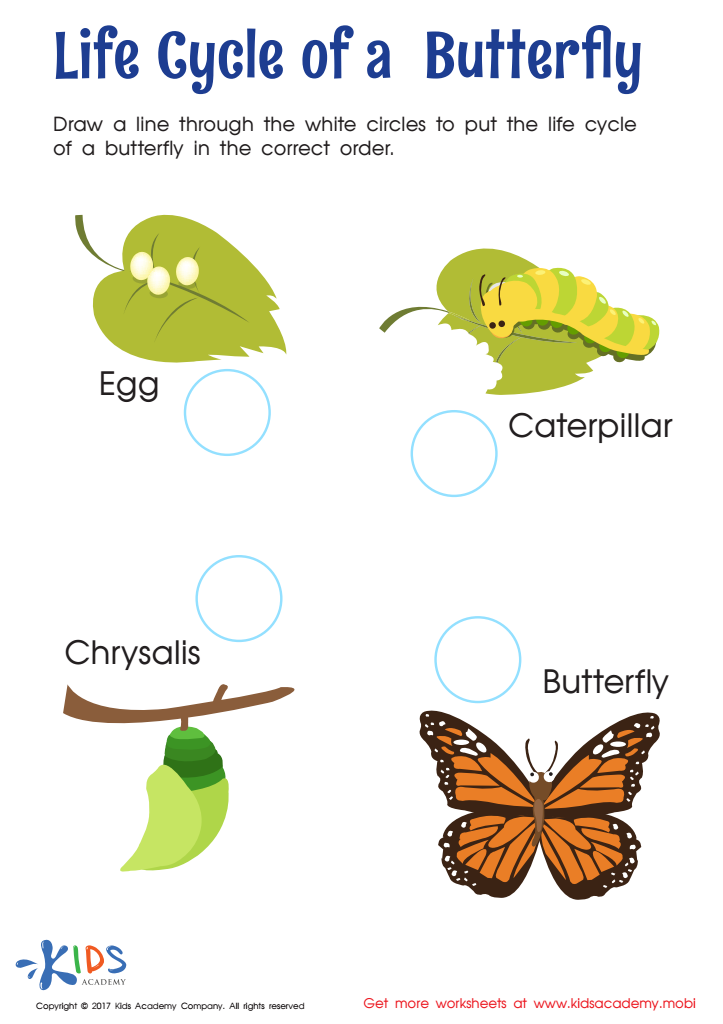
Life Cycle of Butterfly Worksheet
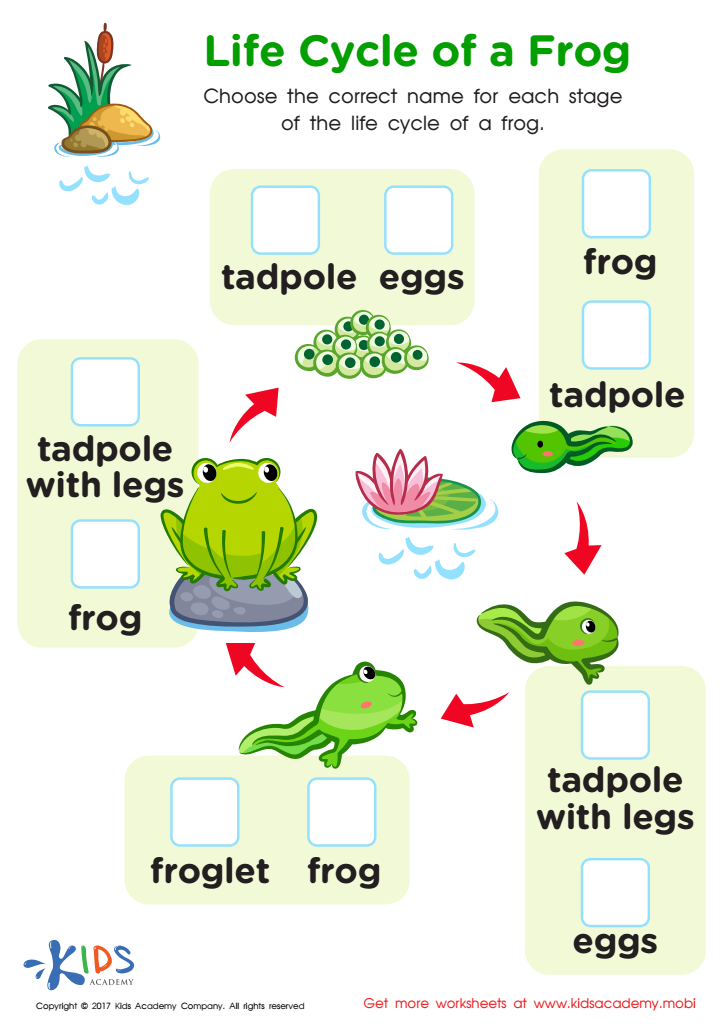
Life Cycle Frog Printable
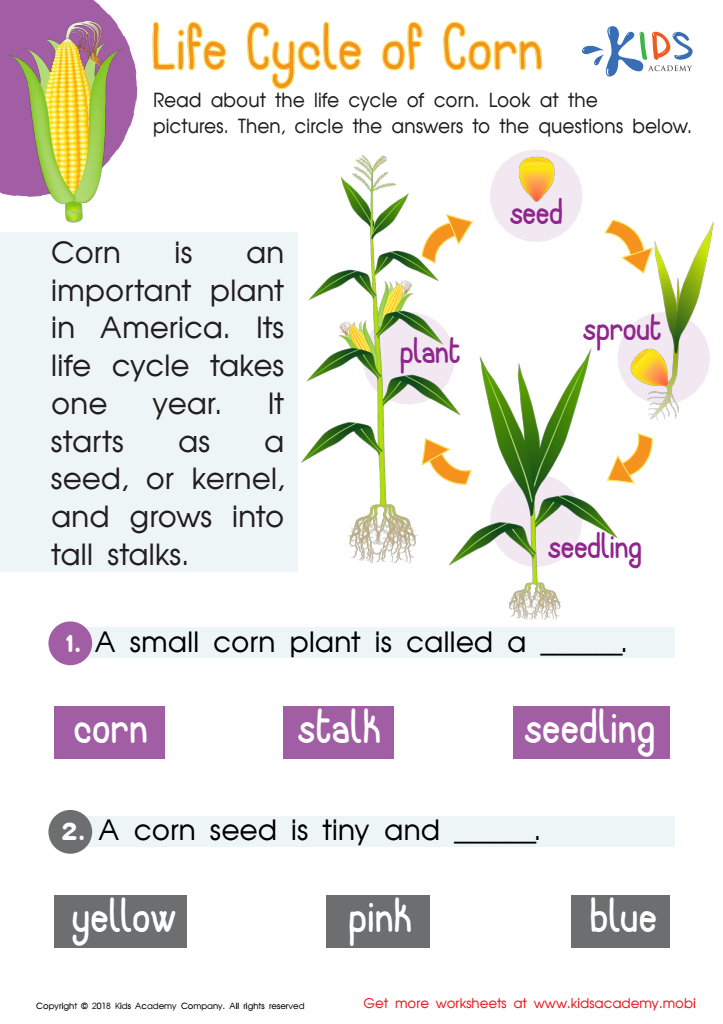
Life Cycle of Corn Worksheet
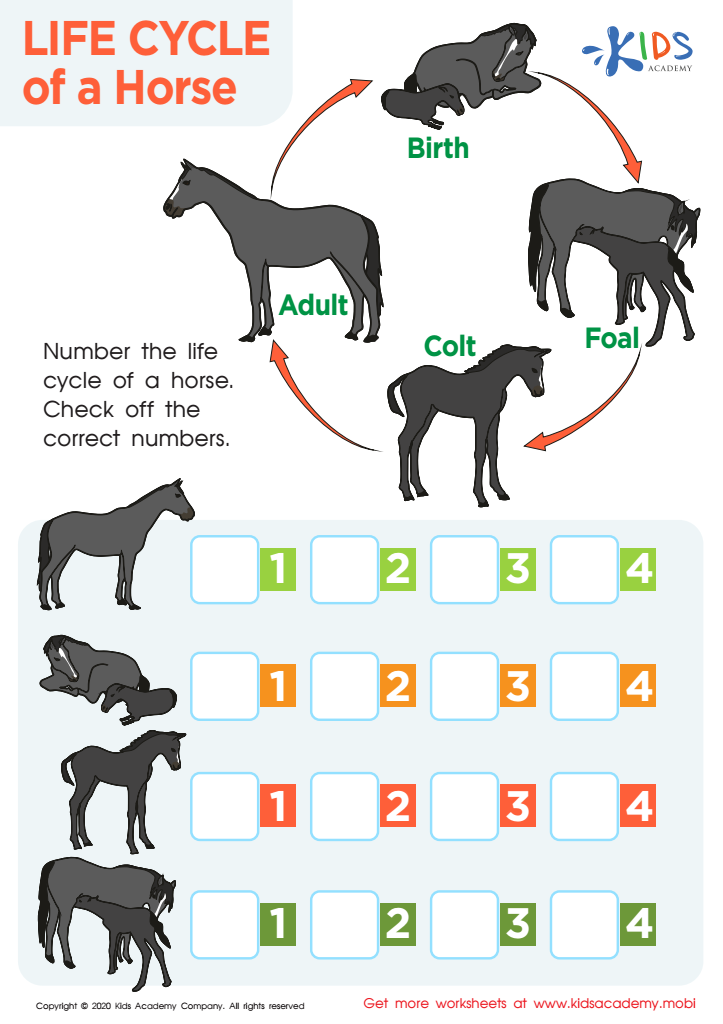
Life Cycle of a Horse Worksheet







Understanding life cycles is fundamental for children aged 7-9 because it lays a foundational understanding of the natural world. At this developmental stage, kids are naturally curious, and exploring life cycles fuels their zest for discovery. Modern education places a strong emphasis on developing critical thinking skills, and grasping life cycles helps nurture these skills by encouraging kids to ask questions, make observations, and draw conclusions.
For parents, this understanding fosters a deeper connection between their child and their environment, promoting empathy and responsibility for other living beings. It encourages outdoor activities such as gardening or even caring for a pet, which are not only educational but also promote bonding and physical activity.
Teachers benefit as well by integrating life cycles into lessons to make scientific concepts tangible and relatable. Such practical knowledge enhances interdisciplinary learning, tying together subjects like math, reading, and social studies—imagine a science project involving the life cycle of a butterfly where kids keep journals, measure growth, and even explore the butterfly's role in Native American folklore.
Moreover, early exposure to life sciences can kindle long-term interest in STEM fields, preparing a future generation that's not just literate in science, but passionate about it. Understanding life cycles thus enriches a child’s educational experience, fostering curiosity, responsibility, and interconnected learning.







