Understanding pollination Science Worksheets for Ages 7-9
3 filtered results
-
From - To
Discover the fascinating world of pollination with our "Understanding Pollination Science Worksheets" designed for children ages 7-9! These engaging worksheets introduce young learners to essential concepts of pollination, including its significance in nature and its role in the food chain. Packed with fun activities, visual illustrations, and thought-provoking questions, these resources aim to enhance comprehension while fostering a love for science. Perfect for classroom use or home learning, these worksheets provide an interactive experience that encourages curiosity about plants, bees, and the environment. Start exploring the mysteries of pollination today and watch your child's scientific knowledge bloom!
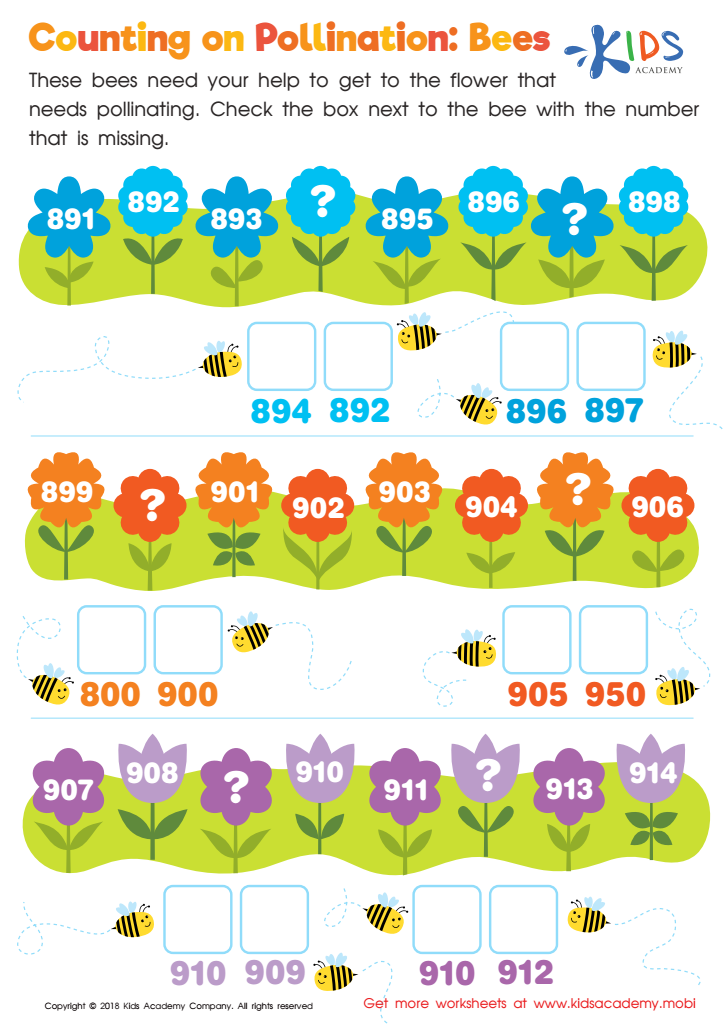
Counting on Pollination: Bees Worksheet
 Assign to My Students
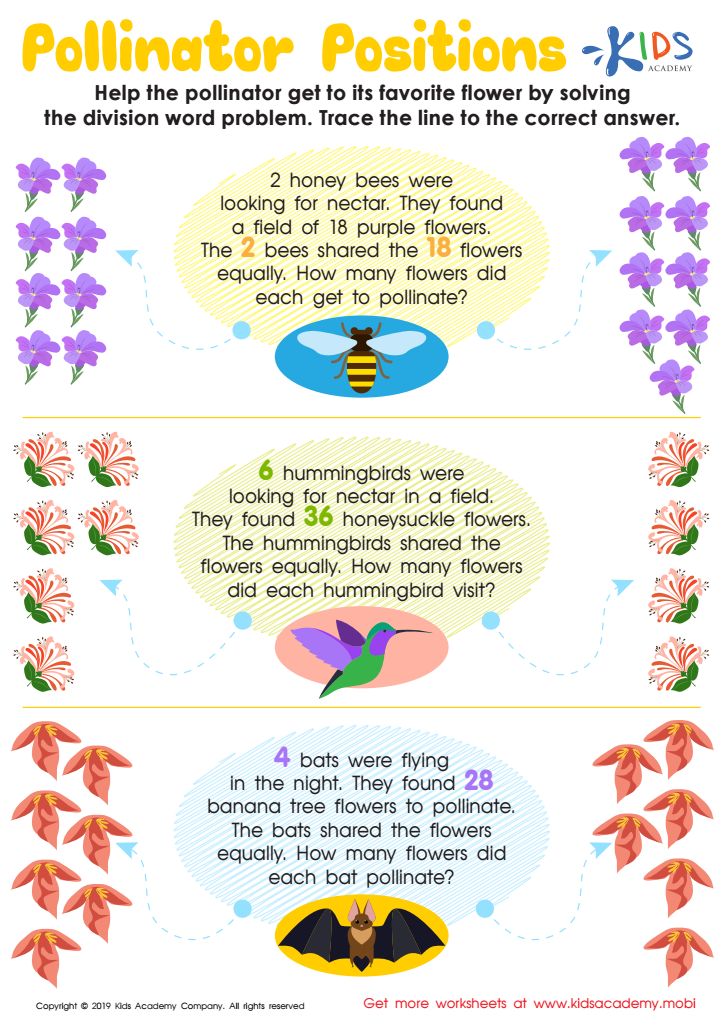
Pollinator Positions Worksheet
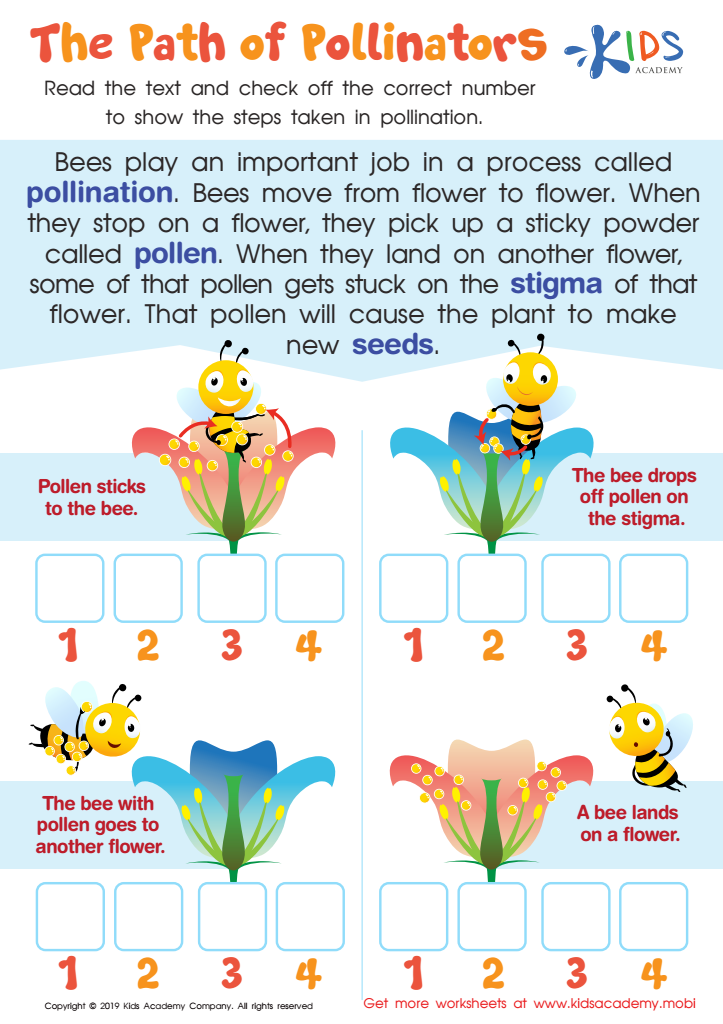
The Path of Pollinators Worksheet






Understanding pollination science is vital for parents and teachers of children aged 7-9, as it lays the groundwork for environmental stewardship and scientific inquiry. At this developmental stage, children are naturally curious about the world around them, and learning about pollination can foster that curiosity. Pollination is a critical process that supports ecosystems, helps plants reproduce, and ultimately contributes to the food we eat.
By exploring pollination, children can grasp key scientific concepts like ecosystems, interdependence, and biodiversity. They learn about the roles of various pollinators—such as bees, butterflies, and birds—and how their decline can impact food production and environmental health. This knowledge can inspire kids to become advocates for the environment, instilling a sense of responsibility to protect pollinators and their habitats.
Additionally, understanding pollination science encourages hands-on learning experiences, such as gardening or observing local wildlife, which enhance critical thinking and observational skills. Teachers and parents can leverage these activities to foster teamwork, creativity, and a lifelong love of learning. Overall, engaging young students in pollination science cultivates informed citizens who appreciate the complexities of nature and are equipped to address environmental challenges in the future.







