Understanding life cycles Life Science Worksheets for Ages 7-9
3 filtered results
-
From - To
Explore the fascinating world of life cycles with our interactive Life Science Worksheets designed specifically for children ages 7-9. These engaging resources provide young learners with a clear understanding of the stages living organisms go through—from birth to adulthood, reproduction, and death. Each worksheet features vibrant illustrations and age-appropriate activities that encourage critical thinking and reinforce key concepts in biology. Perfect for use at home or in the classroom, our worksheets support different learning styles, making science both fun and accessible. Join us in nurturing curiosity about nature and the interconnectedness of life through our comprehensive life cycles curriculum!
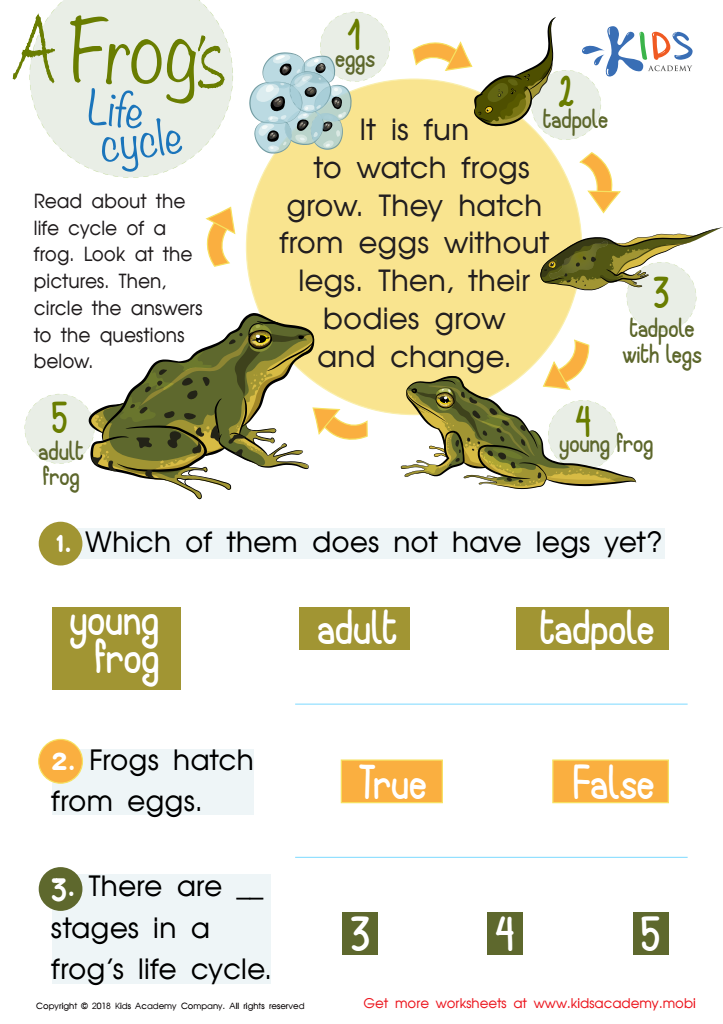
A Frog’s Life Cycle Worksheet
 Assign to My Students
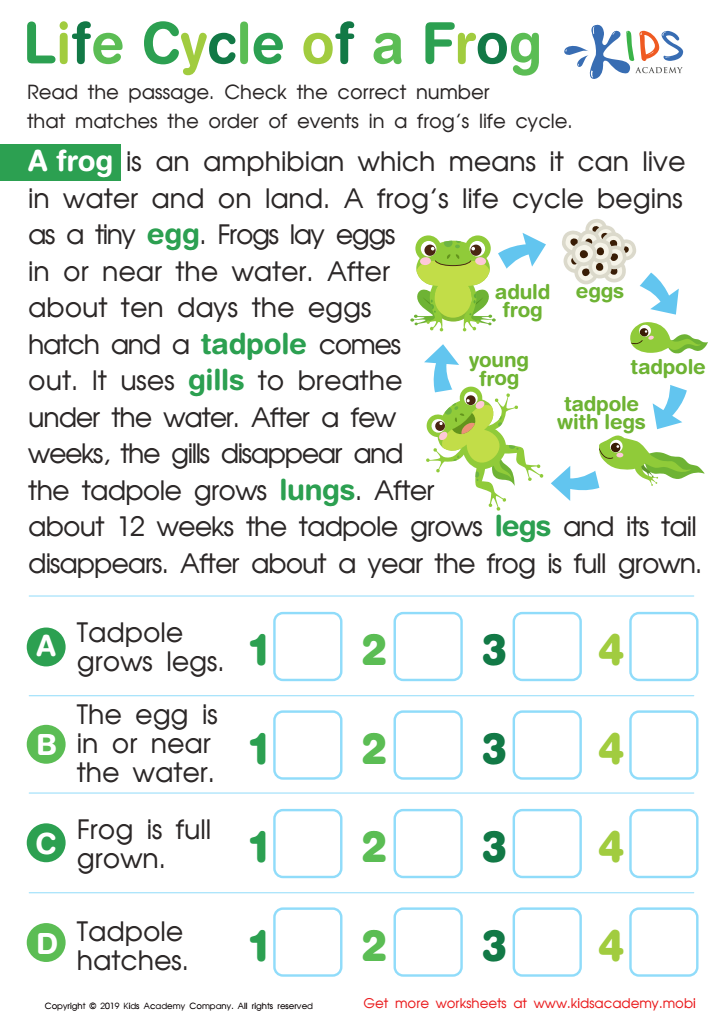
Life Cycle of a Frog Worksheet
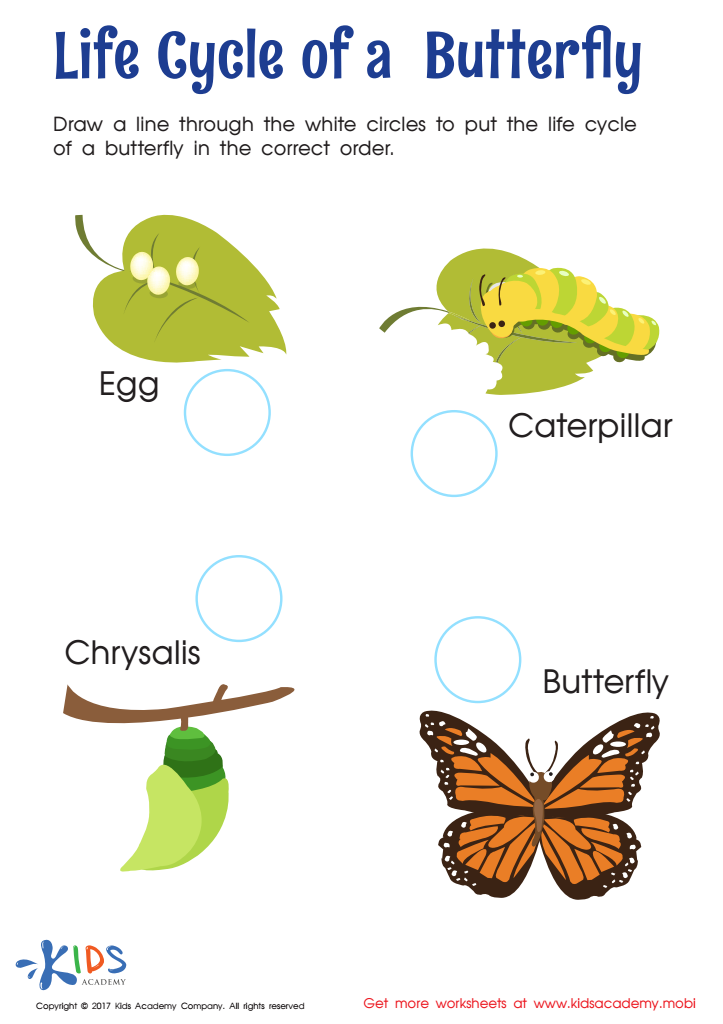
Life Cycle of Butterfly Worksheet






.jpg)

Understanding life cycles is crucial for children aged 7-9 as it lays the foundation for their comprehension of the natural world. At this age, children are naturally curious about the processes of growth and change within plants, animals, and humans. By learning about life cycles, they develop a sense of wonder and respect for living things.
From a pedagogical standpoint, grasping life cycles enhances critical thinking skills as students observe various stages—such as birth, growth, reproduction, and death. This knowledge fosters environmental awareness, encouraging kids to appreciate ecosystems and their interdependencies. In addition, understanding life cycles highlights concepts such as conservation and biodiversity, essential topics in today's world.
For parents, introducing life cycles provides an opportunity for engaging conversations and hands-on experiences, such as gardening or observing local wildlife. These interactions can strengthen familial bonds while promoting curiosity and inquiry.
Moreover, integrating life science into education supports curriculum standards and prepares children for advanced scientific topics in the future. Ultimately, teaching children about life cycles enriches their education, instills a sense of responsibility towards the environment, and nurtures a lifelong passion for science.








