
Vocabulary development Plants and Animals Worksheets for Ages 7-9
3 filtered results
Difficulty Level
Grade
Age
-
From - To
Subject
Activity
Standards
Boost your child's vocabulary and love for science with our "Vocabulary Development: Plants and Animals Worksheets for Ages 7-9." These engaging worksheets are designed to expand young learners' knowledge of plant and animal life while enhancing their language skills. Through interactive activities including matching, crosswords, and guided reading, children will explore essential terms and concepts about the natural world around them. Perfect for both classroom and home environments, our worksheets provide an enjoyable pathway to learning, ensuring a solid foundation in both science and vocabulary development. Help your child grow academic confidence and curiosity with these expertly crafted resources.
Favorites
With answer key
Interactive
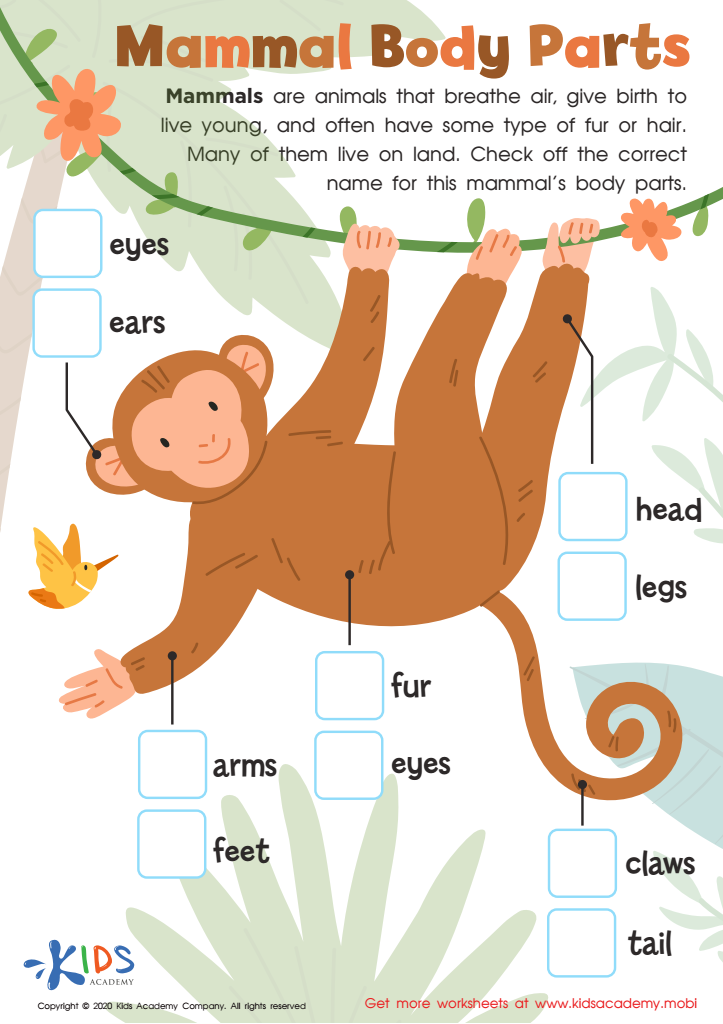
Mammal Body Parts Worksheet
Help your little scientist identify a mammal's body parts with this cute and colorful worksheet. It includes fur, arms, legs, tails, and more! Read the passage to learn what makes an animal a mammal, then have them check off the boxes to identify parts of the monkey. It's a fun way to learn about animals in the animal kingdom!
 Assign to My Students
Mammal Body Parts Worksheet
Worksheet











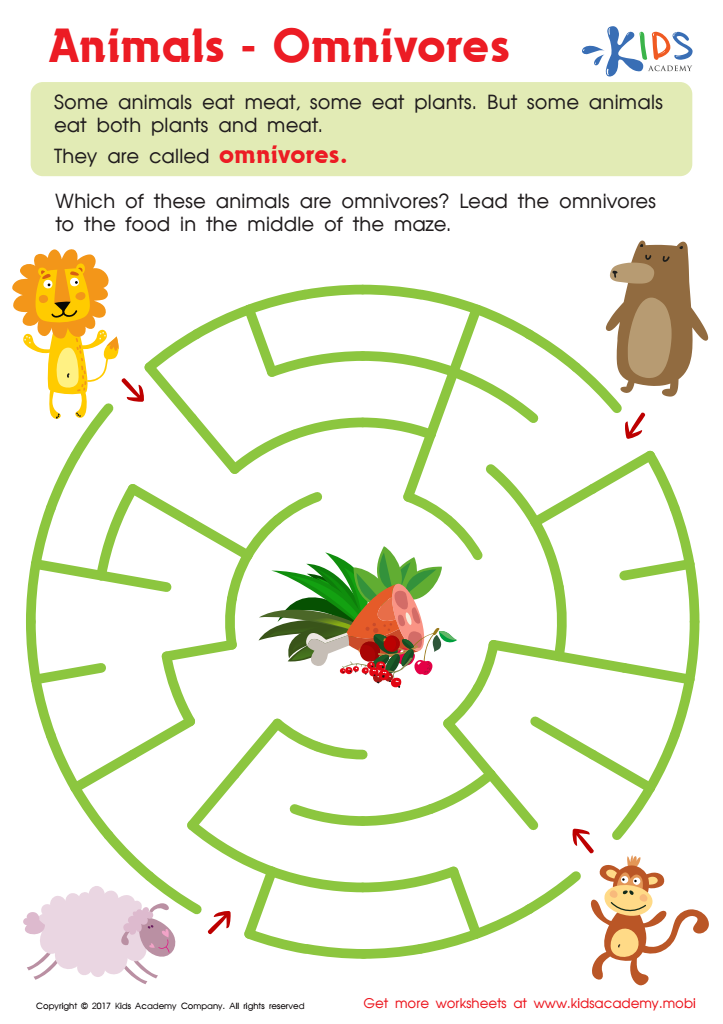
Omnivores Animals Worksheet
Kids can explore omnivores animals with this worksheet! It presents herbivores, carnivores and omnivores, with the main activity being a maze. Kids must guide a bear through it to get to its food. See how much they know about omnivores!
Omnivores Animals Worksheet
Worksheet
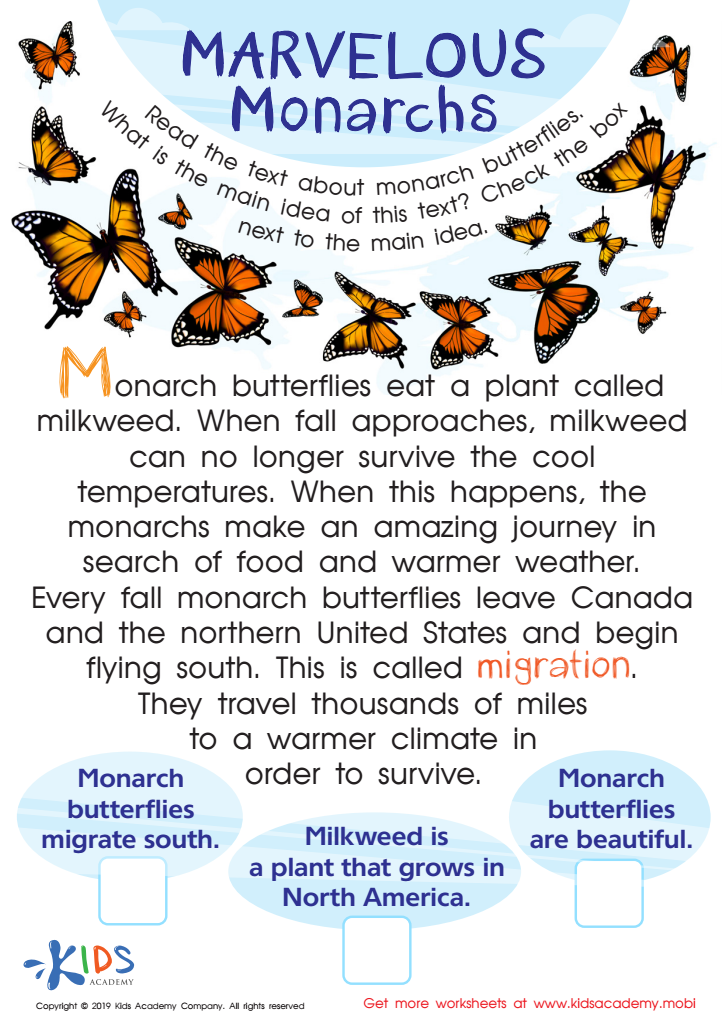
Marvelous Monarchs Worksheet
Help your kids have fun while reading - start with small words and short sentences. This worksheet can test your kids' reading and comprehension skills. Ask them to read the text about Monarch butterflies and help them locate the main idea.
Marvelous Monarchs Worksheet
Worksheet
Join Kids Academy for Free
Who is primarily going to use this learning content?








Vocabulary development in the context of plants and animals for children ages 7-9 is crucial because it lays the foundation for academic success and enhanced communication skills. At this developmental stage, children are naturally curious and eager to explore the world around them. Introducing them to the diverse vocabulary of plants and animals helps satiate this curiosity and fosters a love for learning about the natural world.
First, a robust vocabulary aids in reading comprehension. When children understand more specific terms like "photosynthesis" or "nocturnal," they can grasp the concepts more thoroughly and become better readers. Additionally, the ability to name plants and animals allows children to categorize and retain information systematically, improving their cognitive abilities and content retention.
Second, vocabulary development boosts communication skills. With an expanded vocabulary, children can express their thoughts and observations more clearly and accurately, leading to richer interactions with peers and adults. This heightened ability for expression also aids in critical thinking and problem-solving, as precise language allows for fuller articulation of ideas and questions.
Finally, understanding plant and animal vocabulary encourages environmental awareness and responsibility. Knowing specific terms about different species and ecosystems can inspire respect and stewardship for nature, promoting informed and conscious behavior towards our planet. Therefore, fostering vocabulary in this area benefits not only academic and cognitive skills but also personal and social development.








