Understanding citizenship Social Studies Worksheets for Ages 7-9
3 filtered results
-
From - To
Explore our "Understanding Citizenship" Social Studies Worksheets designed specifically for ages 7-9. These engaging and informative worksheets help young learners grasp the concept of citizenship, including responsibilities, rights, and the importance of being an active community member. Through age-appropriate activities and colorful visuals, children will develop critical thinking skills and a sense of belonging. Our worksheets promote discussions on civic duties and encourage them to reflect on how they can contribute positively to society. Ideal for classroom use or homework, these resources make learning about citizenship fun and impactful. Start nurturing informed, responsible citizens today!
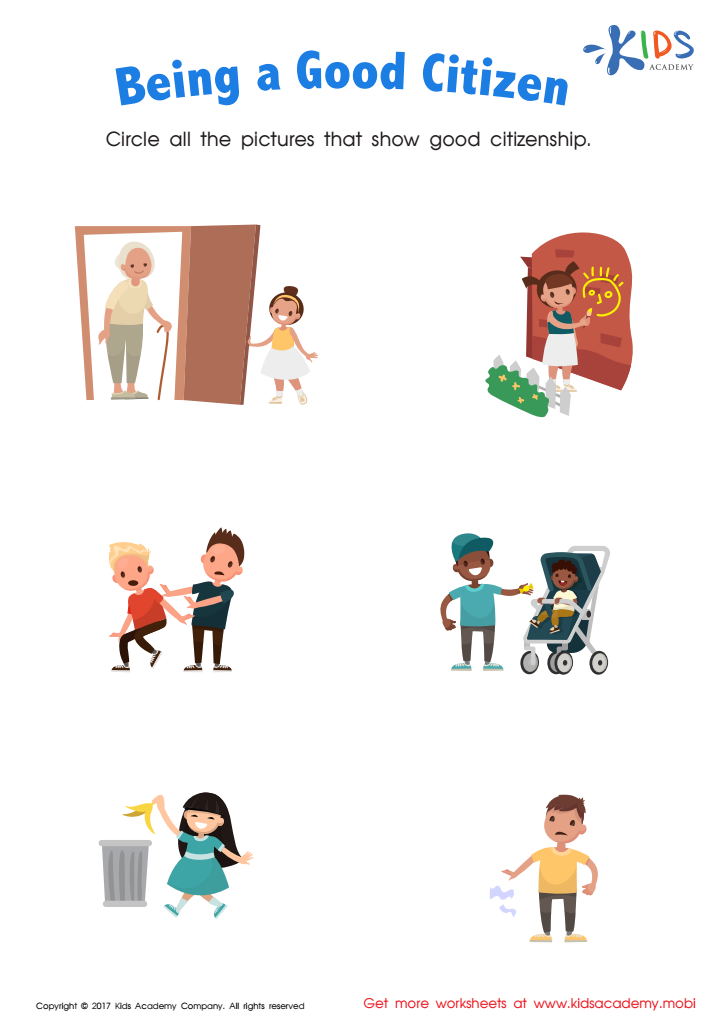
Being a Good Citizen Printable
 Assign to My Students
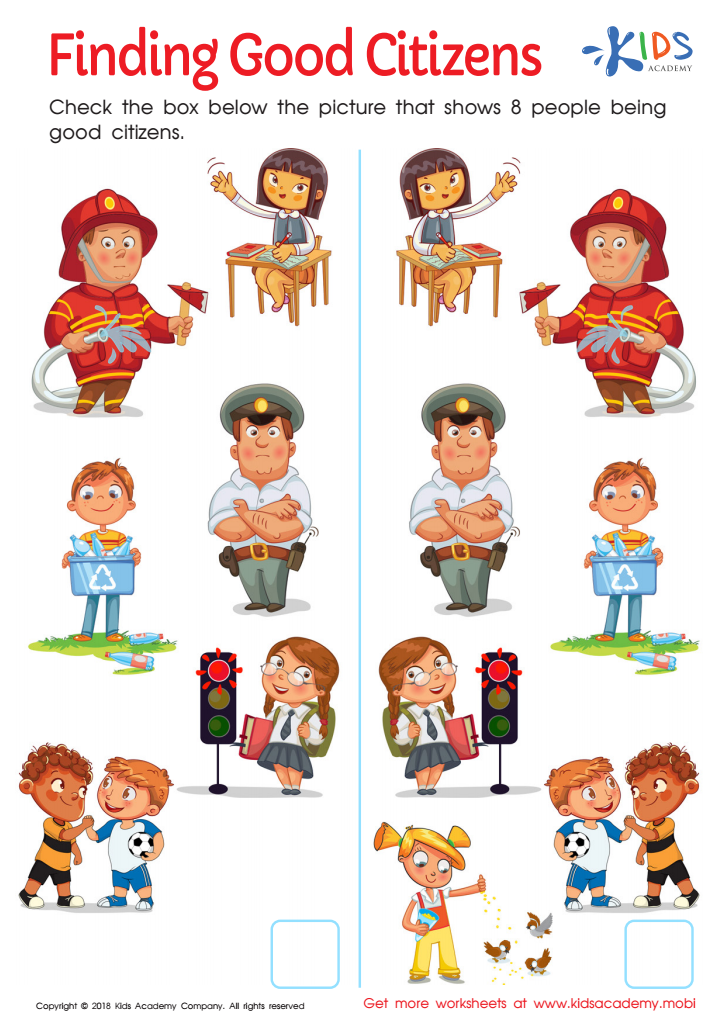
Finding Good Citizens Worksheet
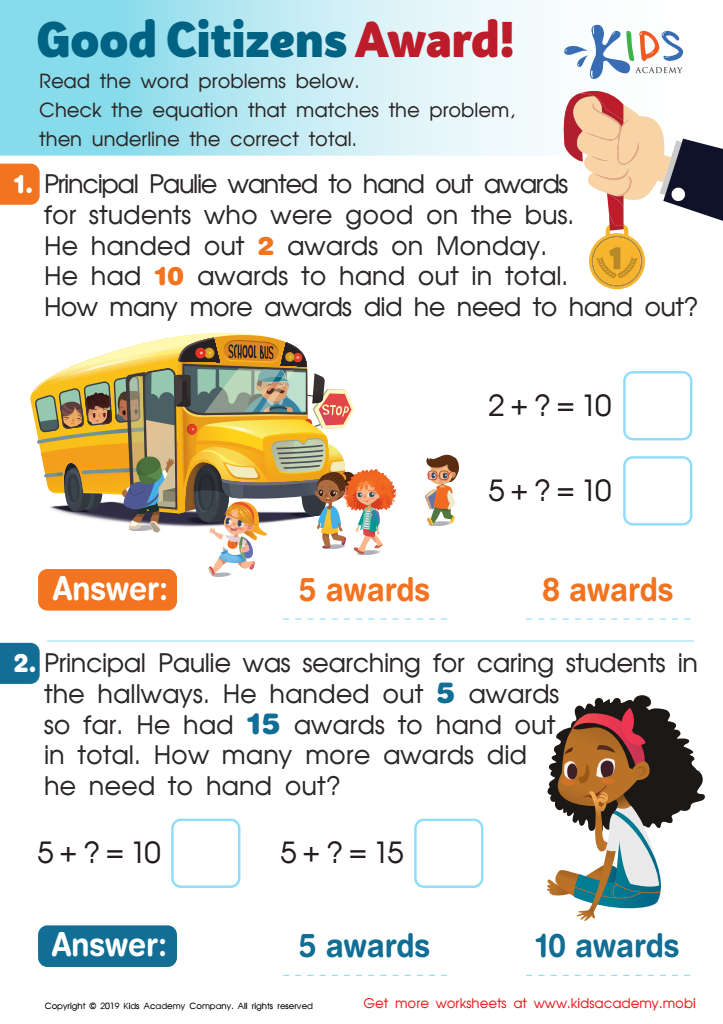
Good Citizens Award! Worksheet








Understanding citizenship through social studies is crucial for children aged 7-9, as it lays the foundation for responsible and engaged citizenship in their future. At this developmental stage, children are beginning to form their identities and understand their roles within their families, schools, and communities. Teaching them about citizenship helps cultivate values such as respect, empathy, and fairness, which are essential for positive social interactions.
When parents and teachers prioritize citizenship education, they empower children to recognize their rights and responsibilities as community members. This understanding fosters a sense of belonging and encourages children to participate actively in their communities, whether through volunteering, becoming informed voters, or advocating for social issues.
Moreover, social studies make connections between personal experiences and larger societal contexts. Children learn about diverse cultures, traditions, and social systems, promoting tolerance and appreciation for differences. In a world that is becoming increasingly interconnected, early lessons in citizenship help children navigate challenges such as prejudice and social inequality.
Ultimately, understanding citizenship equips young learners with essential skills to think critically, engage in meaningful conversations, and contribute positively to society, creating a more informed and compassionate future generation. Parents and teachers are vital in guiding this impactful learning journey.