Understanding patterns Social Studies Worksheets for Ages 7-9
4 filtered results
-
From - To
Explore our comprehensive "Understanding Patterns" Social Studies worksheets designed for children ages 7-9! These engaging, printable resources help young learners recognize and analyze patterns in their social world. Our carefully crafted worksheets cover various topics, including cultural traditions, historical events, and geographical similarities, encouraging students to observe and make connections. With a mix of visual aids, thought-provoking questions, and hands-on activities, students develop critical thinking skills while building their understanding of how patterns shape societies. Perfect for homeschooling or classroom use, these worksheets foster curiosity and enhance children’s ability to identify and understand the recurring elements in their everyday lives.
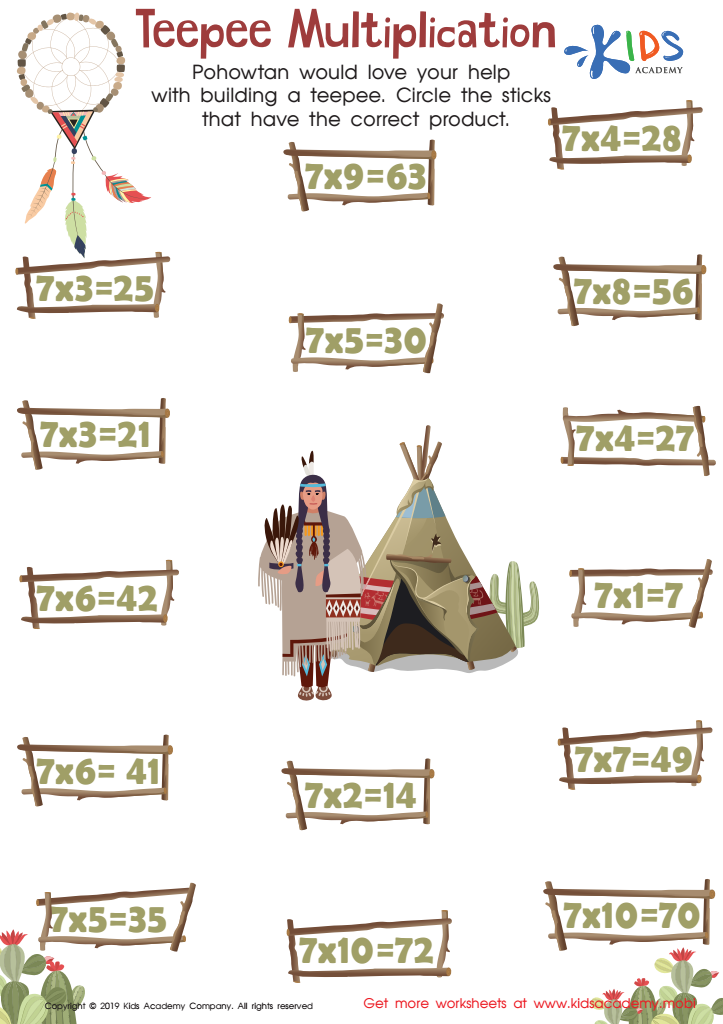
Teepee Multiplication Worksheet
 Assign to My Students
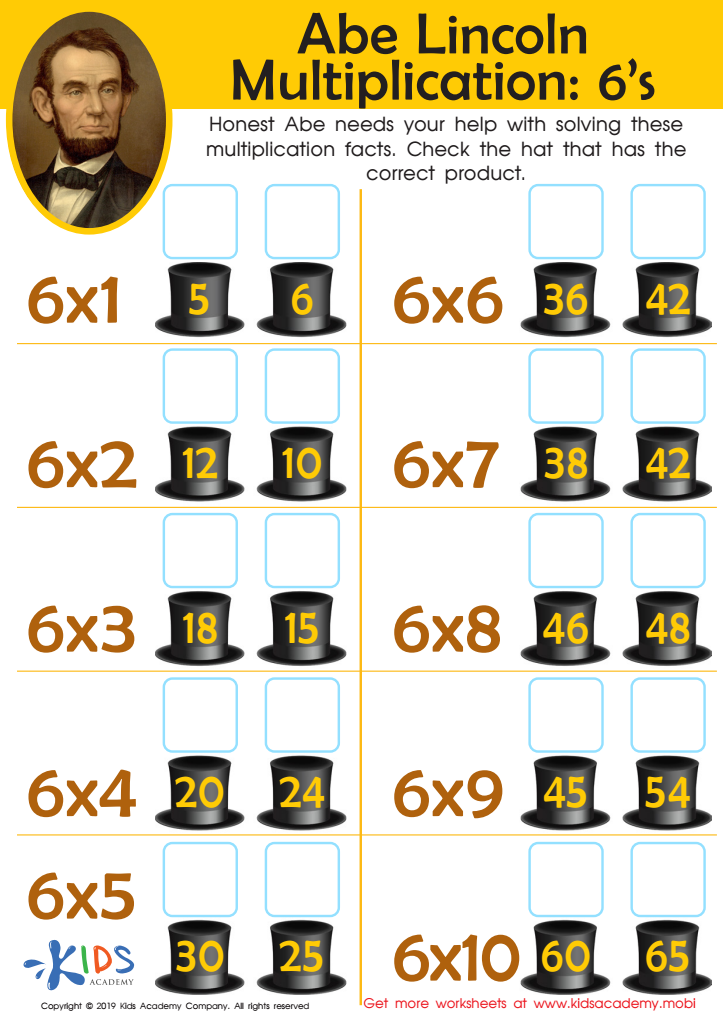
Abe Lincoln Multiplication: 6’s Worksheet
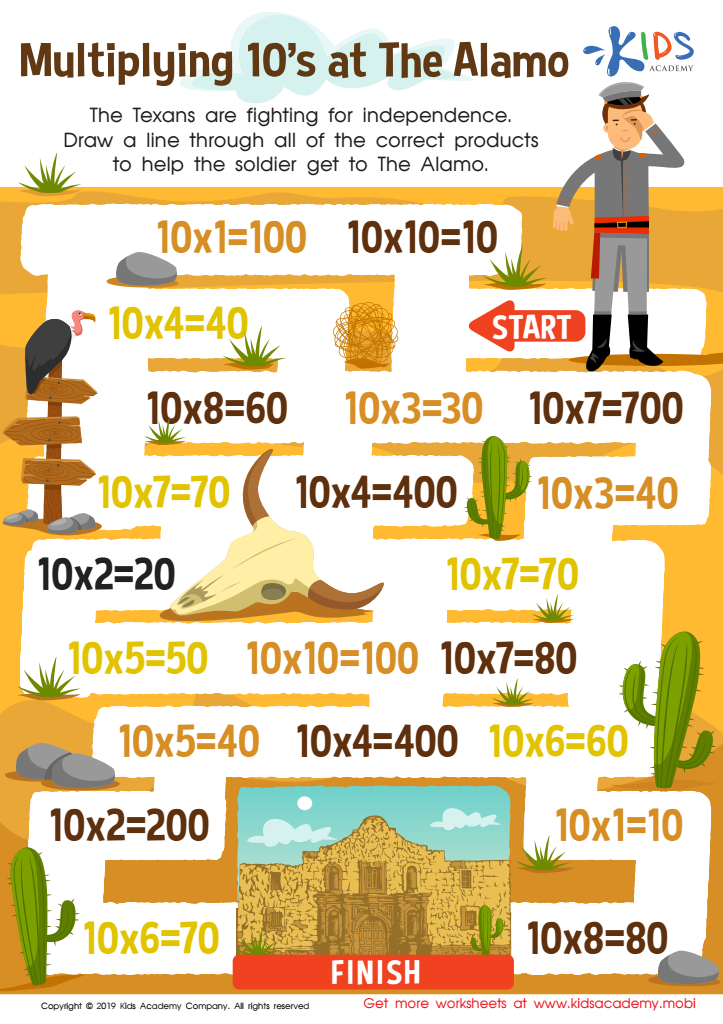
Multiplying 10’s at The Alamo Worksheet
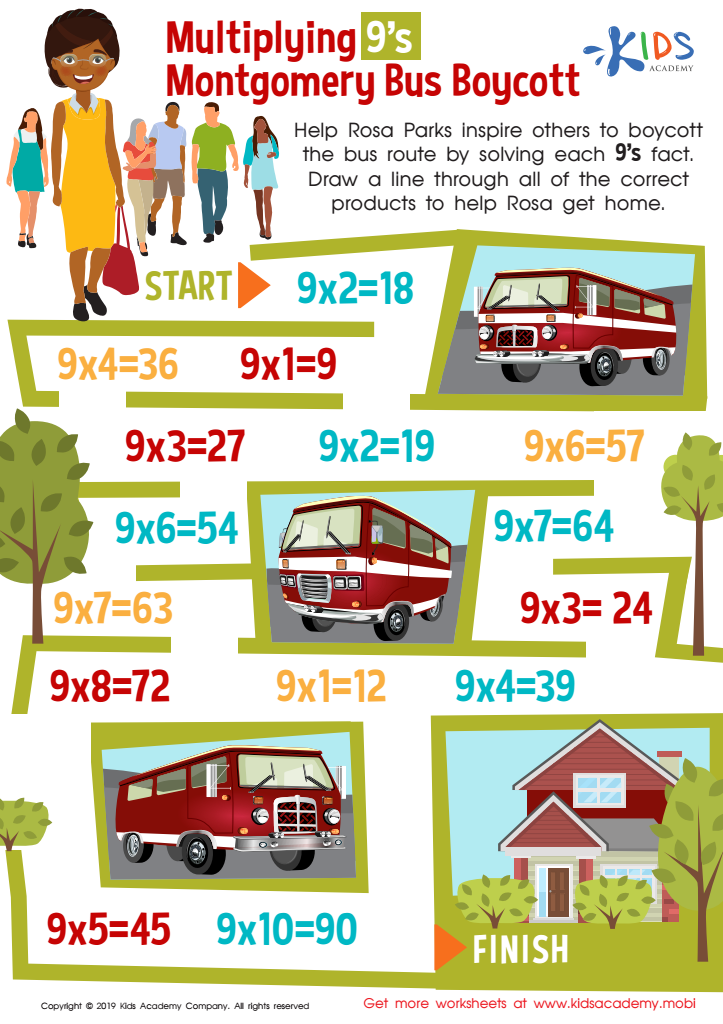
Multiplying 9’s Montgomery Bus Boycott Worksheet







Understanding patterns in Social Studies is crucial for children aged 7-9 as it lays the foundation for their critical thinking and analytical skills. This age group is at a formative stage where they begin to connect information from various sources, making pattern recognition essential for grasping complex concepts.
Firstly, identifying patterns helps students notice relationships in history, geography, and current events, fostering a better comprehension of society's evolution and cultural diversity. For instance, recognizing patterns in migration, trade, or cultural exchanges aids in understanding broader societal dynamics.
Moreover, pattern recognition cultivates problem-solving skills. When children identify trends—like the causes and effects of historical events—they learn to make informed predictions and decisions. This analytical approach fosters curiosity about the world, encouraging lifelong learning.
By integrating pattern understanding into Social Studies curricula, parents and teachers empower kids to ask questions and engage critically with their world. This skill set not only enhances academic performance but also develops informed, engaged citizens capable of contributing thoughtfully to society. In a rapidly changing world, nurturing these abilities is vital for children to adapt and thrive in the complexities they will inevitably face.








