Adjective identification Writing Worksheets for Ages 7-9
3 filtered results
-
From - To
Enhance your child's writing skills with our Adjective Identification Writing Worksheets designed for ages 7-9. These engaging worksheets help young learners identify and use descriptive words effectively, enriching their vocabulary and making their writing more vivid. With a variety of exercises tailored to this age group, kids will have fun while mastering the art of spotting and applying adjectives in sentences. Each worksheet is crafted by educational experts to support classroom learning and develop critical language skills. Perfect for homework or additional practice, these worksheets provide a solid foundation for your child's writing journey.
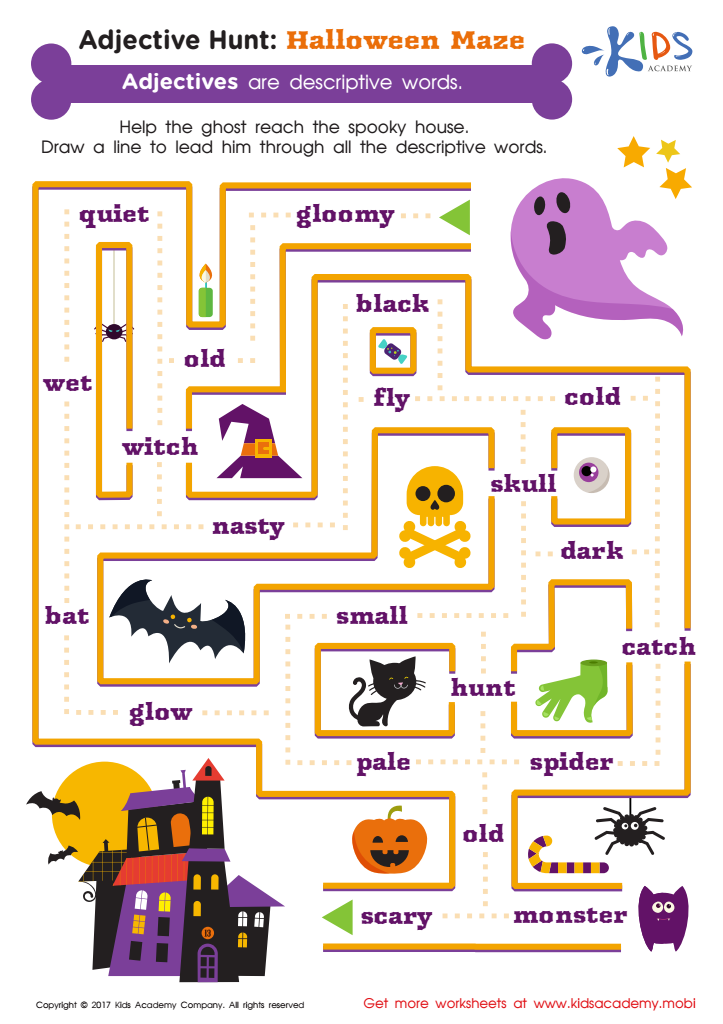
Adjective Hunt Printable
 Assign to My Students
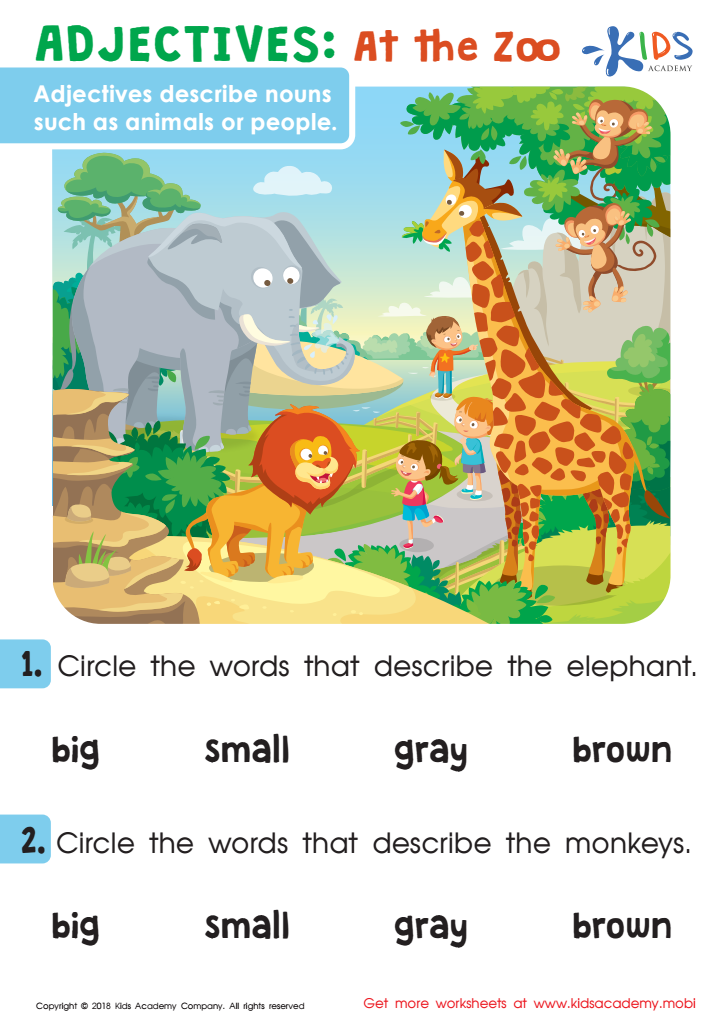
Adjectives: At The Zoo Worksheet
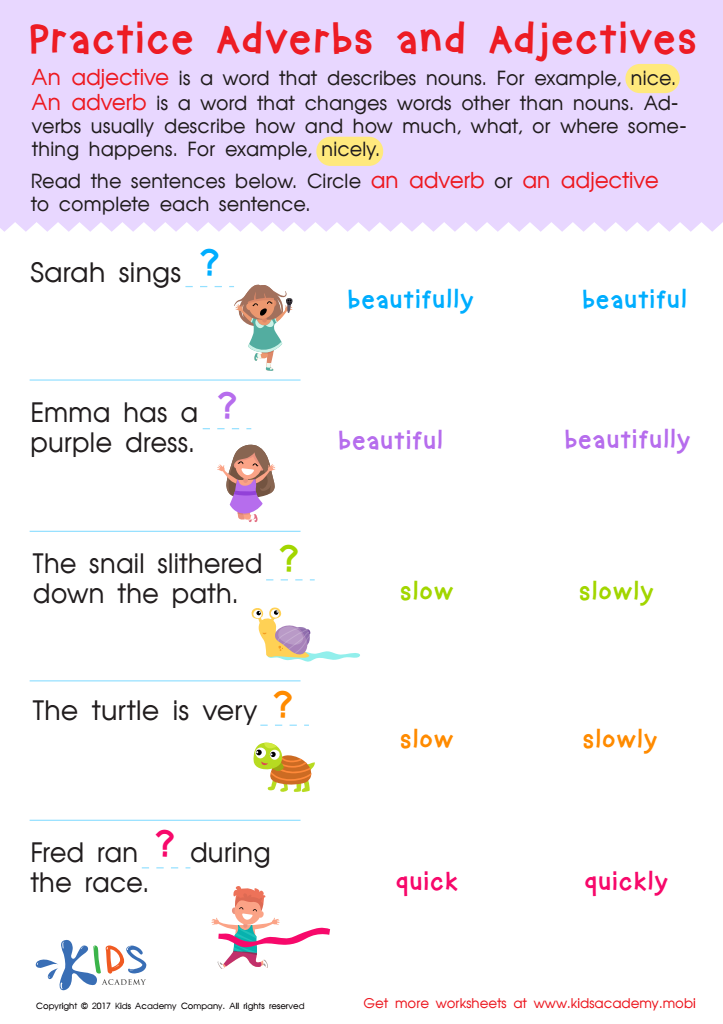
Adverbs and Adjectives Worksheet








Adjective identification and usage are critical components of early writing development for children aged 7-9 because they enhance descriptive skills, language proficiency, and cognitive growth. At this age, children transition from basic sentence construction to more advanced, expressive writing. Knowing how to identify and use adjectives allows young writers to add detail and depth to their narratives, making their writing more vivid and engaging.
When parents and teachers emphasize adjective identification, they nurture a child's ability to observe and articulate their world more precisely. Such descriptive writing fosters better communication skills, enabling children to express emotions, settings, and experiences more accurately. For example, saying "the fluffy, brown dog" creates a clearer, more detailed mental image than just "the dog."
Furthermore, incorporating adjectives can boost vocabulary development, encouraging children to explore and use new words. This enriched vocabulary is linked to improved reading comprehension and overall academic performance.
Adjective-focused exercises also stimulate cognitive skills, such as categorization and critical thinking. Identifying qualities and attributes of people, places, or things builds analytical far beyond linguistics, engendering a sense of curiosity and observational acuity in young learners.
In summary, integrating adjective identification into writing instruction for children aged 7-9 lays a robust linguistic foundation, enhancing their expressive capabilities and cognitive skills, fostering academic growth and effective communication.








