
Develop counting skills Addition & Subtraction Worksheets for 7-Year-Olds
5 filtered results
Difficulty Level
Grade
Age
-
From - To
Subject
Activity
Standards
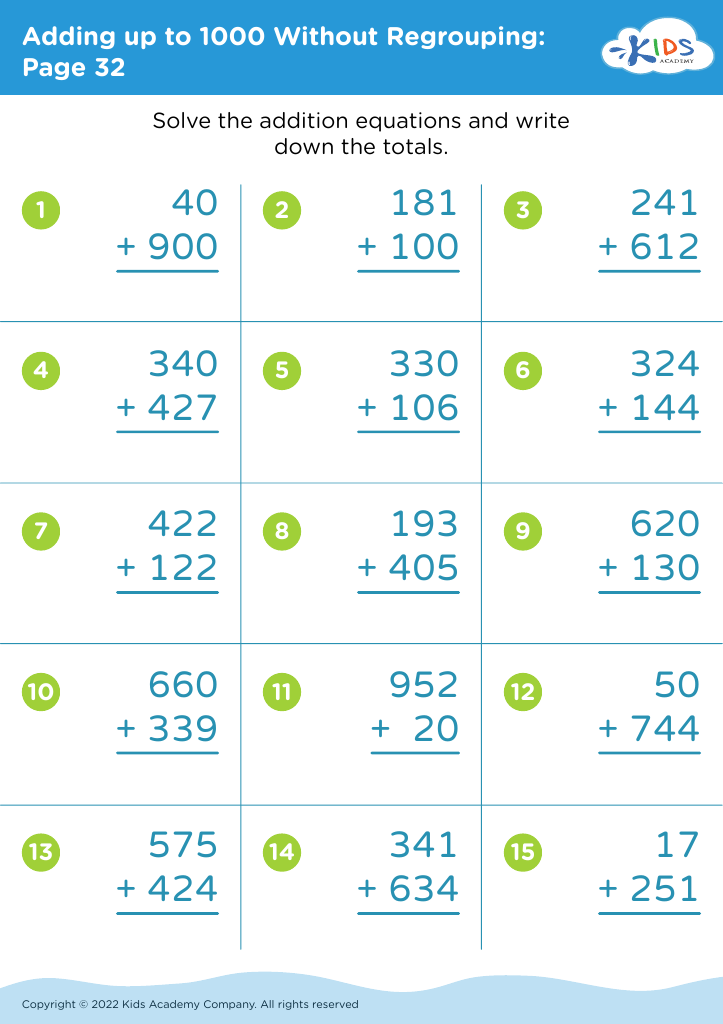
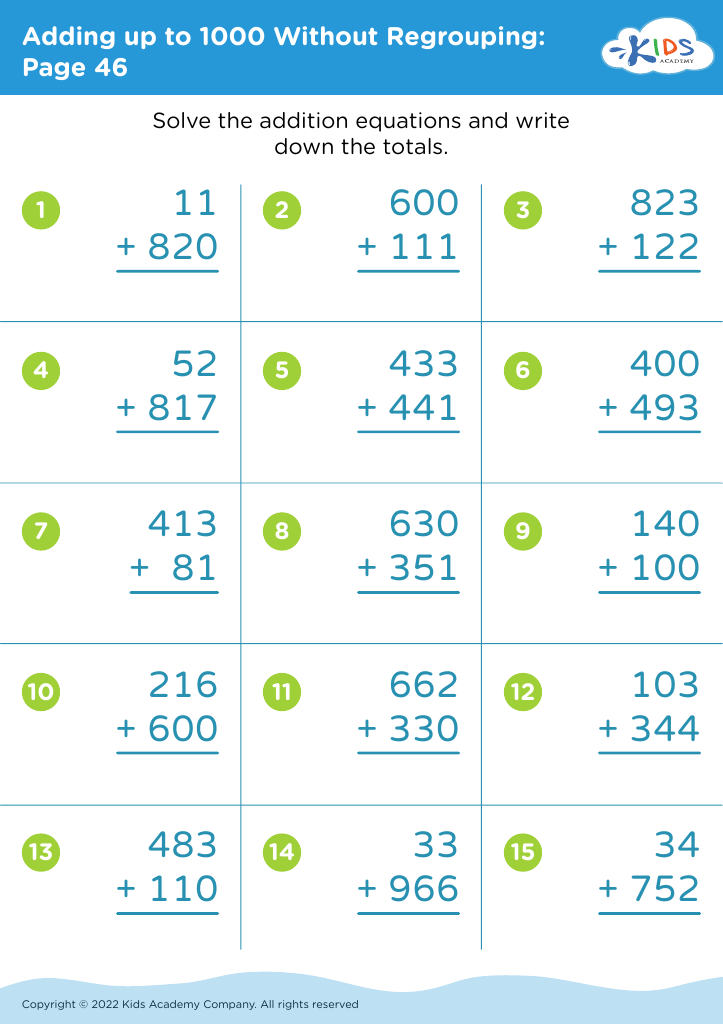
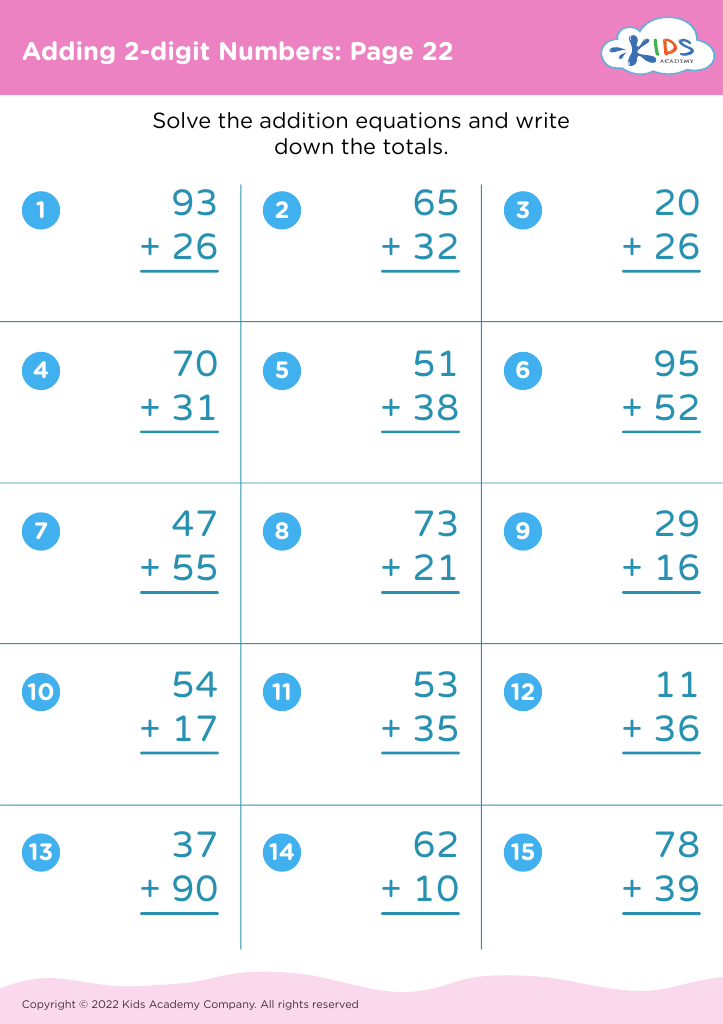
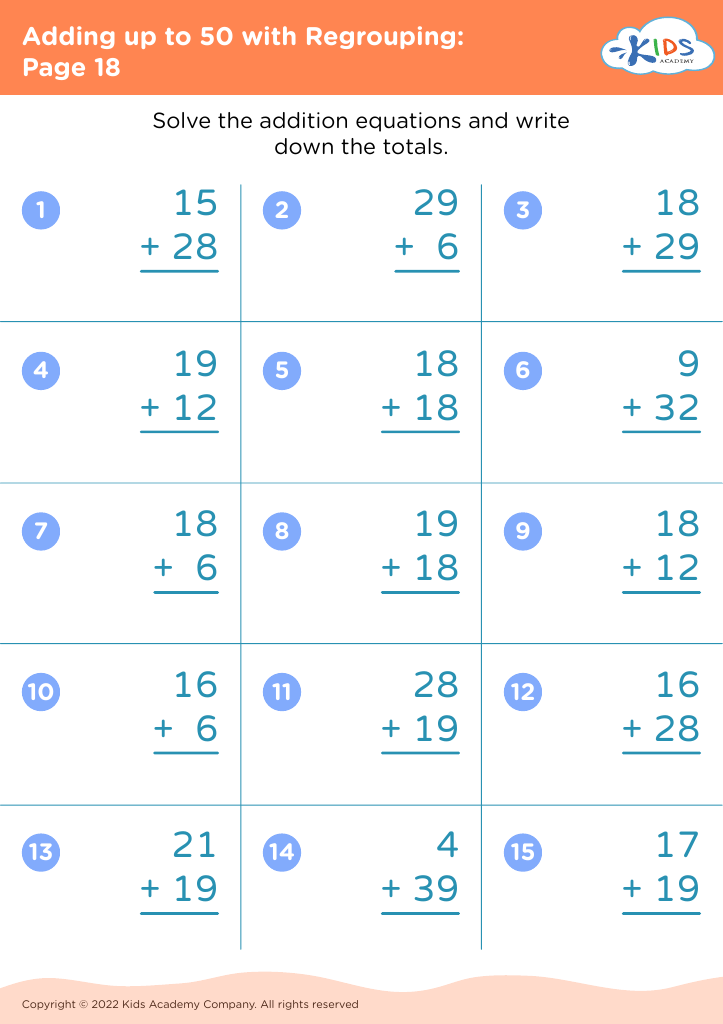
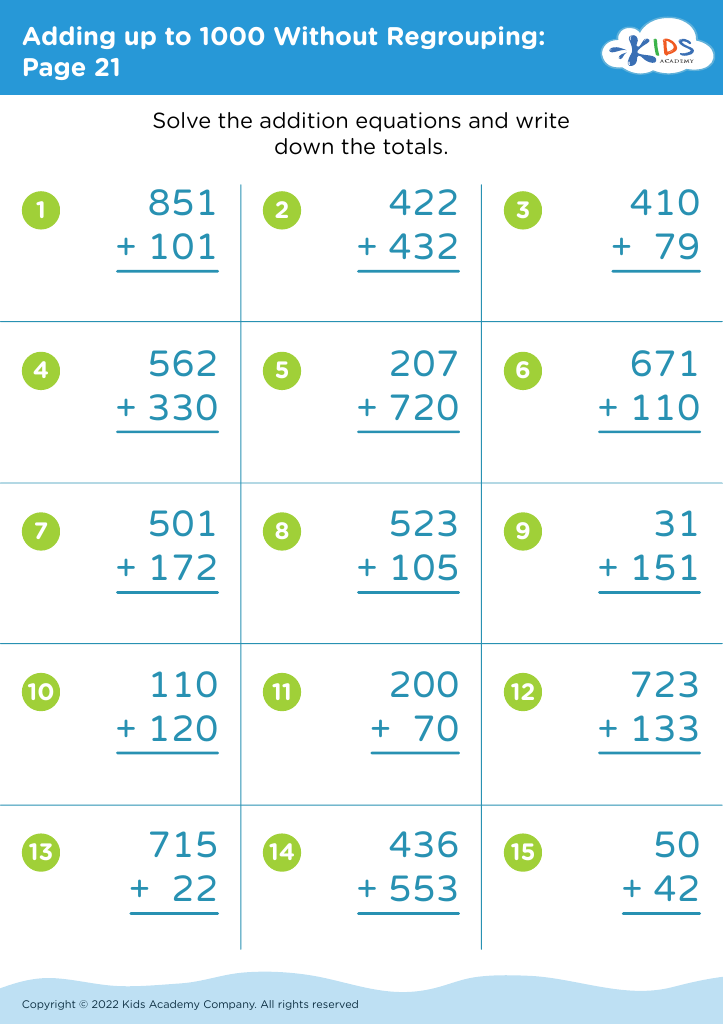
Enhance your child's math abilities with our expertly designed Addition & Subtraction Worksheets tailored for 7-year-olds. These practical and engaging resources are created to bolster counting skills through fun and interactive exercises. Each worksheet is crafted to provide a solid foundation in basic math concepts, making learning enjoyable and effective. Your child will develop critical thinking and problem-solving abilities as they practice addition and subtraction. Easy to download and print, these worksheets are perfect for homeschooling or additional practice. Invest in your child's educational growth with our comprehensive counting skills worksheets and watch their confidence in math soar!
Favorites
With answer key
Interactive
Join Kids Academy for Free
Who is primarily going to use this learning content?








Developing counting skills and basic addition and subtraction in 7-year-olds is essential for several key reasons. First, these foundational math skills form the building blocks for more advanced mathematical concepts that children will encounter as they progress in their education. Mastery in these areas ensures that children have the confidence and ability to tackle more complex problems later on, such as multiplication, division, and eventually algebra.
Secondly, math skills are critical for everyday life. Being able to count, add, and subtract helps children make sense of daily tasks, such as handling money, telling time, and following recipes. These practical applications highlight the importance of strong math skills beyond the classroom.
Furthermore, learning math aids cognitive development. Children improve their problem-solving abilities, logical reasoning, and critical thinking through math. Engaging with math challenges stimulates their brain, fostering overall academic growth.
Additionally, early success in math can boost a child's confidence and develop a positive attitude towards learning. Children who feel competent in math are more likely to enjoy and participate in further math education without fear or frustration. Parents and teachers play a crucial role in this developmental phase by providing the support, encouragement, and resources needed for children to build strong mathematical foundations.








