Comparing shapes Geometry Worksheets for 7-Year-Olds
3 filtered results
-
From - To
Discover the fun and educational geometry worksheets designed specifically for 7-year-olds! Our comparing shapes worksheets help young learners understand and identify the differences and similarities between various shapes. Packed with engaging activities and colorful illustrations, these worksheets make mastering geometry both exciting and enjoyable. Children will improve their observation and critical thinking skills as they compare sides, angles, and other attributes of each shape. Perfect for classroom or home use, our worksheets adhere to educational standards, ensuring your child builds a strong foundation in math. Give your child a head start in geometry today!
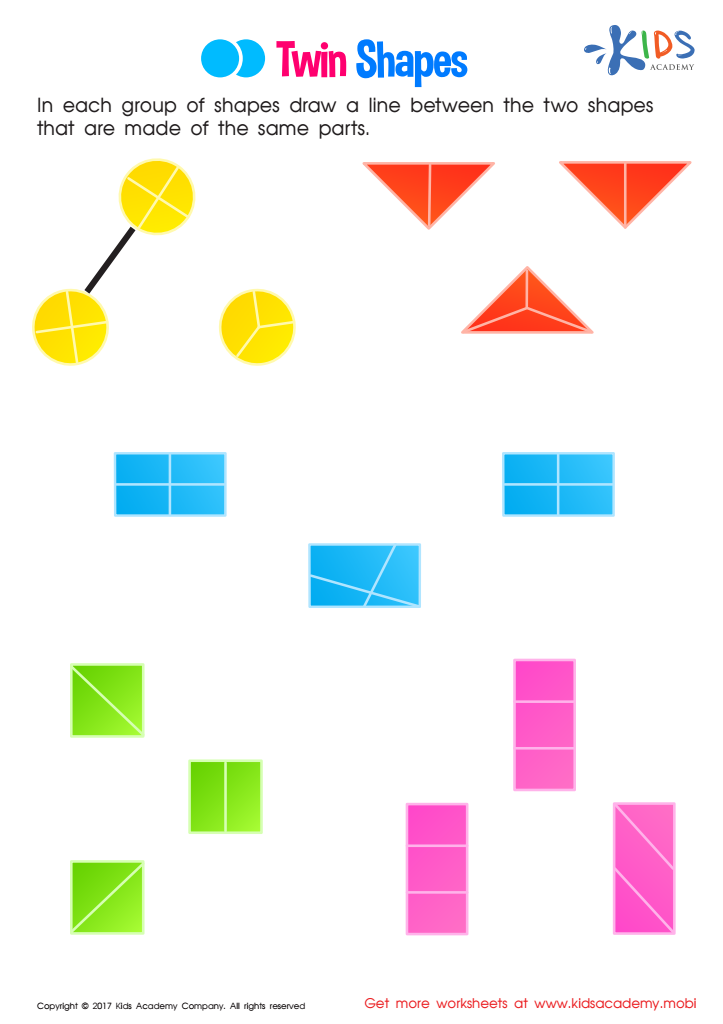
Twin Shapes Worksheet
 Assign to My Students











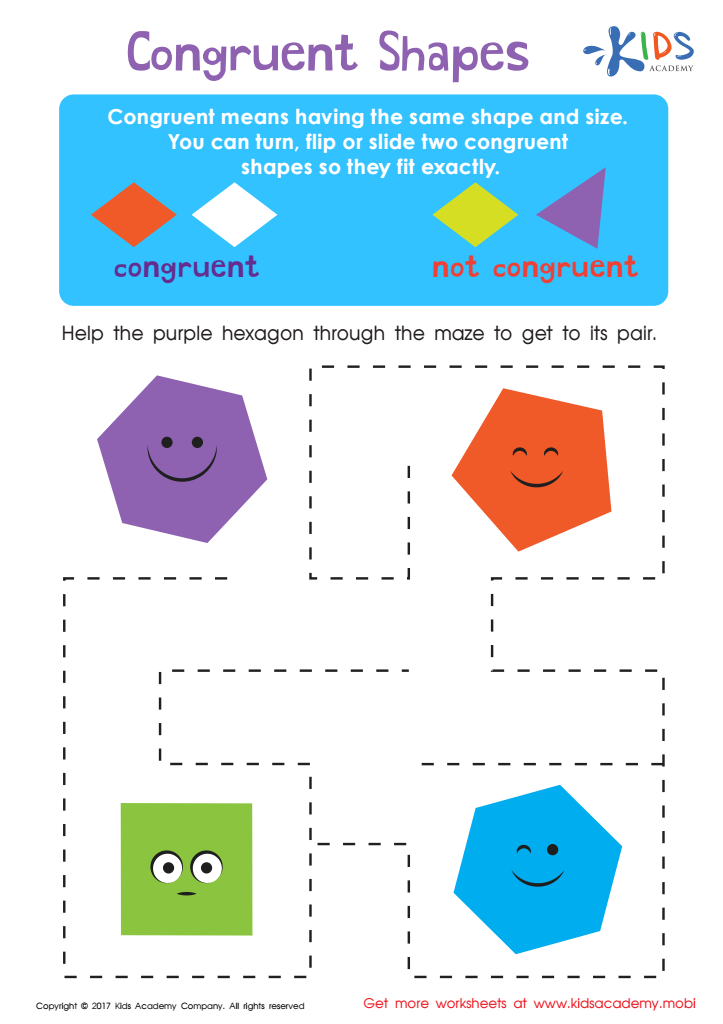
Congruent Shapes Worksheet
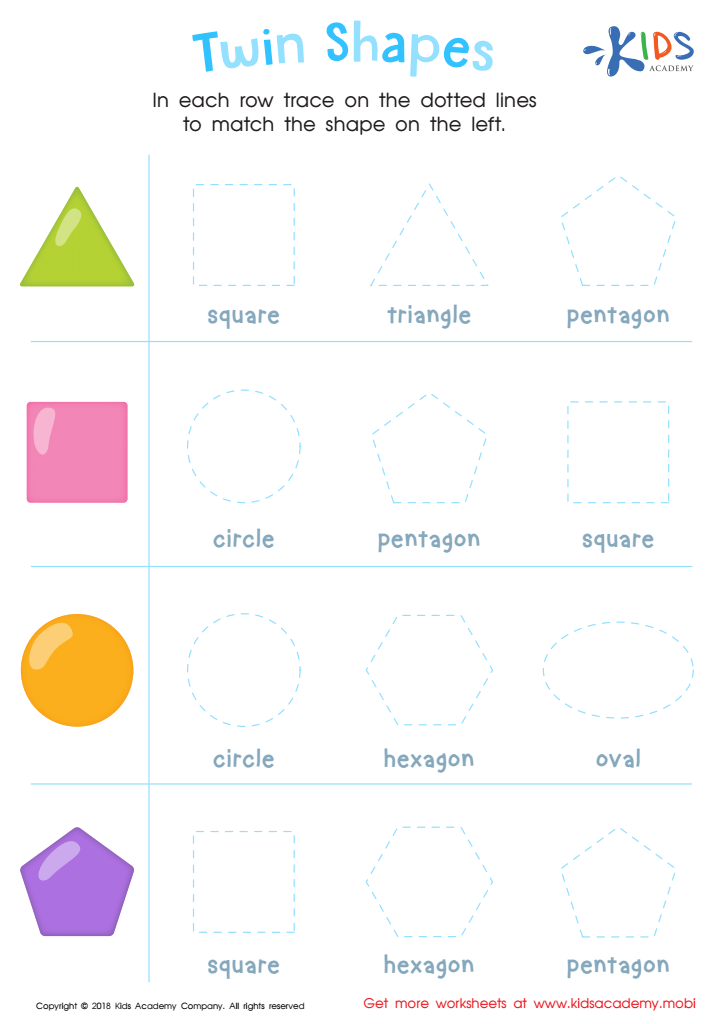
Twin Shapes Dot-to-Dot Worksheet








Comparing shapes in geometry for 7-year-olds is crucial for several reasons. Firstly, it lays the foundation for mathematical reasoning and spatial awareness. At this age, children's cognitive abilities are rapidly developing, and understanding how shapes compare in terms of size, proportion, and positioning strengthens these skills. It aligns with early math curricula, ensuring students meet essential educational milestones.
Secondly, comparing shapes enhances problem-solving skills. When children learn to recognize and differentiate shapes, they develop critical thinking abilities. This skill set is transferable across numerous disciplines, including science and everyday life activities like reading maps or organizing spaces.
Thirdly, early exposure to geometry fosters a positive attitude towards math. Interactive, hands-on activities with shapes can make learning fun and engaging, helping to alleviate math anxiety at an early age. This positive experience encourages lifelong learning enthusiasm.
Lastly, geometry is everywhere. From architecture to nature, understanding the basic principles of shapes enables children to connect with the world meaningfully. By caring about comparing shapes, parents and teachers can provide a well-rounded educational experience that supports both academic growth and practical life skills, laying a strong foundation for future success in various fields.








